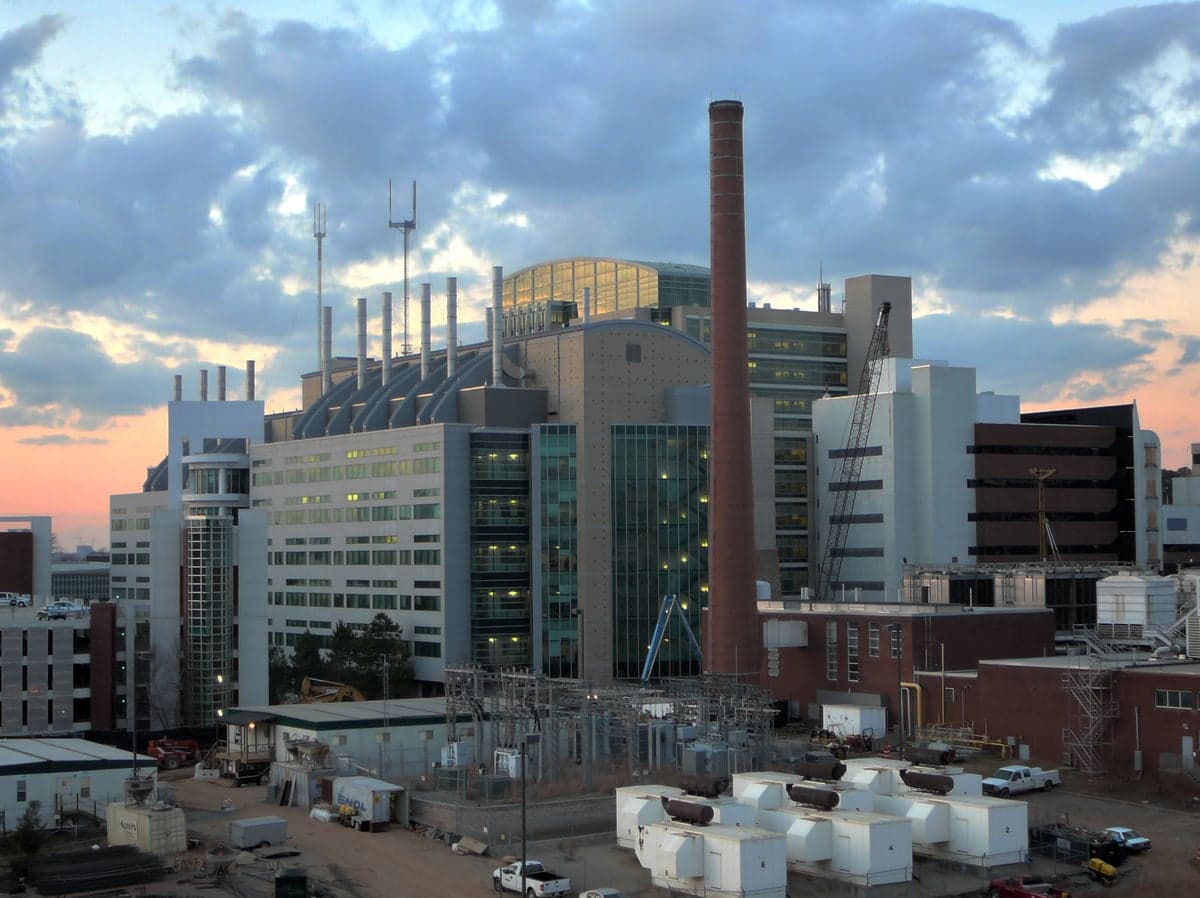
Photo: Wikipedia
Strategic Assessment of Druid Hills, GA
Meaningful friction. Expect exposure to either population pressure, blast zones, or natural disaster risk. Consider buying a retreat property.
What does the Strategic Assessment tell us?
Our Strategic Assessment grades tactical survivability of an area. Major population centers, military targets, fallout zones, natural disasters, and border exposure all drive risk — lower exposure means a more defensible position in a crisis.
This is heavily inspired by Joel Skousen's Strategic Relocation book. Highly recommended you checkout the book ($)What does this tell us?
Our Strategic Assessment grades tactical survivability of an area. Major population centers, military targets, fallout zones, natural disasters, and border exposure all drive risk — lower exposure means a more defensible position in a crisis.
This is heavily inspired by Joel Skousen's Strategic Relocation book. Highly recommended you checkout the book ($)Strategic Pillars

Key Distances
Regional Safe Places
Below is our recommended "safe zones" in Georgia and the surrounding area based on our strategic heuristics. For most people, it's unrealistic to live in a “safe zone” full-time due to work, family or other personal reasons. They tend to be more rural. However, many of these areas are perfect for second homes and retreat properties that double as a vacation home or even a short-term rental.
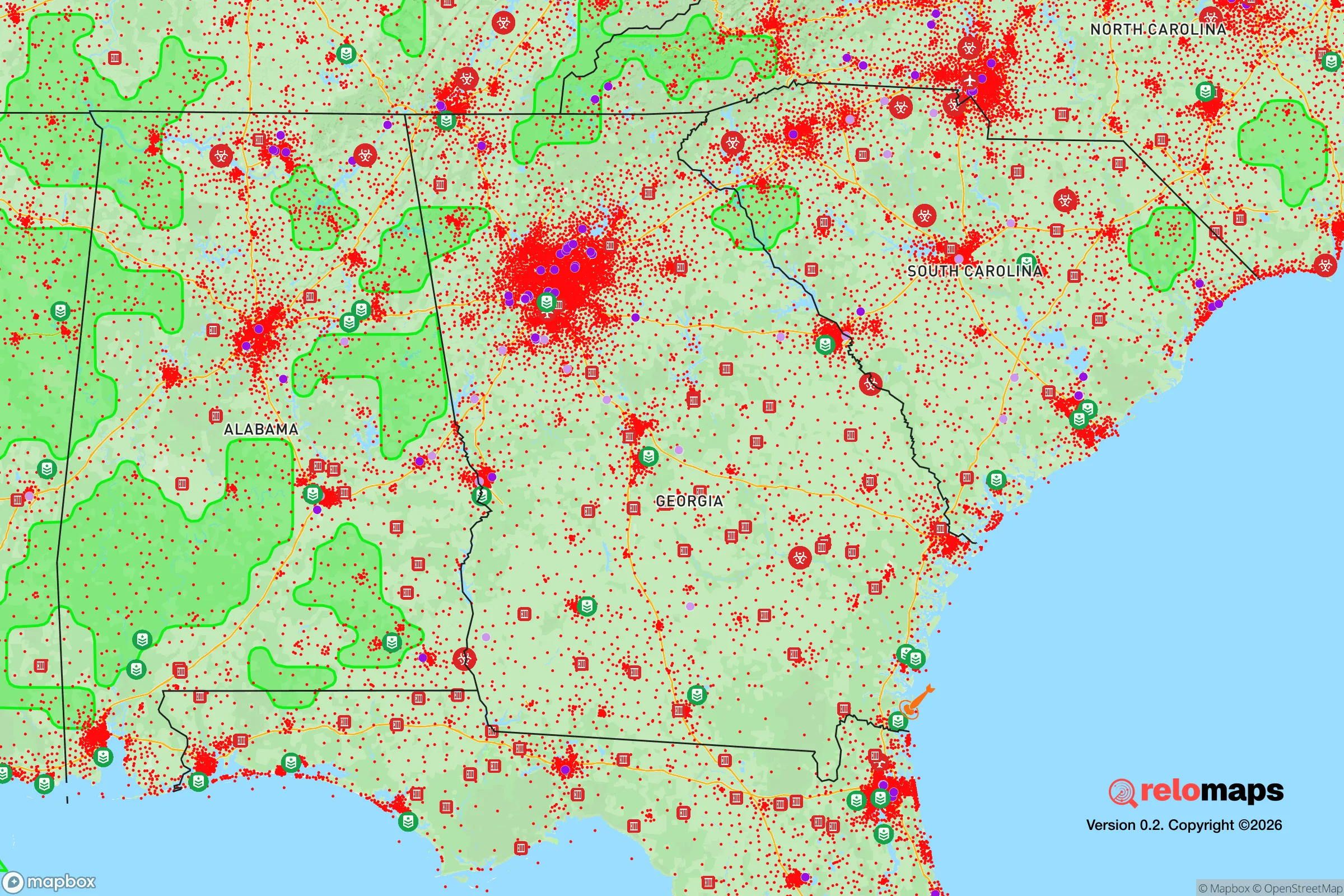
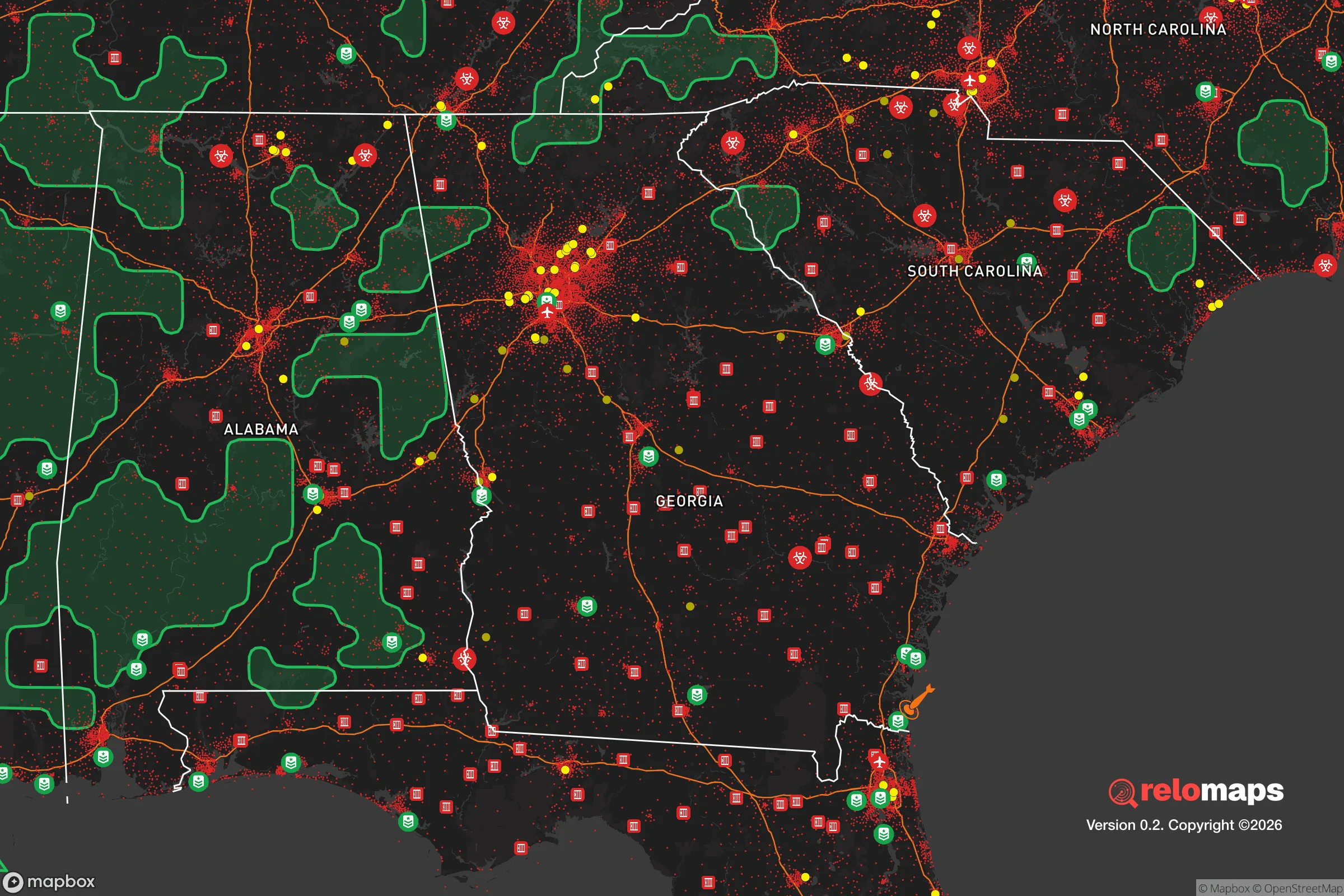


Important Note: For informational purposes only. This does not mean nothing bad ever happens in the green zones. Please use common sense. This is based on public data and modeled with AI. We tried to take a conservative approach but mistakes happen. We update this regularly as new information becomes available.
Solar Generator Recommendations
Backup power matters more here than in safer locations. We've picked three solar generators across budgets and capacity tiers — start with the budget unit if you only need a few essentials, or step up if you want to run a fridge and HVAC for days at a time.

Jackery Portable Power Station Explorer 300
Budget OptionPower on the Go: Weighing only 11 lbs, it's convenient to set up and store with book-sized foldable solar panels

BLUETTI Portable Power Station AC180
Designed for both indoor and outdoor scenarios, AC180 is highly capable as it has a robost capacity and continuous output power.

EF ECOFLOW DELTA Pro Ultra Power Station
Upgraded PickEcoFlow DELTA Pro Ultra is a whole-home energy system designed to grow with your family. Integrated with the Smart Home Panel 2, it scales to meet your evolving energy needs — keeping your home powered, intelligent, and secure through every stage of life.
We earn a commission, at no additional cost to you.
Strategic Assessment Analysis
Druid Hills, Georgia, presents a complex strategic picture for the conservative prepper or survivalist. Its primary advantage is its location as a resilient, established suburb of Atlanta that offers a degree of natural shielding and community cohesion, but its proximity to a major metropolitan target zone introduces significant vulnerabilities. For a relocator prioritizing self-sufficiency and security, Druid Hills is best understood as a semi-defensible buffer zone—close enough to leverage Atlanta’s resources in a stable period, but far enough to require a robust exit and sustainment plan during a crisis. The area’s resilience hinges on its historic tree canopy, established infrastructure, and a demographic profile that leans toward professional and academic stability, but these same factors create risks of population density and dependency on fragile supply chains.
Geographic position and natural advantages for long-term survival
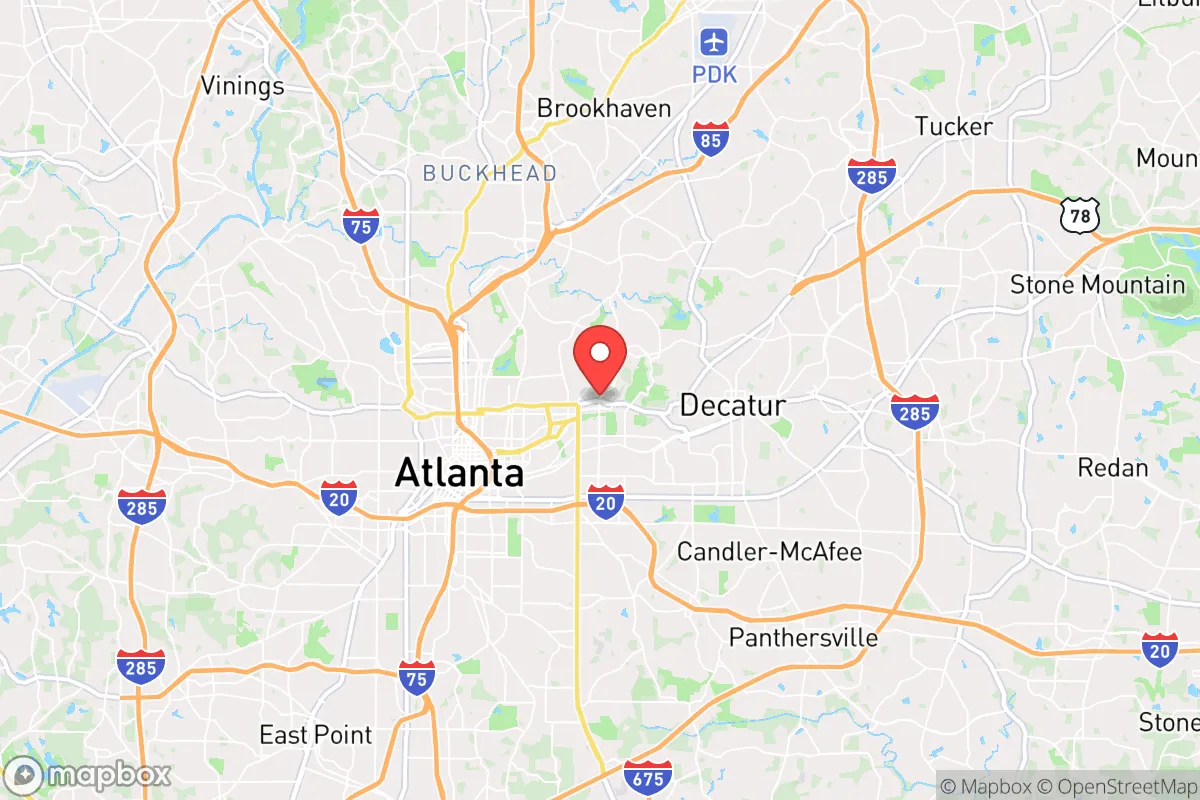
Druid Hills sits on a ridge line in DeKalb County, roughly 5 miles northeast of downtown Atlanta, with elevations ranging from 900 to 1,100 feet. This elevated position provides a modest tactical advantage—better line-of-sight for observation, reduced flood risk, and slightly cooler temperatures during heat events. The area is heavily wooded with mature hardwoods and pines, offering natural camouflage and a microclimate that can moderate temperature extremes. The historic Druid Hills neighborhood, designed by Frederick Law Olmsted, features winding roads and limited through-traffic patterns, which can slow vehicle movement and create natural chokepoints for security. The proximity to the South River and numerous small creeks (like Peachtree Creek) provides surface water sources, though these are urban-affected and require filtration. The area’s clay soils are poor for large-scale agriculture but support hardy native plants and fruit trees—many older properties already have established pecan, fig, and apple trees. For a relocator, the key natural advantage is the combination of elevation, tree cover, and water access within a suburban footprint, which is rare for a location this close to a major city.
Risks, exposures, and proximity to fallout-relevant landmarks
The most significant strategic liability of Druid Hills is its proximity to Atlanta’s critical infrastructure and potential target zones. The area lies within 3 miles of the Centers for Disease Control and Prevention (CDC) headquarters on Clifton Road, a high-value federal asset that could be a target for civil unrest, bioterrorism, or government-directed lockdowns. Druid Hills is also within 5 miles of Hartsfield-Jackson Atlanta International Airport, a major transportation hub that could become a chokepoint or evacuation bottleneck. The nearby Emory University campus and its hospitals (Emory University Hospital, Grady Memorial) are both medical assets and potential crowd magnets during a pandemic or mass casualty event. The area is crisscrossed by major arterial roads—Ponce de Leon Avenue, North Decatur Road, and Briarcliff Road—that could become gridlocked or contested during unrest. The 2020 protests in Atlanta demonstrated how quickly civil disorder can spill into adjacent suburbs; Druid Hills saw increased police presence and road closures during that period. For the prepper, the concentration of federal, medical, and transportation infrastructure within a 5-mile radius creates a high-risk exposure profile. A single event—a cyberattack on the power grid, a bioweapon release, or a coordinated civil disturbance—could cascade into Druid Hills within hours.
Practical resilience for a relocator: food, water, energy, and defensibility
For a relocator assessing daily survival logistics, Druid Hills offers a mixed picture. Water security is the most immediate concern: the area relies on the DeKalb County water system, which draws from the Chattahoochee River and operates through a centralized treatment plant. A prolonged power outage or contamination event would cut supply within 24-48 hours. Rainwater collection is feasible—average annual rainfall is 50 inches—but many homes have restrictive HOA covenants that limit visible cisterns. A better option is drilling a private well, though costs in the rocky Piedmont soil range from $8,000 to $15,000. Food production is limited by lot sizes: typical Druid Hills lots are 0.5 to 1 acre, with many shaded by mature trees. Raised-bed vegetable gardens are possible in sunny patches, but full self-sufficiency would require converting lawn space and accepting lower yields. The area has a strong network of farmers’ markets (e.g., the Decatur Farmers Market, 2 miles away) and local food co-ops, but these are dependent on stable supply chains. Energy resilience is achievable: many homes have natural gas connections for heating and cooking, which can operate without grid power. Solar panel installations are becoming more common, though HOA approval may be required. Battery backup systems (e.g., Tesla Powerwall) are a practical investment for maintaining refrigeration, communications, and medical devices. Defensibility is the weakest link: Druid Hills is a suburban neighborhood with open street grids, multiple access points, and a mix of single-family homes and apartment complexes. Hardening a single property with fencing, reinforced doors, and security cameras is feasible, but perimeter defense of the broader neighborhood is not. The area’s police response times are generally under 10 minutes, but during a widespread event, law enforcement would be stretched thin. The best strategy for a relocator is to treat Druid Hills as a temporary base—a place to stockpile supplies, build community ties, and monitor events—with a pre-planned bug-out route to a more remote property in the North Georgia mountains (e.g., near Ellijay or Blue Ridge, 90 minutes north).
The overall strategic picture for Druid Hills is one of calculated risk. It offers a high quality of life in stable times—good schools, low crime relative to Atlanta proper, and a strong sense of community among long-term residents—but its proximity to high-value targets and reliance on centralized infrastructure make it a fragile position during a major crisis. For the conservative prepper who values community and convenience but is willing to invest in layered defenses and a secondary retreat, Druid Hills can work as a primary residence. For those seeking true independence and low exposure, the area is best viewed as a stepping stone to a more remote location. The key takeaway: Druid Hills is not a survivalist’s paradise, but it is a defensible suburb for those who plan ahead, build local alliances, and keep their bug-out bag packed.

* Values derived from national, state, county, city and local statistics and may differ in a specific area. Last updated: 2026-04-23T05:05:30.000Z
Narrative content on this page is AI-generated and may contain mistakes. Verify any details that matter before acting on them.
ReloMaps may earn a commission from affiliate links at no extra cost to you.

