
Photo: Wikipedia
Quality of Life in Dublin, TX
A high quality of life with strong walkability, manageable living costs, healthy neighborhood signals, and solid amenity access.
What does Quality of Life tell us?
Quality of Life blends cost of living, nearby amenities, socioeconomic signals, and neighborhood character. City-level scores represent the whole municipality; individual neighborhoods can differ.
What does this tell us?
Quality of Life blends cost of living, nearby amenities, socioeconomic signals, and neighborhood character. City-level scores represent the whole municipality; individual neighborhoods can differ.
Cost of Living
22% below national average
The Real Cost of Living in Dublin, TX for 2026
| Tier | Individual | Family (4) |
|---|---|---|
| Survival | $19k | $35k |
| Comfortable | $33k | $48k |
| Luxury | $92k+ | $143k+ |
| Elite (Top 5%) | $176k+ | $273k+ |
105%
* top-5% income substituted from state-level data — local Census figures unavailable for small populations
The Area Signal
A metric tracking the socioeconomic signals of the area.
Hobbies
Explore the areaGroceries
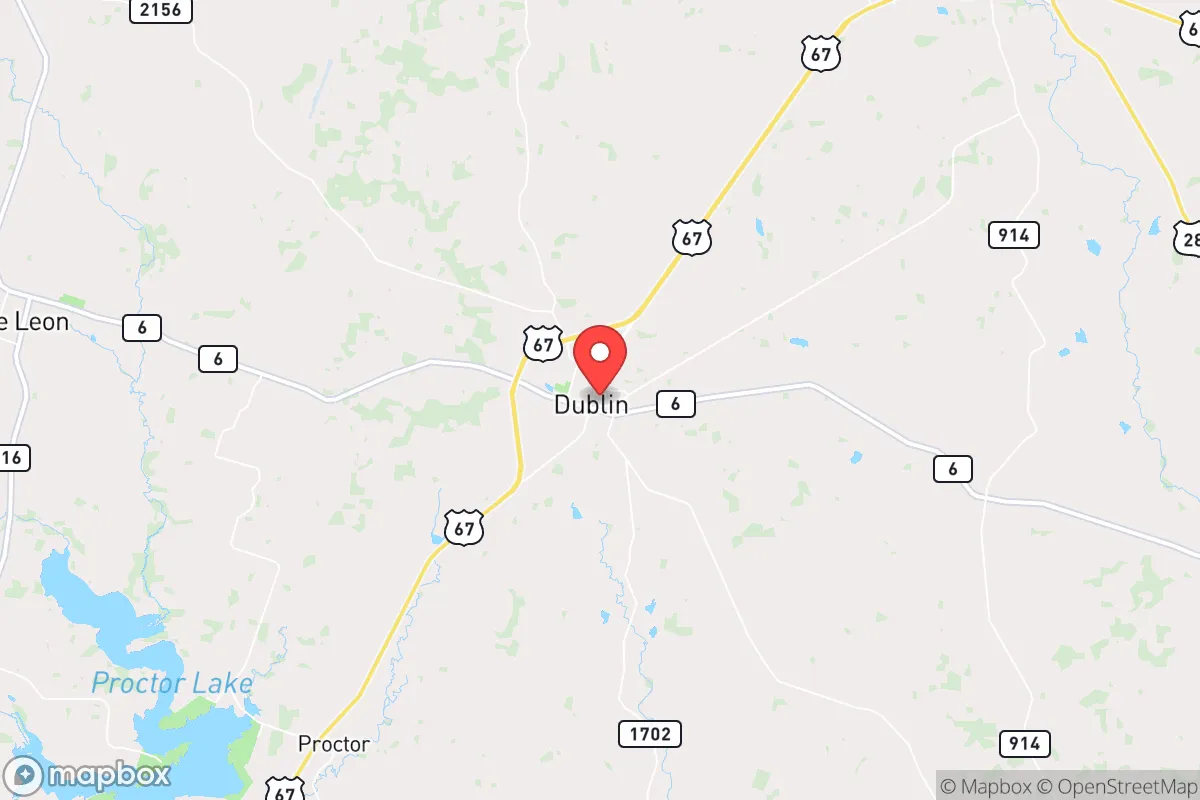
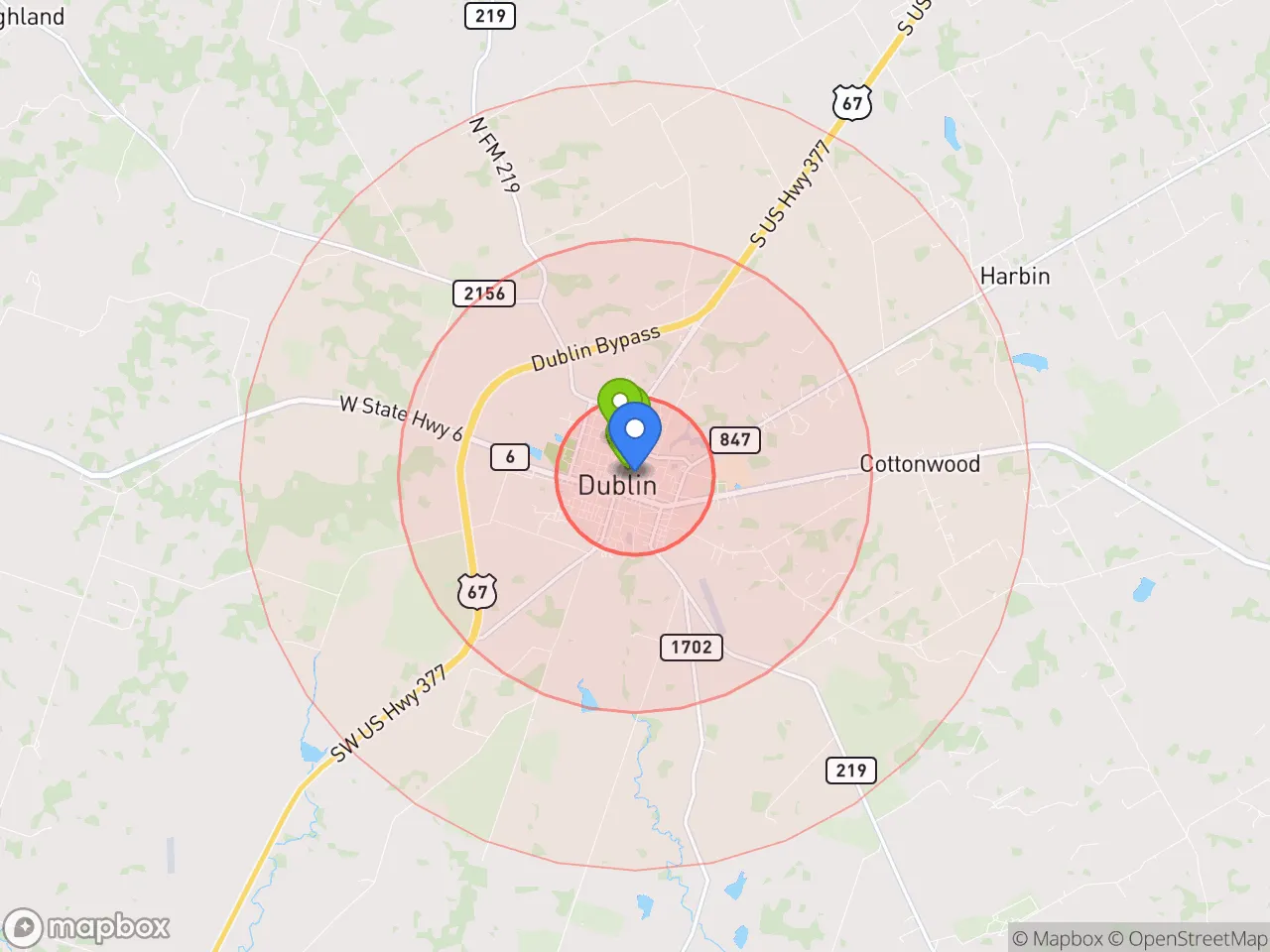
1 within 10 miles
Gas
2 within 10 miles
Hospital
2 within 20 miles
Airport
DFW — Dallas/Fort Worth International
Post Office
USPS — Proctor, TX
Critical Amenities
Quality-of-Life Analysis
Dublin, Texas, offers a notably lower cost of living than the national average, attracting a mix of long-time ranching families, commuters to Stephenville and Fort Worth, and retirees seeking a quieter, more affordable pace of life. With a cost-of-living index of 78 (22% below the U.S. average), the community is characterized by its agricultural roots, a strong sense of local tradition, and a demographic that skews older and more family-oriented than the state average. The town’s modest affluence is reflected in its stable, working-class economy rather than high-end retail or luxury housing, making it a practical choice for those prioritizing financial breathing room over urban amenities.
Housing costs and affordability compared to Stephenville and Erath County
Housing in Dublin is significantly more affordable than in nearby Stephenville (the county seat) and far below the statewide median. The median home value sits at $128,900, roughly half the Texas median, while the median rent of $1,160 is competitive for the region, though slightly higher than some rural pockets due to limited rental inventory. For context, a comparable home in Stephenville typically runs 15–20% higher, and Dublin’s property taxes (Erath County rate of roughly 2.1%) are moderate by Texas standards. The average commute of 26.7 minutes reflects the reality that many residents drive to jobs in Stephenville (15 minutes east) or even Fort Worth (about 90 minutes east), trading daily travel time for substantially lower mortgage or rent payments. Utility costs and grocery prices also track below national averages, reinforcing Dublin’s appeal for budget-conscious households.
Local amenities, schools, and the daily rhythm of life
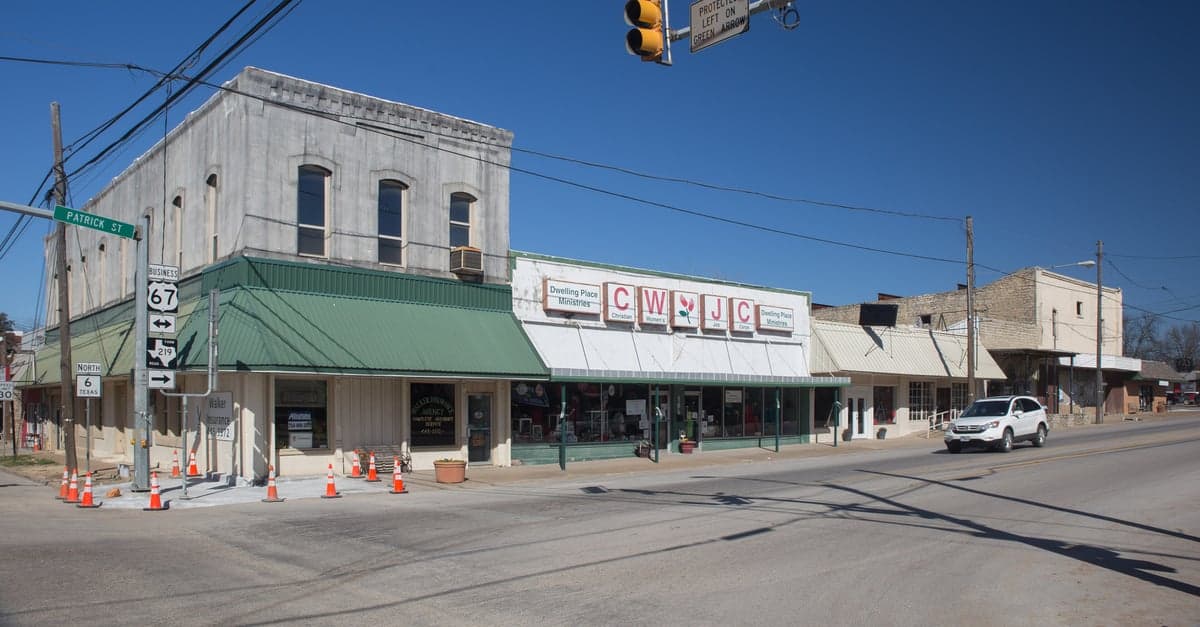
Daily life in Dublin centers on a compact downtown with a historic square, a handful of locally owned restaurants (notably the Dublin Bottling Works & Ice Cream parlor), and essential services like a grocery store, pharmacy, and hardware shop. For broader shopping, healthcare, and entertainment, residents drive 15 minutes to Stephenville, which offers a Walmart Supercenter, a regional hospital, and Tarleton State University. The Dublin Independent School District serves roughly 1,100 students across three campuses, with a student-teacher ratio of about 14:1 and a reputation for strong agricultural and vocational programs. The town’s social rhythm is defined by Friday night football at Lions Stadium, the annual Dr Pepper Festival (celebrating Dublin’s history as the original Dr Pepper bottler), and church-based community gatherings. Outdoor recreation is limited to local parks and nearby Proctor Lake (20 minutes north) for fishing and camping, rather than extensive trail systems or cultural venues.
Dublin is best suited for those who value low housing costs, a tight-knit community, and a slower pace over urban convenience and career diversity. Retirees on fixed incomes, remote workers with stable internet (fiber is available in parts of town), and families who prioritize school affordability and safety will find the trade-offs worthwhile. Commuters should be comfortable with a 25–30 minute drive to Stephenville or a longer haul to the Metroplex, and anyone seeking nightlife, fine dining, or specialized healthcare will need to look to larger cities. For those whose priorities align with Dublin’s strengths—especially cost savings and community connection—it offers a solid, low-stress quality of life in rural Central Texas.

Crime in Dublin, TX
Lower crime rates than 93% of comparable U.S. locations.
Violent CrimeViolent Crime Analysis
Property CrimeProperty Crime Analysis
Crime Analysis
Dublin, Texas, presents a mixed safety profile with property crime rates that exceed national averages, while violent crime remains closer to state norms. The city's location within Erath County, part of a broader region influenced by larger metropolitan justice policies, introduces additional considerations for residents and prospective movers. With a violent crime rate of 342.3 per 100,000 residents and a property crime rate of 1,780.9 per 100,000, understanding these figures in context is essential for evaluating daily life and long-term safety.
Crime in context
Dublin's violent crime rate of 342.3 per 100,000 is roughly on par with the Texas state average of approximately 380 per 100,000, but it sits below the national average of about 380 per 100,000. Property crime, however, is a more pressing concern. At 1,780.9 per 100,000, Dublin's property crime rate is significantly higher than both the Texas average (around 2,200 per 100,000) and the national average (approximately 1,950 per 100,000). This means residents face a notably elevated risk of burglary, theft, and motor vehicle theft compared to the typical American community. The city's proximity to larger metro areas like Fort Worth, roughly 80 miles east, means it is not immune to spillover crime from those regions.
What residents experience
For those living in Dublin, the most tangible safety concern is property crime. Residents commonly report incidents of vehicle break-ins, theft from porches, and occasional burglaries of unoccupied homes. Violent crime, while less frequent, does occur and includes aggravated assault and robbery. The local police department maintains a visible presence, but staffing levels typical for a small city of roughly 4,000 people mean response times can vary. A critical factor for Dublin's safety outlook is the influence of progressive judicial policies from larger nearby counties. Erath County itself maintains a more conservative approach to law enforcement and prosecution, but the proximity to metro areas with liberal district attorneys—who often prioritize reduced sentencing and diversion programs—can lead to offenders cycling back into smaller communities like Dublin. This dynamic directly impacts public safety by potentially increasing recidivism and the number of criminals on the street, undermining justice for victims.
Neighborhood-level variation
Safety in Dublin is not uniform across the city. Older, more established neighborhoods near the downtown square tend to have lower reported crime due to higher owner-occupancy rates and stronger neighborhood watch participation. In contrast, areas along major thoroughfares like U.S. Highway 377 and State Highway 6, which see more transient traffic, experience a disproportionate share of property crimes, particularly thefts from vehicles and retail establishments. Newer subdivisions on the outskirts of town generally report fewer incidents, though their isolation can make them targets for burglary. Prospective residents should prioritize homes in well-lit, established blocks and consider joining or forming a neighborhood watch program to mitigate the elevated property crime risk. Overall, while Dublin offers a small-town atmosphere, its crime data and regional judicial context warrant a cautious, informed approach to personal and property safety.
* Values derived from national, state, county, city and local statistics and may differ in a specific area. Last updated: 2026-05-10T04:09:11.000Z
Narrative content on this page is AI-generated and may contain mistakes. Verify any details that matter before acting on them.
ReloMaps may earn a commission from affiliate links at no extra cost to you.

