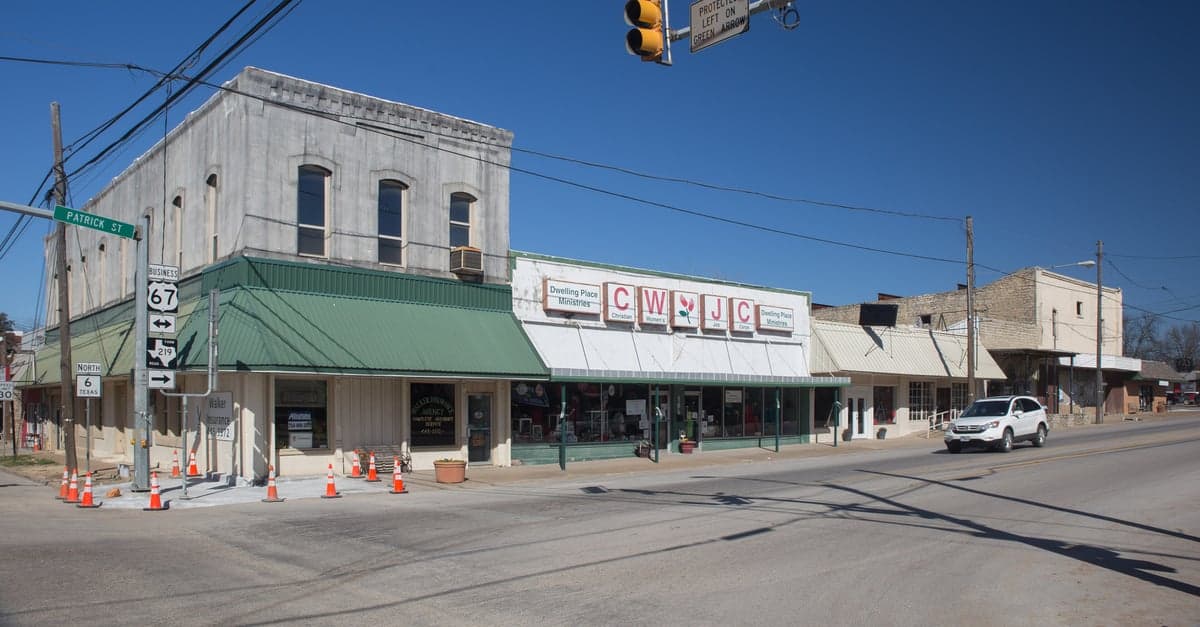
Photo: Wikipedia
Strategic Assessment of Dublin, TX
Workable tactical position. Some exposure to population density or targets, but generally defensible in a crisis.
What does the Strategic Assessment tell us?
Our Strategic Assessment grades tactical survivability of an area. Major population centers, military targets, fallout zones, natural disasters, and border exposure all drive risk — lower exposure means a more defensible position in a crisis.
This is heavily inspired by Joel Skousen's Strategic Relocation book. Highly recommended you checkout the book ($)What does this tell us?
Our Strategic Assessment grades tactical survivability of an area. Major population centers, military targets, fallout zones, natural disasters, and border exposure all drive risk — lower exposure means a more defensible position in a crisis.
This is heavily inspired by Joel Skousen's Strategic Relocation book. Highly recommended you checkout the book ($)Strategic Pillars

Key Distances
Regional Safe Places
Below is our recommended "safe zones" in Texas and the surrounding area based on our strategic heuristics. For most people, it's unrealistic to live in a “safe zone” full-time due to work, family or other personal reasons. They tend to be more rural. However, many of these areas are perfect for second homes and retreat properties that double as a vacation home or even a short-term rental.

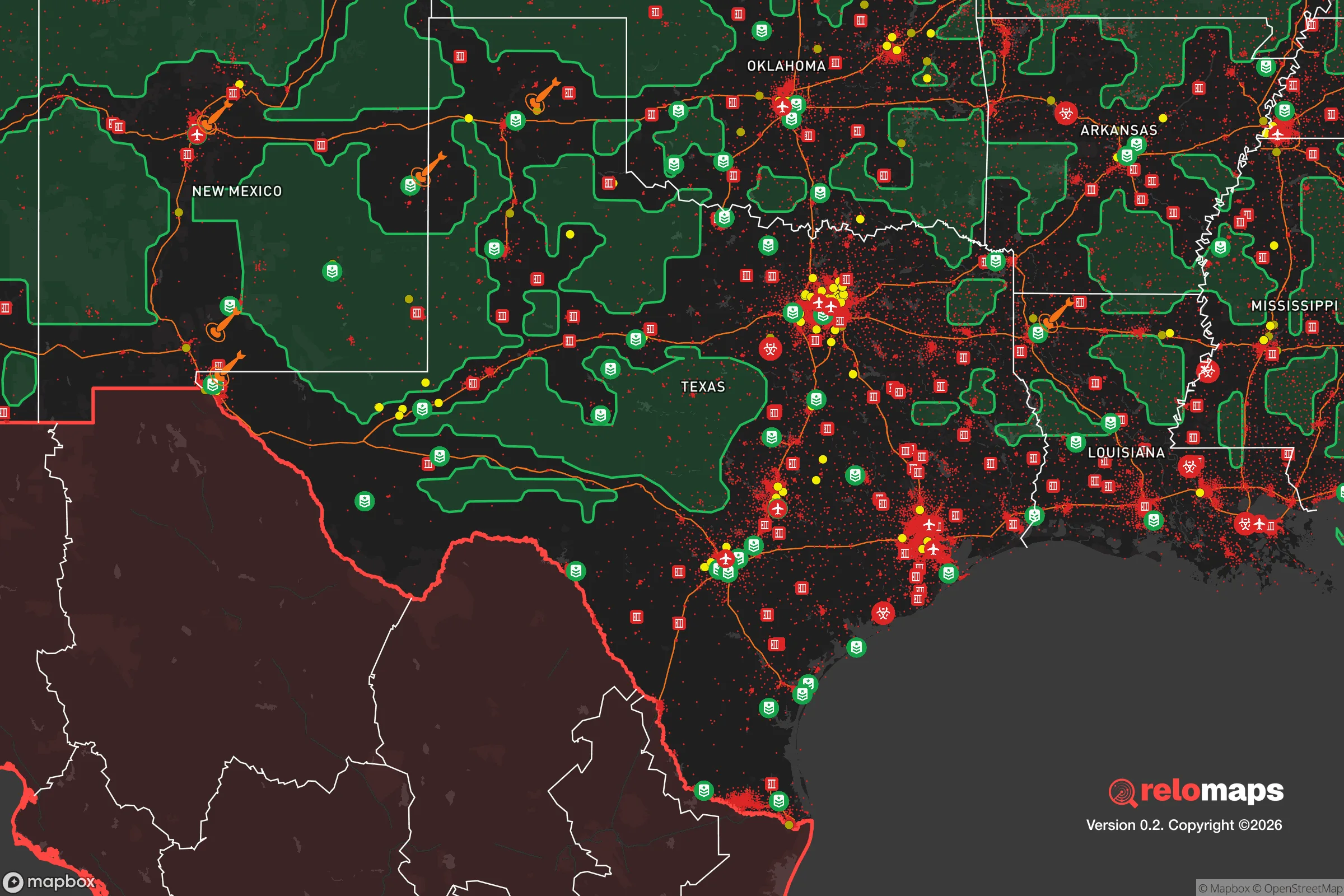


Important Note: For informational purposes only. This does not mean nothing bad ever happens in the green zones. Please use common sense. This is based on public data and modeled with AI. We tried to take a conservative approach but mistakes happen. We update this regularly as new information becomes available.
Solar Generator Recommendations
Backup power matters more here than in safer locations. We've picked three solar generators across budgets and capacity tiers — start with the budget unit if you only need a few essentials, or step up if you want to run a fridge and HVAC for days at a time.

Jackery Portable Power Station Explorer 300
Budget OptionPower on the Go: Weighing only 11 lbs, it's convenient to set up and store with book-sized foldable solar panels

BLUETTI Portable Power Station AC180
Designed for both indoor and outdoor scenarios, AC180 is highly capable as it has a robost capacity and continuous output power.

EF ECOFLOW DELTA Pro Ultra Power Station
Upgraded PickEcoFlow DELTA Pro Ultra is a whole-home energy system designed to grow with your family. Integrated with the Smart Home Panel 2, it scales to meet your evolving energy needs — keeping your home powered, intelligent, and secure through every stage of life.
We earn a commission, at no additional cost to you.
Strategic Assessment Analysis
Dublin, Texas, sits in a sweet spot that few people outside of Erath County fully appreciate: close enough to the I-35 corridor to access supplies and markets, yet far enough from the major metroplexes to avoid the worst of urban collapse scenarios. With a population hovering around 3,800, this small town offers a blend of agricultural self-sufficiency, low population density, and a conservative cultural backbone that makes it a serious contender for anyone thinking long-term about resilience. The local economy is anchored by ranching, dairy production, and light manufacturing—meaning the area already produces real goods, not just services—and the community’s political leanings are overwhelmingly traditional, which tends to translate into strong social cohesion when times get tight.
Geographic position and natural advantages for long-term security
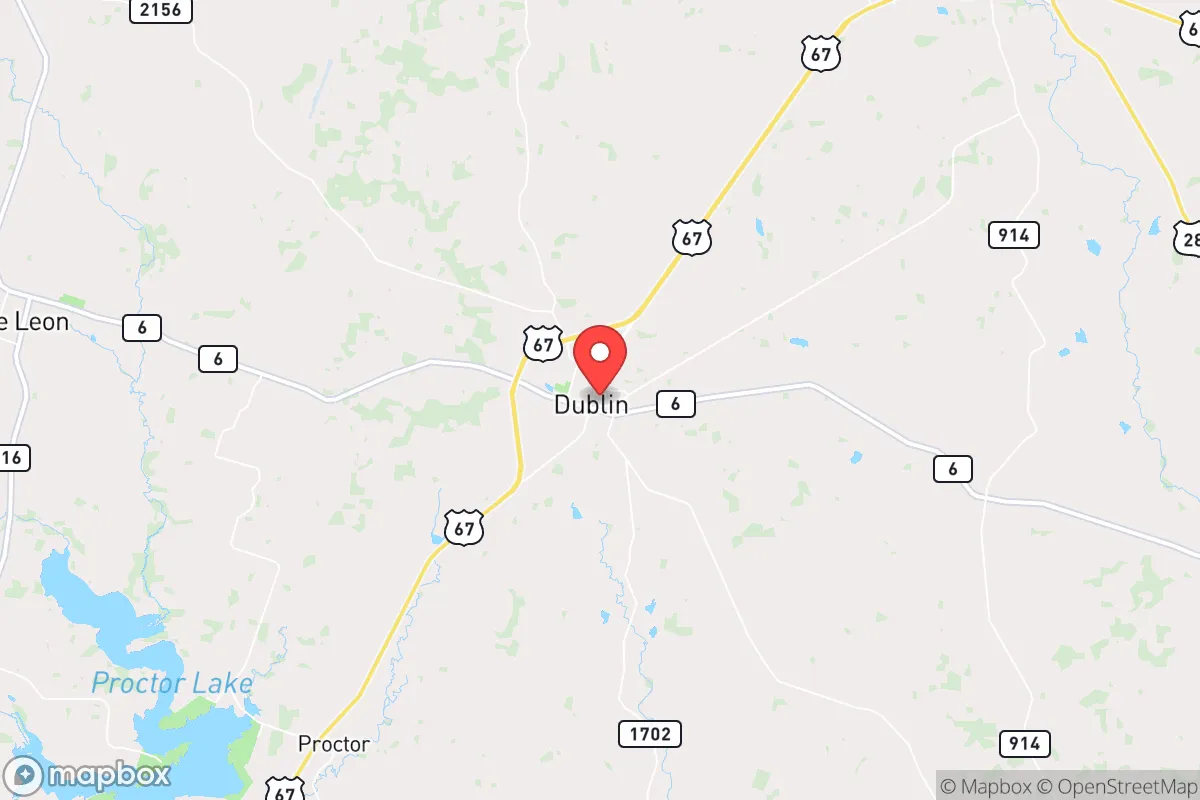
Dublin’s location at the intersection of US-67 and US-377 gives it solid road connectivity without being a choke point. It’s roughly 90 miles southwest of Fort Worth and about 120 miles from Dallas, which puts it outside the immediate blast radius of any major metropolitan target but still within a day’s drive for resupply or evacuation if needed. The surrounding terrain is rolling hills and limestone-based soils, which offer decent drainage and natural cover. Unlike the flat, exposed expanses of the High Plains, this area provides enough topographic variation to make defensive positioning easier if civil order breaks down. The Leon River runs nearby, and the region sits atop the Trinity Aquifer, meaning groundwater access is generally reliable for private wells—a critical advantage over areas dependent on surface reservoirs that could be contaminated or targeted. The climate is temperate, with hot summers but mild winters, allowing for year-round gardening and livestock grazing without the extreme weather risks found farther north or west.
Risks, exposures, and proximity to fallout-relevant landmarks
No location is perfect, and Dublin has its share of vulnerabilities. The most obvious is its proximity to the I-35 corridor, which runs through the heart of Texas and connects San Antonio, Austin, Dallas, and Fort Worth. In a mass evacuation scenario, that highway becomes a parking lot and a target. Dublin sits about 40 miles west of I-35, which is far enough to avoid the immediate crush but close enough that secondary roads could become clogged with refugees fleeing the cities. The town itself has no major military installations, nuclear plants, or chemical facilities within a 50-mile radius, which is a plus—but the Pantex nuclear weapons plant near Amarillo is about 250 miles northwest, and the Comanche Peak nuclear plant near Glen Rose is roughly 60 miles northeast. Neither is close enough to pose a direct fallout risk from a conventional attack or accident, but prevailing winds from the south and southwest mean that any airborne contamination from those sites would likely bypass Dublin. More concerning is the potential for civil unrest spilling out of the DFW metroplex, which has seen its share of protests and crime spikes. Dublin’s small size and tight-knit community make it harder for outside agitators to operate unnoticed, but the town’s police force is limited—typically fewer than a dozen officers—so residents should plan on self-reliance for security.
Practical resilience for a relocator: food, water, energy, and defensibility
For someone serious about prepping, Dublin checks several boxes. The agricultural base means local food production is a reality, not a hobby. Erath County is one of the top dairy-producing counties in Texas, and there are numerous small farms selling beef, eggs, vegetables, and honey directly to consumers. The Dublin Farmers Market operates seasonally, but the real value is in building relationships with local ranchers and farmers before a crisis hits. Water is the bigger concern: while the aquifer is reliable, drought conditions have been tightening across Texas, and the area is under Stage 2 water restrictions periodically. A private well with a hand pump or solar-powered backup is a wise investment. Electricity comes from the ERCOT grid, which has proven fragile during winter storms—the 2021 freeze knocked out power for days in parts of the region. Solar panels with battery storage are becoming common among rural homeowners, and Dublin’s sunny climate makes that a viable option. For defensibility, the town’s layout is compact, with most residential areas clustered around the downtown square. Outlying properties offer more privacy and room for gardens, livestock, and rainwater catchment, but they also require a vehicle for supply runs. The local sheriff’s office and volunteer fire department are responsive but stretched thin; a good relationship with neighbors is your best insurance.
From a strategic standpoint, Dublin offers a rare combination of rural self-sufficiency and reasonable access to urban resources—without being so remote that you’re cut off from medical care or supply chains. The conservative culture means you’re unlikely to face pushback on firearms ownership, homeschooling, or religious practice, all of which matter when building a resilient household. The biggest trade-off is the proximity to I-35 and the DFW metroplex, which could become a liability in a widespread collapse scenario. But for someone looking to relocate now, while things are still stable, Dublin gives you time to establish roots, build a network, and harden your property before the next crisis hits. It’s not a bunker—it’s a base of operations. And in the current climate, that’s worth a serious look.

* Values derived from national, state, county, city and local statistics and may differ in a specific area. Last updated: 2026-05-10T04:09:11.000Z
Narrative content on this page is AI-generated and may contain mistakes. Verify any details that matter before acting on them.
ReloMaps may earn a commission from affiliate links at no extra cost to you.

