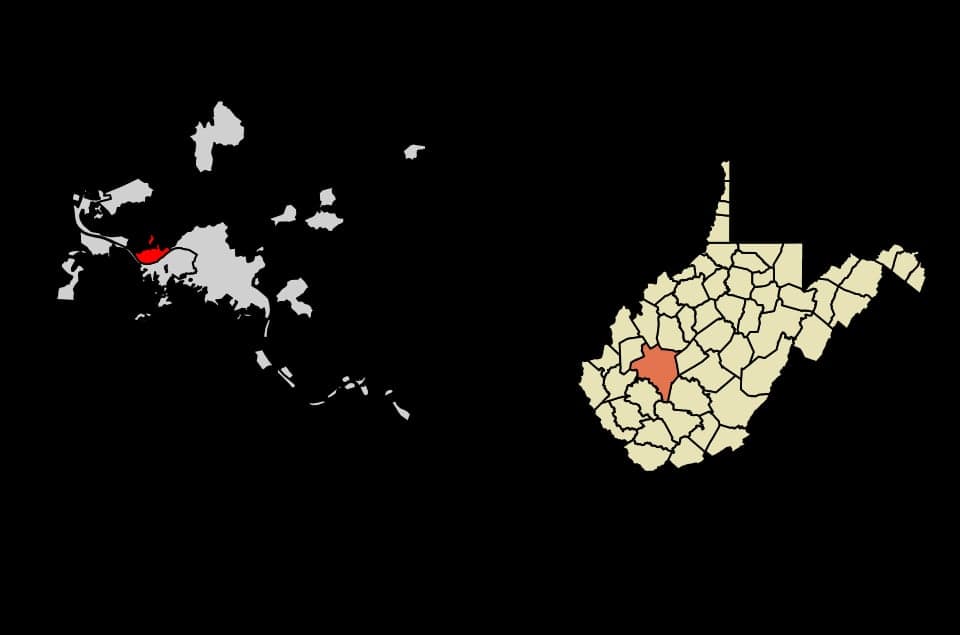
Photo: Wikipedia
Political ClimatePolitical Climate in Dunbar, WV
District shown is the primary district for this city’s centroid. Cities may span multiple districts.
Local Political AnalysisPolitical Analysis of Dunbar, WV
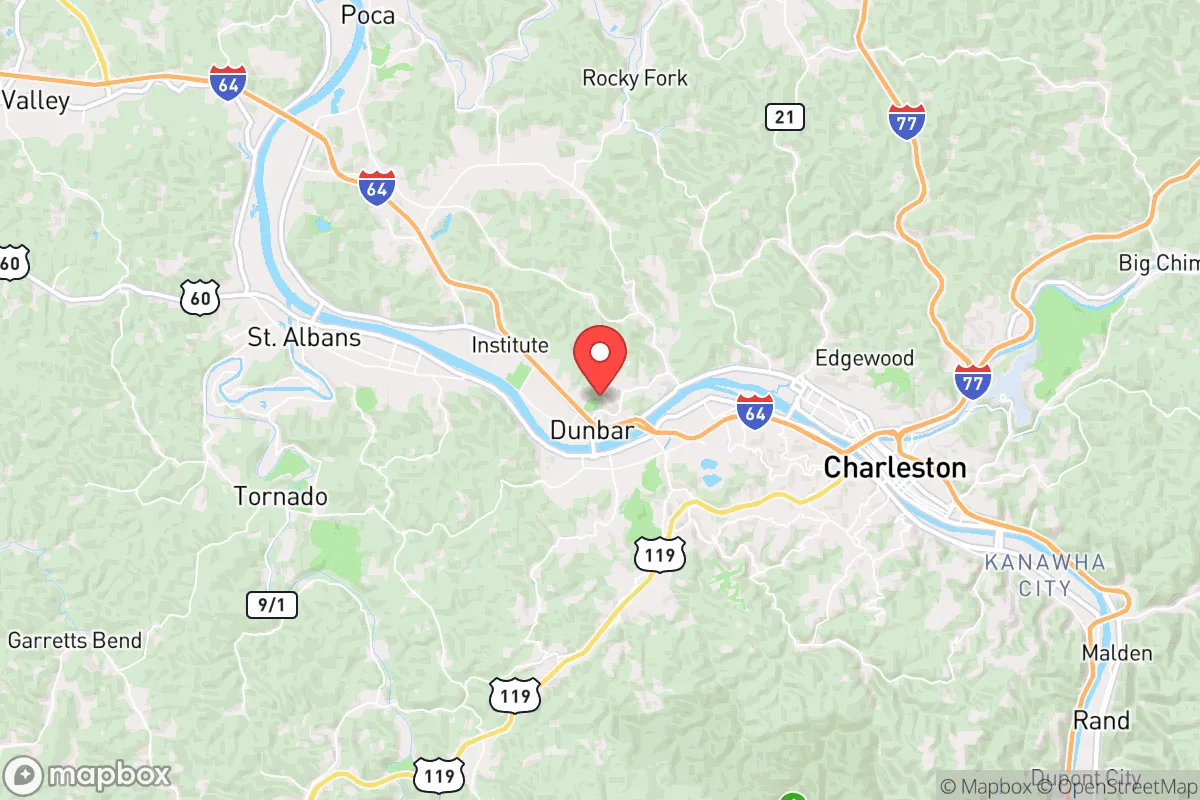
Dunbar, West Virginia, sits solidly in the red, with a Cook PVI of R+22 that reflects a deep-rooted conservative tradition. This isn't a recent shift; the town has long leaned Republican, and the surrounding Kanawha Valley has only hardened that stance over the past decade. If you look at the voting maps, Dunbar and its neighbors like St. Albans and South Charleston are a reliable block for conservative candidates, while Charleston itself, just a few miles up the Kanawha River, is a stark contrast—a blue island in a sea of red, where progressive policies have gained a foothold in city government. That split is something you feel when you cross the river; it's like two different worlds.
How it compares
Compared to the rest of West Virginia, Dunbar is right in the mainstream of the state's conservative lean, but it stands out against the more moderate or liberal pockets. Take Morgantown, home to West Virginia University, which has a younger, more transient population that votes more progressively. Or even nearby Huntington, which has seen some leftward drift on social issues. In Dunbar, you don't see that. The local elections here are still fought over property taxes, road maintenance, and keeping government out of your business—not identity politics or sweeping social reforms. The contrast with Charleston is the most telling: while Charleston's city council debates things like sanctuary city policies or public art funding, Dunbar's council is more focused on keeping the water bills low and the police force funded. It's a quieter, more predictable kind of politics, and most folks here like it that way.
What this means for residents
For the people who live here, the political climate means a lighter touch from government. You're not going to see the kind of overreach that pops up in more progressive areas—no mask mandates that drag on for years, no heavy-handed zoning rules that tell you what you can do with your own property, and no push to raise taxes for programs that don't benefit the community. The local schools, like Dunbar High School, still teach traditional values, and the police are seen as partners, not adversaries. That said, there's a growing concern among long-time residents about the direction of the state as a whole. With younger folks moving to cities like Charleston or leaving the state entirely, there's a fear that Dunbar could eventually be pulled into the orbit of more progressive policies from the county or state level. For now, though, the town remains a place where you can live your life without a lot of bureaucratic hassle, and that's a big reason why families have stayed here for generations.
One cultural distinction that sets Dunbar apart is its strong sense of local identity, tied to things like the annual Dunbar Heritage Festival and the town's history as a railroad hub. There's a wariness of outside influence, whether it's from Charleston or Washington, D.C., and that translates into a preference for local control over everything from school boards to zoning. You won't find a lot of support for statewide initiatives that centralize power, like the push for universal background checks on gun sales or statewide mask mandates. The attitude is simple: we know what's best for our own community, and we don't need someone in the capital telling us how to live. That independent streak is what keeps Dunbar conservative, and it's likely to hold for the foreseeable future, even as the rest of the country gets more polarized.

State Political ClimatePolitical Climate in West Virginia
State Political AnalysisPolitical Environment in the State
West Virginia has been a reliably red state for over two decades, but its conservatism is of a distinct, populist, and culturally rooted variety rather than the suburban, free-market strain seen in places like Texas or Florida. The state voted for Donald Trump by nearly 39 points in 2020 and by a similar margin in 2024, making it one of the most Republican-leaning states in the nation. However, this wasn't always the case—as recently as 2000, West Virginia was a swing state that went for George W. Bush by just 6 points, and before that, it was a Democratic stronghold for generations. The shift has been driven overwhelmingly by cultural realignment, with working-class voters abandoning the national Democratic Party over gun rights, coal and energy policy, and social issues. Today, the state is dominated by a conservative coalition that is pro-gun, pro-life, skeptical of federal authority, and deeply protective of its energy and natural resource industries.
Urban vs. rural divide
The political map of West Virginia is less about urban-rural tension and more about a few small cities versus vast, deeply red rural territory. The state's largest city, Charleston, and its surrounding Kanawha County are the most competitive ground, but even here, the city itself leans Democratic while the county as a whole votes Republican. Morgantown, home to West Virginia University, is the state's most liberal enclave, with Monongalia County often being the only county to vote Democratic in statewide races. Huntington and Cabell County are more purple but trending red, while Wheeling in the Northern Panhandle has become reliably Republican. The real story is the rural expanse: counties like Mingo, Logan, McDowell, and Wyoming in the southern coalfields routinely deliver 75-80% of their votes to Republicans, a dramatic flip from their union-Democrat past. The Eastern Panhandle, including Martinsburg and Berkeley County, is a rapidly growing area that is solidly red, driven by an influx of former Maryland and Virginia residents seeking lower taxes and more freedom. There is no major metro area that acts as a liberal counterweight; the state's political gravity is overwhelmingly rural and conservative.
Policy environment
West Virginia's policy environment is among the most conservative in the nation, particularly on fiscal and cultural issues. The state has no personal income tax on Social Security benefits and has been aggressively cutting its personal income tax rate, with a goal of full elimination. In 2023, the legislature passed a 21% across-the-board income tax cut, and further reductions are planned. Property taxes are among the lowest in the country, and there is no estate or inheritance tax. The regulatory posture is business-friendly, especially for energy, manufacturing, and timber, with a "one-stop shop" permitting process for industrial projects. On education, the state passed a robust school choice law in 2021, creating the Hope Scholarship program, which allows parents to use state education funding for private school tuition, homeschooling, or other educational expenses. This program has been expanded and is a major draw for conservative families. Healthcare policy is mixed—the state expanded Medicaid under the Affordable Care Act, a decision that remains controversial among conservatives, but it has also passed strong pro-life laws, including a near-total abortion ban with limited exceptions. Election laws are secure: voter ID is required, early voting is available but limited, and there is no widespread mail-in voting system. The state has also passed laws to restrict ballot harvesting and ensure election integrity.
Trajectory & freedom
West Virginia is moving decisively toward greater personal and economic freedom, particularly under the leadership of Governor Jim Justice and a supermajority Republican legislature. The most significant recent legislation expanding liberty is the Constitutional Carry law passed in 2024, which allows any law-abiding adult to carry a concealed firearm without a permit. This was a major priority for gun rights advocates and signals the state's commitment to the Second Amendment. On parental rights, the state passed the Parental Bill of Rights in 2023, which requires schools to notify parents of any changes in a child's health or well-being and prohibits instruction on gender identity and sexual orientation in elementary grades. This law has been a model for other red states. Medical freedom was bolstered by a 2022 law prohibiting employers and government entities from mandating COVID-19 vaccines, and the state has resisted federal vaccine mandates for healthcare workers. Property rights are strong, with no statewide zoning mandates and a robust right-to-farm law protecting agricultural operations from nuisance lawsuits. The trajectory is clearly toward less government interference in daily life, though the state's heavy reliance on federal funding (it receives more from Washington than it pays in taxes) creates a tension that fiscal conservatives are beginning to address.
Civil unrest & political movements
West Virginia has a history of labor activism, but in recent years, political movements have been dominated by conservative and libertarian energy. The 2018 teachers' strike was a notable flashpoint, but it was more about pay and benefits than progressive ideology, and the state has since moved to address those concerns. There is a strong Second Amendment sanctuary movement, with dozens of counties passing resolutions vowing not to enforce any future federal gun restrictions. Immigration politics are not a major daily issue—the state has a very small foreign-born population—but there is strong support for border security and opposition to sanctuary city policies. There have been no significant secession or nullification movements, though there is a persistent undercurrent of frustration with federal overreach, particularly from the EPA and the Department of Energy regarding coal mining regulations. Election integrity is a settled issue here; the state's 2020 election was widely viewed as secure, and there have been no major controversies or protests. A new resident would find a politically engaged but generally civil atmosphere, with most political activity centered around local Republican Party meetings, gun shows, and church events rather than street protests.
Projection
Over the next 5-10 years, West Virginia is likely to become even more conservative, driven by two key demographic trends. First, the state is losing population overall, but the people leaving tend to be younger and more moderate, while those staying are older, more rooted, and more conservative. Second, the Eastern Panhandle is experiencing steady in-migration from the D.C. and Baltimore suburbs, bringing people who are explicitly seeking lower taxes, less regulation, and a more traditional lifestyle. These newcomers are accelerating the state's rightward shift. The income tax is on a path to full elimination, which will make the state even more attractive to remote workers and retirees. The school choice program will continue to expand, drawing families who value educational freedom. The only potential counterweight is the state's aging population and its reliance on federal healthcare funding, which could create fiscal pressure if the national political winds shift. But for the foreseeable future, a conservative moving to West Virginia can expect to find a state that is doubling down on its values: low taxes, strong gun rights, parental control over education, and a government that is increasingly deferential to personal liberty. The state is not becoming more moderate; it is becoming more of what it already is.
For a conservative individual or family considering relocation, West Virginia offers a rare combination of low cost of living, genuine cultural alignment, and a government that is actively working to expand freedom. The trade-offs are real—limited job opportunities outside of energy, healthcare, and education, and a rural lifestyle that may not suit everyone—but the political climate is as welcoming as any in the country. If you value being left alone to live your life, raise your kids, and keep your money, West Virginia is one of the few places where the state government is genuinely on your side. Just know that you'll be living in a place that is deeply proud of its independence, and that independence is only growing stronger.
* Values derived from national, state, county, city and local statistics and may differ in a specific area. Last updated: 2026-05-01T17:05:52.000Z
Narrative content on this page is AI-generated and may contain mistakes. Verify any details that matter before acting on them.
ReloMaps may earn a commission from affiliate links at no extra cost to you.

