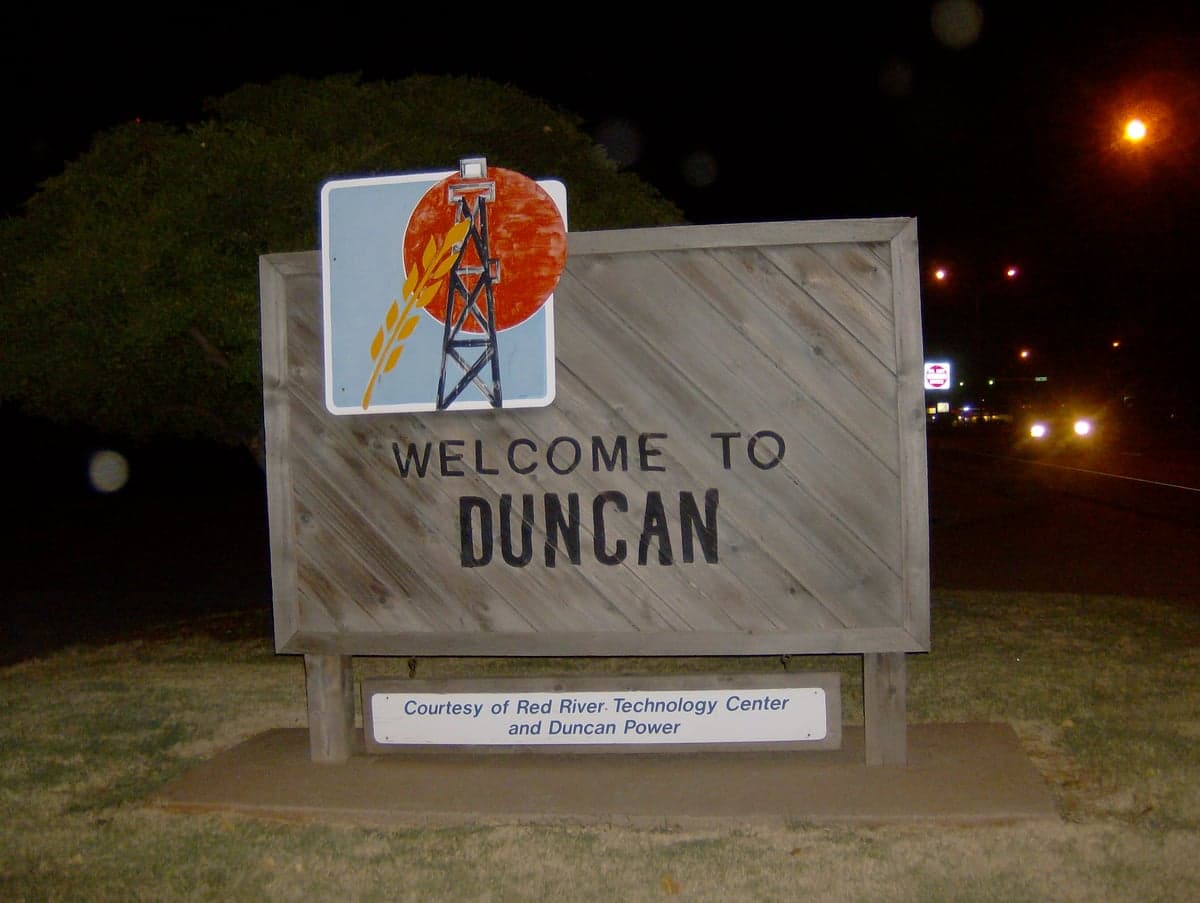
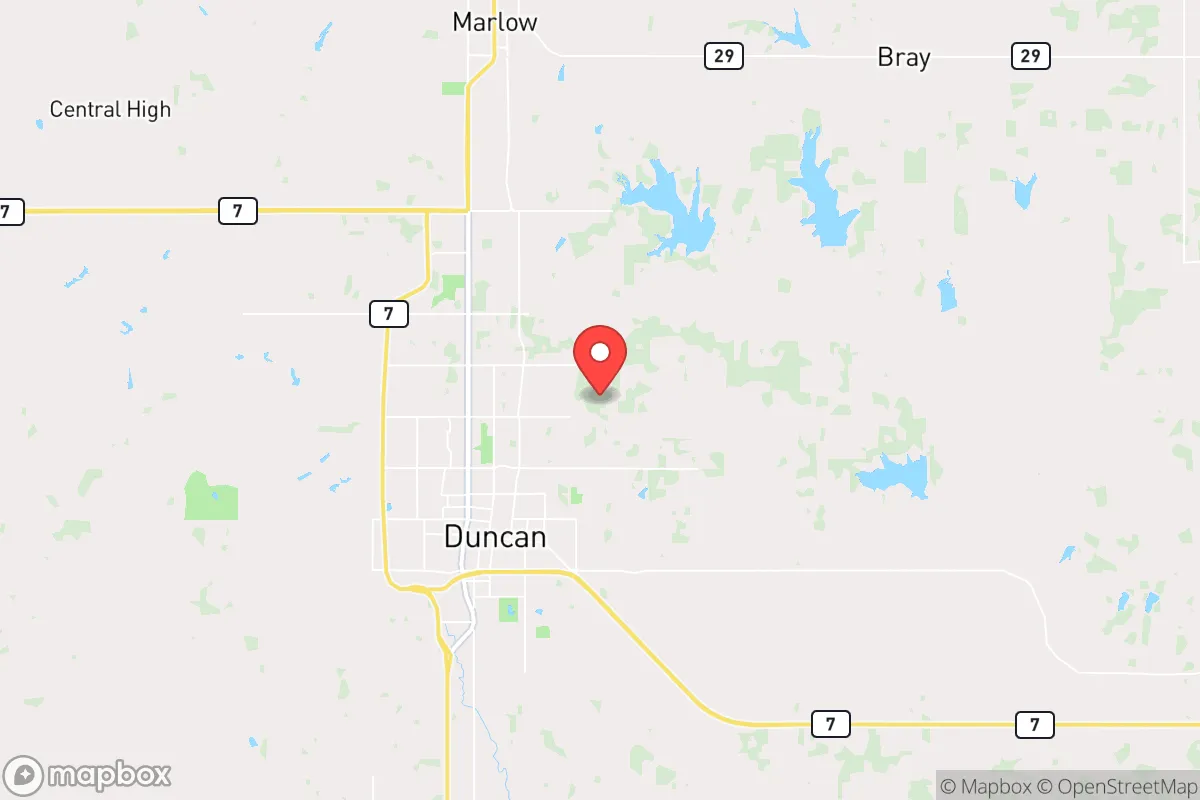
Photo: Wikipedia
Quality of Life in Duncan, OK
A high quality of life with strong walkability, manageable living costs, healthy neighborhood signals, and solid amenity access.
What does Quality of Life tell us?
Quality of Life blends cost of living, nearby amenities, socioeconomic signals, and neighborhood character. City-level scores represent the whole municipality; individual neighborhoods can differ.
What does this tell us?
Quality of Life blends cost of living, nearby amenities, socioeconomic signals, and neighborhood character. City-level scores represent the whole municipality; individual neighborhoods can differ.
Cost of Living
37% below national average
The Real Cost of Living in Duncan, OK for 2026
| Tier | Individual | Family (4) |
|---|---|---|
| Survival | $14k | $26k |
| Comfortable | $25k | $37k |
| Luxury | $103k+ | $160k+ |
| Elite (Top 5%) | $138k+ | $213k+ |
155%
The Area Signal
A metric tracking the socioeconomic signals of the area.
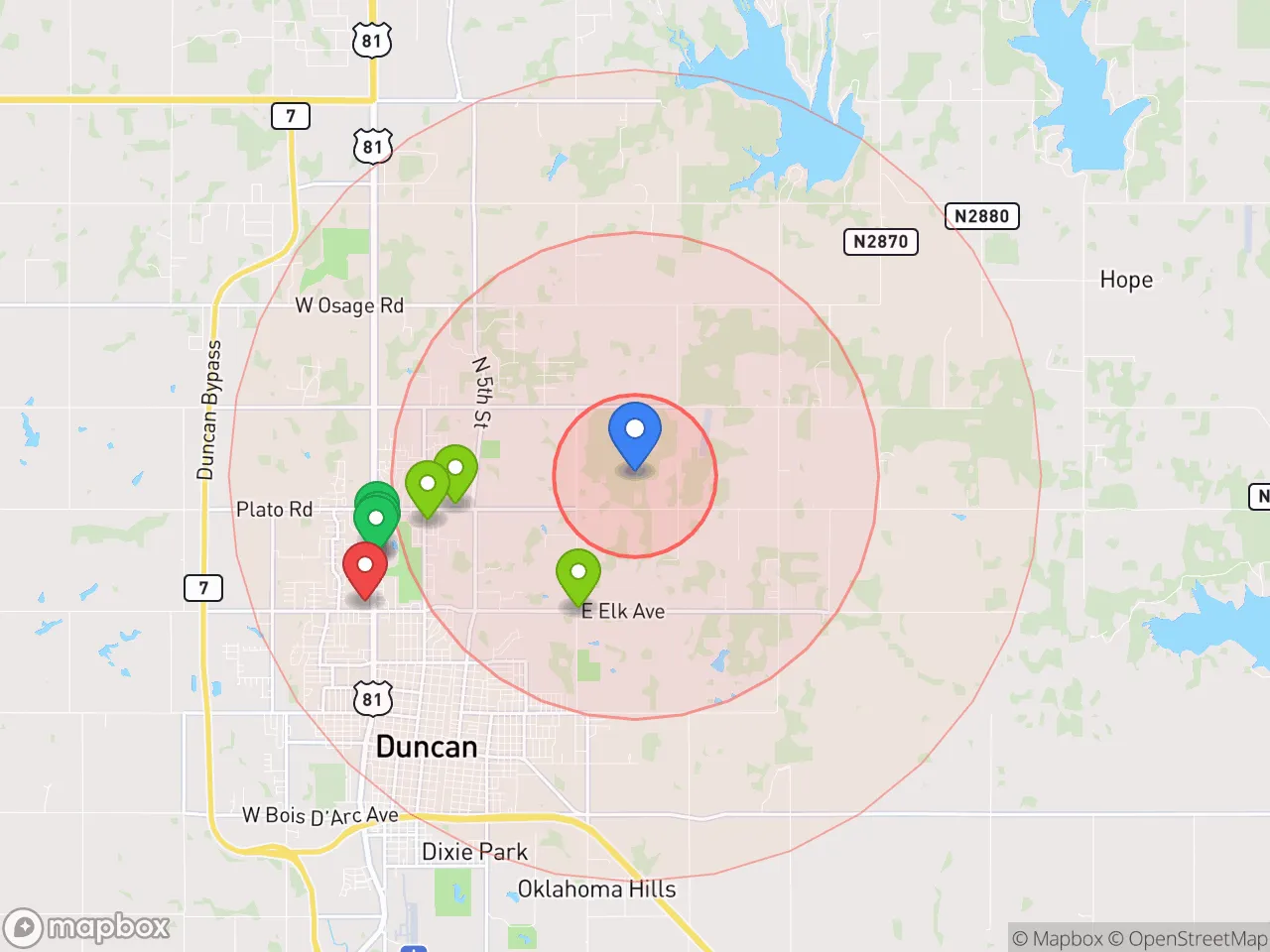
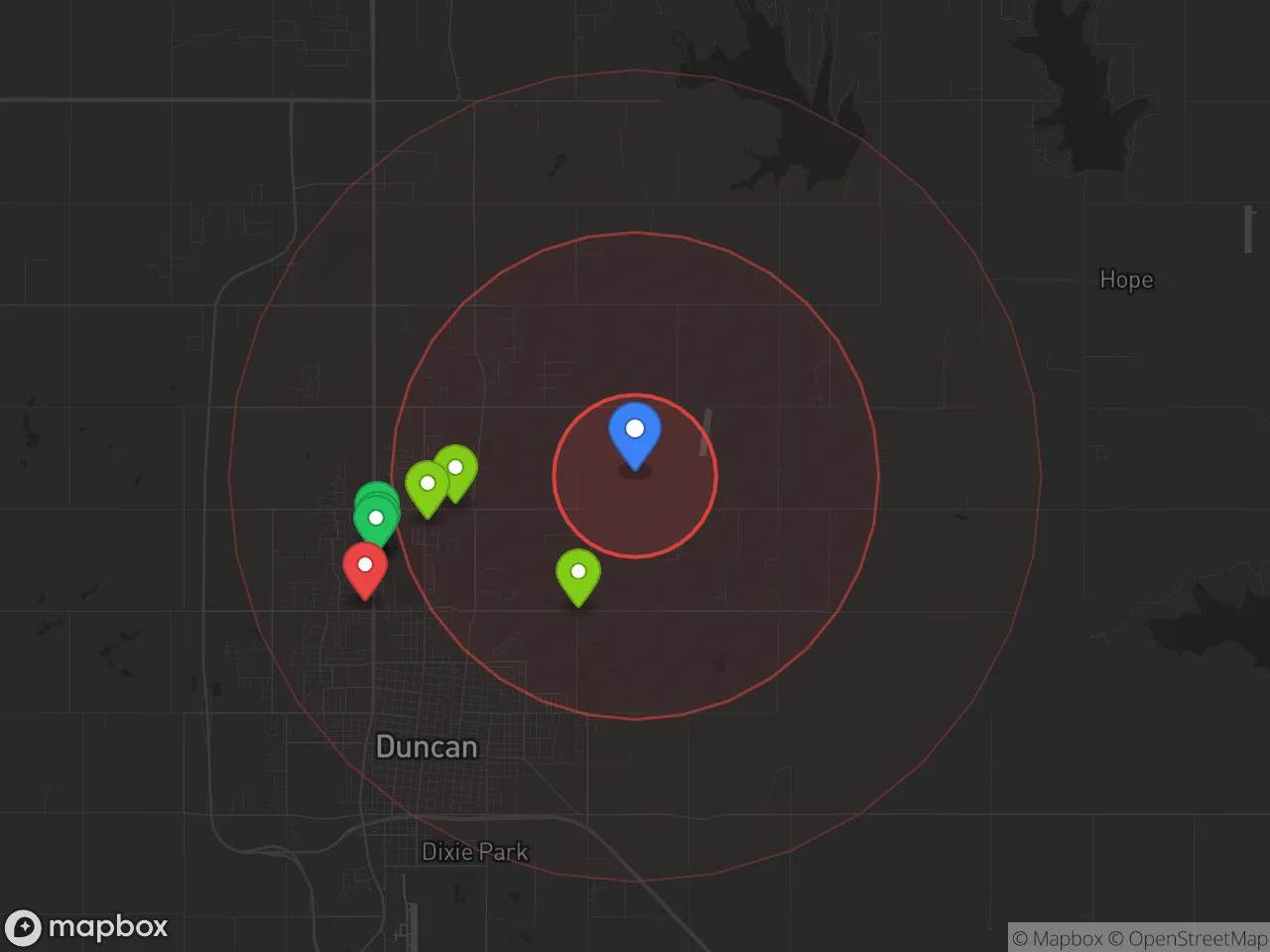
Hobbies
Explore the areaGroceries
1 within 10 miles
Gas
5 within 10 miles
Hospital
1 within 20 miles
Airport
DFW — Dallas/Fort Worth International
Post Office
USPS — Duncan, OK
Critical Amenities
Quality-of-Life Analysis
Duncan, Oklahoma, offers a notably affordable quality of life, with a cost of living index of 63—well below the national average of 100—making it an attractive option for budget-conscious families, retirees, and first-time homebuyers. The area’s population is predominantly middle-income and working-class, with a significant number of residents employed in manufacturing, healthcare, and the energy sector, reflecting the city’s historical ties to the oil and gas industry. Median household incomes hover around the state average, but the low cost of housing and utilities allows many residents to achieve a comfortable standard of living that would be difficult to replicate in pricier metros like Oklahoma City or Dallas.
Cost of living and housing affordability compared to nearby cities
Housing in Duncan is exceptionally affordable, with a median home value of $125,800 and a median rent of $872 per month. This places homeownership within reach for many, as the typical mortgage payment is significantly lower than the national average. Compared to Lawton (median home value ~$140,000) or Ardmore (~$155,000), Duncan offers a clear price advantage, and it is dramatically cheaper than Oklahoma City, where median values exceed $220,000. The average commute time of 22.4 minutes is shorter than the national average of 26 minutes, reducing transportation costs and freeing up time for daily life. Utility costs are also below the U.S. average, further stretching household budgets. For renters, the median rent of $872 is roughly 30% lower than the national median, making it feasible for single-income households and young professionals to live comfortably without being rent-burdened.
Local amenities, schools, and daily life for families and professionals
Daily life in Duncan centers around a compact, walkable downtown area with local restaurants, a historic movie theater, and community events like the annual Simmons Center Festival. The Duncan Public Schools system serves the majority of families, with Duncan High School offering career-tech programs through partnerships with Red River Technology Center. For healthcare, residents rely on Duncan Regional Hospital, a full-service facility that reduces the need to travel to larger cities for routine care. Outdoor recreation is accessible at Fuqua Park and the Chisholm Trail Heritage Center, which provides cultural programming and a museum. The city’s small size—roughly 22,000 residents—means most errands and social activities are within a 10-minute drive, and traffic congestion is virtually nonexistent. However, those seeking high-end retail, fine dining, or major entertainment venues will need to drive about 80 miles north to Oklahoma City or 90 miles south to the Dallas-Fort Worth metroplex.
Duncan is best suited for individuals and families who prioritize financial stability and a slower pace of life over urban amenities. Retirees on fixed incomes will find the low housing costs and short commutes particularly appealing, while young families can benefit from the affordable homeownership opportunities and safe, tight-knit community atmosphere. Professionals in manufacturing, healthcare, or energy will find a steady job market without the high cost of living typical of oil-and-gas hubs. Those who crave cultural diversity, nightlife, or extensive public transit options may find Duncan too quiet, but for anyone seeking a low-stress, budget-friendly environment with solid schools and a strong sense of community, it is a compelling choice.

Crime in Duncan, OK
Generally safer than 65% of comparable U.S. locations.
Violent CrimeViolent Crime Analysis
Property CrimeProperty Crime Analysis
Crime Analysis
Duncan, Oklahoma, presents a mixed safety profile that demands careful consideration from potential residents. The city's violent crime rate stands at 351.8 incidents per 100,000 residents, while property crime occurs at a rate of 1,767.8 per 100,000. These figures place Duncan in a middle ground—safer than many larger metropolitan areas but above the safest rural communities in Stephens County.
Crime in context
Duncan's violent crime rate is notably lower than the national average of roughly 380 per 100,000, but it exceeds the Oklahoma state average of approximately 310 per 100,000. Property crime in Duncan runs significantly higher than both state and national benchmarks, with the national average hovering around 1,950 per 100,000 and Oklahoma's average near 2,100. This means residents face a 1 in 284 chance of experiencing violent crime and a 1 in 57 chance of property crime annually. For comparison, nearby Lawton reports violent crime rates above 500 per 100,000, while smaller communities like Marlow see rates below 200 per 100,000. Duncan's position as a regional economic hub for oil and gas industries likely contributes to its elevated property crime, as transient worker populations and commercial activity can increase opportunities for theft and burglary.
What residents experience
Day-to-day safety in Duncan varies significantly by neighborhood and time of day. The downtown commercial corridor and areas near Highway 81 see higher concentrations of property crime, including vehicle break-ins and shoplifting. Violent crime, while less frequent, tends to cluster in specific blocks rather than spreading uniformly across the city. Residents report that most violent incidents involve individuals who know each other, meaning random attacks on strangers are uncommon. The Duncan Police Department maintains a visible presence, with response times averaging under 10 minutes for priority calls. However, the city's justice system operates under Oklahoma state law, which has seen a shift toward more conservative sentencing in recent years—a factor that can influence recidivism rates and overall community safety.
Neighborhood-level data shows that areas east of U.S. Route 81 and south of Main Street generally report lower crime rates, while the northwest quadrant near the industrial parks sees more property crime. The Chisholm Trail addition and older neighborhoods near the country club tend to be safest, with violent crime rates below 200 per 100,000. Prospective residents should examine block-level crime maps and consider visiting at different times of day to assess comfort levels. While Duncan is not a high-crime city by national standards, its property crime rate warrants standard precautions like securing vehicles, using outdoor lighting, and participating in neighborhood watch programs.
* Values derived from national, state, county, city and local statistics and may differ in a specific area. Last updated: 2026-04-25T13:51:25.000Z
Narrative content on this page is AI-generated and may contain mistakes. Verify any details that matter before acting on them.
ReloMaps may earn a commission from affiliate links at no extra cost to you.

