 Popular
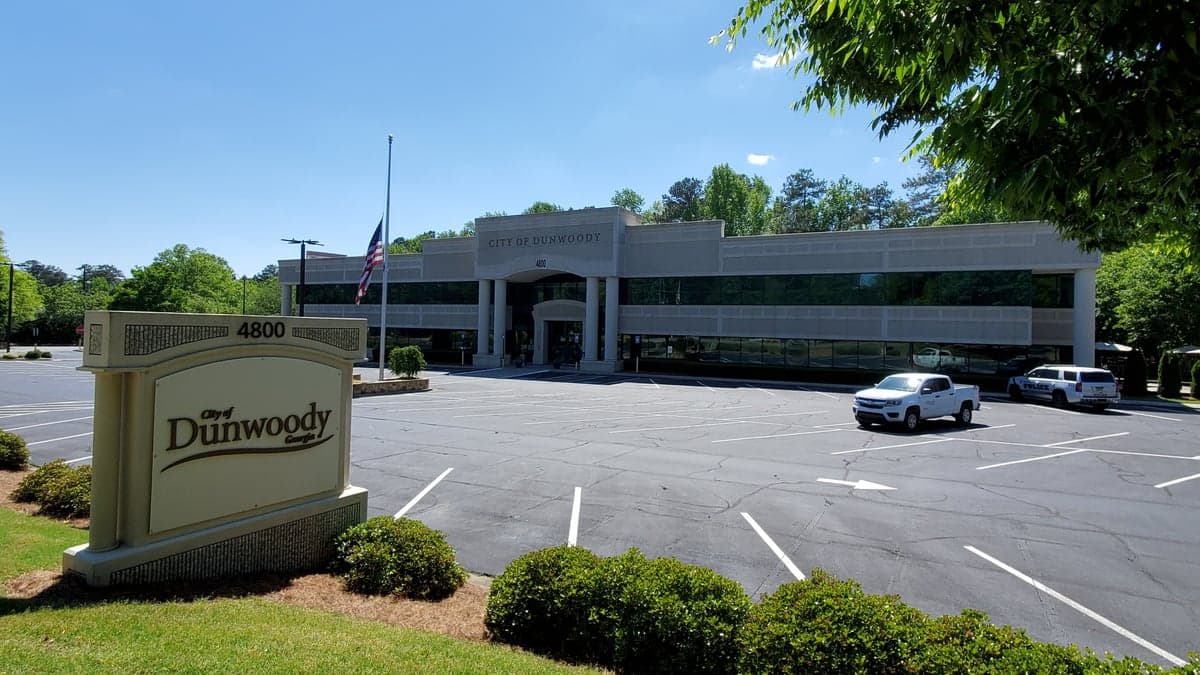
Photo: Wikipedia
Demographics of Dunwoody, GA
Affluence Level in Dunwoody, GA
An upper-middle-class area. Household wealth, education levels, and homeownership run ahead of national benchmarks.
People of Dunwoody, GA
The people of Dunwoody, Georgia today form a dense, highly educated, and ethnically diverse suburban population of 51,563, with a distinctive identity shaped by rapid late-20th-century growth and sustained professional-class immigration. The city is characterized by a 71.7% college-educated adult population, a significant Indian-subcontinent community at 10.2%, and a notable East/Southeast Asian presence at 5.3%, all layered atop a white non-Hispanic majority of 55.1%. This is not a historic Southern town but a planned-edge city that emerged from farmland and forest, its human fabric woven by corporate relocations, school rankings, and the draw of Perimeter Center employment.
How the city was settled and grew
Dunwoody’s human history is almost entirely a 20th-century story. The area was sparsely settled farmland through the 1800s, with a few crossroads communities like Dunwoody Village serving as a trading post for cotton and timber. The first meaningful population wave came after World War II, when returning veterans and Atlanta workers sought affordable land north of the city. The construction of Interstate 285 in the 1960s and the subsequent development of the Perimeter Center business district transformed Dunwoody from rural DeKalb County into a commuter suburb. Early subdivisions like Georgetown and Vanderlyn were built in the 1960s and 1970s, attracting white middle-class families drawn to new schools and easy highway access. By 1980, Dunwoody was a predominantly white, upper-middle-class bedroom community of roughly 18,000 residents, with little ethnic or racial diversity.
Modern era (post-1965)
The 1965 Hart-Cellar Act and subsequent immigration reforms began reshaping Dunwoody’s population, but the real demographic shift accelerated after 1990. The expansion of Perimeter Center into a major employment hub—home to companies like UPS, AT&T, and State Farm—drew skilled professionals from across the United States and abroad. Indian-subcontinent immigrants, particularly from India and Pakistan, began settling in neighborhoods like Spalding Lake and Dunwoody North in the 1990s and 2000s, attracted by top-rated DeKalb County schools and proximity to tech and finance jobs. Today, Indian-origin residents make up 10.2% of the population, a share that has grown steadily through chain migration and professional recruitment. East/Southeast Asian communities—Chinese, Korean, Vietnamese, and Filipino—account for another 5.3%, with clusters in Huntley Hills and the Dunwoody Club Estates area. The Hispanic population, at 10.8%, is more dispersed but has grown through service-sector employment tied to Perimeter Center retail and hospitality. The Black population, 14.1%, includes both long-standing African American families and newer arrivals from other U.S. regions. Domestic in-migration from the Northeast and Midwest has also been a steady contributor, with many newcomers citing the same school-and-commute calculus that drew earlier waves.
The future
Dunwoody’s population is heading toward greater ethnic diversity and continued professional-class concentration, but not toward homogenization. The Indian-subcontinent community is the fastest-growing major group, driven by both H-1B visa holders and second-generation families who choose to remain in the area. This group is increasingly visible in local civic life and real estate, with Dunwoody Village and Perimeter Center seeing Indian-owned businesses and cultural institutions. The East/Southeast Asian population is plateauing, with many second-generation adults moving to newer suburbs in Gwinnett and Forsyth counties. The white non-Hispanic share, while still a majority at 55.1%, is slowly declining as older residents age in place and younger families of all backgrounds move in. The city is not tribalizing into distinct ethnic enclaves—most neighborhoods remain mixed—but subtle concentrations persist: Indian families favor the newer stock in Spalding Lake, while older subdivisions like Georgetown retain a predominantly white, long-term resident base. Over the next 10-20 years, Dunwoody will likely become a majority-minority suburb, with the Indian-subcontinent community approaching 15-18% of the population, while the overall foreign-born share (currently 13.4%) rises modestly as second-generation adults remain in place.
For someone moving in now, Dunwoody is becoming a denser, more globally connected suburb where educational attainment and professional ambition are the dominant cultural forces. The city’s identity is less about Southern heritage and more about the practical calculus of good schools, short commutes, and diverse neighbors. It is a place where a newcomer is likely to find a community of fellow professionals—whether from Mumbai, Seoul, or Michigan—rather than a single dominant ethnic or cultural group.

* Values derived from national, state, county, city and local statistics and may differ in a specific area. Last updated: 2026-04-23T05:29:43.000Z
Narrative content on this page is AI-generated and may contain mistakes. Verify any details that matter before acting on them.
ReloMaps may earn a commission from affiliate links at no extra cost to you.

