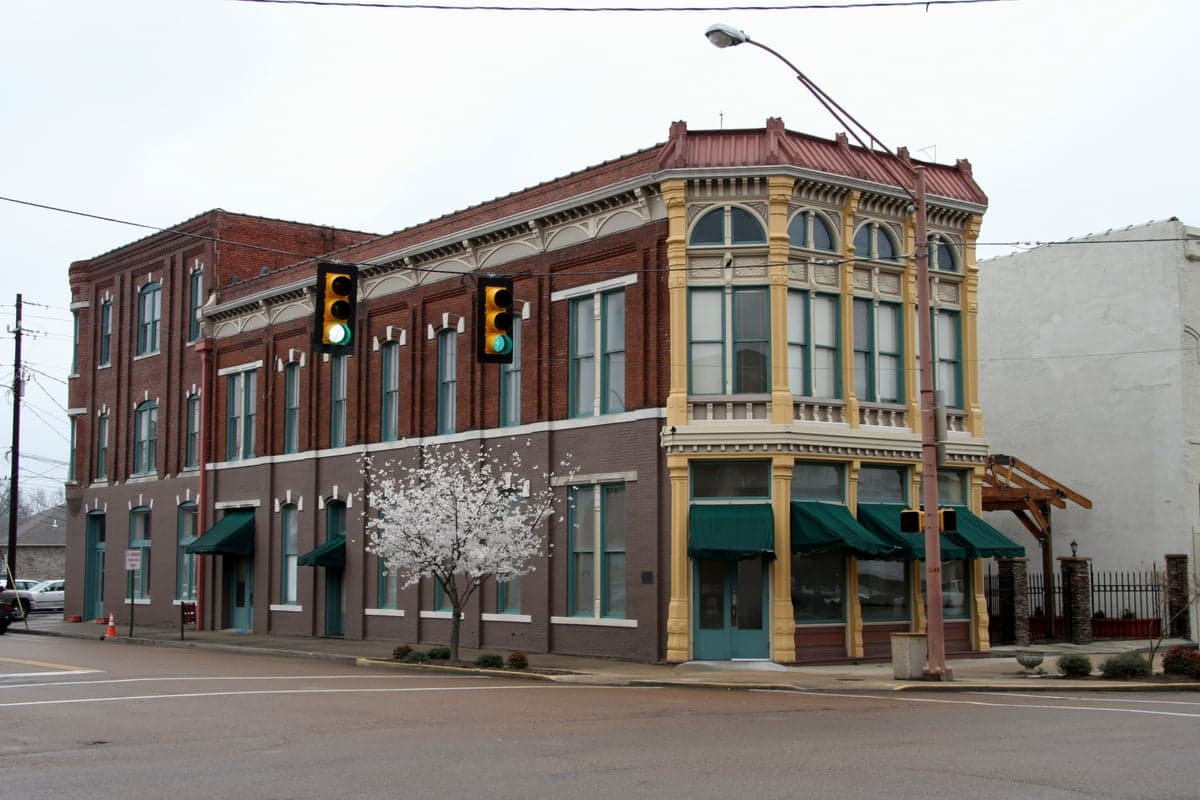
Photo: Wikipedia
Strategic Assessment of Dyersburg, TN
Workable tactical position. Some exposure to population density or targets, but generally defensible in a crisis.
What does the Strategic Assessment tell us?
Our Strategic Assessment grades tactical survivability of an area. Major population centers, military targets, fallout zones, natural disasters, and border exposure all drive risk — lower exposure means a more defensible position in a crisis.
This is heavily inspired by Joel Skousen's Strategic Relocation book. Highly recommended you checkout the book ($)What does this tell us?
Our Strategic Assessment grades tactical survivability of an area. Major population centers, military targets, fallout zones, natural disasters, and border exposure all drive risk — lower exposure means a more defensible position in a crisis.
This is heavily inspired by Joel Skousen's Strategic Relocation book. Highly recommended you checkout the book ($)Strategic Pillars

Key Distances
Regional Safe Places
Below is our recommended "safe zones" in Tennessee and the surrounding area based on our strategic heuristics. For most people, it's unrealistic to live in a “safe zone” full-time due to work, family or other personal reasons. They tend to be more rural. However, many of these areas are perfect for second homes and retreat properties that double as a vacation home or even a short-term rental.
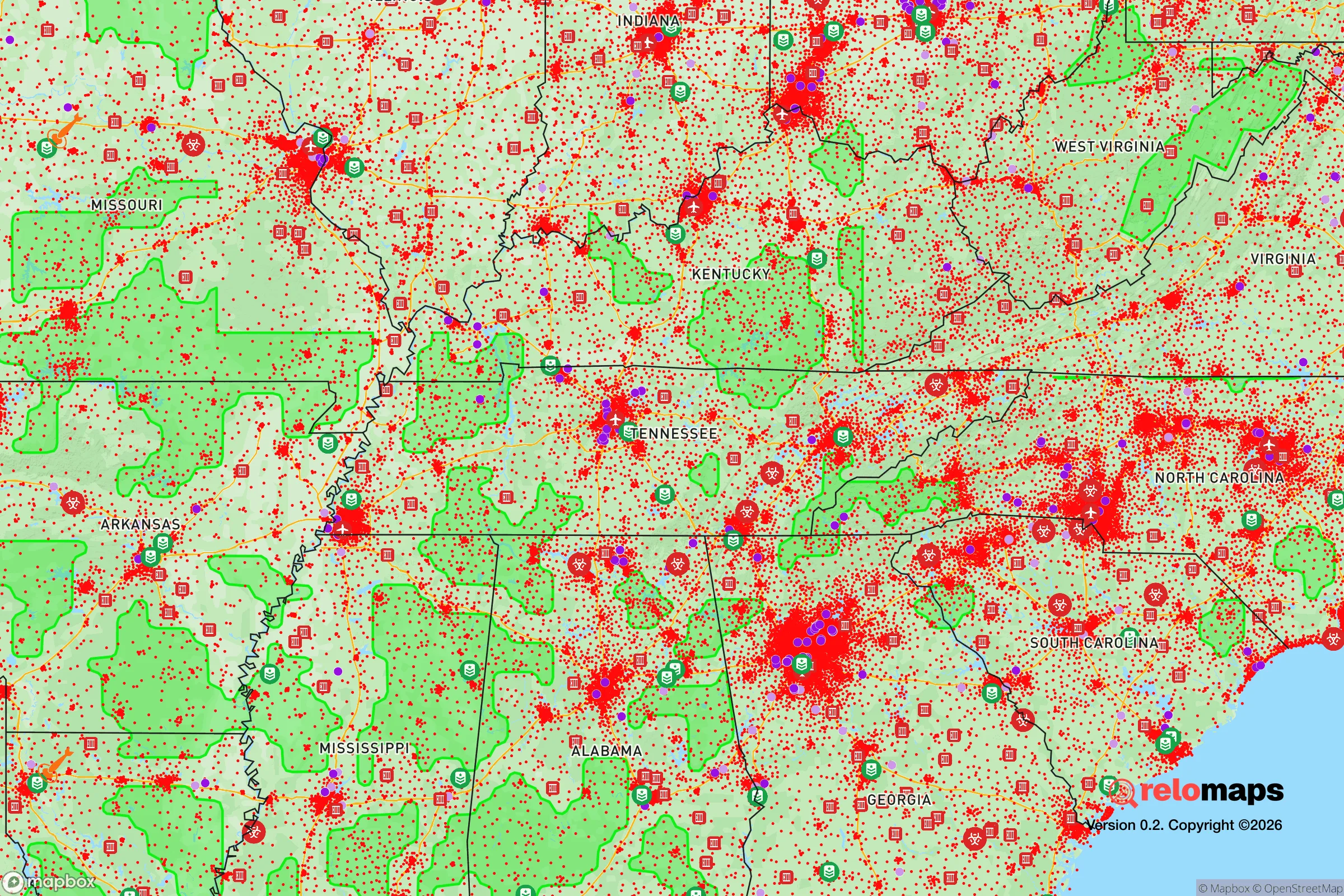
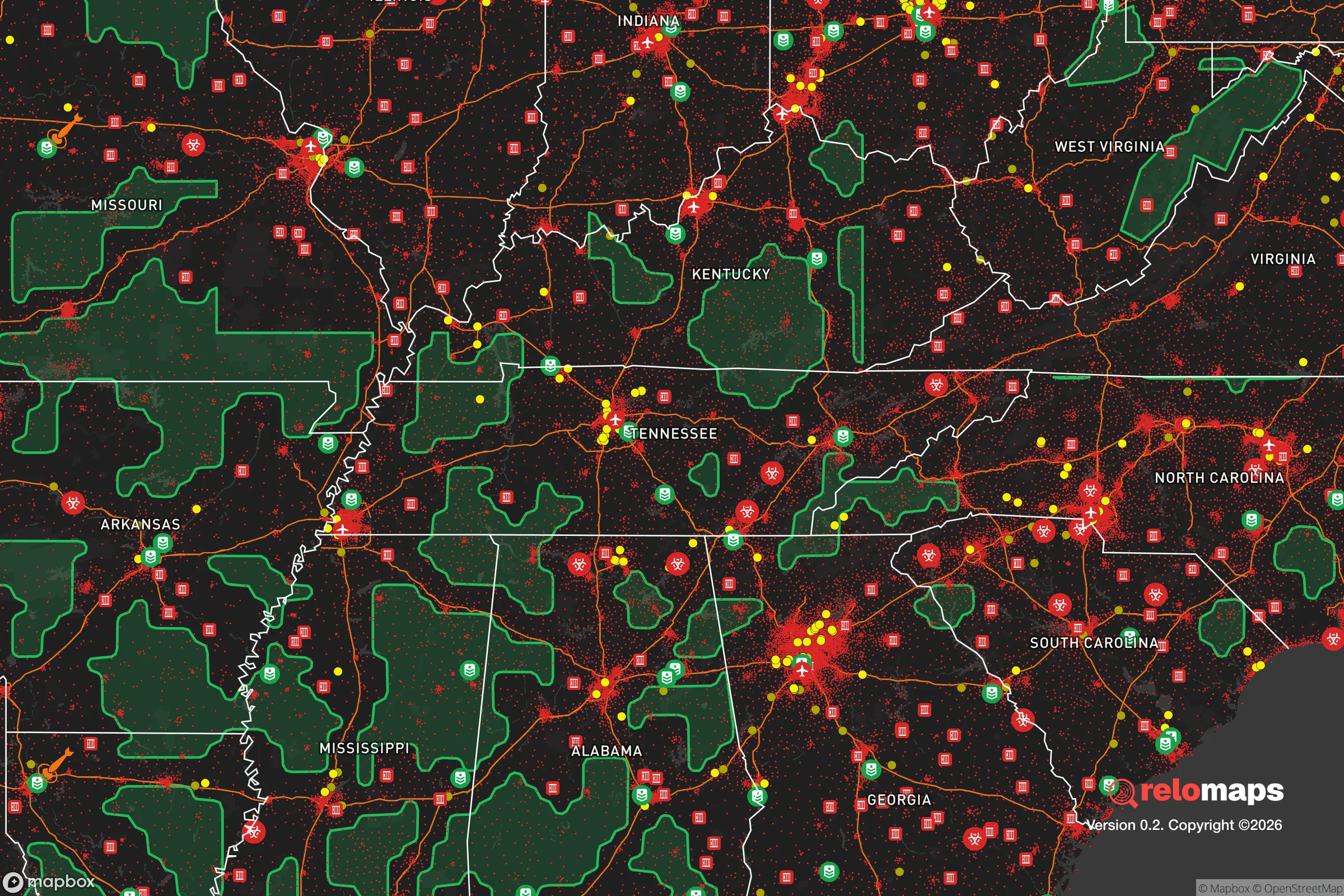


Important Note: For informational purposes only. This does not mean nothing bad ever happens in the green zones. Please use common sense. This is based on public data and modeled with AI. We tried to take a conservative approach but mistakes happen. We update this regularly as new information becomes available.
Solar Generator Recommendations
Backup power matters more here than in safer locations. We've picked three solar generators across budgets and capacity tiers — start with the budget unit if you only need a few essentials, or step up if you want to run a fridge and HVAC for days at a time.

Jackery Portable Power Station Explorer 300
Budget OptionPower on the Go: Weighing only 11 lbs, it's convenient to set up and store with book-sized foldable solar panels

BLUETTI Portable Power Station AC180
Designed for both indoor and outdoor scenarios, AC180 is highly capable as it has a robost capacity and continuous output power.

EF ECOFLOW DELTA Pro Ultra Power Station
Upgraded PickEcoFlow DELTA Pro Ultra is a whole-home energy system designed to grow with your family. Integrated with the Smart Home Panel 2, it scales to meet your evolving energy needs — keeping your home powered, intelligent, and secure through every stage of life.
We earn a commission, at no additional cost to you.
Strategic Assessment Analysis
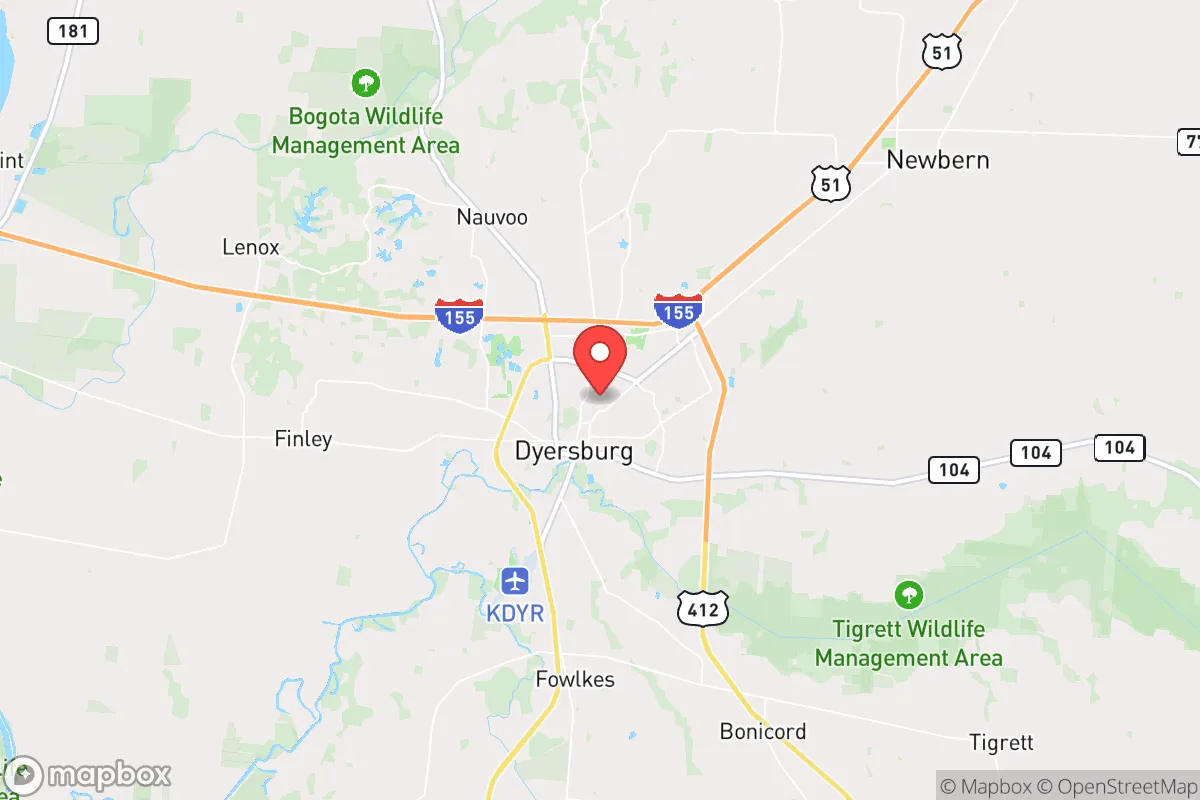
Dyersburg, Tennessee, sits in a strategic pocket of the Mid-South that offers a rare combination: proximity to critical infrastructure and supply lines, yet enough distance from major population centers to avoid the worst of any cascading collapse. Located in Dyer County, roughly 70 miles north of Memphis and 80 miles south of Paducah, Kentucky, this town of about 16,000 people occupies a position that balances access with isolation. For someone thinking about long-term resilience—whether from economic disruption, civil unrest, or a major disaster—Dyersburg’s location along the Interstate 155 corridor and the Forked Deer River gives it a logistical edge that many small towns lack, while its low population density and agricultural base provide a buffer against the chaos that tends to hit bigger cities first.
Geographic position and natural advantages for long-term stability
Dyersburg’s geography is its strongest card. It sits at the junction of two major highways—I-155, which connects to I-55 and I-40, and US-51, a north-south artery that runs parallel to the Mississippi River. This means that in a crisis, you have multiple routes for resupply or evacuation, not just one chokepoint. The town is also within 30 miles of the Mississippi River itself, which provides a massive water source and a potential transportation corridor if roads become compromised. The surrounding terrain is flat, fertile floodplain—the Mississippi Alluvial Plain—which is excellent for agriculture but does require awareness of flood risks. The Obion River and the Forked Deer River both run through the area, offering additional water sources and drainage. The climate is humid subtropical, with hot summers and mild winters, which means year-round growing seasons for food production, though you’ll need to manage for humidity and pests. The natural advantages here are real: abundant water, fertile soil, and a location that’s far enough from major targets like Memphis (a major logistics hub and potential civil unrest hotspot) to avoid the initial shockwave of any event, but close enough to tap into regional supply chains if they hold.
Risks, exposures, and proximity to fallout-relevant landmarks
No location is without vulnerabilities, and Dyersburg has a few that a serious prepper needs to account for. The most obvious is flood risk. The town sits in the Mississippi River floodplain, and while Dyersburg itself is on slightly higher ground than some surrounding areas, the 2011 Mississippi River floods and the 2019 flooding of the Obion River both caused significant damage in Dyer County. FEMA flood maps show substantial portions of the county in the 100-year flood zone, so any property you buy needs to be carefully vetted for elevation. The second risk is proximity to the New Madrid Seismic Zone. The last major earthquake there was in 1811-1812, but seismologists consider it overdue for a significant event. A major quake could liquefy the alluvial soil, damage infrastructure, and potentially disrupt the Mississippi River itself, causing secondary flooding. Dyersburg is about 60 miles from the zone’s epicenter near New Madrid, Missouri—close enough to feel severe shaking but far enough that the worst damage would likely be to bridges and roads rather than buildings. The third risk is the town’s location relative to potential fallout targets. Memphis is a major transportation and industrial hub with a FedEx SuperHub, a large port, and a population of over 600,000—a prime target for any adversary. Dyersburg is 70 miles away, which puts it outside the immediate blast zone but within a potential fallout plume depending on wind direction. The same applies to the Paducah Gaseous Diffusion Plant (now decommissioned but still a hazardous waste site) about 80 miles north. For a conservative-minded relocator, the calculus is this: Dyersburg is far enough from high-value targets to avoid the initial strike, but you need a plan for fallout shelter and a bug-out route that doesn’t rely on I-155 or US-51 if those become clogged or damaged.
Practical resilience for a relocator: food, water, energy, and defensibility
For someone serious about self-sufficiency, Dyersburg offers a solid foundation but requires work. The agricultural base is strong—Dyer County is a major producer of soybeans, corn, cotton, and wheat. That means local access to bulk grains and feed for livestock, and a network of farmers who know how to grow food. The town has a farmers’ market and several local grocery stores, but in a prolonged disruption, you’d want to establish relationships with local producers directly. Water is abundant from the Mississippi River and the Forked Deer River, but both require treatment for human consumption. The groundwater in the area is generally good, with the Memphis Sand aquifer providing clean water at moderate depths—many rural properties have wells. For energy, the grid is served by the Tennessee Valley Authority (TVA), which is relatively reliable but vulnerable to ice storms and flooding. Solar is viable here—the area gets about 210 sunny days per year, slightly below the national average but enough for a well-sized off-grid system. Natural gas is available in town, but rural properties may rely on propane. Defensibility is a mixed bag. Dyersburg is a small town with a low crime rate, but it’s not a fortress. The terrain is flat, with few natural chokepoints. The best approach is to choose a property on the outskirts—preferably with a creek or river on one side and open fields on the others—to create a natural buffer. The local law enforcement presence is adequate for day-to-day issues, but in a widespread collapse, you’d be relying on your own resources and neighbors. The community itself is predominantly conservative, with a strong church presence and a culture of mutual aid among rural families. That’s a significant asset—in a crisis, social cohesion matters more than any piece of gear.
The overall strategic picture for Dyersburg is one of cautious optimism for a relocator with a prepper mindset. It’s not a hardened bunker location like the remote Rockies, nor is it a self-sufficient homestead in the Ozarks. What it offers is a middle ground: a place where you can live affordably, grow food, access water, and stay connected to regional supply lines while being far enough from the major flashpoints to survive the first wave of any national crisis. The risks—flooding, earthquake potential, and proximity to Memphis—are real but manageable with proper planning. For a conservative individual or family looking to relocate to a community that shares their values and has the practical resources to weather a storm, Dyersburg deserves a serious look. Just don’t buy in the floodplain, dig a root cellar, and make friends with a farmer before you need to.

* Values derived from national, state, county, city and local statistics and may differ in a specific area. Last updated: 2026-05-07T00:12:21.000Z
Narrative content on this page is AI-generated and may contain mistakes. Verify any details that matter before acting on them.
ReloMaps may earn a commission from affiliate links at no extra cost to you.

