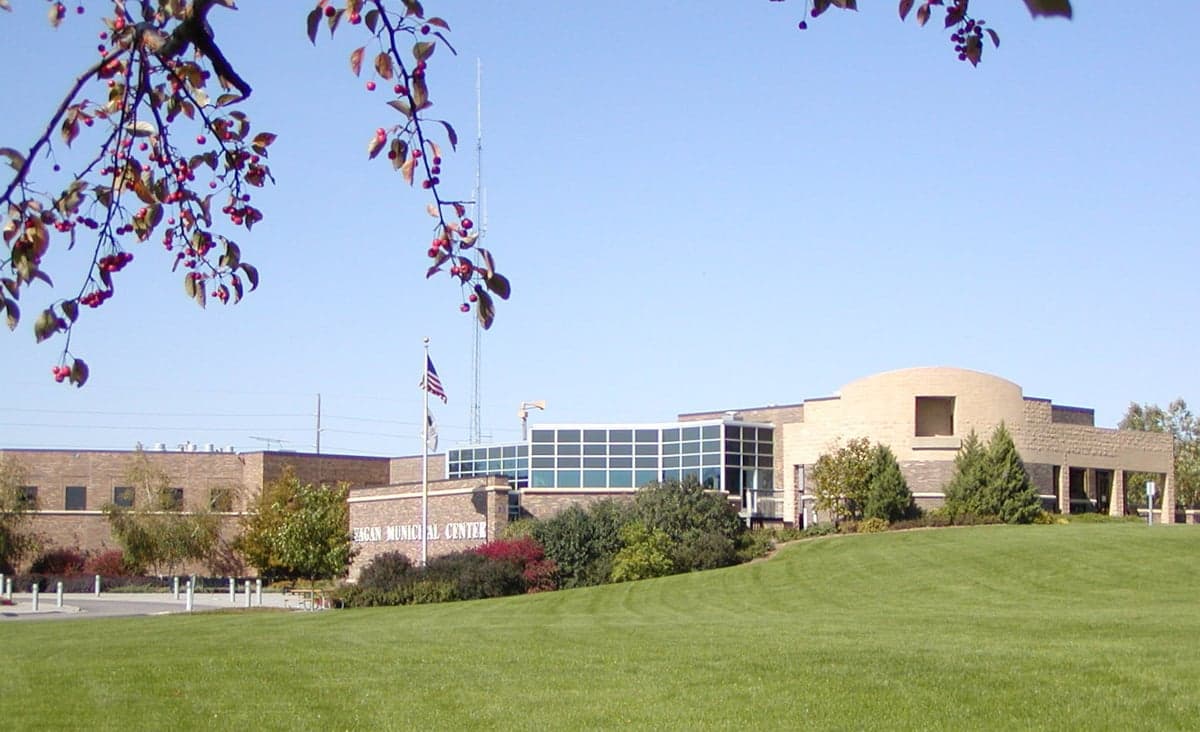
Photo: Wikipedia
Personal Sovereignty in Eagan, MN
Viable for self-reliance. Generally workable, though some barriers may limit total independence.
What does Personal Sovereignty tell us?
Personal Sovereignty measures your capacity for self-reliance and independence with minimal government friction. Higher scores mean fewer barriers between you and the way you want to live... but it assumes you have the space you need and good neighbors.
What does this tell us?
Personal Sovereignty measures your capacity for self-reliance and independence with minimal government friction. Higher scores mean fewer barriers between you and the way you want to live... but it assumes you have the space you need and good neighbors.
State Policy
Energy independence: Importer (20% of energy produced in-state)
Personal Liberty
Homesteading

Personal Liberty Analysis
Eagan, Minnesota, presents a complex picture for those prioritizing personal sovereignty. While the city itself offers a stable, well-managed suburban environment, it operates under the full weight of Minnesota state law, which has increasingly trended toward centralized control and limitations on individual autonomy. For the survivalist or prepper mindset, Eagan is a location where you can build a comfortable life, but only if you are prepared to navigate a regulatory landscape that is skeptical of self-reliance and deeply embedded in a progressive state apparatus. The core tension here is between the city's high quality of life and the state's aggressive encroachment on personal freedoms, making it a location that requires constant vigilance, not passive acceptance.
Tax burden and regulatory posture in a blue state
Minnesota's tax burden is among the highest in the nation, and Eagan residents feel this acutely. The state has a progressive income tax with a top marginal rate of 9.85%, which kicks in at a relatively modest income level, punishing high earners and small business owners who are the backbone of a self-reliant community. Property taxes in Dakota County are also significant, funding a school system and local services that, while excellent, come at a steep price. The regulatory posture is equally burdensome. Minnesota has a robust state environmental review process that can delay or kill development projects, and the Minnesota Department of Labor and Industry enforces strict building codes and licensing requirements that make DIY construction or off-grid modifications a legal minefield. For the prepper, this means that any attempt to build a root cellar, install a backup generator, or modify your home for resilience will likely require permits, inspections, and adherence to state codes that are designed for conventional suburban living, not independent survival. The state's regulatory appetite is a constant drag on personal initiative.
Self-defense realities and Minnesota gun law specifics
For those concerned with self-defense, Eagan sits in a state that has moved decisively against the Second Amendment. Minnesota is a "shall-issue" state for permits to carry, but the process requires a training course, a background check, and a fee. More critically, the state has enacted a "red flag" law (Extreme Risk Protection Order) that allows for the temporary seizure of firearms based on a complaint, without a criminal conviction or a full hearing. This is a direct threat to due process and a tool that can be abused by vindictive neighbors or family members. Furthermore, in 2023, Minnesota passed a universal background check law for all firearm transfers, including private sales between individuals. This effectively criminalizes the private transfer of a firearm to a neighbor or family member without going through a licensed dealer. There is no state preemption for firearm regulation, meaning cities like Eagan could theoretically pass their own restrictions, though they have not yet done so aggressively. For the survivalist, the legal environment is hostile to the idea of an armed citizenry as a check on government power. You can own firearms, but the state has created multiple points of friction and potential confiscation.
Self-reliance and homesteading viability in a suburban grid
Eagan is a fully developed suburb with standard residential lot sizes typically ranging from one-quarter to one-third of an acre. This makes traditional homesteading—raising livestock, maintaining a large garden, or storing significant quantities of fuel—nearly impossible. Zoning ordinances are strict, and the city code prohibits chickens, bees, and any form of livestock on standard residential lots. The city's water and sewer are municipally provided, meaning you are tied to the grid for basic necessities. Off-grid feasibility is essentially zero within city limits; solar panels are allowed but must be permitted and tied to the grid, and any attempt to disconnect from municipal water or sewer would be a code violation. For the prepper, this means Eagan is a location for "gray man" survival—blending in and relying on stored supplies and community networks—rather than a place for self-sufficient homesteading. The best you can do is a robust vegetable garden, a well-stocked pantry, and a backup generator, all of which must comply with local codes. The regulatory environment actively discourages visible self-reliance.
Personal liberties in a state of expanding control
Personal liberties in Eagan are increasingly constrained by state-level mandates. Parental rights have been a flashpoint, with Minnesota passing laws that allow minors to access certain medical procedures and mental health services without parental consent, and the state has also mandated that schools adopt policies that can keep information about a child's gender identity from parents. This is a direct assault on the family as the primary unit of sovereignty. Medical autonomy is similarly compromised; Minnesota has a state-run health insurance exchange and mandates that all residents have health insurance, and during the COVID-19 pandemic, the state imposed some of the longest-lasting emergency orders in the country. Freedom of speech is protected by the First Amendment, but the state's political culture is heavily left-leaning, and expressing dissenting views on topics like vaccine mandates or school curriculum can lead to social ostracism or professional consequences. Property rights are also under pressure, with the state's robust eminent domain authority and environmental regulations that can restrict how you use your land. In Eagan, you are free to live your life as long as it conforms to the state's progressive vision; deviation from that vision invites legal and social friction.
Overall, personal sovereignty in Eagan is a matter of defensive positioning rather than active liberty. The city itself is safe, well-run, and offers excellent services, but it is a node in a state network that is actively hostile to the core tenets of self-reliance, armed defense, and parental authority. For the survivalist or prepper, Eagan is a place to live a comfortable life while maintaining a low profile and preparing for contingencies, but it is not a place where you can openly practice a sovereign lifestyle. Compared to areas in the Upper Midwest like rural Wisconsin or the Dakotas, Eagan represents a significant compromise on personal freedom in exchange for economic opportunity and community stability. It is a location for those who understand that true sovereignty requires constant effort and legal navigation, not a place where it is granted by default. If you are looking for a location where you can build a life free from government overreach, you will need to look further afield.

* Values derived from national, state, county, city and local statistics and may differ in a specific area. Last updated: 2026-04-24T05:51:11.000Z
Narrative content on this page is AI-generated and may contain mistakes. Verify any details that matter before acting on them.
ReloMaps may earn a commission from affiliate links at no extra cost to you.

