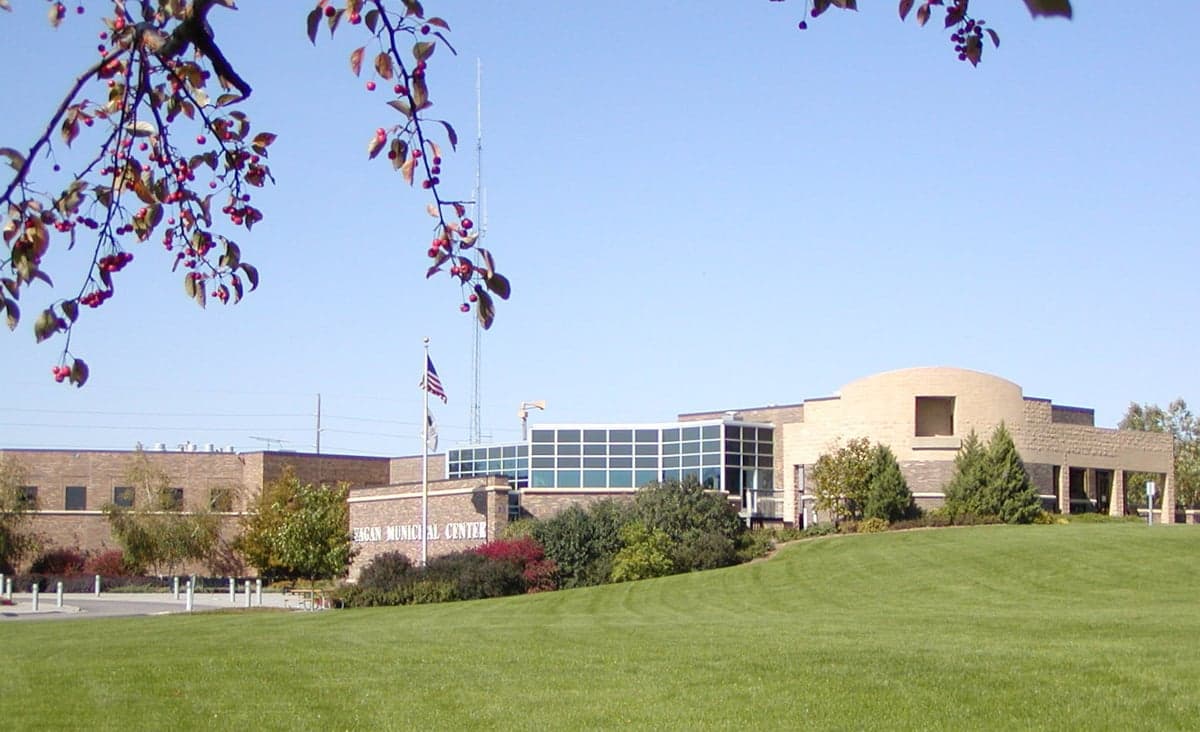
Photo: Wikipedia
Political ClimatePolitical Climate in Eagan, MN
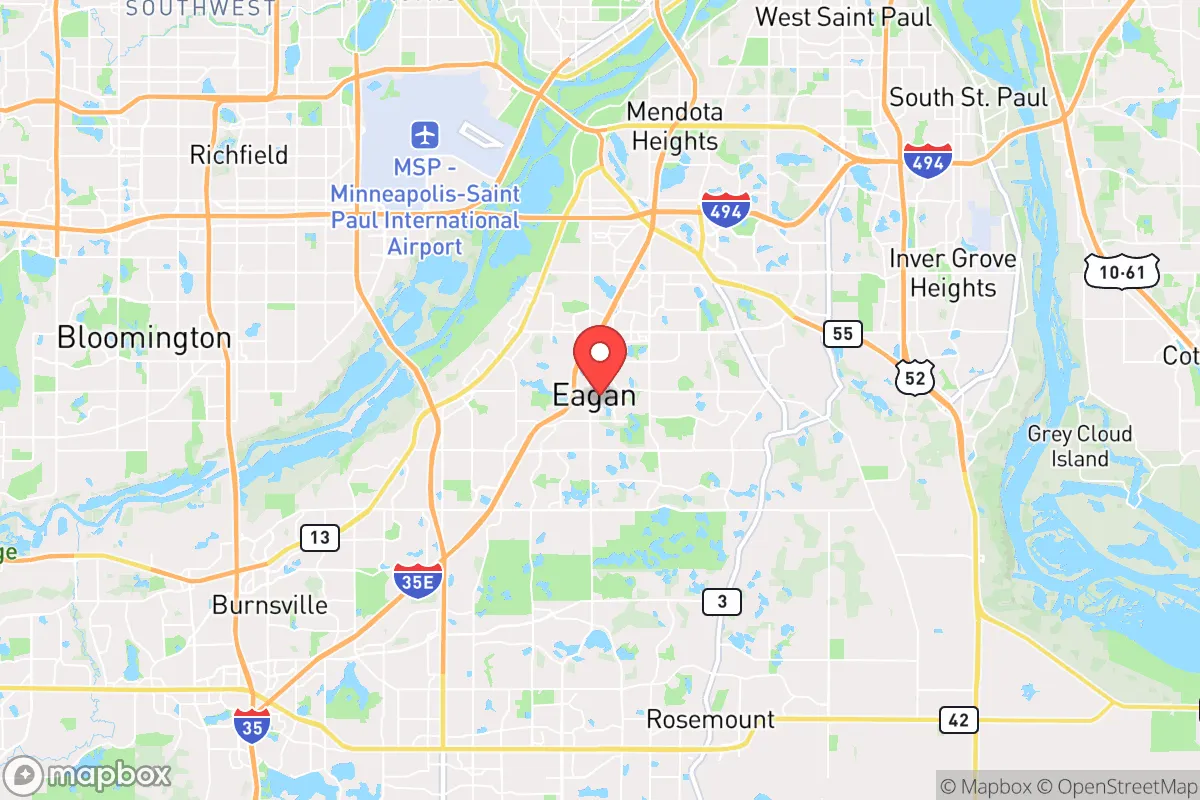
District shown is the primary district for this city’s centroid. Cities may span multiple districts.
Local Political AnalysisPolitical Analysis of Eagan, MN
Eagan, Minnesota, sits in a political bubble that’s been drifting left for a while now. With a Cook PVI of D+3, it’s reliably blue, but not as deep blue as Minneapolis or St. Paul proper. That D+3 number means it leans Democratic by about three points compared to the national average, which might not sound like much, but it’s a shift from where things were even a decade ago. Back in the 90s and early 2000s, Eagan was more of a purple suburb—you’d see a mix of yard signs for both parties, and local elections were genuinely competitive. Now, it’s trending in a direction that has a lot of us long-time residents raising an eyebrow, especially when it comes to how much the local government feels it needs to get involved in our daily lives.
How it compares
Drive ten minutes south to Lakeville or Farmington, and you’re in a completely different world politically. Those towns lean solidly Republican, with Lakeville’s Cook PVI estimated around R+6 or R+7. The contrast is stark: you’ll see more Trump signs, more talk about property rights and school choice, and a general sense that the government should stay out of your business. Head east to Woodbury, and you’re in another D+3 or D+4 suburb, similar to Eagan but with a slightly more affluent, moderate vibe. The real eye-opener is just west, in Bloomington—that’s D+8 or higher, and you can feel the progressive energy there. Eagan sits in this uncomfortable middle ground where it’s not as far left as the core cities, but it’s definitely not the kind of place where you can count on your neighbors to push back against new regulations or tax hikes. The Dakota County Board, which oversees Eagan, has a Democratic majority, and that’s been the case for a while now.
What this means for residents
For folks who value personal freedom and limited government, living in Eagan means you’re constantly watching your back. The city council and county board have been more willing to impose mandates—think mask requirements that lasted longer than in surrounding areas, or zoning rules that make it harder to run a small business out of your home. Property taxes have crept up faster than inflation, and there’s a growing appetite for “equity” initiatives that sound good on paper but often translate into more bureaucracy and less local control. If you’re a conservative, you’re not going to find a lot of allies on the school board or in city hall. The local schools, while well-funded, have leaned into DEI training and curriculum changes that prioritize social justice over academic rigor. It’s not the end of the world, but it’s a slow, steady drift that feels like it’s picking up speed. You learn to pick your battles—maybe you vote in local primaries, maybe you get involved in the Republican Party of Dakota County, which is small but active.
The cultural vibe here is polite but passive. People are friendly, but there’s a reluctance to rock the boat. You won’t see many open displays of conservative pride, and the few that exist—like a small but dedicated chapter of the Minnesota Gun Owners Caucus—tend to keep a low profile. The real concern is the long-term trajectory: as the Twin Cities metro expands, Eagan is absorbing more transplants from blue states and younger families who see progressive policies as normal. If you’re thinking of moving here, just know that you’ll be in a minority if you lean right. It’s not hostile, but it’s not a place where your values are reflected in the local government. Keep an eye on the 2026 midterms and the 2028 presidential race—if the D+3 shifts to D+5 or D+6, that’s a sign the bubble is tightening, and the space for dissent will shrink even more.

State Political ClimatePolitical Climate in Minnesota
State Political AnalysisPolitical Environment in the State
Minnesota has shifted from a classic purple battleground to a solidly blue state over the past two decades, with Democrats now controlling the governorship, both legislative chambers, and the entire federal delegation. The state hasn't voted for a Republican presidential candidate since 1972, and in 2024, Kamala Harris carried it by about 7 points, though that margin has narrowed from the double-digit wins of the Obama era. The real story is the growing divide between the metro core and everywhere else, with the Twin Cities suburbs flipping blue while rural and exurban counties have gone deep red.
Urban vs. rural divide
The political map of Minnesota is a tale of two states. The seven-county Twin Cities metro area, home to roughly 55% of the state's population, drives the Democratic margin. Hennepin County alone (Minneapolis) delivered a 35-point margin for Biden in 2020, while Ramsey County (St. Paul) added another 30-point spread. The critical shift has been in the inner-ring suburbs: Anoka County, once a bellwether that voted for George W. Bush twice, now reliably goes blue by 10-15 points. Meanwhile, outstate Minnesota is overwhelmingly Republican. The Iron Range counties (St. Louis, Itasca) that once voted reliably Democratic for labor reasons have flipped hard—St. Louis County (Duluth) went from +20 D in 2012 to just +4 D in 2024. Southern Minnesota's agricultural counties like Blue Earth (Mankato) and Olmsted (Rochester) are now competitive or lean Republican, while the far northwestern counties (Kittson, Roseau) are deep red. The only blue outposts outside the metro are college towns like Northfield (Carleton College) and Winona (Winona State University), plus the city of Duluth itself.
Policy environment
Minnesota's policy environment has become aggressively progressive since Democrats took full control in 2023. The state now has a progressive income tax with a top rate of 9.85% on income over $190,000, one of the highest in the nation. Property taxes are above average, and the state sales tax is 6.875% (with local add-ons pushing it to 8%+ in many cities). In 2023, the legislature passed a clean energy mandate requiring 100% carbon-free electricity by 2040, a paid family and medical leave program funded by a new payroll tax, and a massive expansion of state government spending. Education policy is firmly in the hands of teachers unions—the state has no school choice programs, no charter school expansion, and a per-pupil spending that ranks in the top 10 nationally. Healthcare is dominated by the state-run MNsure exchange, and the state expanded Medicaid under the ACA. Election laws have been loosened: Minnesota now has automatic voter registration, same-day voter registration, and no-excuse absentee voting, making it one of the easiest states to vote in—but also raising concerns about ballot security among conservatives.
Trajectory & freedom
Minnesota is clearly trending toward less personal freedom across multiple dimensions. The 2023 legislative session was a watershed: the DFL passed a "red flag" extreme risk protection order law that allows courts to temporarily seize firearms from individuals deemed a threat, without a criminal conviction or mental health adjudication. They also banned "conversion therapy" for minors, codified abortion rights into state law (the PRO Act), and passed a driver's license for all law that grants licenses to illegal immigrants. On the parental rights front, the state has no parental notification requirement for minors seeking abortions, and the Department of Education has pushed critical race theory-aligned social studies standards that emphasize "systemic oppression" narratives. Property rights have been constrained by a new statewide rent control law that caps rent increases at 3% plus inflation for buildings older than 15 years, though it exempts new construction for 15 years. The state's Clean Car Rule effectively bans the sale of new gas-powered vehicles by 2035. On the positive side for conservatives, Minnesota has no state income tax on Social Security benefits, and the estate tax exemption was raised to $3 million in 2024.
Civil unrest & political movements
Minnesota has been a flashpoint for civil unrest since the 2020 George Floyd riots in Minneapolis, which caused an estimated $500 million in property damage and led to the destruction of the Third Precinct police station. The aftermath saw a defund the police movement that actually succeeded—the Minneapolis City Council voted to disband the police department (later reversed after public backlash), and the city has struggled with a 40% increase in violent crime since 2019. The state has become a sanctuary state in practice, with the "driver's license for all" law and a 2023 law that prohibits state and local law enforcement from cooperating with federal immigration authorities in most circumstances. Organized activist movements are strong: the Minnesota Freedom Fund bails out protesters, and groups like TakeAction Minnesota push the DFL further left. On the right, the Minnesota Gun Owners Caucus has become a powerful force, and the Minnesota Family Council fights parental rights battles. Election integrity remains a hot-button issue—Minnesota's same-day registration system and widespread mail-in voting have led to persistent concerns about ballot security, though no major fraud has been proven. The 2020 election saw a 79% turnout rate, the highest in the nation, but also allegations of ballot harvesting in the Somali-American community in Minneapolis.
Projection
Over the next 5-10 years, Minnesota is likely to become more Democratic and more progressive. The Twin Cities metro continues to grow while rural areas shrink, and in-migration from blue states (Illinois, California) is accelerating the shift. Demographic trends favor the DFL: the state's growing Somali, Hmong, and Latino populations are heavily Democratic, while the white working-class base of the GOP is aging and declining. The 2024 election showed that even with a strong rural turnout, Republicans can't overcome the metro margin. Expect more progressive legislation: a statewide single-payer healthcare system is on the DFL wish list, as is a wealth tax and public financing of elections. The state's budget surplus (projected at $2.4 billion for 2025) will fuel further spending expansions. However, there are limits: the state's high tax burden is already driving out-migration of high earners, and the business climate is deteriorating. Minnesota lost a net 10,000 residents to other states in 2023, mostly to Florida, Texas, and Arizona. If this trend accelerates, it could eventually moderate the state's leftward drift.
For a conservative considering a move to Minnesota, the bottom line is this: you'll find like-minded communities in the exurbs and rural areas, but you'll be fighting an uphill battle against a state government that is increasingly hostile to your values. The tax burden is high, the regulatory environment is restrictive, and your children will be educated in a system that prioritizes progressive ideology over academic excellence. If you're looking for a place where your vote actually matters and your freedoms are respected, Minnesota is not that place—at least not outside of a few red enclaves like Orono, Edina's western edge, or the Lake Minnetonka area. The state's natural beauty and strong economy are real, but they come with a political price tag that's only going up.
* Values derived from national, state, county, city and local statistics and may differ in a specific area. Last updated: 2026-04-24T05:51:11.000Z
Narrative content on this page is AI-generated and may contain mistakes. Verify any details that matter before acting on them.
ReloMaps may earn a commission from affiliate links at no extra cost to you.

