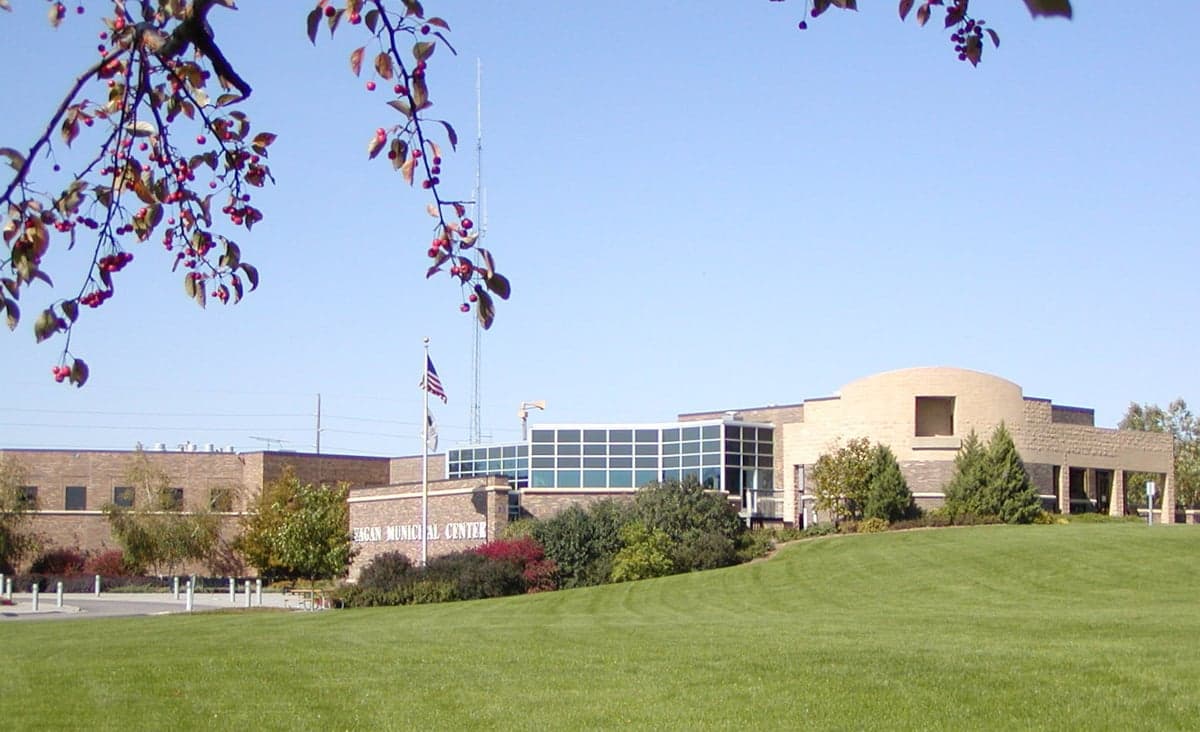
Photo: Wikipedia
Strategic Assessment of Eagan, MN
Multiple tactical vulnerabilities. Population density, target proximity, or disaster risk are likely compounding. A retreat property and exit planning is required.
What does the Strategic Assessment tell us?
Our Strategic Assessment grades tactical survivability of an area. Major population centers, military targets, fallout zones, natural disasters, and border exposure all drive risk — lower exposure means a more defensible position in a crisis.
This is heavily inspired by Joel Skousen's Strategic Relocation book. Highly recommended you checkout the book ($)What does this tell us?
Our Strategic Assessment grades tactical survivability of an area. Major population centers, military targets, fallout zones, natural disasters, and border exposure all drive risk — lower exposure means a more defensible position in a crisis.
This is heavily inspired by Joel Skousen's Strategic Relocation book. Highly recommended you checkout the book ($)Strategic Pillars

Key Distances
Regional Safe Places
Below is our recommended "safe zones" in Minnesota and the surrounding area based on our strategic heuristics. For most people, it's unrealistic to live in a “safe zone” full-time due to work, family or other personal reasons. They tend to be more rural. However, many of these areas are perfect for second homes and retreat properties that double as a vacation home or even a short-term rental.
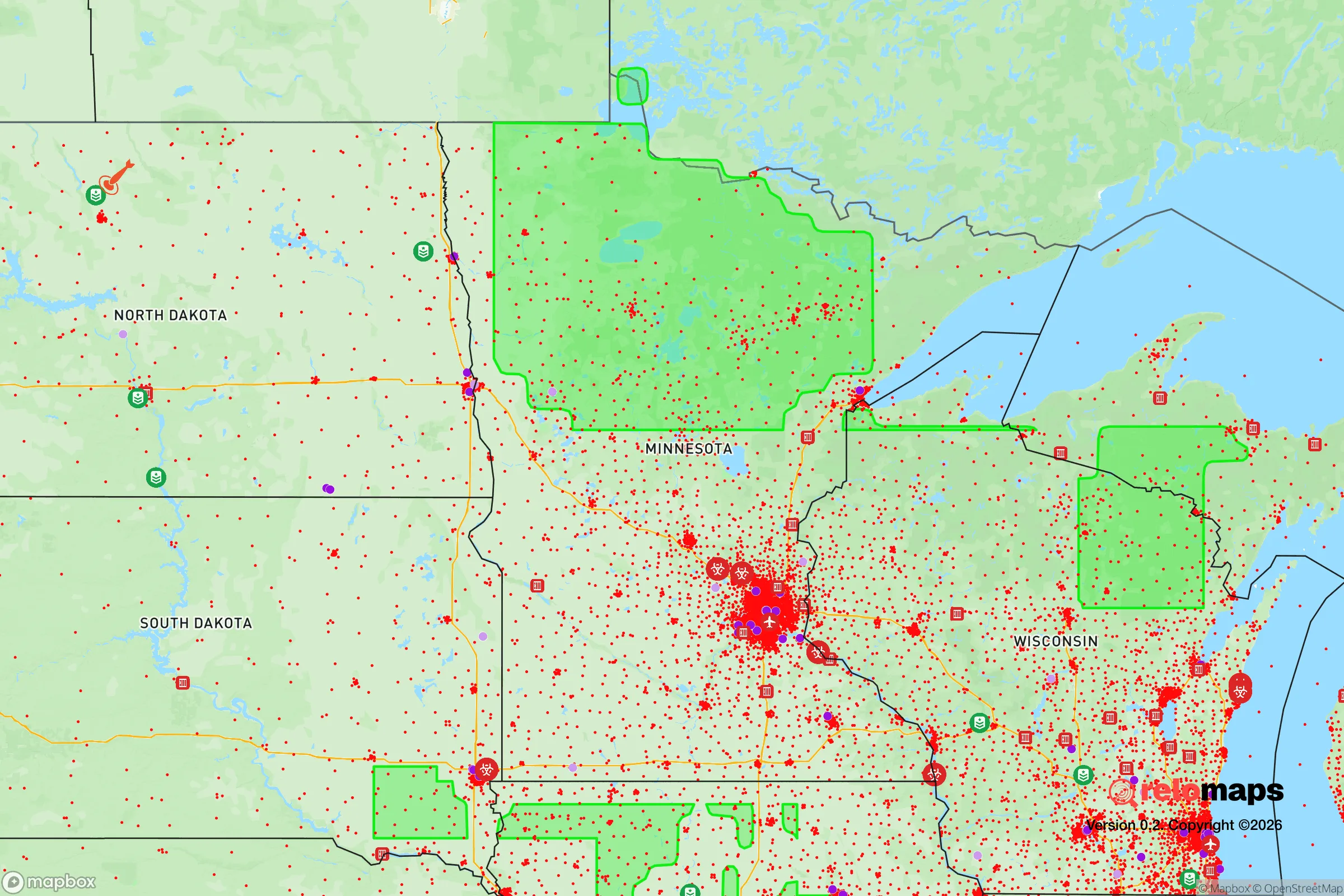
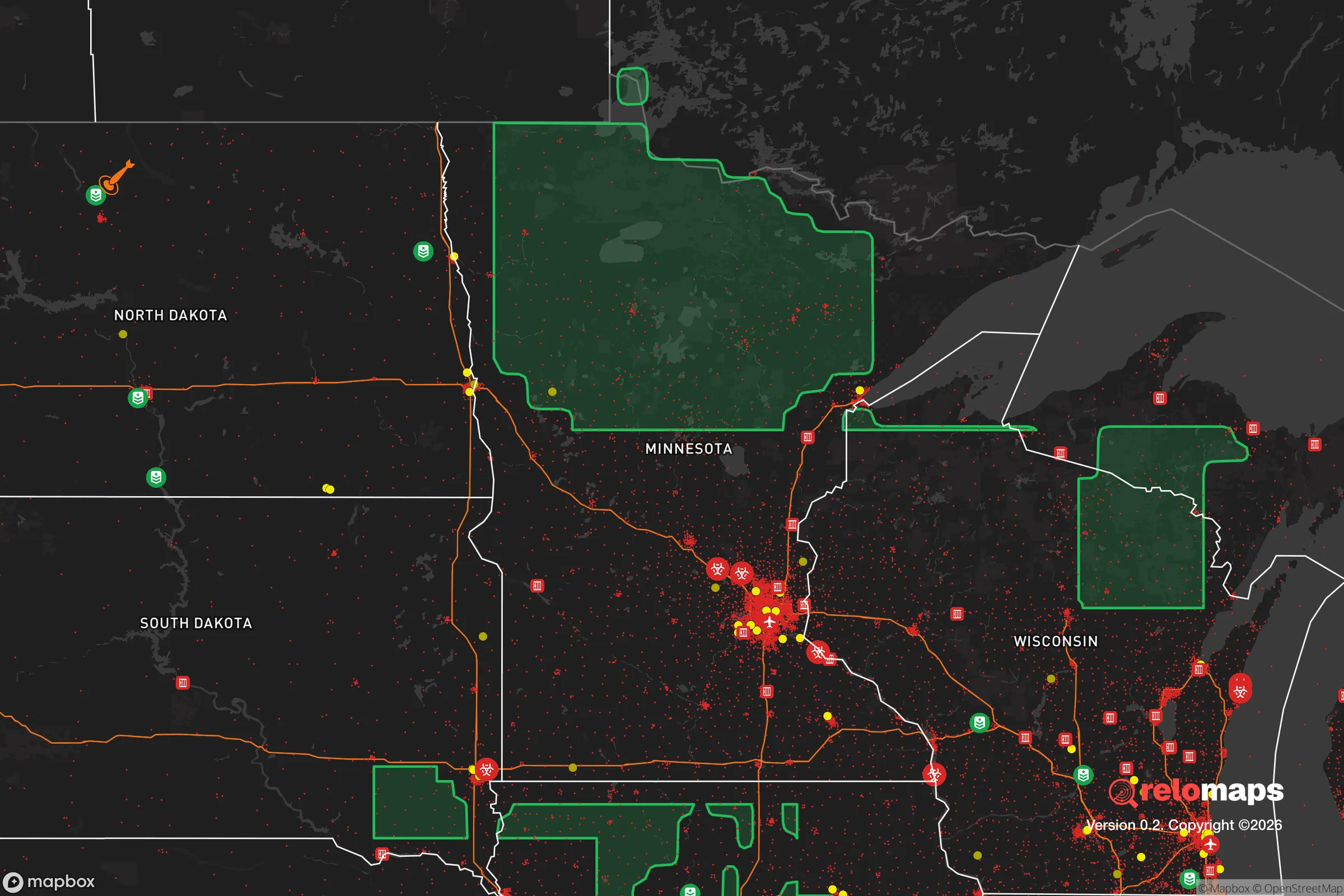


Important Note: For informational purposes only. This does not mean nothing bad ever happens in the green zones. Please use common sense. This is based on public data and modeled with AI. We tried to take a conservative approach but mistakes happen. We update this regularly as new information becomes available.
Solar Generator Recommendations
Backup power matters more here than in safer locations. We've picked three solar generators across budgets and capacity tiers — start with the budget unit if you only need a few essentials, or step up if you want to run a fridge and HVAC for days at a time.

Jackery Portable Power Station Explorer 300
Budget OptionPower on the Go: Weighing only 11 lbs, it's convenient to set up and store with book-sized foldable solar panels

BLUETTI Portable Power Station AC180
Designed for both indoor and outdoor scenarios, AC180 is highly capable as it has a robost capacity and continuous output power.

EF ECOFLOW DELTA Pro Ultra Power Station
Upgraded PickEcoFlow DELTA Pro Ultra is a whole-home energy system designed to grow with your family. Integrated with the Smart Home Panel 2, it scales to meet your evolving energy needs — keeping your home powered, intelligent, and secure through every stage of life.
We earn a commission, at no additional cost to you.
Strategic Assessment Analysis
Eagan, Minnesota, sits in a precarious strategic position that demands a clear-eyed assessment for anyone serious about resilience. While its location in the southern Twin Cities metro offers some economic advantages, the area’s proximity to major population centers, critical infrastructure, and potential fallout targets presents significant liabilities for those prioritizing long-term survival and self-sufficiency. This analysis examines Eagan’s geographic realities, exposure risks, and practical preparedness considerations from a prepper’s perspective, with an eye toward civic unrest, mass casualty events, and large-scale disasters.
Geographic position and natural advantages for long-term survival
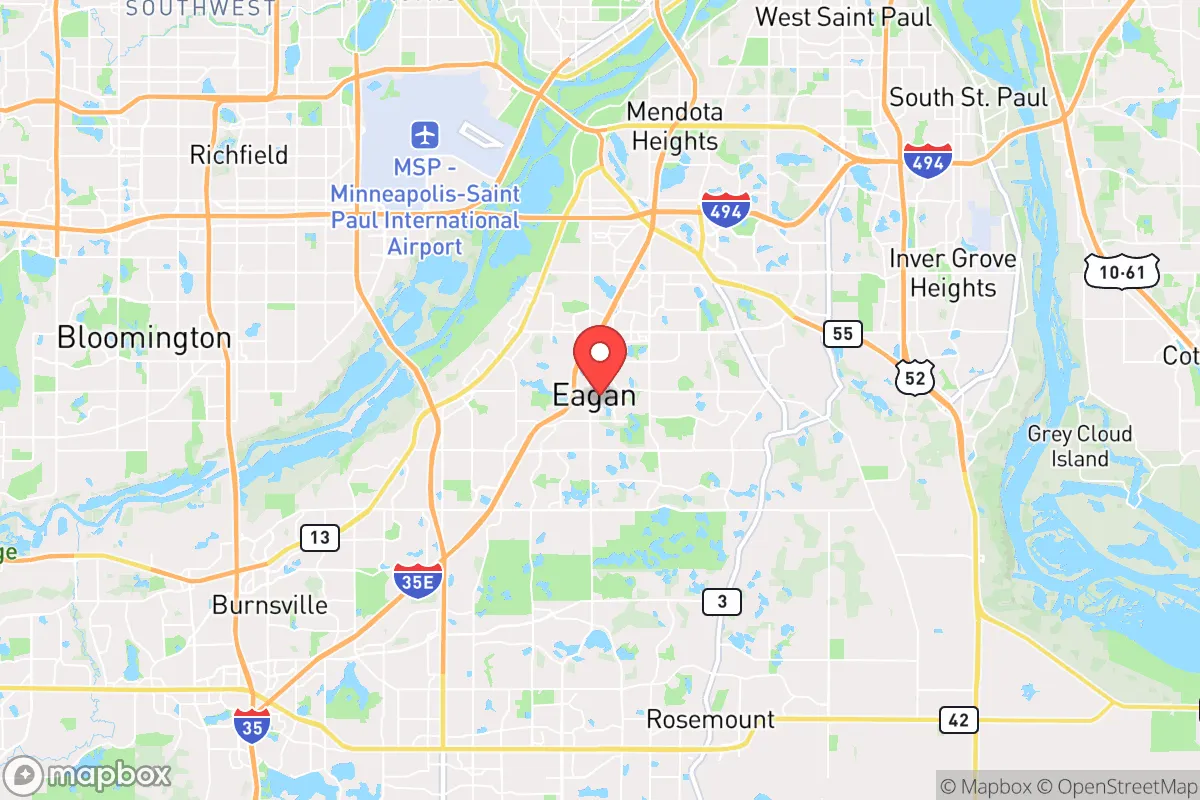
Eagan’s location at the intersection of Interstate 35E and Highway 77 places it roughly 15 miles south of downtown Minneapolis and 10 miles from St. Paul. This proximity to major highways is a double-edged sword: it provides quick evacuation routes north or south, but also makes the area a natural chokepoint during any large-scale evacuation. The Minnesota River runs along the city’s western edge, offering a potential water source, though access is limited by steep bluffs and private property. The terrain is generally flat to gently rolling, with scattered woodlots and wetlands that could provide limited cover and natural barriers. The area’s cold winters—average January lows around 8°F—act as a natural deterrent to large-scale migration during a crisis, but also impose serious heating and food storage challenges. The city’s 68,000 residents are spread across roughly 33 square miles, giving it a moderate population density that is neither urban nor truly rural. For a relocator, the key natural advantage is the presence of the Minnesota River Valley and the nearby Vermillion River, which could support small-scale agriculture and fishing if properly managed. However, the region’s reliance on the Mississippi River watershed means any contamination event upstream—such as a dam failure or industrial spill—could compromise water quality for weeks.
Risks, exposures, and proximity to fallout-relevant landmarks
The most glaring vulnerability for Eagan is its position within the blast and fallout radius of several high-value targets. The city lies approximately 12 miles from Minneapolis-St. Paul International Airport (MSP), a major transportation hub that would be a primary target in any conflict involving strategic bombing or EMP attacks. The nearby Mall of America in Bloomington, just 8 miles north, is a symbolic and economic target that would draw significant attention. Eagan is also within 20 miles of the Fort Snelling military base and the U.S. Bank Stadium, both potential targets for civil unrest or coordinated attacks. The city itself hosts several corporate headquarters, including Thomson Reuters and Blue Cross Blue Shield of Minnesota, which could become focal points for looting or protest activity during a breakdown of order. On the energy front, Eagan is served by Xcel Energy’s grid, which relies on a mix of natural gas, coal, and nuclear power from the Prairie Island plant, located about 30 miles southeast. A failure or attack on that plant would put Eagan in the downwind fallout zone, depending on weather patterns. The city’s water supply comes from the Mississippi River via the St. Paul Regional Water Services, a centralized system that is vulnerable to contamination, cyberattack, or physical sabotage. For the prepper, these exposures mean that Eagan is not a safe haven but a potential secondary target zone, where the chaos of a major event would arrive within hours.
Practical resilience for a relocator: food, water, energy, and defensibility
For someone looking to establish a resilient household in Eagan, the practical challenges are substantial. The city’s zoning and suburban layout make large-scale gardening or livestock raising difficult, though some homeowners have successfully converted lawns into vegetable plots. Community gardens exist but are limited and could become contested resources during a shortage. Water storage is critical: the municipal supply is reliable in normal times, but a prolonged grid failure would render electric pumps useless. Rainwater collection is legal in Minnesota but restricted for potable use without treatment, and the area’s average 30 inches of annual precipitation is adequate for non-potable needs. Energy resilience requires off-grid investment: solar panels are viable but face reduced output during Minnesota’s long, cloudy winters. Natural gas is the primary heating fuel, but a pipeline disruption or grid failure would leave homes without heat in subzero temperatures. Wood-burning stoves are a practical backup, but firewood availability is limited in suburban areas and would require storage space. Defensibility is a major concern: Eagan’s typical suburban layout—with cul-de-sacs, open yards, and multiple entry points—makes it difficult to secure a single property against determined groups. The city’s police force of roughly 100 officers would be overwhelmed in a widespread crisis, and the Dakota County Sheriff’s Office would be stretched thin. For the relocator, the best approach is to identify a property on the city’s southern or western edges, near agricultural land and away from major highways, with a well, septic system, and space for a garden. Even then, the proximity to the metro means that any large-scale evacuation or civil unrest would bring thousands of people through the area, increasing the risk of theft, violence, and resource competition.
The overall strategic picture for Eagan is one of calculated risk. It is not a survivalist’s paradise, nor is it a complete dead zone. The area’s economic stability and access to healthcare (including the Mayo Clinic system in Rochester, 70 miles south) are genuine advantages for those who can afford to prepare. But the city’s location within the Twin Cities metro, its dependence on centralized infrastructure, and its exposure to multiple high-value targets make it a poor choice for anyone seeking true isolation or defensibility. For a conservative-leaning relocator who values community, schools, and job opportunities but is willing to invest heavily in off-grid systems and maintain a low profile, Eagan could work as a base of operations—provided they have a bug-out plan for the first 72 hours of any major event. The smartest move is to treat Eagan as a temporary hub, not a final destination, and to establish relationships with rural landowners in nearby counties like Goodhue or Wabasha for long-term retreat options. In short: Eagan offers a decent quality of life in normal times, but its strategic weaknesses demand serious preparation and a clear exit strategy.

* Values derived from national, state, county, city and local statistics and may differ in a specific area. Last updated: 2026-04-24T05:51:11.000Z
Narrative content on this page is AI-generated and may contain mistakes. Verify any details that matter before acting on them.
ReloMaps may earn a commission from affiliate links at no extra cost to you.

