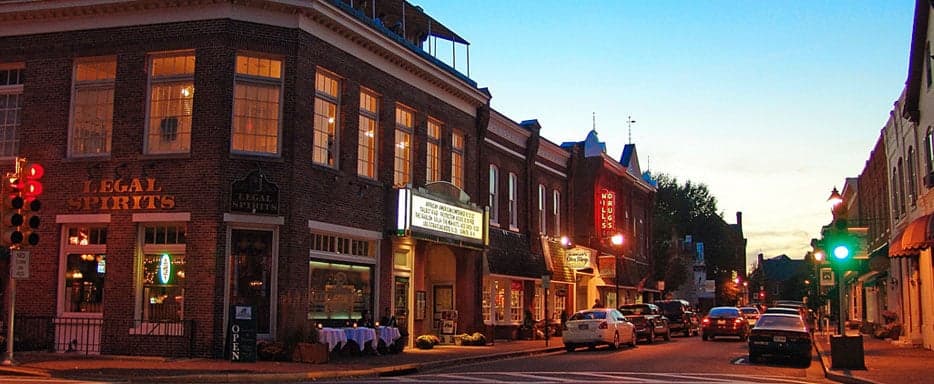
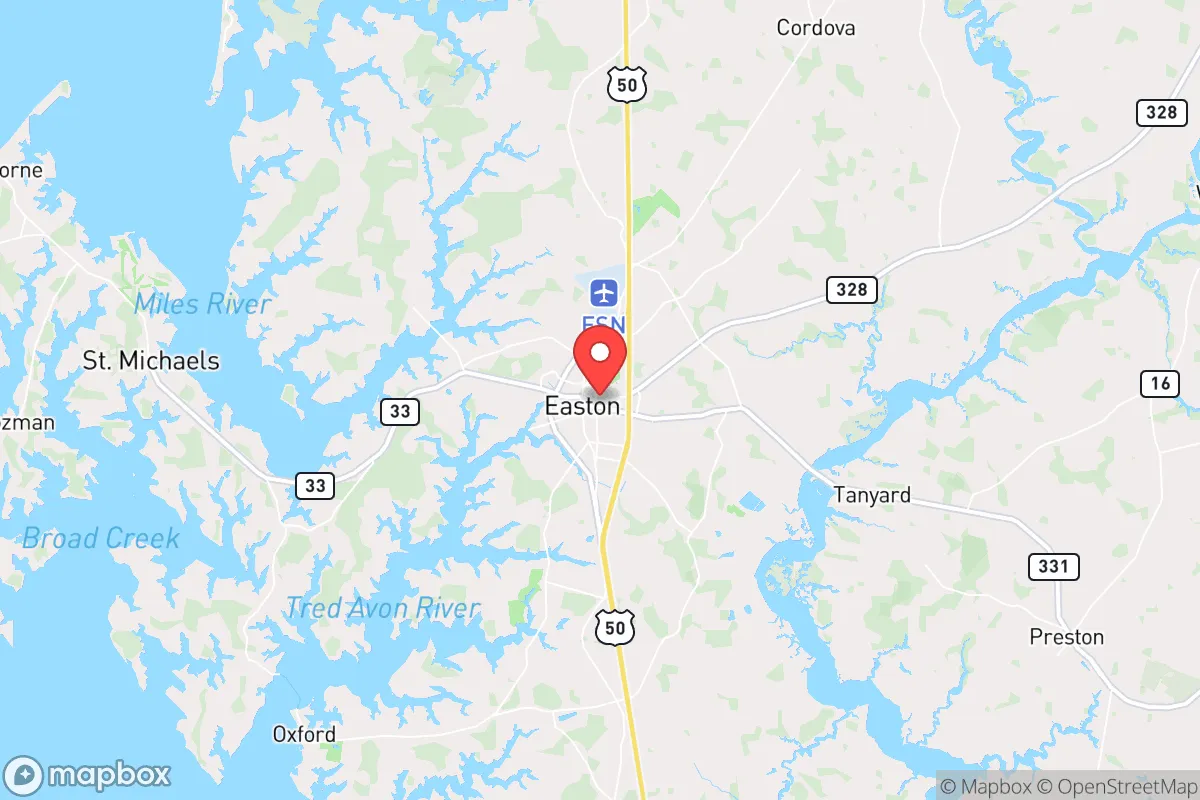
Photo: Wikipedia
Personal Sovereignty in Easton, MD
Viable for self-reliance. Generally workable, though some barriers may limit total independence.
What does Personal Sovereignty tell us?
Personal Sovereignty measures your capacity for self-reliance and independence with minimal government friction. Higher scores mean fewer barriers between you and the way you want to live... but it assumes you have the space you need and good neighbors.
What does this tell us?
Personal Sovereignty measures your capacity for self-reliance and independence with minimal government friction. Higher scores mean fewer barriers between you and the way you want to live... but it assumes you have the space you need and good neighbors.
State Policy
Energy independence: Importer (8% of energy produced in-state)
Personal Liberty
Homesteading

Personal Liberty Analysis
Easton, Maryland, offers a mixed bag for those prioritizing personal sovereignty, with the town’s charm and rural character offset by a state-level regulatory environment that leans heavily toward collectivist control. For a survivalist or prepper mindset, the key tension here is between the tangible, day-to-day autonomy you can carve out on the Eastern Shore and the long arm of Annapolis and Washington, D.C., which increasingly reaches into firearms, property use, and medical decisions. The area’s slower pace and lower population density provide breathing room, but the legal framework demands careful navigation if you intend to live truly free from government overreach.
Tax burden and regulatory posture in Talbot County
Maryland’s overall tax burden is among the highest in the nation, and Easton sits squarely within that reality. The state’s income tax ranges from 2% to 5.75%, and when combined with local county taxes, effective rates can push past 8% for higher earners. Property taxes in Talbot County are moderate for the region—around 0.90% of assessed value—but the state’s aggressive property tax assessment system means reassessments happen every three years, often catching homeowners off guard with sudden increases. Sales tax is 6%, with no local add-ons, but the state taxes a wide range of services, including labor for home repairs, which cuts into self-reliance projects. Regulatory posture is the bigger concern: Maryland’s building codes are strict, and Talbot County enforces environmental zoning that can limit what you do on your own land, especially near waterways. Permitting for anything beyond basic repairs is slow and bureaucratic, a frustration for anyone wanting to build a workshop, install solar panels, or dig a well without state oversight. The state’s energy policies also mandate renewable portfolio standards, which can drive up utility costs and complicate off-grid ambitions.
Self-defense and gun law specifics in a restrictive state
This is the sharpest edge of the sovereignty debate in Easton. Maryland is a "may issue" state for concealed carry, meaning the burden of proof is on you to show "good and substantial reason" to carry a firearm—a standard that has been loosened slightly post-Bruen but still requires a lengthy application, background check, and firearms training course. The state also bans "assault weapons" by name, including many common AR-15 platforms, and limits magazine capacity to 10 rounds. Handgun purchases require a seven-day waiting period, a state police background check, and a Handgun Qualification License (HQL) that involves fingerprinting and a separate training class. For a prepper, this means building a serious defensive arsenal is legally constrained from the start. Open carry is technically legal but practically discouraged and often draws unwanted attention from law enforcement. On the positive side, Talbot County’s sheriff’s office is generally more pro-2A than counterparts in the Baltimore suburbs, and private property rights for home defense are respected—there is no duty to retreat in your own home under Maryland’s Castle Doctrine. However, the state’s Red Flag law allows for temporary seizure of firearms based on a complaint, a tool that can be abused by neighbors or estranged family members. If self-defense is a core value, Easton’s location in a restrictive state means you must be prepared for ongoing legal battles to keep your rights intact.
Self-reliance and homesteading viability: lot sizes, zoning, and off-grid feasibility
Easton’s rural character offers genuine opportunities for self-reliance, but zoning and environmental regulations impose real limits. Outside the town limits, Talbot County allows agricultural zoning on parcels as small as 2 acres, and many properties in the surrounding area are 5 to 20 acres, providing room for gardens, small livestock, and even a few head of cattle. The county’s Right to Farm law protects agricultural activities from nuisance complaints, which is a plus for anyone wanting to raise chickens, goats, or bees. However, off-grid living is heavily restricted: Maryland requires connection to the electrical grid for any habitable structure, and solar panels must be grid-tied unless you obtain a rare variance. Rainwater collection is legal but limited to non-potable uses, and drilling a private well requires a permit and water quality testing. Septic systems are strictly regulated, with mandatory inspections every three years. Composting toilets and graywater systems are not permitted for primary residences. For a prepper, this means true off-grid independence is nearly impossible without moving to a more permissive state. The upside is that the local soil is fertile, the growing season is long (April to October), and there are active farmers’ markets and seed exchanges that support a DIY food production culture. If you’re willing to work within the system—keeping a low profile and not pushing the boundaries too far—you can achieve a high degree of food and energy self-sufficiency, but you’ll always be tethered to the grid and the county health department.
Personal liberties: parental rights, medical autonomy, speech, and property
Parental rights in Maryland are under increasing pressure. The state mandates comprehensive sex education in public schools, and parents cannot opt their children out of specific lessons—only the entire program. Vaccine mandates for school attendance are strict, with no philosophical exemptions, only medical and religious ones (and religious exemptions are being challenged in court). Homeschooling is legal but requires annual notification, a portfolio review, and standardized testing in grades 3, 5, 8, and 10. For parents who want to control their children’s education and medical decisions, Easton’s public school system is competent but not friendly to dissent. Medical autonomy is similarly constrained: Maryland expanded Medicaid aggressively and mandates insurance coverage for a wide range of treatments, but it also has strict prescription drug monitoring and vaccine mandates for healthcare workers. The state’s emergency powers during the pandemic were broad and lasted longer than in many other states, a red flag for those concerned about future overreach. Free speech is protected under the First Amendment, but Maryland has hate crime laws that can be applied broadly, and local government meetings in Talbot County are generally orderly but not particularly receptive to dissenting views on public health or land use. Property rights are the strongest pillar: Talbot County has no rent control, no inclusionary zoning mandates, and no statewide property tax caps that limit your ability to improve your land. You can build fences, install security systems, and post no-trespassing signs without interference. The county’s zoning board is conservative and generally defers to property owners, as long as you stay within the building code.
Overall, Easton offers a moderate level of personal sovereignty compared to other areas in the Mid-Atlantic, but it falls short of the freedom found in states like Texas, Idaho, or New Hampshire. The town’s rural setting and conservative local culture provide a buffer against the worst of Maryland’s state-level overreach, but you cannot escape the long arm of Annapolis on taxes, guns, and medical mandates. For a survivalist or prepper, Easton is a compromise location: you can build a self-sufficient homestead, raise a family with traditional values, and keep a low profile, but you must be prepared to fight for your rights in court and at the ballot box. If you value absolute autonomy above all else, look further south or west. If you want a beautiful, historic town with good soil and a like-minded community, Easton is a viable base of operations—just keep your legal counsel on speed dial.

* Values derived from national, state, county, city and local statistics and may differ in a specific area. Last updated: 2026-04-22T01:12:56.000Z
Narrative content on this page is AI-generated and may contain mistakes. Verify any details that matter before acting on them.
ReloMaps may earn a commission from affiliate links at no extra cost to you.

