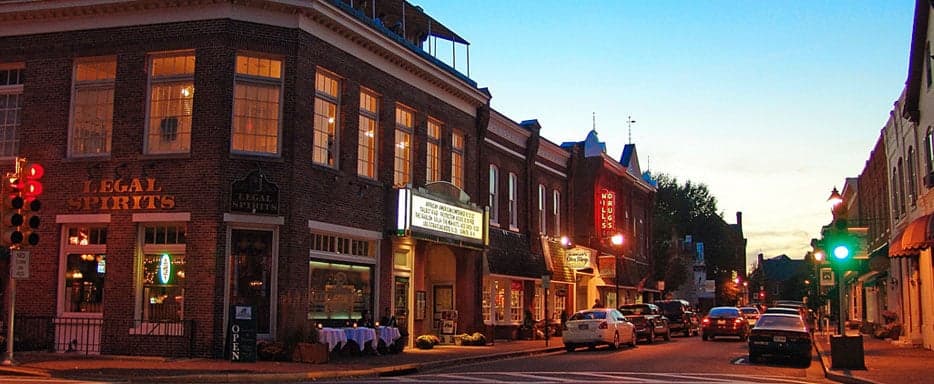
Photo: Wikipedia
Political ClimatePolitical Climate in Easton, MD
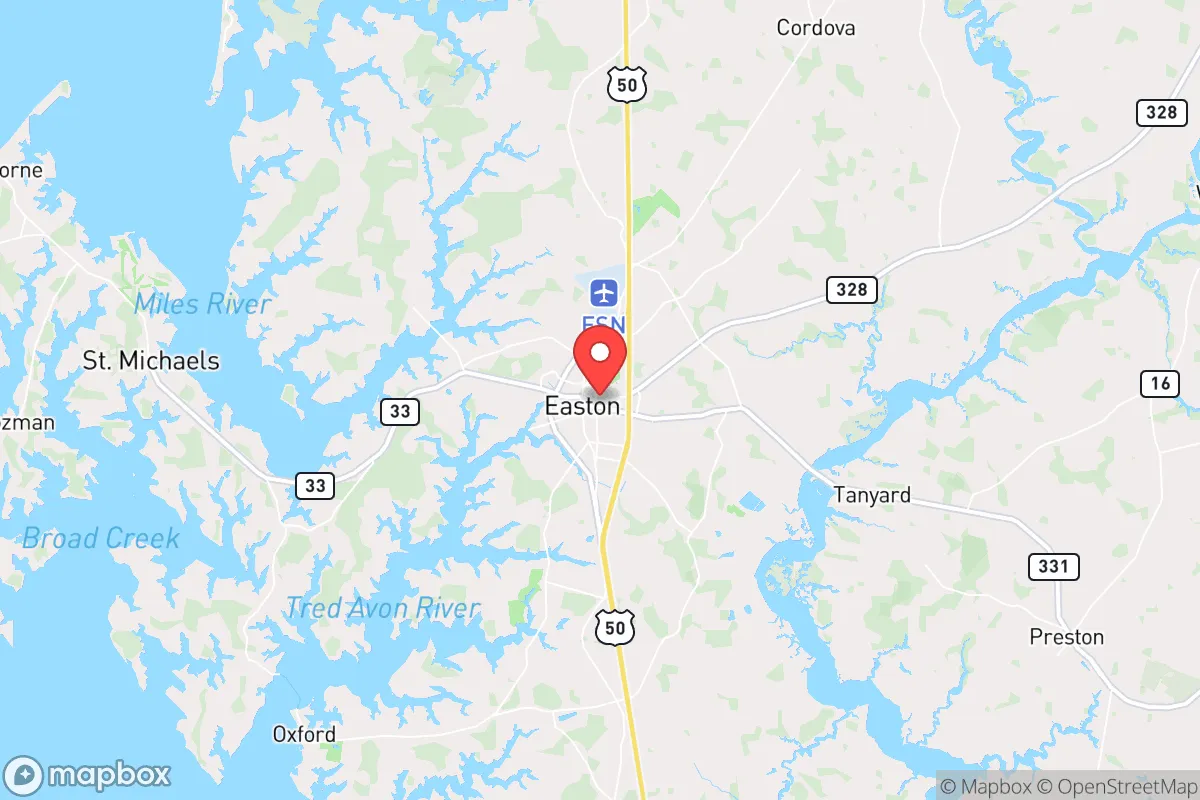
District shown is the primary district for this city’s centroid. Cities may span multiple districts.
Local Political AnalysisPolitical Analysis of Easton, MD
Easton, Maryland, has long been a reliably conservative community, and the numbers back that up with a Cook PVI of R+8, meaning the area votes about eight points more Republican than the national average. But if you’ve lived here as long as I have, you’ve seen the political winds shift in ways that feel less like a gentle breeze and more like a steady push from the left, especially in the county seat and surrounding Talbot County. The old-school, live-and-let-live conservatism that defined this town for decades is still the backbone, but there’s a growing tension between that tradition and the progressive policies creeping in from Annapolis and the D.C. suburbs. It’s not a radical swing yet, but the trajectory is worth watching closely, especially for anyone who values limited government and personal freedoms.
How it compares
When you look at the political map, Easton sits in a bit of a conservative island compared to its neighbors. Head south to Cambridge in Dorchester County, and you’ll find a similar rural Republican lean, but it’s less pronounced and more economically driven. The real contrast is north and west: Annapolis and the D.C. suburbs are a different universe entirely, with their high taxes, strict regulations, and government-heavy approach to everything from land use to education. Even within the Eastern Shore, towns like St. Michaels and Oxford have seen an influx of second-home owners and retirees from blue states, which has nudged those communities slightly more moderate on social issues. Easton, by contrast, still holds a stronger conservative core, but the pressure is there. The R+8 rating masks a subtle shift: in 2020, Talbot County voted for Trump by a smaller margin than in 2016, and local school board and county council races have become battlegrounds over critical race theory, mask mandates, and property rights. The contrast with the rest of the state is stark—Maryland as a whole is deep blue, so Easton feels like a last stand for common-sense, limited-government values on the Shore.
What this means for residents
For those of us who call Easton home, the political climate directly affects daily life in ways that can be frustrating. The biggest red flag is the steady creep of state-level overreach into local affairs. Annapolis has pushed mandates on energy efficiency, zoning, and even agricultural practices that feel like they were written for a city, not a rural town. Property rights are a constant concern—new state laws around shoreline development and septic systems have made it harder for landowners to do what they want with their own land, and there’s always talk of more restrictions on the horizon. Taxes are another sore spot: while Talbot County’s property tax rate is moderate, the state income tax is among the highest in the nation, and residents feel the pinch every April. On the cultural side, the school system has become a flashpoint, with parents pushing back against curriculum changes that seem to prioritize ideology over fundamentals. If you value the freedom to run your business, raise your family, and live without a bureaucrat in your business, Easton is still a good bet—but you’ll need to stay engaged and vote in every local election to keep it that way.
One thing that sets Easton apart is its stubborn sense of independence. You won’t find the same level of government intervention in daily life that you’d see in, say, Montgomery County. The local government here is still run by folks who understand that a farmer’s livelihood shouldn’t be dictated by a coastal planner. But the long-term outlook is uncertain. As more people move from high-tax states like New York and California, they bring their voting habits with them, and that could tip the balance in the next decade. For now, Easton remains a place where a conservative can breathe easy, but the fight to keep it that way is real and ongoing.

State Political ClimatePolitical Climate in Maryland
State Political AnalysisPolitical Environment in the State
Maryland has long been a solidly blue state, but the reality on the ground is far more divided than the statewide numbers suggest. The Democratic stronghold is driven almost entirely by the Washington, D.C. suburbs and Baltimore City, while the rest of the state—from the Eastern Shore to the western mountains—votes reliably Republican. Over the past two decades, the state has shifted leftward on cultural and economic issues, driven by population growth in Montgomery and Prince George’s counties, but the rural-urban split has only deepened, creating a political landscape that feels like two different states under one flag.
Urban vs. rural divide
The political map of Maryland is a textbook case of the urban-rural chasm. The D.C. suburbs—Montgomery County and Prince George’s County—alone account for roughly 40% of the state’s population and vote Democratic by margins of 70-80% in presidential elections. Baltimore City is similarly lopsided, delivering 85%+ Democratic votes. Meanwhile, the rest of the state leans heavily Republican. Garrett County in the far west, Carroll County north of Baltimore, and the Eastern Shore counties like Queen Anne’s and Worcester routinely vote 60-70% Republican. The divide is stark: drive 45 minutes west from Annapolis to Anne Arundel County’s rural fringe, and you’ll go from a blue-leaning suburb to deep-red farmland. The 2022 gubernatorial race saw Republican Dan Cox lose statewide by 32 points, but he won 16 of 24 counties—all of them rural or exurban. The urban cores simply outvote the rest.
Policy environment
Maryland’s policy environment is a mixed bag for conservatives, but the trend is unmistakably progressive. The state has a progressive income tax with rates up to 5.75%, plus a local piggyback tax that can push the effective rate over 8% in high-tax counties like Montgomery. Property taxes are locally set but generally high, especially in the D.C. suburbs. The regulatory posture is heavy: Maryland has some of the strictest environmental regulations in the nation, a gasoline tax that is among the highest (over 40 cents per gallon), and a statewide ban on single-use plastic bags. Education policy is dominated by the Blueprint for Maryland’s Future, a massive funding plan that pours billions into public schools but also mandates union-friendly policies and limits school choice. Homeschooling is legal but requires annual notification and portfolio review—more oversight than in many red states. Election laws are liberal: no-excuse mail-in voting, same-day registration, and automatic voter registration are all in place. The state also has a sanctuary policy that limits cooperation between local law enforcement and federal immigration authorities, a flashpoint for many conservative residents.
Trajectory & freedom
On the freedom front, Maryland has been moving in the wrong direction for conservatives over the past decade. The most glaring example is gun rights: the state passed the Firearm Safety Act of 2013, which banned assault weapons and limited magazine capacity to 10 rounds, and in 2024, a new law required a handgun permit to purchase any rifle or shotgun—effectively ending the private sale of long guns. The state also has a red flag law allowing temporary confiscation of firearms without a criminal conviction. On parental rights, Maryland has moved left: in 2023, the legislature passed a law requiring school districts to adopt policies that affirm transgender students’ identities, including allowing them to use preferred names and pronouns without parental consent in some cases. Medical freedom took a hit with the state’s strict vaccine mandates for schoolchildren, which were expanded during COVID and remain in place. Property rights are constrained by county-level zoning that often blocks new development, especially in rural areas, and the state’s agricultural preservation program limits what landowners can do with their property. The overall trajectory is toward more government control, not less.
Civil unrest & political movements
Maryland has seen its share of civil unrest, most notably the 2015 Baltimore riots following the death of Freddie Gray, which led to a state of emergency and National Guard deployment. Since then, organized activist movements have been active on both sides. On the left, groups like CASA de Maryland push for immigrant rights and sanctuary policies, while Progressive Maryland advocates for higher taxes and expanded government programs. On the right, the Maryland Shall Issue organization fights for gun rights, and the Maryland Republican Party has seen a grassroots surge from the Trump-aligned “Maryland Freedom Caucus” in the state legislature. Immigration politics are a constant flashpoint: the sanctuary policy means that Prince George’s County and Montgomery County are de facto safe havens for undocumented immigrants, while rural counties like Harford and Carroll have passed resolutions opposing the policy. Election integrity remains a concern for many conservatives, especially after the 2020 election saw widespread use of mail-in ballots and ballot drop boxes, though no major fraud was proven. The 2022 gubernatorial primary saw a contested Republican race where the Trump-endorsed candidate won, but the party remains fractured between moderates and the MAGA wing.
Projection
Looking ahead 5-10 years, Maryland is likely to become even more Democratic, driven by continued in-migration from the D.C. area and the aging of the rural population. The 2020 Census showed that Montgomery and Prince George’s counties grew by 10% and 8% respectively, while rural counties like Garrett and Allegany lost population. The Blueprint for Maryland’s Future will lock in higher education spending and likely lead to higher taxes, as the state struggles to fund it. Gun laws will almost certainly tighten further—a proposed “assault weapons” ban is already being debated, and a statewide magazine capacity limit is likely. The sanctuary policy will remain, and may expand to include limits on ICE cooperation in all counties. The one wild card is the 2026 gubernatorial election: if a moderate Republican wins, they might slow the leftward march, but the legislature is veto-proof Democratic, so any governor can only delay, not stop, the trend. For a conservative moving in now, expect to see a state that is increasingly blue, with higher taxes, tighter regulations, and less personal freedom, especially on guns and education.
For a new resident, the bottom line is this: Maryland offers a high quality of life in terms of natural beauty, proximity to D.C., and strong job markets, but it comes at a steep price in terms of taxes, regulations, and cultural alignment. If you value low taxes, gun rights, and parental control over education, you will find yourself swimming against the current. The best bet for a conservative is to settle in a rural or exurban county like Carroll, Harford, or Queen Anne’s, where local government is more aligned with your values, but be prepared to pay state-level taxes that fund policies you may oppose. Maryland is not a lost cause, but it is a state where conservatives must be strategic about where they live and how they engage politically.
* Values derived from national, state, county, city and local statistics and may differ in a specific area. Last updated: 2026-04-22T01:12:56.000Z
Narrative content on this page is AI-generated and may contain mistakes. Verify any details that matter before acting on them.
ReloMaps may earn a commission from affiliate links at no extra cost to you.

