Photo: Wikipedia
Demographics of Eastport, ME
Affluence Level in Eastport, ME
A below-average socioeconomic profile. Incomes, home values, and educational attainment trail the U.S., with higher poverty and unemployment.
People of Eastport, ME
The people of Eastport, Maine, today number just 1,230, making it one of the smallest and most tightly-knit city populations in the state. The city is overwhelmingly white (91.5%) and native-born, with only 1.2% of residents foreign-born. Despite its tiny size, Eastport retains a distinctive identity as a historic maritime and border community, where a relatively high share of adults (37.9%) hold college degrees, reflecting a population that is older, educated, and deeply rooted in place rather than transient.
How the city was settled and grew
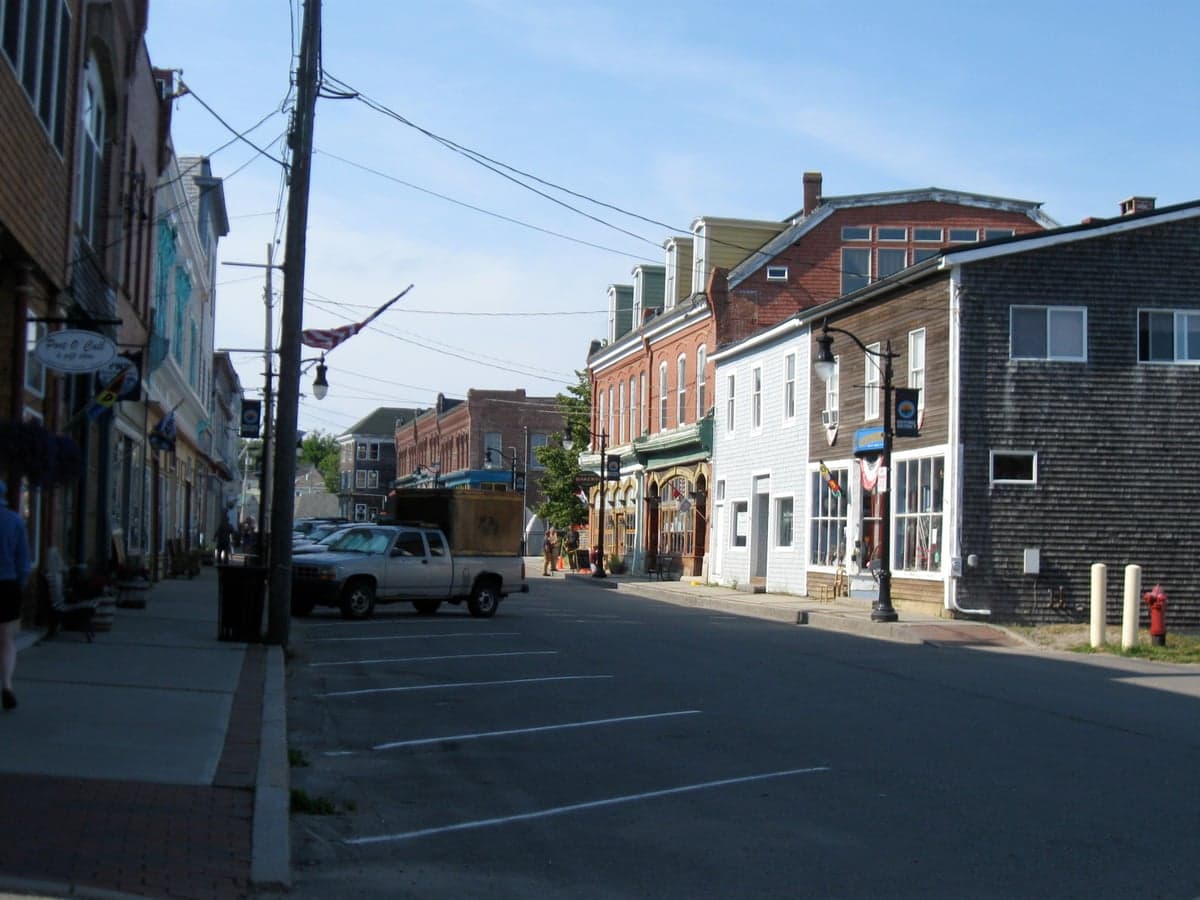
Eastport’s human history begins with the Passamaquoddy people, who occupied the islands and shores of Passamaquoddy Bay for millennia. European settlement began in earnest after the American Revolution, when the Massachusetts General Court granted land to veterans. The city was incorporated in 1798 and quickly became a major fishing and shipping port. The first major wave of settlers were Yankees from Massachusetts and New Hampshire, who built the Water Street district along the waterfront, establishing wharves, warehouses, and shipyards. By the mid-19th century, Eastport was one of the busiest ports in Maine, its population swelling to over 5,000 as Irish immigrants arrived to work the docks and fish processing plants. These Irish families settled in the South End neighborhood, near the sardine canneries that lined the shore. A smaller wave of French-Canadian laborers from Quebec followed in the 1880s, clustering in the North End around the rail depot and the Catholic church. The city’s population peaked around 5,300 in 1900, then began a long decline as the sardine industry collapsed and rail access diminished.
Modern era (post-1965)
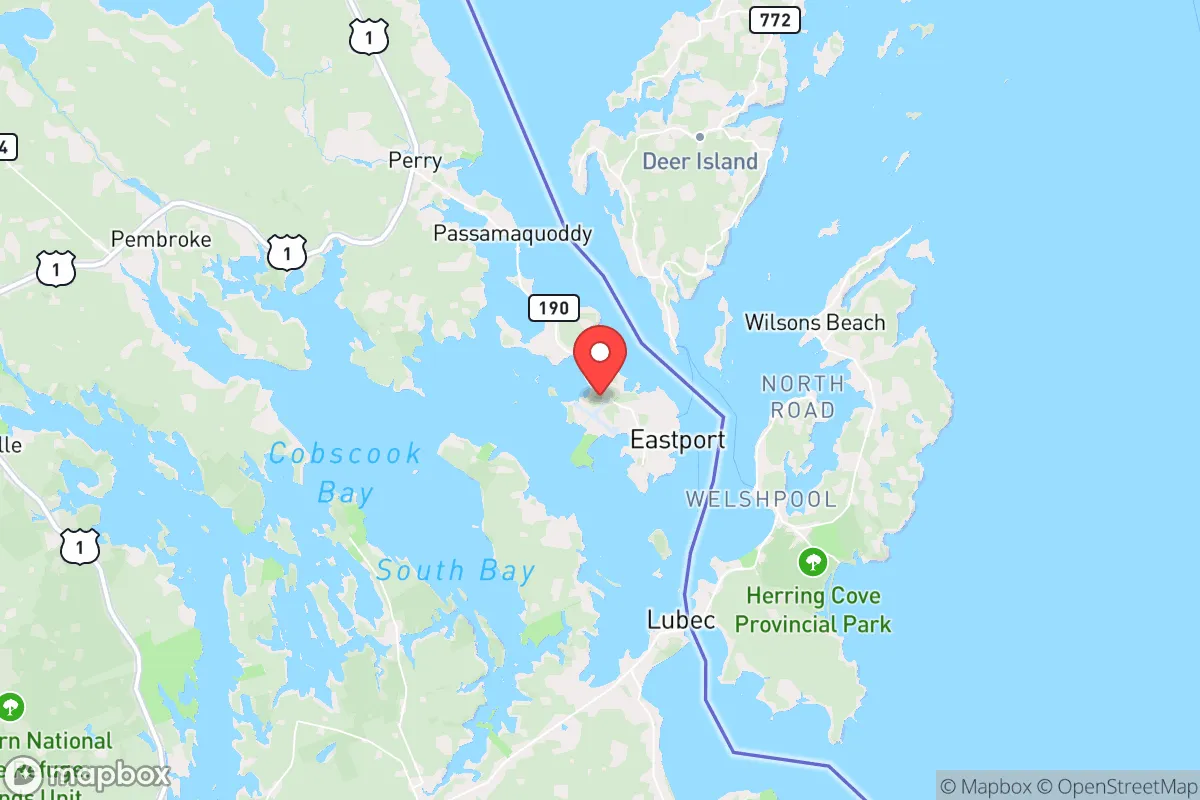
After the 1965 Immigration and Nationality Act, Eastport saw virtually no new foreign-born arrivals. The foreign-born share today (1.2%) is among the lowest in Maine, and the city’s racial composition has remained static: 91.5% white, 1.8% Hispanic, 0.7% Black, and 0.0% East/Southeast Asian or Indian. The post-1965 era was instead defined by domestic out-migration. Young people left for college and jobs in Bangor, Portland, or Boston, while retirees and second-home buyers from southern New England began trickling in. These newcomers—often seasonal residents—gravitated toward the Pleasant Street and Key Street neighborhoods, where restored Federal-style homes offered waterfront views. The Shore Road area, running along the eastern edge of the city, became a corridor for summer cottages and vacation rentals. Meanwhile, the historic South End and North End neighborhoods, once dense with working-class families, saw their populations thin as housing stock aged and the local economy shifted from fishing to tourism and services. The city’s population dropped from 1,982 in 1970 to 1,230 by 2020, a 38% decline.
The future
Eastport’s demographic future points toward continued shrinkage and homogenization. The city’s low birth rate and aging population—median age is over 50—mean natural decrease will likely accelerate. The foreign-born share is unlikely to rise significantly, as the city lacks the job base or housing stock to attract immigrants. The small Hispanic and Black populations (1.8% and 0.7%) are concentrated in service-sector roles and are not growing. The college-educated share (37.9%) is high for a city this size, but many of those residents are older and retired; younger educated workers are scarce. The city is not tribalizing into distinct ethnic enclaves—it is too small and too homogeneous for that—but it is becoming more economically stratified, with the Pleasant Street and Shore Road areas drawing wealthier seasonal residents while the South End and North End see rising vacancy and disinvestment. Over the next 10–20 years, Eastport will likely stabilize at around 1,000–1,100 residents, becoming a quieter, older, and more seasonal community.
For someone moving in now, Eastport offers a deeply authentic, low-crime coastal setting with a strong sense of place—but it is a place in demographic retreat. The population is not diversifying, not growing, and not attracting young families in numbers. New residents should expect a small, predominantly white, older community where social life revolves around local civic groups, the working waterfront, and the seasonal rhythms of tourism. It is a good fit for retirees, remote workers seeking solitude, or those who value historic character over economic dynamism, but it offers limited opportunity for those seeking a growing, diverse, or career-rich environment.

* Values derived from national, state, county, city and local statistics and may differ in a specific area. Last updated: 2026-05-01T17:31:35.000Z
Narrative content on this page is AI-generated and may contain mistakes. Verify any details that matter before acting on them.
ReloMaps may earn a commission from affiliate links at no extra cost to you.

