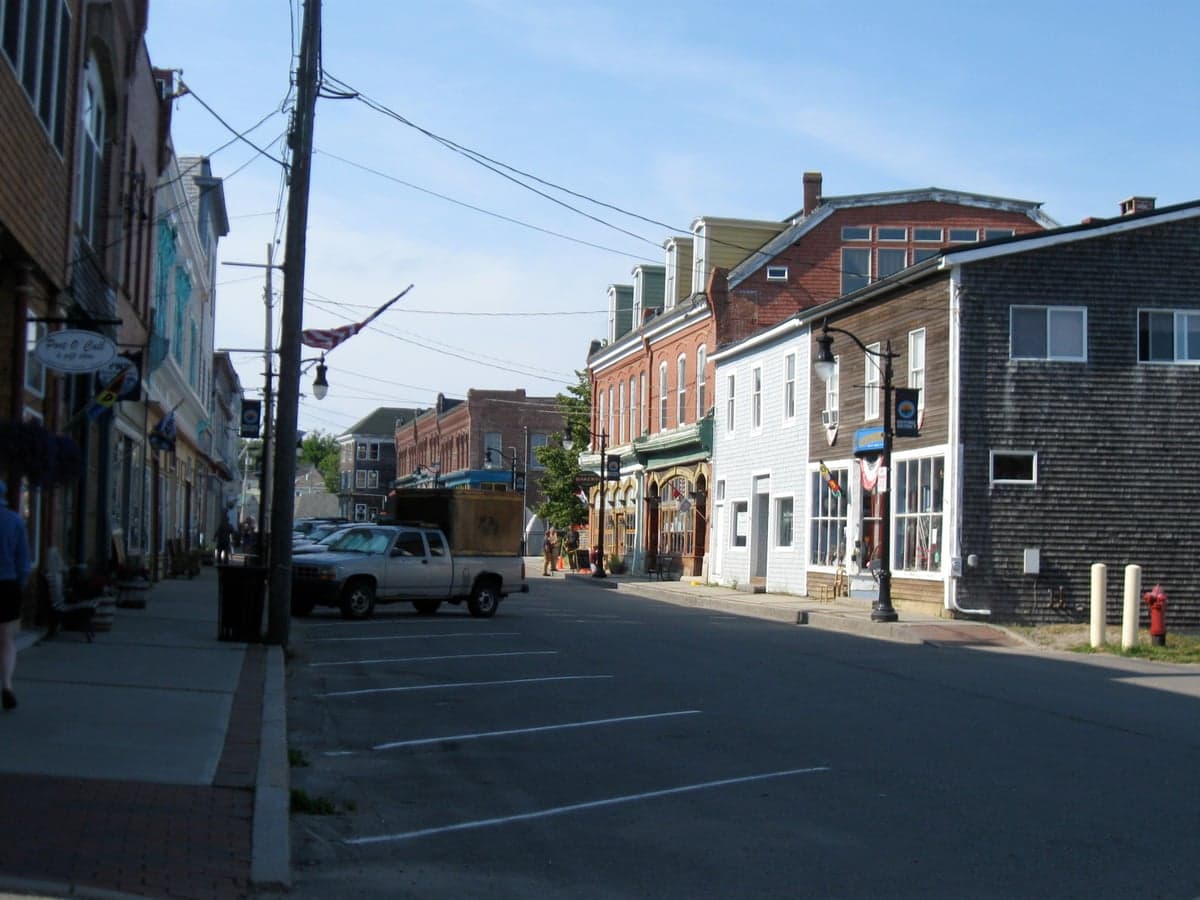
Photo: Wikipedia
Political ClimatePolitical Climate in Eastport, ME
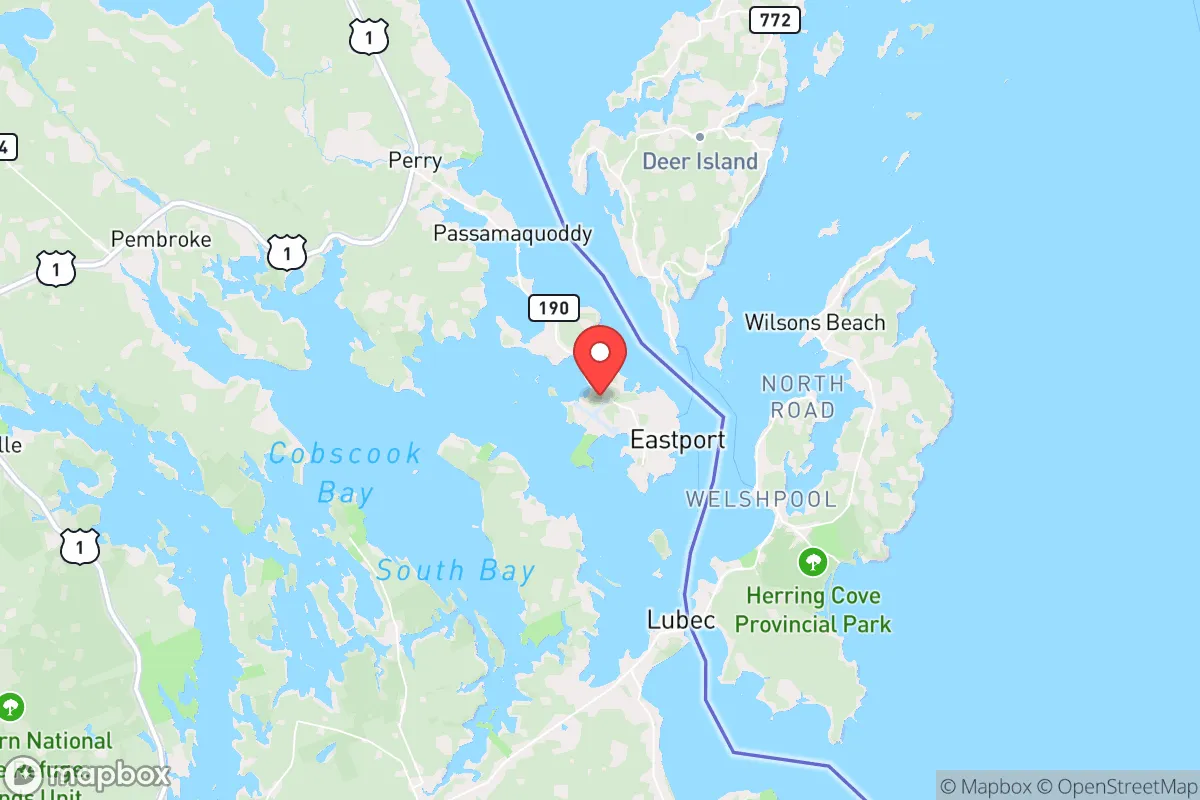
District shown is the primary district for this city’s centroid. Cities may span multiple districts.
Local Political AnalysisPolitical Analysis of Eastport, ME
Eastport, Maine, has long been a place where folks value their independence and don't take kindly to being told how to live their lives, and that's reflected in its political lean. The area carries a Cook PVI of R+4, meaning it's a solidly Republican district, but it's not a monolith—there's a real mix of old-school libertarian types, working-class families, and a growing number of folks who've moved here to escape the chaos of bigger cities. Over the last decade, you've seen a slow but noticeable shift: the old guard of fiscal conservatives and small-government advocates is still strong, but there's a creeping influence from progressive transplants who want to bring their coastal-elite ideas up here, and that's got a lot of locals worried about the direction things are headed.
How it compares
If you drive down to Machias or Calais, you'll find a similar vibe—folks who hunt, fish, and work hard without asking for a handout. But head west toward Bangor or south to Portland, and you're in a different world entirely. Bangor's still got a conservative streak, but Portland's gone full progressive—think bike lanes, rent control, and a city council that's more interested in social engineering than keeping the streets safe. Eastport, by contrast, is still a place where the Second Amendment isn't up for debate, and where the idea of a government telling you what kind of lightbulb to use or how to heat your home is met with a good-natured but firm "no thanks." The R+4 rating puts it right in the middle of Washington County's conservative heartland, but you can feel the pressure from the coast—newcomers from away are buying up waterfront property and trying to push zoning changes that would limit what you can do on your own land.
What this means for residents
For the people who've been here for generations, the biggest concern is that the same government overreach they moved here to avoid is starting to follow them. There's been talk of stricter environmental regulations on fishing and lobstering that could choke off the local economy, and some folks are worried about school board meetings turning into battlegrounds over curriculum and library books—things that used to be left to parents and local teachers. The good news is that Eastport's small size means you still know your neighbors and can have a real say at town hall meetings. But if you're thinking of moving here, keep an eye on the local elections: the school board and planning commission races are where the real fights are happening, and a few bad votes could tip the balance toward the kind of progressive policies that have wrecked other small towns.
One thing that sets Eastport apart is its fierce sense of self-reliance. You won't find a lot of hand-wringing over national politics here—people care more about whether the road to the Canadian border is plowed and if the local hardware store is still open. That said, there's a growing unease about the long-term trajectory. The same folks who fought off a proposed wind farm a few years back are now watching the state push for more renewable energy mandates that could raise electricity bills. If you value your privacy, your property rights, and the freedom to live without a bureaucrat looking over your shoulder, Eastport is still a good bet—but you'll need to stay engaged to keep it that way.

State Political ClimatePolitical Climate in Maine
State Political AnalysisPolitical Environment in the State
Maine has long been known as a purple state with a libertarian streak, but over the past decade it has shifted noticeably to the left, driven largely by the Portland metro area and a wave of out-of-state transplants. While the state still elects centrist governors like Janet Mills (a Democrat who often tacks to the middle), the legislature has passed increasingly progressive policies on taxes, energy, and social issues that give conservatives pause. The 2020 and 2022 cycles saw Democrats consolidate control of both chambers and the governor’s office, and the 2024 presidential race saw Maine’s 2nd Congressional District (the vast, rural northern half) vote for Trump while the 1st District (southern coastal strip) went heavily for Biden—a split that encapsulates the state’s deepening urban-rural chasm.
Urban vs. rural divide
The political map of Maine is a tale of two states. The southern coast, anchored by Portland and its suburbs like South Portland, Scarborough, and Falmouth, is solidly Democratic and growing fast. These areas are increasingly populated by remote workers from Massachusetts and New York, who bring progressive voting habits and push for higher taxes and stricter environmental regulations. In contrast, the vast interior and northern reaches—places like Bangor, Presque Isle, and Caribou—remain conservative strongholds, with economies tied to logging, farming, and seasonal tourism. The 2020 election highlighted this divide: the 2nd District voted for Trump by 7 points, while the 1st District backed Biden by 23 points. Even within the 2nd, the city of Lewiston (the state’s second-largest) leans left, while surrounding Androscoggin County is more competitive. The rural-urban split is so stark that Maine is one of only two states (along with Nebraska) that allocates its electoral votes by congressional district, a system that gives rural conservatives a voice in presidential elections but doesn’t stop the overall leftward drift.
Policy environment
Maine’s policy landscape has become increasingly unfriendly to conservatives. The state has a progressive income tax with a top rate of 7.15% (kicking in at around $58,000 for single filers), and property taxes are among the highest in the nation—averaging 1.3% of home value. In 2021, the legislature passed a major tax reform that raised rates on high earners and expanded the estate tax, which now kicks in at just $5.8 million (down from $5.9 million in 2023). On education, Maine has a universal school choice program through charter schools and public school open enrollment, but funding for traditional public schools remains generous, and the state mandates a controversial “Maine Learning Results” curriculum that includes progressive social-emotional learning standards. Healthcare is dominated by MaineCare (Medicaid expansion, passed in 2017 via ballot initiative), and the state has a strict certificate-of-need law that limits new hospital and clinic construction. Election laws are relatively open: same-day voter registration, no-excuse absentee voting, and automatic voter registration at the DMV. The state also uses ranked-choice voting for federal and state primaries, which conservatives argue dilutes the power of single-party voters and benefits moderate candidates.
Trajectory & freedom
Over the past five years, Maine has taken a clear turn toward less personal freedom, particularly on issues conservatives care about. Gun rights have been under sustained assault: in 2023, after the Lewiston mass shooting (the deadliest in state history), the legislature passed a 72-hour waiting period for firearm purchases and expanded background checks to private sales, overriding the governor’s initial reluctance. The state also banned “ghost guns” and raised the minimum age to purchase a firearm to 21. On parental rights, Maine has one of the most progressive education laws in the country: a 2021 statute requires schools to adopt policies that affirm transgender students’ gender identity without parental notification, and a 2023 law explicitly prohibits schools from disclosing a student’s gender identity or sexual orientation to parents without the student’s consent. Medical autonomy took a hit with the 2023 passage of a vaccine mandate for healthcare workers (still in effect), and the state has a strict “right-to-know” law that allows the government to access personal medical data for public health research. Property rights are constrained by a powerful state planning office that can veto large developments, and the state’s “Tree Growth Tax Law” gives tax breaks to landowners who keep forests undeveloped—but also restricts what they can do with their land. The overall trajectory is clear: more regulation, higher taxes, and less individual discretion.
Civil unrest & political movements
Maine has seen its share of political flashpoints. The 2020 Black Lives Matter protests in Portland turned violent on several nights, with property damage and clashes with police, leading to a lasting rift between city leaders and rural residents. The state’s sanctuary policies are a major point of contention: Portland and several other cities have declared themselves “sanctuary cities” for illegal immigrants, and a 2021 law (LD 1610) prohibits state and local law enforcement from cooperating with federal immigration authorities except in narrow circumstances. This has fueled a backlash in rural areas, where towns like Sanford and Biddeford have passed resolutions opposing the policy. Election integrity has been a hot-button issue: the 2020 election saw widespread use of no-excuse absentee voting, and a 2022 audit found no evidence of fraud, but conservatives remain skeptical of the state’s mail-in ballot system and the lack of voter ID requirements. The “Maine Statehood” movement (a fringe group advocating for secession from the U.S.) has no real traction, but the “Maine Independence” movement (which wants to split the state into two—a liberal southern coastal state and a conservative northern one) has gained some online support, though it’s not politically viable. The most visible flashpoint for a new resident would be the constant tension between Portland’s progressive activism and the rest of the state’s more traditional values.
Projection
Looking ahead 5-10 years, Maine is likely to continue its leftward drift, driven by two factors: in-migration from blue states and the retirement of older, more conservative residents. The Portland metro area is growing at about 1% per year, while rural counties like Aroostook and Washington are losing population. This demographic shift will likely flip the 2nd Congressional District to blue within a decade, as the coastal suburbs of Belfast and Ellsworth attract more remote workers. The state’s tax burden will likely increase further, as the legislature eyes a “wealth tax” on high-value properties and a carbon tax to meet aggressive climate goals (Maine aims for 80% renewable energy by 2030). Gun rights will face continued pressure, with a likely “red flag” law and a ban on “assault weapons” on the horizon. Parental rights will erode further, as the state moves toward a “gender-affirming care” mandate for minors that overrides parental consent. The one bright spot for conservatives is the state’s strong tradition of local control—many towns still run their own schools and zoning—but that’s being steadily eroded by state mandates. Someone moving in now should expect to find a state that is increasingly expensive, regulated, and progressive, especially along the coast.
For a conservative relocating to Maine, the bottom line is this: you can still find affordable land and a slower pace of life in the northern and western counties, but you’ll be fighting a losing battle against the political tide. The state’s tax burden is high and rising, your gun rights are being chipped away, and your parental authority is under direct assault from the education system. If you’re willing to live in a rural area and keep your head down, you can still enjoy Maine’s natural beauty and strong sense of community. But if you’re looking for a state that respects your freedom and keeps government out of your life, you’d be better off looking at New Hampshire or even northern Vermont. Maine is a beautiful place to live, but it’s no longer a free one.
* Values derived from national, state, county, city and local statistics and may differ in a specific area. Last updated: 2026-05-01T17:31:35.000Z
Narrative content on this page is AI-generated and may contain mistakes. Verify any details that matter before acting on them.
ReloMaps may earn a commission from affiliate links at no extra cost to you.

