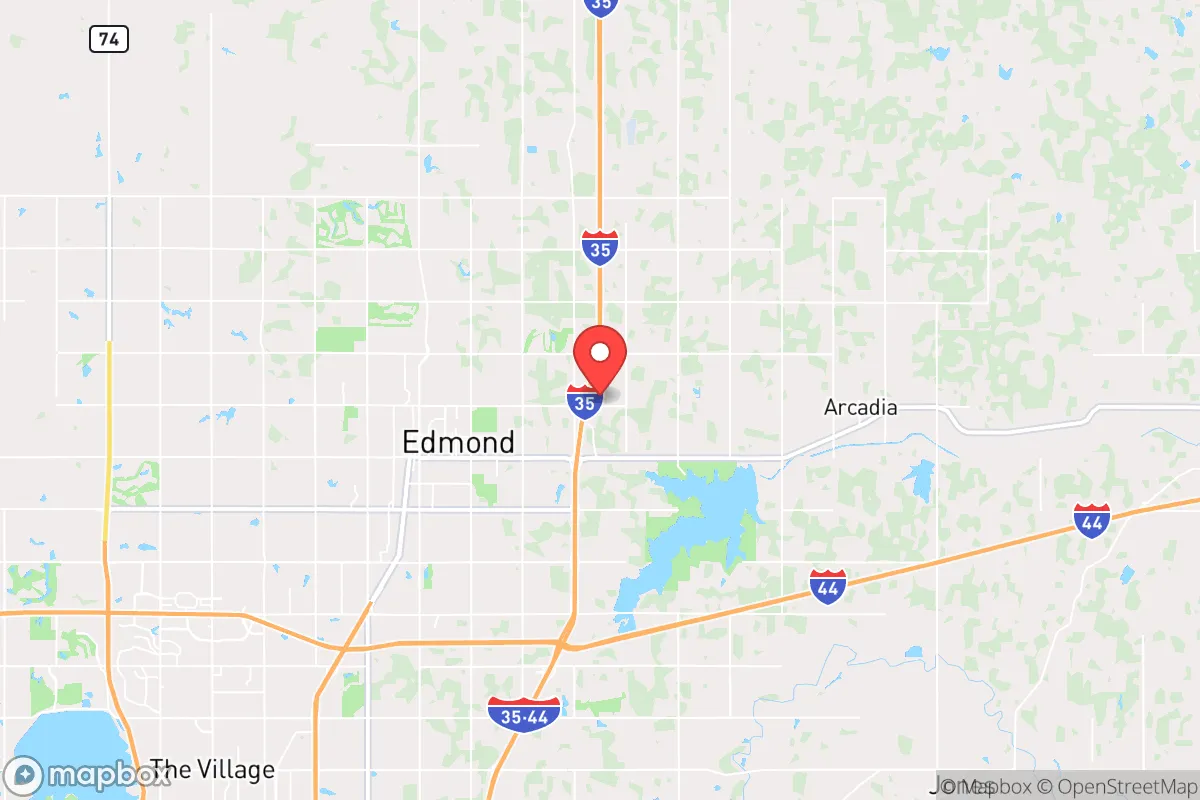
Photo: Wikipedia
Political ClimatePolitical Climate in Edmond, OK
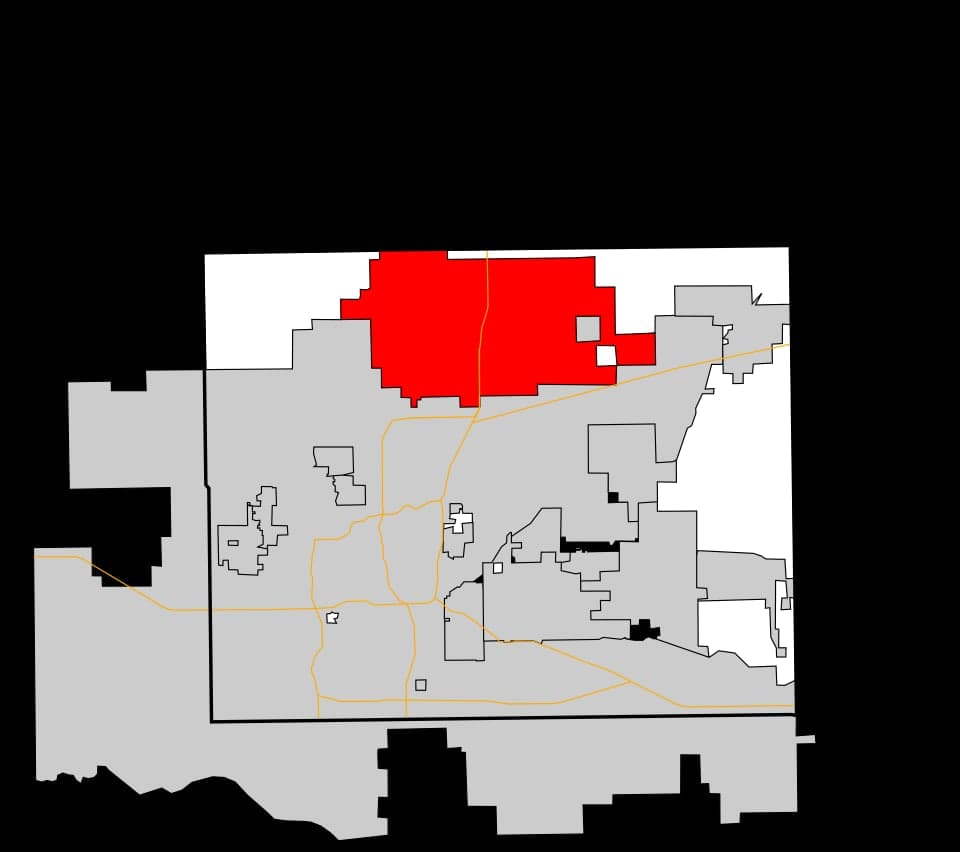
District shown is the primary district for this city’s centroid. Cities may span multiple districts.
Local Political AnalysisPolitical Analysis of Edmond, OK
Edmond has long been a rock-solid conservative stronghold, and honestly, that's one of the main reasons a lot of us choose to live here. With a Cook PVI of R+9, the city leans heavily Republican, and that's not just some statistic—it's reflected in everything from city council meetings to school board decisions. You can feel it in the air. But I gotta be straight with you: like a lot of places in Oklahoma, there's been a slow, creeping shift. We're not talking about a blue wave or anything dramatic, but you can see the progressive influence seeping in from the edges, especially from folks moving up from Oklahoma City or out-of-state transplants who don't quite get our values. It's something to keep an eye on, because once that genie's out of the bottle, it's hard to get it back in.
How it compares
When you look at the surrounding areas, Edmond stands out as a bit of a conservative anchor. Drive ten minutes south into Oklahoma City proper, and you'll hit precincts that are much more purple, even leaning blue in some spots, especially around the downtown and midtown districts. Head north or west into places like Guthrie or Deer Creek, and you're back in deep-red territory where folks still fly the Gadsden flag without a second thought. Edmond sits right in that sweet spot—conservative enough to feel safe, but close enough to the city that you get the economic benefits. The real contrast, though, is with Norman, home to the University of Oklahoma. That town has gone noticeably more progressive over the last decade, and you can see the difference in local policy, especially around things like zoning and public spending. Edmond's still holding the line, but we're not immune to the same pressures.
What this means for residents
For those of us who value personal freedom and limited government, Edmond is still a pretty good place to be. Property taxes are low, there's no city income tax, and the local government generally stays out of your business—for now. But here's the thing: the school board has become a battleground. We've seen attempts to push critical race theory and gender ideology into the curriculum, and it's taken a lot of parent activism to push back. That's the kind of government overreach that gets my blood boiling. If you're moving here, you need to be aware that the fight for local control is real. The city council has been mostly sensible, but every election cycle brings new candidates who want to "modernize" things, which is usually code for more regulations and less freedom. Long-term, if we don't stay vigilant, Edmond could start looking more like Norman or even parts of Tulsa, and that's a future I'd rather avoid.
One thing that still sets Edmond apart is the strong sense of community and the willingness to stand up for traditional values. You see it in the churches, the local businesses, and the way neighbors look out for each other. We've got a thriving homeschool community, a lot of veterans, and a general distrust of federal overreach. The gun culture here is healthy and responsible—no one's trying to take your rights away, and the local sheriff's office is pro-Second Amendment. That said, the biggest cultural shift I've noticed is in the younger generation. More of them are getting their news from social media and buying into the progressive narrative. It's not a crisis yet, but it's a warning sign. If you're considering a move here, just know that Edmond is still a great place for a conservative family, but it's not a fortress. You have to be engaged, vote in every local election, and keep an eye on the school board. That's the only way we keep it from sliding.

State Political ClimatePolitical Climate in Oklahoma
State Political AnalysisPolitical Environment in the State
Oklahoma has long been one of the most reliably Republican states in the nation, with a partisan lean that has only deepened over the past two decades. In 2024, Donald Trump carried the state by more than 34 points, and Republicans hold supermajorities in both chambers of the legislature, every statewide office, and all five congressional seats. But beneath that red veneer, the state’s political climate is more layered than the raw numbers suggest — a mix of deep-red rural conservatism, a growing but contained suburban shift, and a small but vocal progressive presence in Oklahoma City and Tulsa. For a conservative considering relocation, the state offers a policy environment that has largely resisted the leftward drift seen in neighboring states, though recent battles over education funding, medical marijuana, and criminal justice reform show that the political landscape is not static.
Urban vs. rural divide
The political map of Oklahoma is a study in contrasts. The vast rural expanse — from the Panhandle towns like Guymon and Boise City down through the cotton and wheat country around Altus and Lawton — votes Republican by margins of 70 to 80 percent. These areas are culturally and economically tied to agriculture, energy extraction, and traditional values, and they form the bedrock of the state’s conservative majority. The two major metros, Oklahoma City and Tulsa, are more nuanced. Oklahoma City’s core has trended slightly more moderate, with precincts in the downtown and near-north neighborhoods occasionally voting Democratic in local races, but the suburban rings — Edmond, Yukon, Mustang, and Moore — are reliably conservative. Tulsa County, once a swing area, has hardened red in recent cycles, with suburbs like Broken Arrow and Bixby delivering massive margins for Republicans. The only reliably blue pockets are in a handful of precincts in Norman (home to the University of Oklahoma) and parts of Stillwater (Oklahoma State), but these are small and isolated. The urban-rural divide here is not a battle for control — rural votes simply overwhelm the cities — but it does create a cultural tension that plays out in legislative debates over issues like abortion restrictions and school funding.
Policy environment
Oklahoma’s policy environment is among the most conservative in the country, and it has become more so over the past decade. The state has a flat income tax of 4.75 percent, with ongoing legislative efforts to phase it out entirely — a top priority for Governor Kevin Stitt and the Republican supermajority. Property taxes are among the lowest in the nation, thanks to a constitutional cap and a homestead exemption that shields primary residences. There is no estate tax, and sales taxes are moderate but vary by municipality. On education, the state has embraced school choice aggressively: the Oklahoma Parental Choice Tax Credit Act, passed in 2023, provides up to $7,500 per student for private school tuition, and charter schools have expanded rapidly, especially in Oklahoma City and Tulsa. The state also enacted a near-total abortion ban in 2022 (SB 612) with no exceptions for rape or incest, and it has resisted Medicaid expansion under the Affordable Care Act — though voters approved it via ballot initiative in 2020, a rare instance of direct democracy overriding the legislature. Election laws have tightened: voter ID is required, early voting is limited to three days, and absentee ballot drop boxes were effectively banned in 2022. For a conservative, the policy climate is broadly favorable, but the tension between legislative priorities and voter-driven initiatives (like medical marijuana legalization in 2018) shows that the government is not always aligned with the people.
Trajectory & freedom
On balance, Oklahoma has been moving in a direction that expands personal liberty for conservatives, though not without controversy. The most significant recent development is the passage of constitutional carry (permitless carry of firearms) in 2019, which made Oklahoma one of the most gun-friendly states in the nation. Parental rights have been strengthened: the 2023 Parental Bill of Rights (HB 1440) requires schools to notify parents of any medical or mental health services provided to their children and prohibits instruction on sexual orientation or gender identity in grades K-5. Medical autonomy took a hit with the abortion ban, but the state also legalized medical marijuana in 2018 via a ballot initiative that passed with 57 percent support — a clear example of voters asserting freedom over legislative resistance. On property rights, Oklahoma has a strong right-to-farm law and has resisted eminent domain abuse. The biggest concern for freedom-minded residents is the state’s heavy reliance on oil and gas tax revenue, which creates a boom-and-bust cycle that can lead to budget shortfalls and, occasionally, tax increases. The state also has a history of government overreach in the form of alcohol control laws (only recently loosened) and a cumbersome occupational licensing regime. Still, the trajectory is positive: the legislature has been cutting taxes, expanding school choice, and resisting federal overreach on everything from vaccine mandates to environmental regulations.
Civil unrest & political movements
Oklahoma has not seen the kind of large-scale civil unrest that has plagued cities like Portland or Seattle, but it has had its share of political flashpoints. The most visible was the 2020 protests in Oklahoma City and Tulsa following the death of George Floyd, which included some property damage and clashes with police, but they were relatively small and short-lived compared to national events. The state has a strong and active Second Amendment movement, with groups like the Oklahoma Rifle Association and Oklahomans for Constitutional Carry regularly lobbying at the capitol. Immigration politics are less heated than in border states, but there is a vocal faction pushing for stricter enforcement, particularly in rural areas where agricultural labor is a concern. The 2023 controversy over a proposed tribal casino in Stroud highlighted tensions between state and tribal sovereignty, a recurring issue given Oklahoma’s 38 federally recognized tribes. Election integrity has been a persistent topic since 2020, with the legislature passing several bills to tighten voting procedures, though no major fraud scandals have emerged. A new resident would notice the strong presence of conservative activism — from county Republican party meetings to pro-life sidewalk counseling — but the overall atmosphere is one of stable, orderly politics rather than constant upheaval.
Projection
Over the next five to ten years, Oklahoma is likely to become even more conservative, driven by two demographic trends. First, the state is experiencing steady in-migration from blue states like California, Colorado, and Illinois — people fleeing high taxes, crime, and progressive policies. These newcomers tend to be conservative or libertarian-leaning, and they are settling in suburbs like Edmond, Bixby, and Owasso, reinforcing the existing political lean. Second, the rural population is aging and shrinking, but the urban and suburban growth is overwhelmingly Republican, so the overall partisan balance is stable. The biggest wildcard is the state’s fiscal health: if oil prices remain volatile, the legislature may face pressure to raise taxes or cut services, which could create openings for more moderate candidates. But the supermajority is unlikely to crack anytime soon. The most realistic projection is that Oklahoma will remain a deep-red state with a policy environment that continues to prioritize low taxes, school choice, gun rights, and limited government. A conservative moving here now should expect to find a state that is politically comfortable and culturally aligned, but one that still has room to improve on fiscal discipline and regulatory reform.
For a new resident, the bottom line is this: Oklahoma offers a political climate that is broadly aligned with conservative values, with a government that has been actively expanding personal freedoms in areas like gun rights, school choice, and tax relief. The urban-rural divide is real but not destabilizing, and the state’s trajectory is toward greater liberty, not less. The main practical takeaway is to choose your location carefully — the suburbs of Oklahoma City and Tulsa offer the best mix of conservative politics, good schools, and economic opportunity, while rural areas provide a slower pace and even deeper cultural alignment. Just be aware that the state’s dependence on energy revenue means that economic downturns can create political friction, and the ongoing tension between legislative control and voter initiatives (especially on medical marijuana and criminal justice reform) is something to watch. Overall, Oklahoma is a solid bet for a conservative looking for a state that respects individual rights and pushes back against federal overreach.
* Values derived from national, state, county, city and local statistics and may differ in a specific area. Last updated: 2026-04-25T13:48:55.000Z
Narrative content on this page is AI-generated and may contain mistakes. Verify any details that matter before acting on them.
ReloMaps may earn a commission from affiliate links at no extra cost to you.

