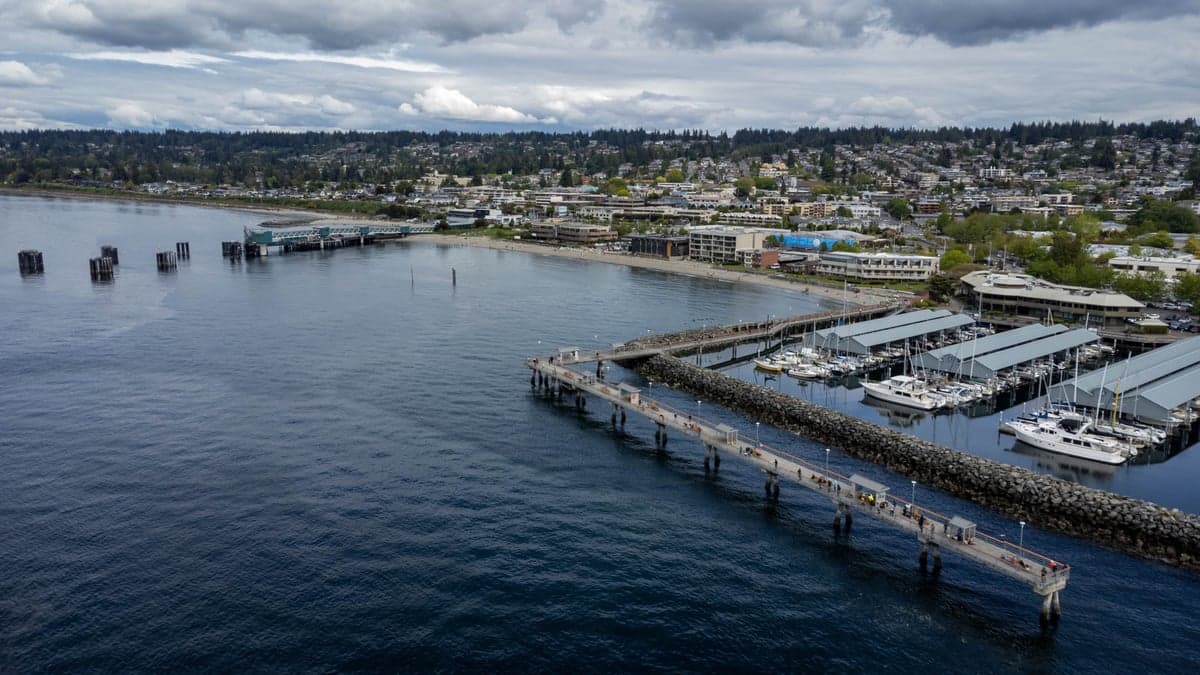
Photo: Wikipedia
Strategic Assessment of Edmonds, WA
Multiple tactical vulnerabilities. Population density, target proximity, or disaster risk are likely compounding. A retreat property and exit planning is required.
What does the Strategic Assessment tell us?
Our Strategic Assessment grades tactical survivability of an area. Major population centers, military targets, fallout zones, natural disasters, and border exposure all drive risk — lower exposure means a more defensible position in a crisis.
This is heavily inspired by Joel Skousen's Strategic Relocation book. Highly recommended you checkout the book ($)What does this tell us?
Our Strategic Assessment grades tactical survivability of an area. Major population centers, military targets, fallout zones, natural disasters, and border exposure all drive risk — lower exposure means a more defensible position in a crisis.
This is heavily inspired by Joel Skousen's Strategic Relocation book. Highly recommended you checkout the book ($)Strategic Pillars

Key Distances
Regional Safe Places
Below is our recommended "safe zones" in Washington and the surrounding area based on our strategic heuristics. For most people, it's unrealistic to live in a “safe zone” full-time due to work, family or other personal reasons. They tend to be more rural. However, many of these areas are perfect for second homes and retreat properties that double as a vacation home or even a short-term rental.
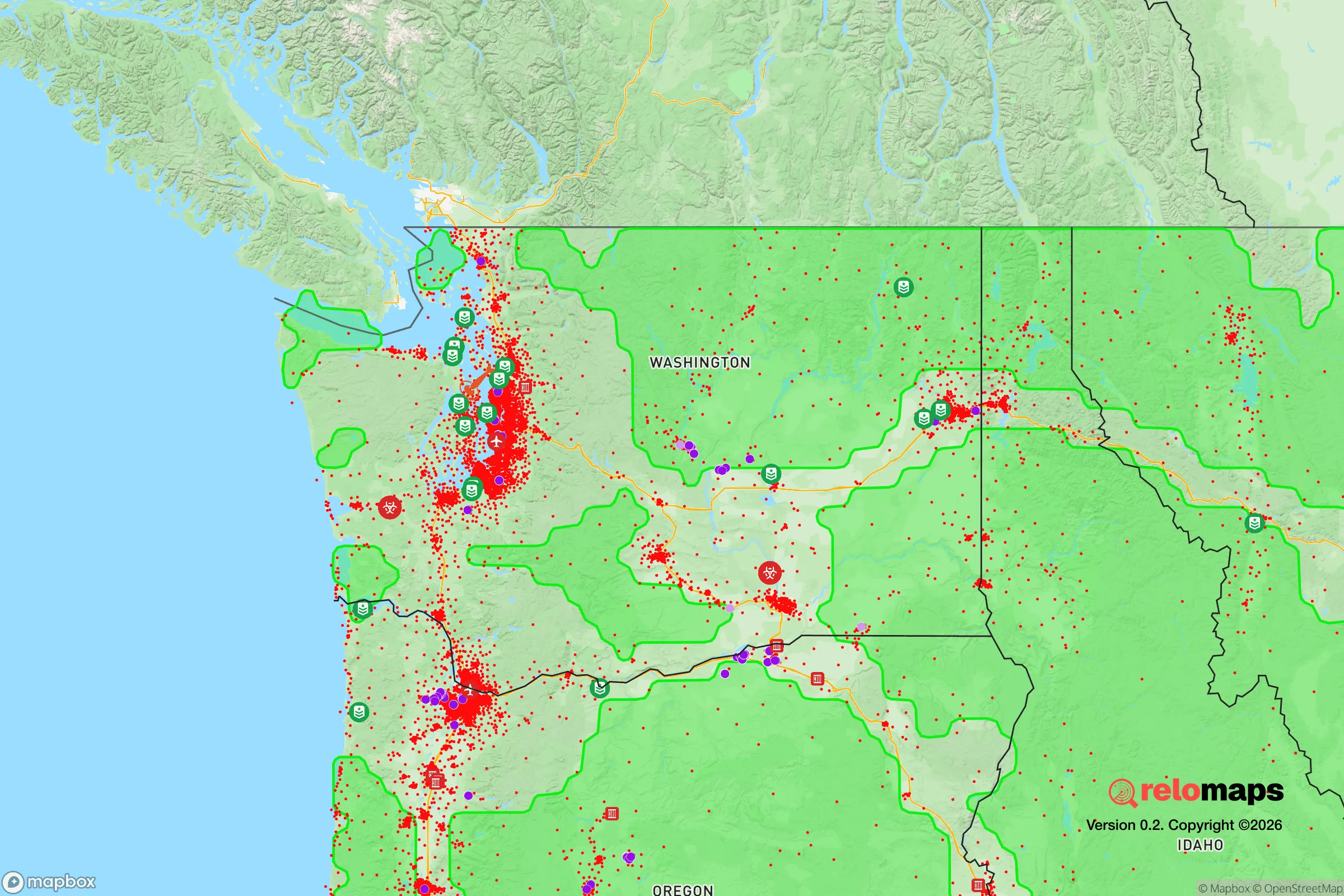
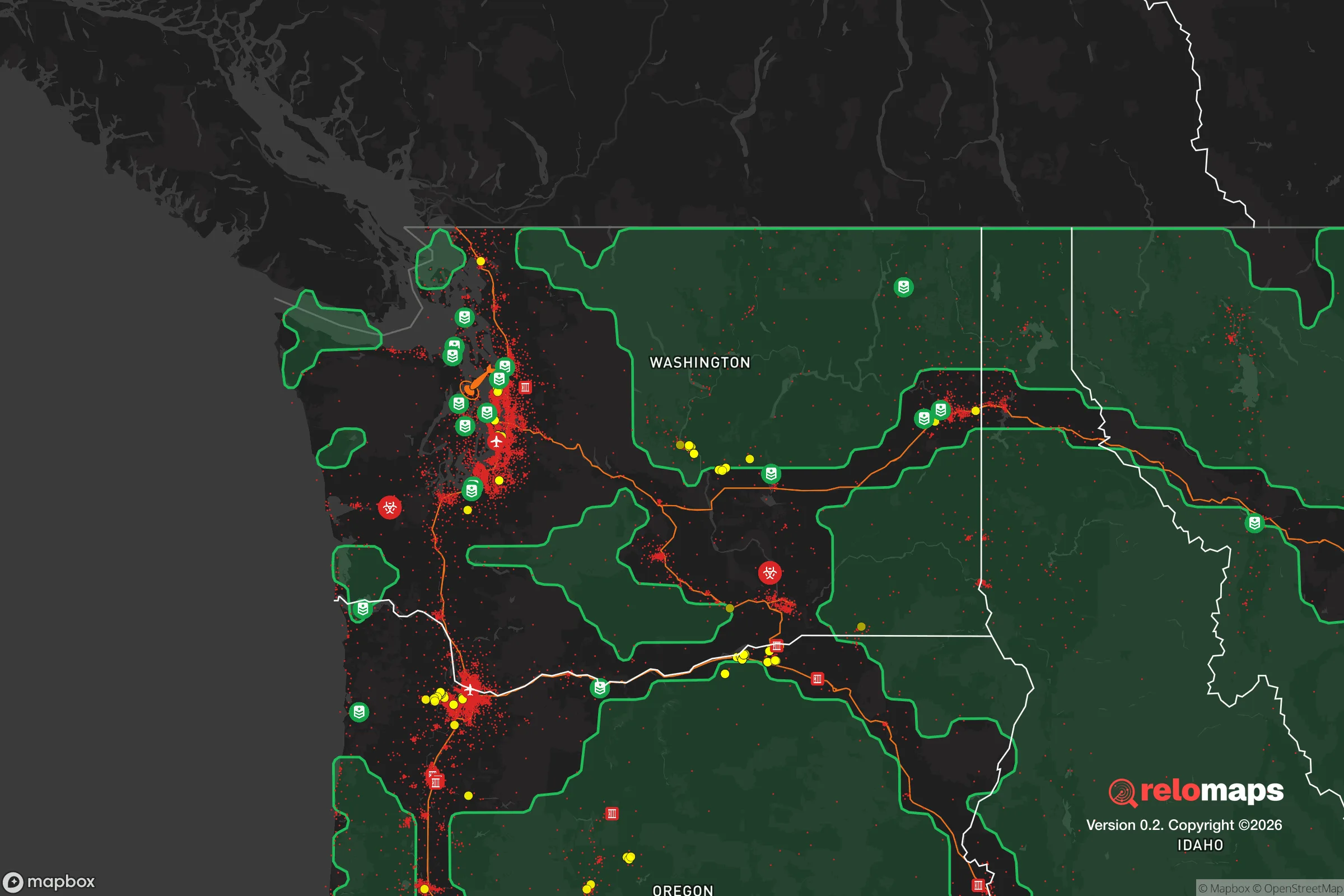


Important Note: For informational purposes only. This does not mean nothing bad ever happens in the green zones. Please use common sense. This is based on public data and modeled with AI. We tried to take a conservative approach but mistakes happen. We update this regularly as new information becomes available.
Solar Generator Recommendations
Backup power matters more here than in safer locations. We've picked three solar generators across budgets and capacity tiers — start with the budget unit if you only need a few essentials, or step up if you want to run a fridge and HVAC for days at a time.

Jackery Portable Power Station Explorer 300
Budget OptionPower on the Go: Weighing only 11 lbs, it's convenient to set up and store with book-sized foldable solar panels

BLUETTI Portable Power Station AC180
Designed for both indoor and outdoor scenarios, AC180 is highly capable as it has a robost capacity and continuous output power.

EF ECOFLOW DELTA Pro Ultra Power Station
Upgraded PickEcoFlow DELTA Pro Ultra is a whole-home energy system designed to grow with your family. Integrated with the Smart Home Panel 2, it scales to meet your evolving energy needs — keeping your home powered, intelligent, and secure through every stage of life.
We earn a commission, at no additional cost to you.
Strategic Assessment Analysis
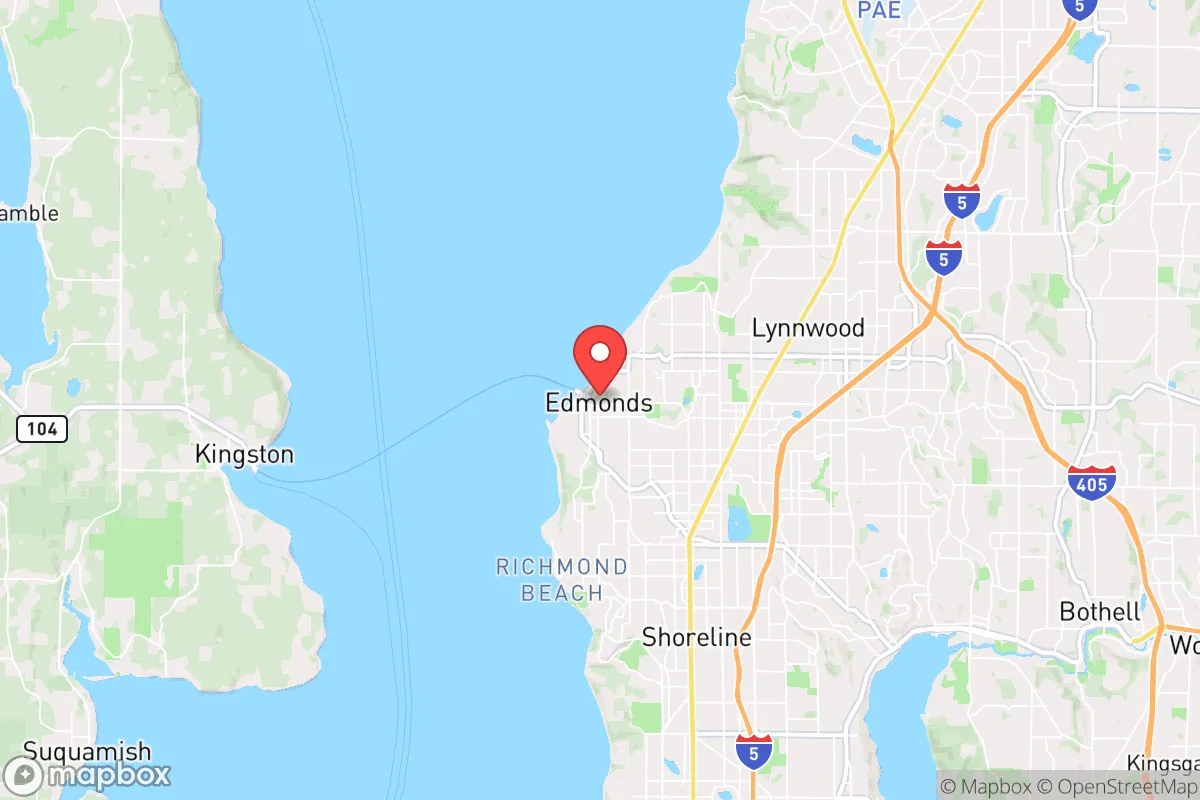
Edmonds, Washington, presents a mixed strategic picture for the conservative prepper or survivalist. Its location on Puget Sound, roughly 15 miles north of Seattle, offers some natural advantages but also places it uncomfortably close to a major metropolitan area that could become a focal point for civil unrest, resource scarcity, and cascading infrastructure failures. While the city itself has a reputation for being a quiet, affluent suburb, its proximity to Seattle, the Port of Seattle, and the region's major transportation corridors means that any large-scale disaster—whether economic collapse, earthquake, or social breakdown—would likely ripple through Edmonds with little delay. For those prioritizing long-term resilience, Edmonds is a location that demands careful, sober assessment rather than blind optimism.
Geographic position and natural advantages for long-term survival
Edmonds sits on a bluff overlooking the Puget Sound, with the Olympic Mountains to the west and the Cascade Range to the east. This position provides a moderate maritime climate that supports year-round gardening and reduces the risk of extreme temperature swings, which is a genuine asset for anyone planning to grow food or maintain off-grid water supplies. The city's waterfront and marina offer potential access to marine resources—fishing, crabbing, and shellfish—though these are heavily regulated and would likely be contested in a crisis. The surrounding Snohomish County has ample forested land and rural pockets, particularly to the north and east, which could serve as retreat zones if Edmonds itself becomes untenable. However, the city's geography is not defensible: it is a narrow strip of development along the Sound, with only a few major roads (I-5, Highway 99, and the Edmonds-Kingston ferry) connecting it to the rest of the region. In a grid-down scenario, those chokepoints would become liabilities, not assets.
Risks, exposures, and proximity to fallout-relevant landmarks
The most glaring vulnerability for Edmonds is its proximity to Seattle and the broader Puget Sound urban corridor. Seattle is a primary target for any large-scale terrorist attack, EMP strike, or civil unrest scenario, and Edmonds lies within the blast radius of any major event at the Port of Seattle, Boeing Field, or the region's numerous tech and military installations. The city is also within 20 miles of Naval Base Kitsap (Bangor), which houses a significant portion of the U.S. nuclear submarine fleet. In a conflict scenario, that base would be a high-value target, and Edmonds sits directly in the potential fallout zone. Additionally, the I-5 corridor, which runs just east of Edmonds, is a critical supply route that would be choked with refugees and looters in any emergency. The city's own infrastructure—power lines, water mains, and natural gas pipelines—is aging and vulnerable to the region's seismic activity. A Cascadia Subduction Zone earthquake would likely sever all road and utility connections to Seattle and the east side, leaving Edmonds isolated and dependent on its own resources. For a relocator, these are not abstract risks; they are near-certainties over a 20- to 30-year horizon.
Practical resilience for a relocator: food, water, energy, and defensibility
For the prepper-minded individual, Edmonds offers a mixed bag. The city has a robust local food scene with farmers' markets and community gardens, but these are not designed for crisis-level self-sufficiency. The average household in Edmonds has less than a quarter-acre lot, limiting space for serious gardening or livestock. Water is a critical concern: the city draws from the Spada Lake Reservoir via the Snohomish County PUD, a system that is vulnerable to earthquake damage and power outages. A well is not an option for most properties due to the area's geology and urban density. Rainwater catchment is possible, but the region's long, dry summers (June through September) mean that storage capacity must be substantial. Energy-wise, the grid is reliable under normal conditions, but the area's reliance on hydroelectric power (over 70% of the state's electricity) means that a drought or dam failure would cripple the region. Solar is viable, but the Pacific Northwest's cloud cover reduces output significantly in winter. Defensibility is poor: Edmonds is a dense, suburban community with no natural barriers to entry. The waterfront and ferry terminal create a funnel for people fleeing Seattle, and the city's police force is small relative to the population. In a breakdown scenario, Edmonds would likely be overrun within days. For those serious about resilience, the city is better viewed as a staging point or a temporary base rather than a long-term retreat.
The overall strategic picture for Edmonds is one of calculated risk. For a conservative relocator who values community, moderate climate, and access to marine resources, it is not a terrible choice—provided they have a clear exit plan and a secondary location further inland or north (e.g., Skagit County or the San Juan Islands) for when things go sideways. The city's affluence and liberal politics may also create friction for those with a prepper mindset, as local regulations on firearms, building codes, and land use are restrictive. If you are looking for a place to ride out the coming storms with a high degree of self-sufficiency, Edmonds is not that place. But if you need a base within striking distance of Seattle's resources—and you have the discipline to maintain a low profile, stockpile supplies, and build relationships with like-minded neighbors—it can serve as a viable, if imperfect, option. Just do not expect to stay put when the lights go out.

* Values derived from national, state, county, city and local statistics and may differ in a specific area. Last updated: 2026-04-19T04:24:16.000Z
Narrative content on this page is AI-generated and may contain mistakes. Verify any details that matter before acting on them.
ReloMaps may earn a commission from affiliate links at no extra cost to you.

