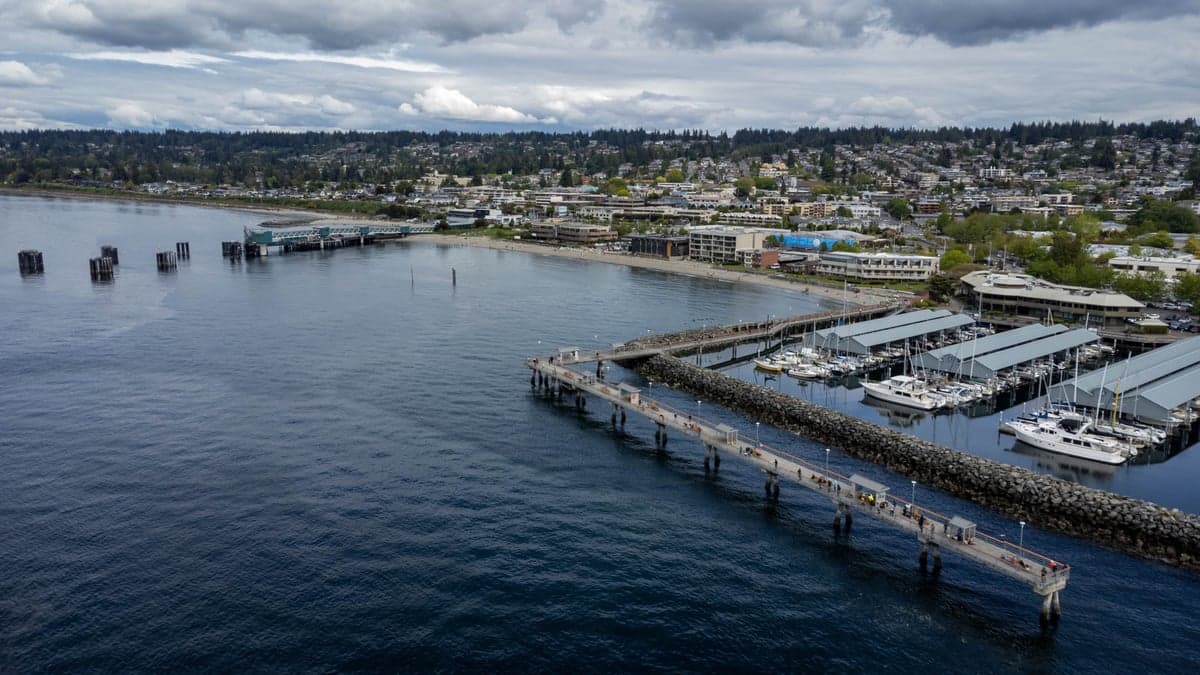
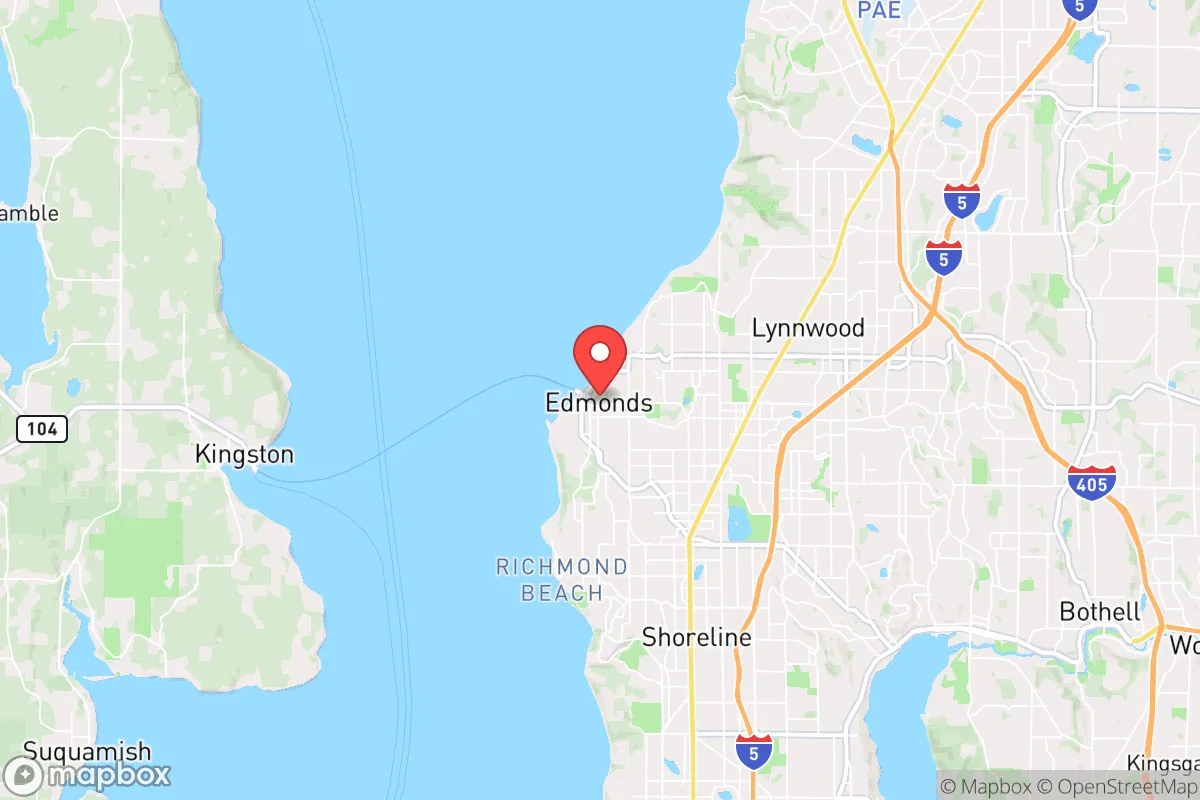
Photo: Wikipedia
Quality of Life in Edmonds, WA
A high quality of life with strong walkability, manageable living costs, healthy neighborhood signals, and solid amenity access.
What does Quality of Life tell us?
Quality of Life blends cost of living, nearby amenities, socioeconomic signals, and neighborhood character. City-level scores represent the whole municipality; individual neighborhoods can differ.
What does this tell us?
Quality of Life blends cost of living, nearby amenities, socioeconomic signals, and neighborhood character. City-level scores represent the whole municipality; individual neighborhoods can differ.
Cost of Living
115% above national average
The Real Cost of Living in Edmonds, WA for 2026
| Tier | Individual | Family (4) |
|---|---|---|
| Survival | $30k | $56k |
| Comfortable | $162k | $239k |
| Luxury | $210k+ | $325k+ |
| Elite (Top 5%) | $280k+ | $434k+ |
49%
The Area Signal
A metric tracking the socioeconomic signals of the area.


Hobbies
Explore the areaGroceries
0 within 10 miles
Gas
0 within 10 miles
Hospital
3 within 20 miles
Airport
SEA — Seattle-Tacoma International
Post Office
USPS — Redmond, WA
Critical Amenities
Quality-of-Life Analysis
Edmonds, Washington, is an affluent waterfront community on Puget Sound where the median home value of $840,200 and a cost-of-living index of 215 (more than double the U.S. average) attract established professionals, empty-nesters, and families trading Seattle’s intensity for walkable neighborhoods and saltwater views. The city’s population of roughly 42,000 skews older and more educated than the national median, with a notable concentration of healthcare, tech, and aerospace workers who commute to Boeing’s Everett plant or Amazon’s Seattle headquarters. Edmonds balances small-town charm with proximity to major employment centers, making it a premium choice for those who prioritize quality of life over raw affordability.
How housing costs and affordability compare to Seattle and Lynnwood
Edmonds sits firmly in the top tier of Snohomish County housing markets. The median home value of $840,200 is roughly 15% below Seattle’s median but nearly double that of nearby Lynnwood ($440,000) and Marysville ($520,000). Renters face a median of $1,850 per month, which undercuts Seattle’s $2,100 average but still represents a significant premium over Everett’s $1,550. The cost-of-living index of 215 is driven primarily by housing—utilities and groceries run only 10–15% above national averages. Property taxes remain moderate for Washington (around 0.9% of assessed value), but the lack of a state income tax means high earners keep more of their paychecks. For buyers, the trade-off is clear: Edmonds demands a six-figure household income to enter the market, but offers better square footage and yard space than comparable Seattle neighborhoods like Ballard or Fremont.
What daily life is like for families and professionals
Edmonds’ daily rhythm revolves around its historic downtown, the waterfront Edmonds Ferry Terminal, and a highly rated school system. The Edmonds School District serves the city with a 14:1 student-teacher ratio and consistently ranks among Washington’s top 20% for test scores, particularly at Edmonds-Woodway High School and College Place Middle School. The average commute of 27.6 minutes is manageable by regional standards—drivers reach downtown Seattle in 25–35 minutes via I-5 or the Sounder train, while the Kingston-Edmonds ferry offers a scenic alternative for Kitsap County workers. Amenities include the Edmonds Center for the Arts, a 400-seat performing arts venue; the Edmonds Marsh, a 22-acre wildlife preserve; and over 20 parks, including the popular Marina Beach Park. The city’s walk score of 68 and bike score of 52 reflect a car-dependent but pedestrian-friendly core, with most errands concentrated along Main Street and Highway 99. Restaurants lean toward farm-to-table and seafood, with local staples like Salt & Iron and Arnie’s attracting both residents and day-trippers.
Edmonds is best suited for professionals and families who can absorb its housing premium in exchange for strong schools, a low-crime environment (violent crime rates are roughly half the national average), and direct access to Puget Sound recreation. Remote workers and retirees also thrive here, drawn by the ferry connections, the Edmonds Library’s robust programming, and the slower pace compared to Seattle. Those on tighter budgets should look to Lynnwood or Mountlake Terrace, where housing costs drop 30–40% but schools and walkability decline. For buyers willing to pay for a coastal lifestyle with a 27-minute commute, Edmonds delivers a rare combination of natural beauty, civic investment, and urban proximity that few Puget Sound suburbs can match.

Crime in Edmonds, WA
Generally safer than 68% of comparable U.S. locations.
Violent CrimeViolent Crime Analysis
Property CrimeProperty Crime Analysis
Crime Analysis
Edmonds, Washington, presents a mixed safety profile for prospective residents. While the city’s violent crime rate of 205.2 incidents per 100,000 residents is notably lower than the national average, its property crime rate of 2,024.3 per 100,000 exceeds the national figure, reflecting a common challenge in suburban communities near major metro areas. This combination means that while the risk of violent confrontation is relatively low, residents face a heightened likelihood of theft, burglary, and vehicle-related crime.
Crime in context
Edmonds’ violent crime rate is roughly 41% below the national average, placing it among safer suburbs for personal safety. However, its property crime rate is approximately 15% above the national average, a pattern consistent with many cities in the Seattle metropolitan area. This disparity is partly attributable to the broader regional context: Snohomish County, like King County, has seen progressive prosecutorial policies that critics argue prioritize diversion and reduced incarceration over deterrence. These policies, while intended to address systemic inequities, have been linked to higher recidivism and a perception that property crimes carry minimal consequences. For Edmonds residents, this translates into a persistent property crime problem that feels disconnected from the city’s otherwise tranquil reputation.
What residents experience
Daily life in Edmonds is generally safe, but property crime is a tangible concern. Residents commonly report package thefts from porches, bicycle thefts, and occasional car break-ins, particularly in areas near the ferry terminal and downtown commercial corridors. The city’s police department has responded with targeted patrols and a community alert system, but the underlying issue is systemic: progressive district attorneys in Snohomish County have adopted policies that frequently result in no jail time for first-time property offenders and reduced charges for repeat offenders. This approach, while intended to reduce mass incarceration, has frustrated many residents who feel the justice system prioritizes offender rehabilitation over victim restitution and public safety. The result is a sense that property crime is a low-risk, high-reward activity for criminals, undermining the community’s quality of life.
Neighborhood-level variation is modest but notable. Areas closer to the waterfront and downtown Edmonds experience slightly higher property crime due to foot traffic and tourist activity, while residential neighborhoods farther inland—such as those near Edmonds-Woodway High School—report fewer incidents. Violent crime remains rare across all neighborhoods, with most incidents concentrated in a few apartment complexes near Highway 99. For families and retirees, the primary safety consideration is not personal danger but the persistent nuisance of property crime, a trade-off common in desirable suburbs adjacent to major progressive metro areas.
* Values derived from national, state, county, city and local statistics and may differ in a specific area. Last updated: 2026-04-19T04:24:16.000Z
Narrative content on this page is AI-generated and may contain mistakes. Verify any details that matter before acting on them.
ReloMaps may earn a commission from affiliate links at no extra cost to you.

