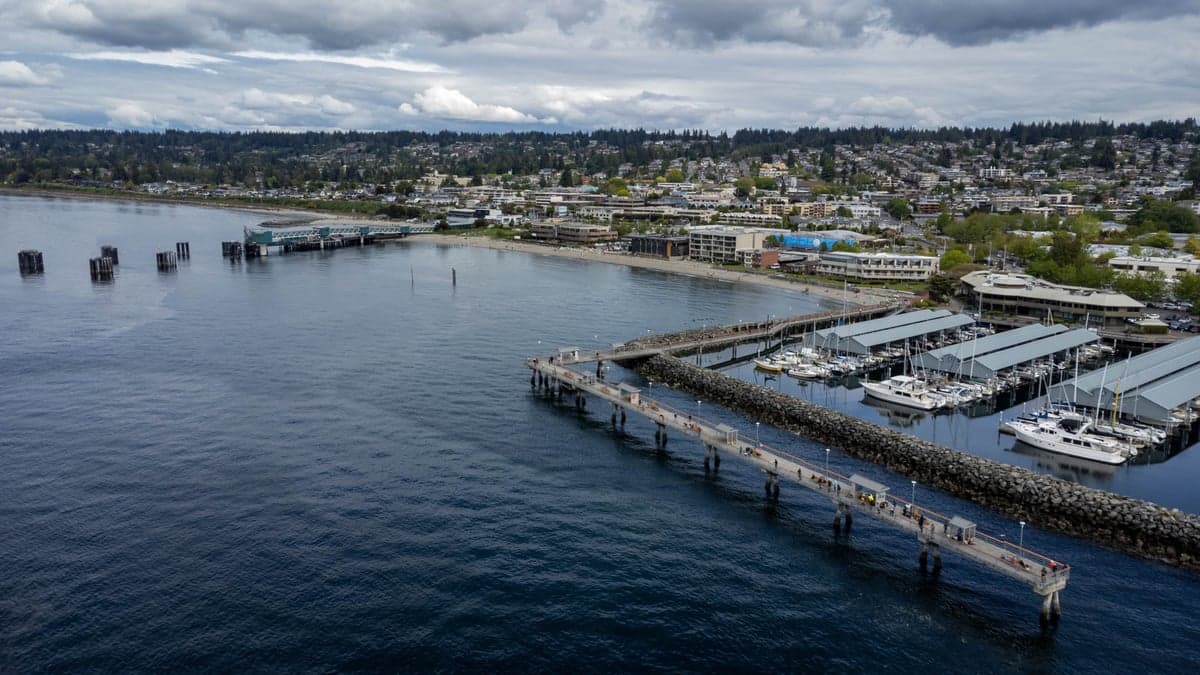
Photo: Wikipedia
Political ClimatePolitical Climate in Edmonds, WA
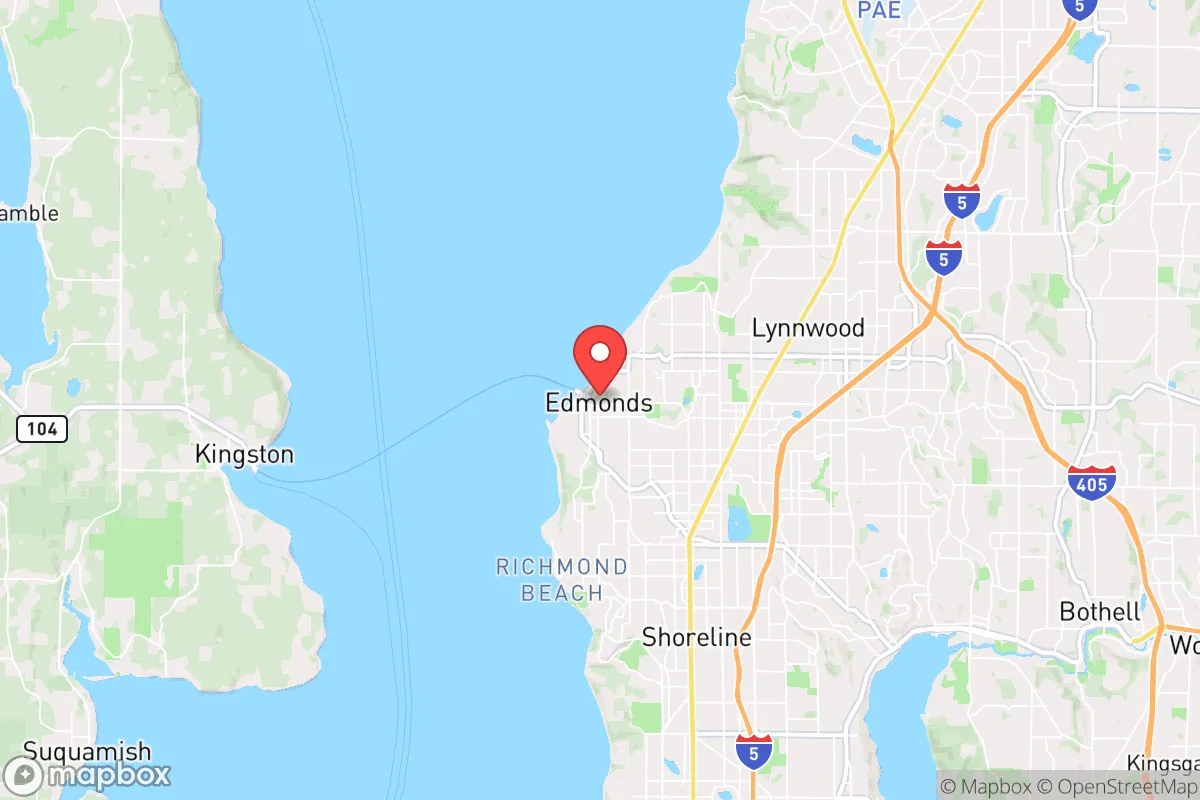
District shown is the primary district for this city’s centroid. Cities may span multiple districts.
Local Political AnalysisPolitical Analysis of Edmonds, WA
Edmonds leans heavily Democratic, with a Cook PVI of D+12, meaning it votes about 12 points more Democratic than the national average. That’s a pretty solid blue anchor, and it’s been trending that way for a while now. If you’re looking at the political landscape here, you’re seeing a place that’s moved from a moderate, live-and-let-live town to one where progressive policies are the norm, and frankly, that shift has come with some real costs to personal freedoms and local control.
How it compares
To get a feel for Edmonds’ politics, you have to look at its neighbors. Head north to Lynnwood or Mountlake Terrace, and you’ll find similar Democratic strongholds, though maybe a bit less affluent and with a slightly more working-class vibe. But drive just a few miles east to Mill Creek or Bothell, and you start seeing more of a purple-to-reddish tint, especially in local races and school board elections. The real contrast is south toward Shoreline and Seattle, where the politics get even more progressive. Edmonds sits in that suburban bubble where the city council and school board are dominated by folks who see government as the solution to everything, from housing density to business regulations. It’s a far cry from the more independent, small-town feel that used to define this area.
What this means for residents
For the average person living here, the political climate translates into a lot of rules and mandates that can feel suffocating. You’ve got strict zoning laws that limit what you can do with your own property, a push for higher taxes to fund programs you might not agree with, and a general attitude that the city knows best. The school board has been a battleground, with curriculum choices and library books becoming flashpoints. If you value your Second Amendment rights, you’ll find Edmonds increasingly hostile, with local ordinances that make it harder to carry or store firearms. The city council has also been aggressive on environmental regulations, like banning natural gas in new construction, which drives up your energy bills and limits your choices. It’s not just about politics; it’s about the daily friction of living under a government that seems to want to manage every aspect of your life.
What daily life is like for families
If you’re raising a family here, you’ll notice the political lean shows up in the little things. The parks and recreation department is full of well-meaning programs, but they often come with a side of social messaging. The local library hosts drag story hours and other events that might not align with your values, and there’s little room for dissent without being labeled intolerant. The housing market is tight, and the city’s push for “missing middle” housing—like duplexes and townhouses in single-family neighborhoods—is changing the character of established blocks. It’s a trade-off: you get a beautiful waterfront and good schools, but you also get a government that’s increasingly comfortable telling you how to live. The long-term trajectory looks like more of the same, with the progressive wing gaining more seats on the council and the county-level politics in Snohomish County adding another layer of blue mandates. If you’re a conservative or even a moderate, you’ll feel like you’re swimming against the current, and that current is only getting stronger.

State Political ClimatePolitical Climate in Washington
State Political AnalysisPolitical Environment in the State
Washington State has shifted from a purple swing state to a solidly Democratic stronghold over the past 20 years, with Democrats now holding every statewide office and supermajorities in both legislative chambers. The state hasn’t voted for a Republican presidential candidate since 1984, and the 2024 election saw Kamala Harris win by roughly 19 points, driven overwhelmingly by King County (Seattle) and its suburbs. For a conservative-leaning individual or family, this means living under a one-party system where policy is set by the progressive wing of the Democratic Party, with little check from the other side.
Urban vs. rural divide
The political map of Washington is a tale of two worlds. The Puget Sound corridor—Seattle, Bellevue, Redmond, Tacoma, and Olympia—generates nearly 60% of the state’s vote and is deeply progressive. King County alone cast more votes for Biden in 2020 than the entire eastern half of the state combined. Meanwhile, rural and exurban counties like Spokane, Yakima, and Clark County (Vancouver) lean Republican, but their influence is diluted by the urban population. A notable shift: Clark County, once reliably red, voted for Biden in 2020 and Harris in 2024, reflecting the influx of Portland-area refugees who brought their politics with them. The only reliably red strongholds are the central and eastern counties—Grant, Adams, Lincoln, and Whitman—where agriculture and small towns dominate. But these areas lack the population to swing statewide elections.
Policy environment
Washington’s policy environment is aggressively progressive. There is no state income tax, which sounds good, but the state relies heavily on a regressive sales tax (9.5% average) and high property taxes to fund an ever-growing budget. The state has a capital gains tax (7% on gains over $250,000) that was upheld by the state supreme court in 2023, a clear sign the court is a policy arm of the legislature. On education, the state mandates comprehensive sex education starting in kindergarten, and parental rights are weak—parents cannot opt their children out of LGBTQ+ curriculum without a fight. Healthcare is heavily regulated, with a state-run insurance exchange and a public option that has driven up costs. Election laws are among the most liberal: universal mail-in voting, same-day registration, and no voter ID requirement. This makes it easy to vote but raises integrity concerns for conservatives. The state also has a strict assault weapons ban (HB 1240, passed in 2023) and a 10-day waiting period for all firearm purchases, effectively making it one of the hardest states to exercise Second Amendment rights.
Trajectory & freedom
Washington is becoming less free by the year, especially for conservatives. The 2023 legislative session was a disaster for personal liberty: HB 1240 banned the sale of many semi-automatic rifles, and SB 5078 created a state-run “firearm violence” office that tracks gun owners. Parental rights took a hit with the “My Health, My Data” act, which allows minors to access gender-affirming care without parental consent. On speech, the state passed a law in 2024 that effectively bans “hate speech” in public schools, a vague standard that chills conservative viewpoints. The state also expanded its paid family leave program, which sounds nice but adds a 0.6% payroll tax on workers. Property rights are under threat from the state’s Growth Management Act, which limits development in rural areas and has driven up housing costs. The only bright spot: a 2024 initiative to repeal the capital gains tax failed, but a new initiative to require a two-thirds legislative vote for tax increases is gaining traction. Still, the trend is clear: more regulation, higher taxes, and less individual freedom.
Civil unrest & political movements
Washington has a long history of civil unrest, most notably the 2020 CHOP/CHAZ occupation in Seattle, where six blocks were taken over by armed activists for three weeks, resulting in two deaths. The city’s response—or lack thereof—was a national embarrassment. Since then, organized left-wing activism has shifted to the state capitol in Olympia, where groups like Washington Bus and Moms Demand Action lobby for stricter gun laws and higher taxes. On the right, the Washington State Republican Party is fractured and ineffective, but grassroots groups like the Washington Gun Rights Coalition and the Family Policy Institute of Washington fight an uphill battle. Immigration politics are hot: Washington is a sanctuary state, with a 2019 law (HB 1020) that prohibits local law enforcement from cooperating with ICE. This has led to tensions in border counties like Yakima and Spokane, where illegal crossings have increased. Election integrity remains a flashpoint: the 2020 election saw widespread use of ballot drop boxes, and a 2024 audit found thousands of duplicate registrations, though the state dismissed concerns. A new resident will notice the political divide in everyday life—Seattle’s homeless encampments and open drug use versus Spokane’s quieter, more conservative suburbs.
Projection
Over the next 5-10 years, Washington will likely become even more progressive. The state is growing fastest in the Seattle suburbs (Redmond, Issaquah, and Bothell), which are solidly blue, while rural counties are losing population. The 2024 election saw Democrats gain seats in the legislature, and the 2026 midterms are expected to be a wash. The state’s Supreme Court is now 7-2 liberal, and the governor’s mansion is held by Bob Ferguson, a progressive who has already signaled support for a state income tax and a public health insurance option. In-migration from California and Oregon is accelerating the leftward shift—new arrivals bring their politics with them. For a conservative, the outlook is grim: expect more gun control, higher taxes, and weaker parental rights. The only hope is a ballot initiative to require supermajority votes for tax hikes, but even that faces legal challenges. If you’re moving here, plan for a state that will feel increasingly like a mini-California within a decade.
Bottom line: Washington is a beautiful state with a thriving economy, but for a conservative-leaning individual or family, the political climate is hostile and getting worse. You’ll pay high taxes, face strict gun laws, and have little say in how your kids are educated. If you value personal freedom, low taxes, and a community that shares your values, look at the rural counties like Spokane or Grant, but know that statewide policy will still affect you. If you’re set on moving here, get involved in local politics and support ballot initiatives—it’s the only way to push back against a one-party system that shows no signs of slowing down.
* Values derived from national, state, county, city and local statistics and may differ in a specific area. Last updated: 2026-04-19T04:24:16.000Z
Narrative content on this page is AI-generated and may contain mistakes. Verify any details that matter before acting on them.
ReloMaps may earn a commission from affiliate links at no extra cost to you.

