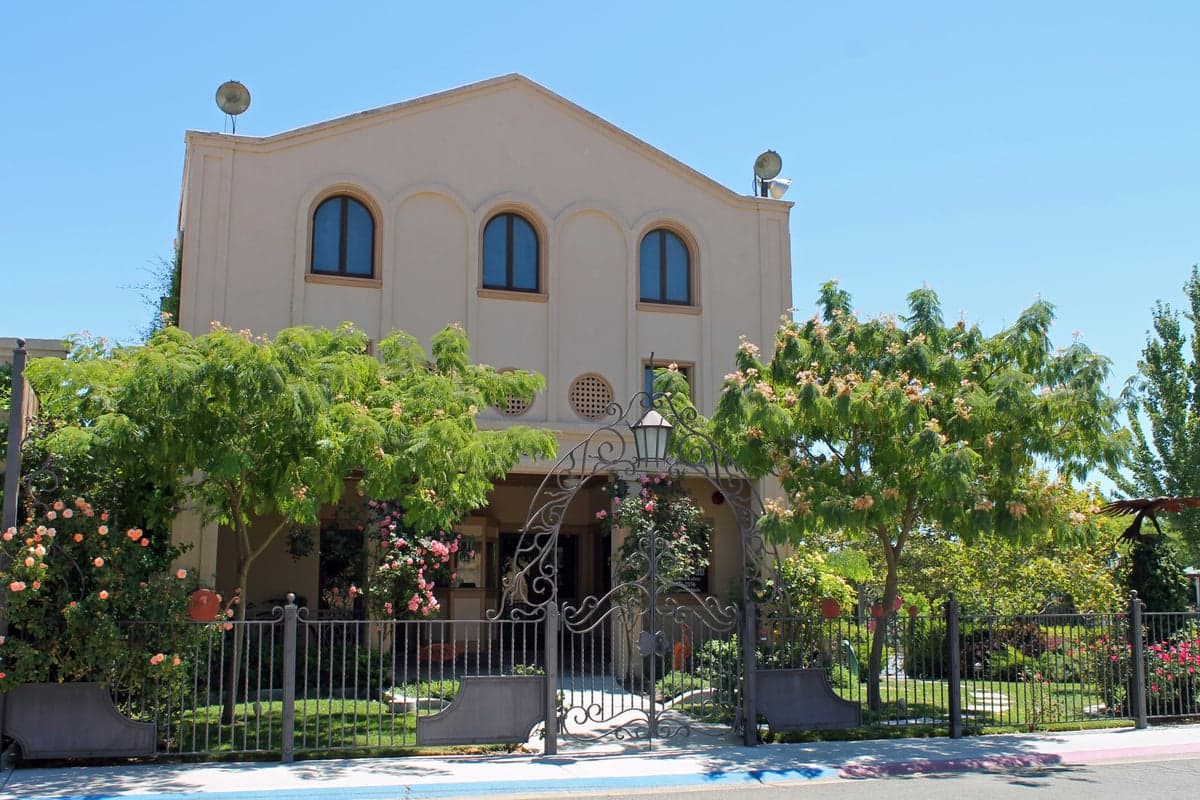
Photo: Wikipedia
Political ClimatePolitical Climate in Elk Grove, CA
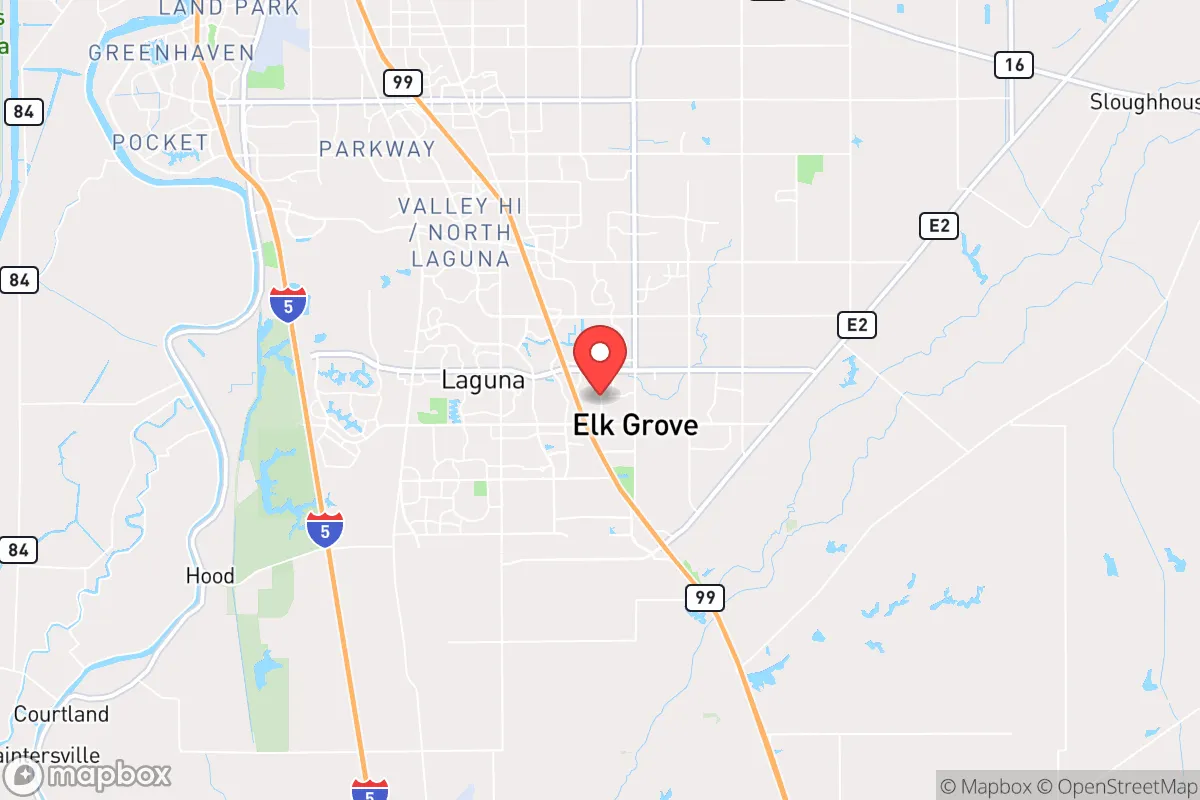
District shown is the primary district for this city’s centroid. Cities may span multiple districts.
Local Political AnalysisPolitical Analysis of Elk Grove, CA
Elk Grove’s political climate has shifted hard and fast over the past decade. The Cook PVI of D+16 tells you the headline—this is a solidly Democratic area now, but it wasn’t always that way. When I first moved here in the early 2000s, Elk Grove was a classic swing suburb, with a lot of fiscally conservative, socially moderate families who just wanted good schools and safe streets. Today, the city council and county board are dominated by progressive voices, and the voting patterns reflect a place that’s moved left even faster than Sacramento County as a whole. The 2020 election saw Biden win Elk Grove precincts by margins closer to 30 points in some neighborhoods, and the trend line is only getting steeper.
How it compares
If you want to see the contrast, drive 15 minutes south to Galt or 20 minutes east to Wilton. Those are still the kind of places where you’ll see Trump signs in yards year-round and where the local school board meetings don’t turn into debates over critical race theory. Elk Grove, by comparison, feels like a different state. The city’s growth has been fueled by transplants from the Bay Area and younger families drawn to new housing developments, and those demographics have brought a reliably progressive voting bloc. The surrounding unincorporated areas of Sacramento County—like Vineyard or the rural pockets near Highway 99—still lean more conservative, but they’re being swallowed up by the same suburban sprawl. The city council’s current makeup is 4-1 Democratic, with the lone Republican often voting against zoning changes and spending increases that feel like they’re coming from a playbook written in San Francisco.
What this means for residents
For a conservative-leaning resident, the practical impact is a slow but steady creep of policies that prioritize government solutions over personal choice. The city has adopted a “progressive” housing element that pushes for higher density zoning, even in established single-family neighborhoods, which means you might see apartment complexes going up where there used to be quiet cul-de-sacs. The school board, now majority progressive, has implemented ethnic studies requirements and pushed for “equity” training that some parents feel sidelines academic rigor. Property taxes are already high in California, but Elk Grove has added local parcel taxes and bond measures that get approved by the same voters who show up for every election. The police department, while still professional, has seen budget debates that feel like they’re testing the waters for defunding—nothing drastic yet, but the rhetoric is there. If you value being left alone to raise your family without the government telling you how to think or what to build, you’ll notice the difference from even five years ago.
The cultural distinction that stands out most is the city’s embrace of “inclusivity” as a governing philosophy. Elk Grove was one of the first suburbs in the region to fly the Pride flag over city hall year-round, and the annual “Elk Grove Multicultural Festival” has become a platform for activist groups rather than a simple community gathering. The long-term trajectory, if current trends hold, is a city that looks more like Davis or Berkeley than the family-friendly suburb it was built to be. For those of us who remember when Elk Grove was a place where you could disagree politically and still share a fence line, that’s a loss worth paying attention to.

State Political ClimatePolitical Climate in California
State Political AnalysisPolitical Environment in the State
California is a deep blue state where Democrats hold a supermajority in the legislature and control every statewide office, but the political reality is far more fractured than the registration numbers suggest. Over the last 20 years, the state has lurched from a purple-leaning-blue battleground into a one-party progressive stronghold, driven largely by massive population growth in coastal metros like Los Angeles, San Francisco, and San Jose. However, the 2020 and 2022 cycles revealed a notable rightward shift in inland and suburban areas, with places like Orange County flipping back toward Republicans and Central Valley counties like Kern and Tulare becoming reliably red. For a conservative considering relocation, the state is a study in contrasts—immense natural beauty and economic opportunity weighed against a government that increasingly treats personal freedom as optional.
Urban vs. rural divide
The political map of California is a tale of two states. The coastal urban crescent—from San Diego up through Los Angeles, the Bay Area, and into Sacramento—votes overwhelmingly Democratic, often by margins of 30 to 50 points. San Francisco County gave Biden 85% of the vote in 2020, while Los Angeles County delivered nearly 2 million more Democratic votes than Republican. In contrast, the vast interior—the Central Valley, the Sierra foothills, and the far north—is deeply conservative. Places like Bakersfield (Kern County), Redding (Shasta County), and El Centro (Imperial County) vote Republican by double digits. The real story is in the suburbs: Orange County, once a GOP stronghold, flipped blue in 2018 and 2020, but in 2022, Republicans flipped two House seats back there, signaling a potential rebalancing. The Inland Empire (Riverside and San Bernardino counties) remains a purple battleground, with fast-growing exurbs like Temecula and Murrieta leaning conservative. For a conservative, the safest political bets are the Central Valley farm towns, the Sierra Nevada foothills, and the far northern counties—but even there, state-level policy overrides local sentiment.
Policy environment
California’s policy environment is a textbook case of progressive governance with a heavy hand. The state has the highest income tax rate in the nation (13.3% for top earners), a state sales tax that can exceed 10% in some cities, and some of the highest gas taxes and property tax rates (though Prop 13 caps annual increases). The regulatory posture is aggressive: California effectively sets national standards for vehicle emissions, energy efficiency, and consumer product labeling. In education, the state has a universal school lunch program, mandates ethnic studies for high school graduation, and has banned school boards from notifying parents if a child changes their gender identity—a major flashpoint for parental rights. Healthcare is heavily regulated, with a state-run insurance exchange and a push toward single-payer that has stalled. Election laws are among the most liberal: universal mail-in ballots, same-day registration, and no voter ID requirement. For a conservative, the cumulative effect is a state that taxes heavily, regulates pervasively, and prioritizes government solutions over individual choice.
Trajectory & freedom
California is becoming less free by almost any measure, and the trend has accelerated since 2020. On gun rights, the state has some of the strictest laws in the nation—an assault weapons ban, a 10-day waiting period, a "may-issue" concealed carry regime that was recently tightened further by SB 2 (2023), which effectively bans carrying in most public places. On parental rights, AB 1955 (2024) prohibits school districts from requiring staff to notify parents about a child's gender identity, overriding local school board decisions. On speech, the state has cracked down on "hate speech" in public forums and on college campuses, though enforcement is uneven. On medical autonomy, California has codified abortion rights into the state constitution (Prop 1, 2022) and expanded taxpayer-funded coverage for illegal immigrants. Property rights are under constant assault from rent control expansions (AB 1482 caps annual rent increases at 5% plus inflation) and a growing push for "social housing" that would compete with private landlords. The only area where freedom has expanded is in cannabis—recreational use is fully legal and regulated—but even that comes with heavy taxation and local opt-out provisions. For a conservative, the trajectory is clear: more mandates, more taxes, and less room for personal choice.
Civil unrest & political movements
California has been a flashpoint for civil unrest and political movements for decades. The 2020 George Floyd protests in Los Angeles, Oakland, and San Francisco resulted in billions in property damage and a lasting shift in public safety policy—many cities defunded police, only to reverse course after crime spikes. The state is home to the largest organized activist movements on both sides: the progressive "California Democratic Party" machine, backed by labor unions and environmental groups, and a growing conservative "California Republican Party" that has gained ground in the Central Valley and inland suburbs. Immigration politics are a constant flashpoint—California is a "sanctuary state" (SB 54, 2017), limiting local law enforcement cooperation with federal immigration authorities, and has expanded health coverage to all illegal immigrants regardless of age. Secession rhetoric is alive on both fringes: the "Calexit" movement (2016-2018) fizzled, but a more serious "State of Jefferson" movement in the far north and rural east continues to push for a separate, conservative state. Election integrity remains a hot-button issue—the state's universal mail-in voting system (permanent since 2021) has no voter ID requirement, and while fraud is rare, trust in the system is low among conservatives. A new resident will see visible homelessness encampments in every major city, frequent protests on college campuses, and a palpable tension between coastal elites and inland traditionalists.
Projection
Over the next 5-10 years, California will likely become more progressive at the state level but more polarized internally. Demographic trends favor the left: the state's population is aging, but younger voters (Gen Z and Millennials) are overwhelmingly Democratic, and immigration from Latin America and Asia continues to fuel blue-leaning growth in coastal areas. However, the exodus of conservatives and middle-class families to Texas, Idaho, and Arizona is accelerating—California lost a congressional seat after the 2020 census for the first time in history, and net domestic migration has been negative for years. The Central Valley and Inland Empire will continue to grow as affordable alternatives to the coast, but they will remain purple-to-red islands in a blue sea. The biggest wildcard is housing: if the state ever seriously reforms zoning and permits more construction, it could slow the exodus and stabilize the tax base. But given the current trajectory—more rent control, more environmental review, more mandates—expect continued out-migration of conservatives and a state government that doubles down on progressive policies. For someone moving in now, the realistic expectation is that your vote will not matter in statewide elections, but your local city council and school board races will be intensely fought and potentially winnable for conservatives in the right areas.
Bottom line for a new resident: If you are a conservative moving to California, you are choosing a state where your political voice will be drowned out at the state level but can still be heard in local races in the right county. You will pay high taxes, navigate heavy regulation, and live under laws that often conflict with your values—especially on parental rights, gun ownership, and free speech. But you will also enjoy world-class natural beauty, a diverse economy, and a climate that is hard to beat. The key is picking your location carefully: stick to the Central Valley (Bakersfield, Fresno), the Sierra foothills (Placerville, Grass Valley), or the far north (Redding, Yreka), and you can find a community that shares your values. Just don't expect the state government to have your back—it won't.
* Values derived from national, state, county, city and local statistics and may differ in a specific area. Last updated: 2026-04-24T15:51:10.000Z
Narrative content on this page is AI-generated and may contain mistakes. Verify any details that matter before acting on them.
ReloMaps may earn a commission from affiliate links at no extra cost to you.

