Photo: Wikipedia
Personal Sovereignty in Ellsworth, ME
Viable for self-reliance. Generally workable, though some barriers may limit total independence.
What does Personal Sovereignty tell us?
Personal Sovereignty measures your capacity for self-reliance and independence with minimal government friction. Higher scores mean fewer barriers between you and the way you want to live... but it assumes you have the space you need and good neighbors.
What does this tell us?
Personal Sovereignty measures your capacity for self-reliance and independence with minimal government friction. Higher scores mean fewer barriers between you and the way you want to live... but it assumes you have the space you need and good neighbors.
State Policy
Energy independence: Importer (30% of energy produced in-state)
Personal Liberty
Homesteading

Personal Liberty Analysis
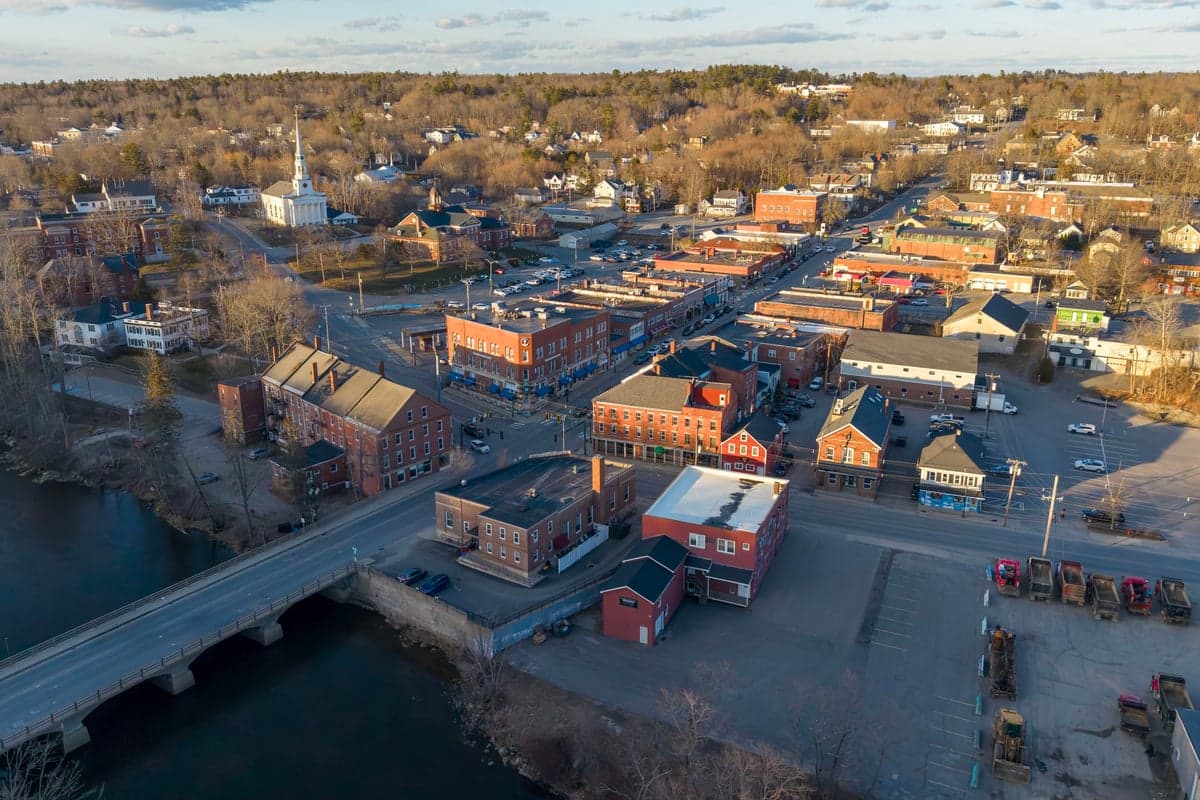
Ellsworth, Maine, offers a notably high degree of personal sovereignty relative to much of the Northeast, functioning as a pocket of relative autonomy within a state that itself balances a strong libertarian streak against progressive coastal influence. For the survivalist or prepper, the city’s position as the Hancock County seat provides a strategic blend of access to essential services and proximity to the vast, sparsely populated woodlands of Downeast Maine, where government presence thins considerably. The local culture leans heavily on self-reliance, a legacy of the region’s logging and fishing heritage, and this translates into a practical, live-and-let-live attitude that is increasingly rare in more regulated urban centers. While Maine is not a free-for-all, Ellsworth’s distance from the policy engines of Portland and Augusta means that many state-level mandates are enforced with a lighter touch, making it a viable base for those seeking to minimize friction with the state.
Tax burden and regulatory posture: How much the state leaves in your pocket
Maine’s tax burden is a mixed bag, but Ellsworth residents benefit from a property tax system that, while not cheap, is predictable and tied to local services rather than sprawling state mandates. The state’s income tax is a flat 5.8% on most income, which is moderate compared to high-tax states like New York or California, but it still represents a significant cut. However, the real story for the sovereignty-minded is the regulatory climate: Maine has a reputation for environmental and land-use regulations that can frustrate development, but in Ellsworth, the local code enforcement is generally pragmatic. The city’s zoning is relatively permissive in its rural outskirts, and there is no county-level planning department to add layers of bureaucracy. For a prepper, the key takeaway is that you can own land, build a modest dwelling, and keep livestock without the kind of permitting nightmares common in the suburban Northeast. The state’s lack of a sales tax on most goods (only 5.5% on prepared food and lodging) also means your purchasing power goes further, especially when stockpiling supplies.
Self-defense and gun law specifics: What you can carry and where
Maine is a constitutional carry state, and Ellsworth fully reflects that. As of 2025, any person 21 or older who is legally allowed to possess a firearm may carry it concealed or openly without a permit. This is a foundational liberty for the survivalist mindset, and it is exercised openly here—you will see sidearms on hips at the local hardware store and in the woods without a second glance. The state preempts local gun ordinances, meaning Ellsworth cannot enact its own restrictions beyond state law, so there is no risk of the city council suddenly banning certain firearms or magazine capacities. There is no waiting period for purchases, and private sales between individuals require no background check or paperwork. The only notable restriction is that carrying in a state-owned building or a school (with exceptions for those with a permit) is prohibited, but these are narrow carve-outs. For the prepper, this means your defensive capabilities are limited only by your own training and discretion, not by government overreach. The local sheriff’s office is generally supportive of Second Amendment rights, and the gun culture is deeply embedded in the community.
Self-reliance and homesteading viability: Lot sizes, zoning, and off-grid feasibility
Ellsworth’s rural character makes it a strong candidate for homesteading and off-grid living, though with some practical caveats. Minimum lot sizes in the city’s rural zoning districts are typically 2 acres, but many parcels outside the urban core are 5 to 20 acres, offering ample space for gardens, small livestock, and even a modest orchard. The city’s zoning code does not explicitly prohibit off-grid systems like solar panels, rainwater collection, or composting toilets, but you will need to meet state plumbing and electrical codes if you ever connect to the grid or sell the property. The real advantage is that the local building inspector is accustomed to unconventional setups—many residents heat exclusively with wood, use private wells, and maintain septic systems. There is no county-level health department breathing down your neck for a simple outbuilding. For the serious prepper, the surrounding Hancock County offers thousands of acres of unorganized territory where you can buy land with virtually no zoning at all, though you will be far from emergency services. The trade-off is that winters are long and harsh, so self-reliance means mastering wood heat, snow removal, and food preservation—skills that are respected, not regulated.
Personal liberties: Parental rights, medical autonomy, speech, and property
On personal liberties, Ellsworth sits in a state that has seen significant battles over parental rights and medical autonomy, but the local reality is more favorable than the headlines suggest. Maine has a statewide school choice program that includes charter schools and homeschooling, and Ellsworth’s school district is generally accommodating to parents who wish to opt out of certain curricula or pursue alternative education paths. The state’s vaccine mandate for school attendance was a flashpoint, but enforcement in rural areas like Ellsworth has been inconsistent, and many families simply homeschool or use private options. Medical autonomy is a mixed bag: Maine has a strong public health apparatus, but the local healthcare system (Northern Light Maine Coast Hospital) is not aggressive about enforcing state-level mandates on treatments or procedures. For the prepper, the key is that you can refuse medical interventions without immediate legal consequence, though you may face social pressure. Free speech is robust—Ellsworth is a small city where people speak their minds openly, and there is no local censorship of political or religious expression. Property rights are strong: the state’s “right to farm” law protects agricultural activities from nuisance lawsuits, and there is no state-level rent control or landlord-tenant regime that heavily favors tenants over owners. Eminent domain is rarely used for anything other than public infrastructure, and the local government is not in the business of seizing land for private development.
Overall, Ellsworth provides a level of personal sovereignty that is hard to find in the coastal Northeast, ranking favorably against similar-sized towns in New Hampshire or Vermont for its combination of gun rights, tax structure, and regulatory leniency. It is not a libertarian utopia—Maine still has a state income tax, environmental regulations that can affect land use, and a public health system that occasionally overreaches—but for the survivalist or prepper who values practical autonomy over theoretical purity, it is a solid, defensible base. The city’s small size and rural surroundings mean that government overreach is more a distant threat than a daily reality, and the local culture rewards those who can take care of themselves. If you are looking to escape the tightening grip of urban governance without moving to a remote compound, Ellsworth offers a workable middle ground where your freedoms are largely your own to manage.

* Values derived from national, state, county, city and local statistics and may differ in a specific area. Last updated: 2026-05-01T04:57:29.000Z
Narrative content on this page is AI-generated and may contain mistakes. Verify any details that matter before acting on them.
ReloMaps may earn a commission from affiliate links at no extra cost to you.

