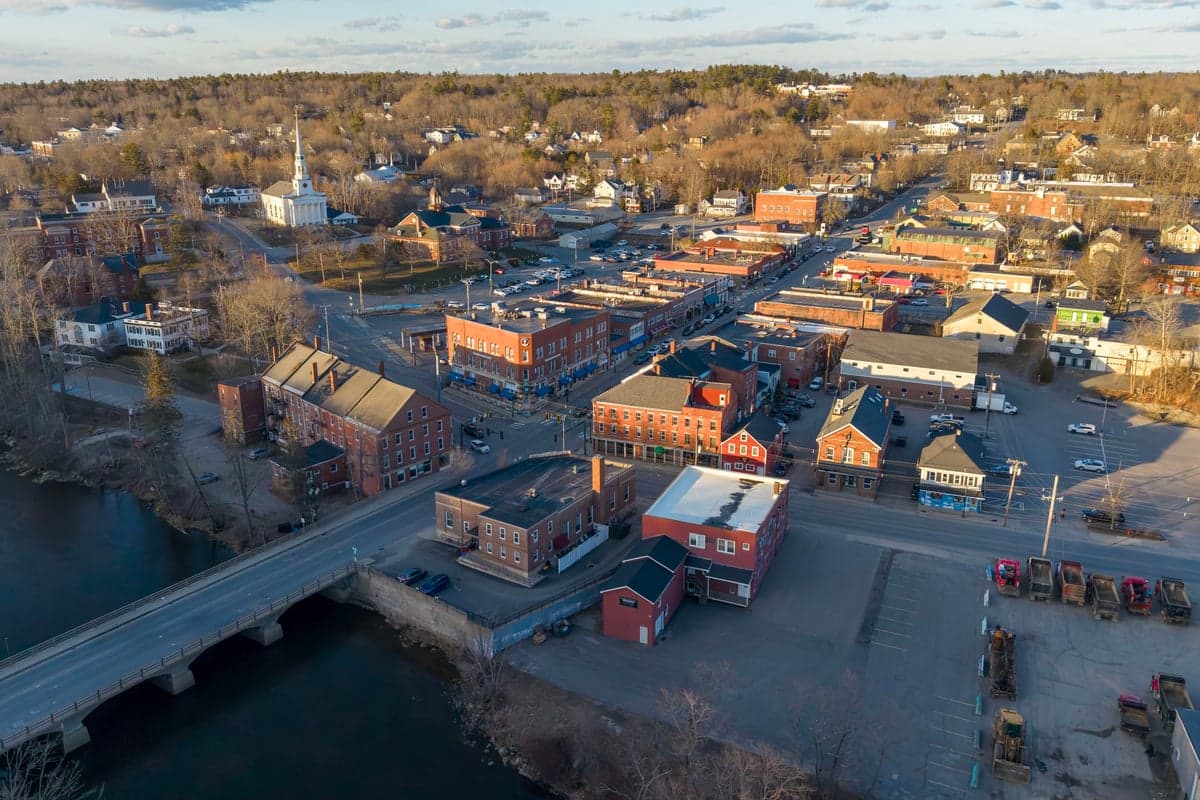
Photo: Wikipedia
Strategic Assessment of Ellsworth, ME
Meaningful friction. Expect exposure to either population pressure, blast zones, or natural disaster risk. Consider buying a retreat property.
What does the Strategic Assessment tell us?
Our Strategic Assessment grades tactical survivability of an area. Major population centers, military targets, fallout zones, natural disasters, and border exposure all drive risk — lower exposure means a more defensible position in a crisis.
This is heavily inspired by Joel Skousen's Strategic Relocation book. Highly recommended you checkout the book ($)What does this tell us?
Our Strategic Assessment grades tactical survivability of an area. Major population centers, military targets, fallout zones, natural disasters, and border exposure all drive risk — lower exposure means a more defensible position in a crisis.
This is heavily inspired by Joel Skousen's Strategic Relocation book. Highly recommended you checkout the book ($)Strategic Pillars

Key Distances
Regional Safe Places
Below is our recommended "safe zones" in Maine and the surrounding area based on our strategic heuristics. For most people, it's unrealistic to live in a “safe zone” full-time due to work, family or other personal reasons. They tend to be more rural. However, many of these areas are perfect for second homes and retreat properties that double as a vacation home or even a short-term rental.
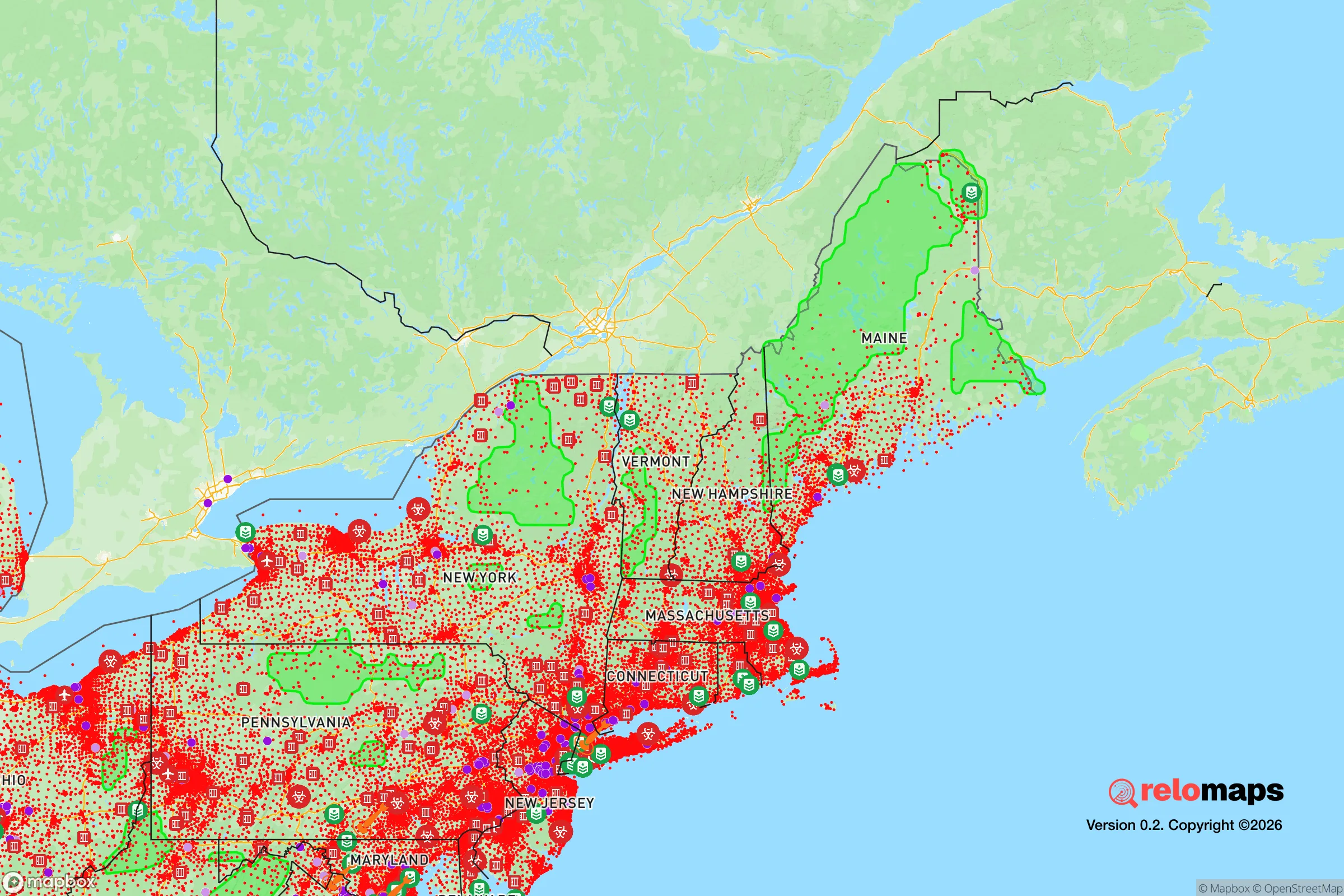
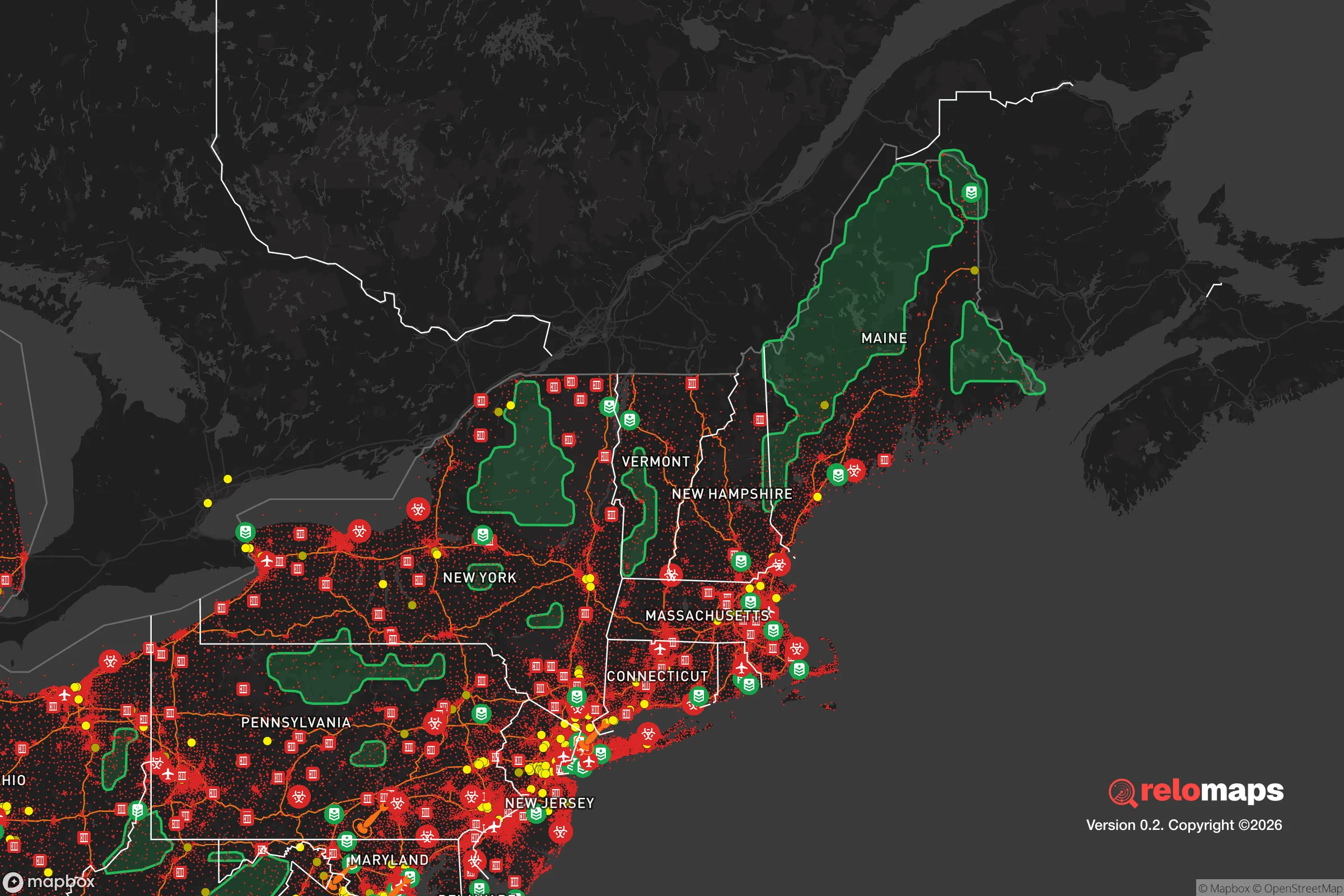


Important Note: For informational purposes only. This does not mean nothing bad ever happens in the green zones. Please use common sense. This is based on public data and modeled with AI. We tried to take a conservative approach but mistakes happen. We update this regularly as new information becomes available.
Solar Generator Recommendations
Backup power matters more here than in safer locations. We've picked three solar generators across budgets and capacity tiers — start with the budget unit if you only need a few essentials, or step up if you want to run a fridge and HVAC for days at a time.

Jackery Portable Power Station Explorer 300
Budget OptionPower on the Go: Weighing only 11 lbs, it's convenient to set up and store with book-sized foldable solar panels

BLUETTI Portable Power Station AC180
Designed for both indoor and outdoor scenarios, AC180 is highly capable as it has a robost capacity and continuous output power.

EF ECOFLOW DELTA Pro Ultra Power Station
Upgraded PickEcoFlow DELTA Pro Ultra is a whole-home energy system designed to grow with your family. Integrated with the Smart Home Panel 2, it scales to meet your evolving energy needs — keeping your home powered, intelligent, and secure through every stage of life.
We earn a commission, at no additional cost to you.
Strategic Assessment Analysis
Ellsworth, Maine, sits in a strategic sweet spot that few relocators fully appreciate: far enough from major population centers to avoid the worst of cascading collapse scenarios, yet close enough to the coast and critical infrastructure to support a self-reliant lifestyle. With a population hovering around 8,000, this Hancock County seat functions as a regional hub for the eastern Maine coast, but it lacks the density and target profile of Bangor or Portland. For a conservative-leaning prepper or survivalist family, Ellsworth offers a rare combination of geographic insulation, natural resource abundance, and low-key civic stability that makes it a credible long-term base for weathering both slow-burn societal decay and acute disaster events.
Geographic position and natural advantages for long-term security
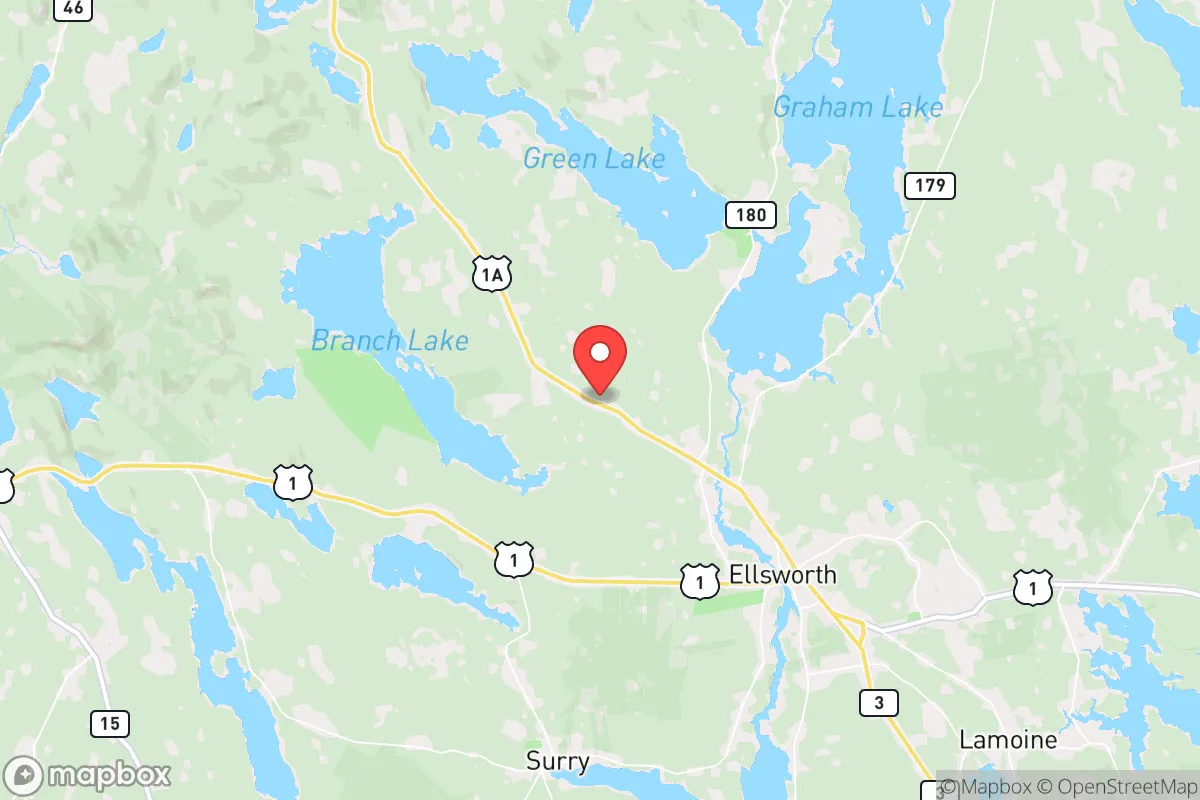
Ellsworth's location at the intersection of U.S. Route 1 and Route 1A places it at the gateway to Acadia National Park and the Down East region, but that same junction also provides multiple egress routes in multiple directions—critical for a relocation node. The city sits roughly 30 miles from the Atlantic coast, which means it benefits from maritime weather moderation without the direct storm surge exposure that plagues coastal towns. The surrounding landscape is a mix of dense mixed forest, low mountains, and hundreds of lakes and ponds, including Branch Lake and Graham Lake, which serve as municipal water sources. This terrain offers natural cover and defensibility; the forested hills and winding two-lane roads create natural choke points that would slow any large-scale movement, whether from fleeing populations or organized threats. The area's low population density—Hancock County averages about 38 people per square mile—means that even a modest retreat property here offers genuine buffer from neighbors, which is a non-negotiable advantage for anyone serious about operational security and long-term sustainability.
Risks, exposures, and proximity to fallout-relevant landmarks
No location is without vulnerabilities, and Ellsworth has a few that demand honest assessment. The most obvious is its proximity to the Maine Yankee nuclear waste storage site in Wiscasset, roughly 50 miles southwest. While the spent fuel is in dry cask storage and not an active reactor, a catastrophic event—whether from sabotage, earthquake, or a direct strike—could render a significant swath of mid-coast Maine uninhabitable for generations. Prevailing winds in this region run west to east, meaning fallout from Wiscasset would push toward the Atlantic, not directly over Ellsworth, but a shift in weather patterns or a secondary event could change that calculus. Additionally, Ellsworth lies about 30 miles from the Portsmouth Naval Shipyard in Kittery, a high-value military target, and roughly 120 miles from Boston—close enough that a major event in the Boston metro area could send waves of refugees up I-95 and Route 1. The city itself has no major industrial or military targets, which is a positive, but its role as a regional commercial hub means it would attract attention from those seeking supplies during a breakdown. The Ellsworth area also sits in a zone of moderate seismic risk; while not California-level, the region has experienced occasional tremors, and the aging infrastructure of dams and bridges along the Union River could be compromised in a quake.
Practical resilience for a relocator: food, water, energy, and defensibility
For a family or individual serious about self-sufficiency, Ellsworth's practical assets are substantial. The city draws its municipal water from Graham Lake, a 1,000-acre reservoir, but the real advantage is the abundance of private wells and surface water across the county. Most rural properties in the area have access to groundwater at reasonable depths, and the numerous ponds and streams provide redundancy for off-grid water collection. The growing season is short—roughly 120 frost-free days—but the soil in the Union River valley is workable for root vegetables, greens, and cold-hardy crops, and the surrounding forests are rich in deer, turkey, and small game. Saltwater fishing in Frenchman Bay and the Gulf of Maine is a 30-minute drive, providing a protein source that doesn't require land ownership. Energy resilience is mixed: Ellsworth is served by Emera Maine (now Versant Power), and the grid is prone to outages from winter storms and nor'easters. However, the region has strong solar potential for a northern latitude, and wood heat is the dominant backup strategy—nearly every rural property has a wood stove or boiler, and firewood is abundant and affordable. Defensibility is good but not fortress-grade: the terrain offers natural cover, and the low population density means fewer eyes on your movements, but the road network is limited enough that a determined group could block the main arteries. A retreat property with a long driveway, a creek or pond on the property, and a southern exposure for solar panels would be the ideal configuration here.
The overall strategic picture for Ellsworth is one of cautious optimism for the prepared relocator. It is not a bug-out location for a weekend warrior; it is a place to build a life with serious contingency planning baked in. The risks from the Wiscasset waste site and the potential for refugee flow from the Boston corridor are real but manageable with proper situational awareness and a well-stocked retreat. The area's natural resources—water, timber, game, and coastal seafood—provide a buffer that most inland locations cannot match. For a conservative family looking to step off the treadmill of urban vulnerability and into a community that still values self-reliance, local knowledge, and neighborly mutual aid, Ellsworth offers a credible foundation. The key is to arrive with skills, not just supplies: know how to process firewood, maintain a well pump, and preserve food without grid power. If you bring that mindset, this corner of Maine will reward you with a level of security that few other regions in the Northeast can still provide.

* Values derived from national, state, county, city and local statistics and may differ in a specific area. Last updated: 2026-05-01T04:57:29.000Z
Narrative content on this page is AI-generated and may contain mistakes. Verify any details that matter before acting on them.
ReloMaps may earn a commission from affiliate links at no extra cost to you.

