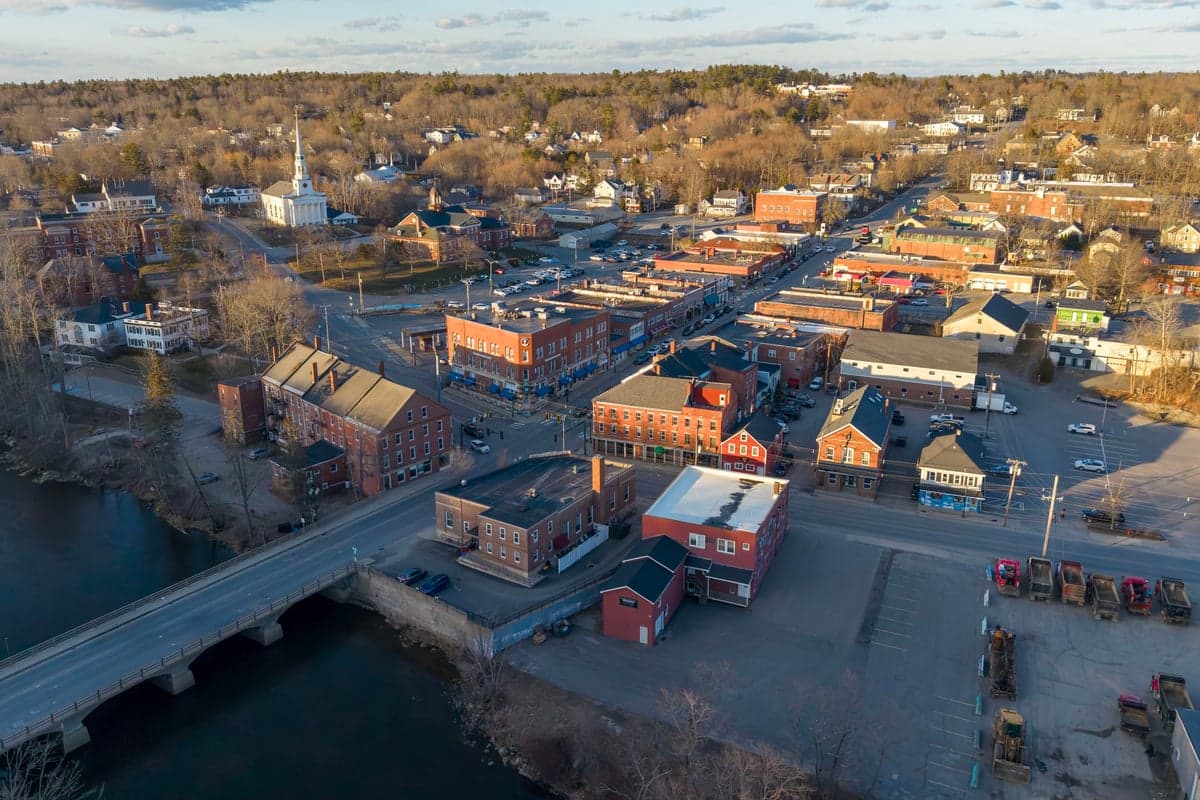
Photo: Wikipedia
Political ClimatePolitical Climate in Ellsworth, ME
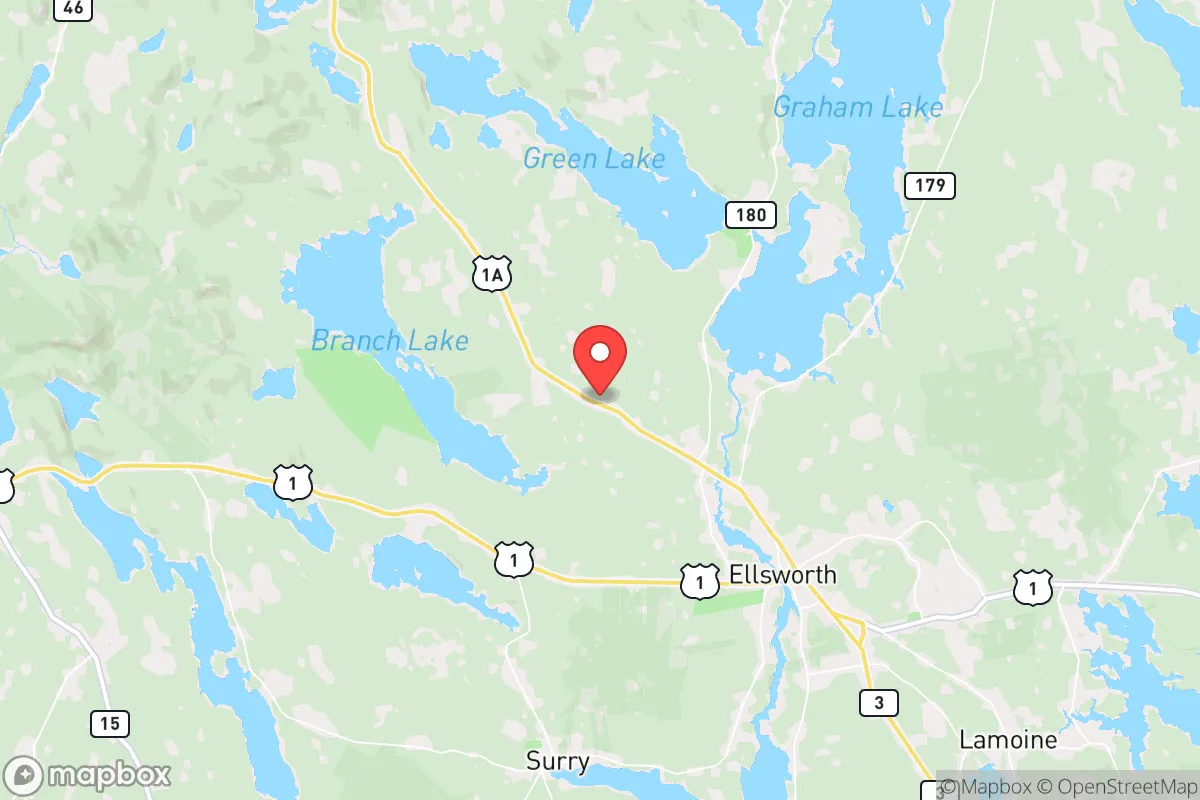
District shown is the primary district for this city’s centroid. Cities may span multiple districts.
Local Political AnalysisPolitical Analysis of Ellsworth, ME
Ellsworth has long been a reliably conservative anchor in Hancock County, with a Cook PVI of R+4 that reflects its steady Republican lean even as the rest of coastal Maine has trended leftward. The city itself votes red in most statewide races, though you’ll see the margins shrink a bit in presidential years when the summer folks and out-of-state transplants flood the polls. If you’ve been around here long enough, you remember when Ellsworth was a quiet mill town where everyone knew your name and the biggest political debate was whether to fix the potholes on Main Street. These days, the political climate is shifting under the surface, and it’s worth paying attention to where things are headed.
How it compares
Drive 20 minutes south to Bar Harbor or 30 minutes southwest to Camden, and you’ll hit some of the bluest territory in the state—places where progressive activism is loud and local ordinances often prioritize environmental regulations over property rights. Ellsworth, by contrast, still feels like a place where the Second Amendment is respected and the town council isn’t trying to micromanage how you heat your home or what you can build on your own land. Up north, towns like Bucksport and Holden lean more conservative, but Ellsworth sits right at the edge of that cultural divide. The R+4 rating tells you it’s not a deep-red stronghold, but it’s solid enough that you won’t feel like an outsider for flying a Gadsden flag or questioning the latest state mandates out of Augusta.
What this means for residents
For folks who value personal freedom and want to keep government out of their daily lives, Ellsworth offers a decent buffer against the overreach you see in more progressive coastal towns. The local school board hasn’t gone off the deep end with radical curriculum changes, and the city council generally sticks to practical matters like road maintenance and zoning rather than social engineering. That said, you can feel the pressure building as more people move up from Massachusetts and New York, bringing their big-government ideas with them. Property taxes have crept up, and there’s been chatter about adopting stricter environmental rules that could affect small businesses and landowners. If you’re considering a move here, keep an eye on local elections—the balance could tip in the next few years if the transplants keep coming and the old guard doesn’t stay engaged.
Culturally, Ellsworth still holds onto a live-and-let-live attitude that’s becoming rare in New England. You won’t find the kind of aggressive policing of speech or behavior that’s common in Portland or Burlington. The local paper still runs letters to the editor that would make a coastal progressive’s head spin, and the annual Fourth of July parade is about as traditional as it gets. But there’s a quiet concern among long-time residents that the state government in Augusta is chipping away at local control—pushing energy mandates, land-use restrictions, and health regulations that feel less like common sense and more like social experimentation. Ellsworth remains a good place for someone who wants to live free and raise a family without constant government interference, but it’s not immune to the broader trends. The next five to ten years will tell whether it stays that way or becomes just another Maine town that lost its character to the progressive wave.

State Political ClimatePolitical Climate in Maine
State Political AnalysisPolitical Environment in the State
Maine has long been known as a libertarian-leaning state with a fierce independent streak, but over the past 20 years it has shifted from a purple swing state to a reliably blue one at the presidential level, voting Democratic in every election since 1992 except 2000. The state’s political soul is split between the progressive, densely populated southern coast—anchored by Portland, Lewiston, and Augusta—and the vast, rural, and increasingly conservative northern and eastern counties like Aroostook, Piscataquis, and Washington. While Maine still elects centrist governors like Janet Mills (a Democrat who signed some of the nation’s strictest gun laws), the legislature has moved steadily left on taxes, education, and social policy, creating a growing tension between the coastal elite and the “other Maine” that feels left behind.
Urban vs. rural divide
The political map of Maine is a textbook study in geographic polarization. The Portland metro area—Cumberland County, home to about 30% of the state’s population—drives the Democratic machine, delivering margins of +20 to +30 points in statewide races. Just south of Portland, the wealthy coastal towns of Kennebunk, Ogunquit, and York are reliably blue, while inland suburbs like Windham and Gorham are more competitive but trending left. In contrast, the vast 2nd Congressional District—which covers the northern and eastern two-thirds of the state—voted for Donald Trump in both 2016 and 2020, and in 2024 it went for Trump again by about 7 points. Counties like Aroostook (the “Potato County” along the Canadian border), Piscataquis, and Franklin are deeply red, driven by gun culture, logging, and a fierce distrust of Augusta. The city of Bangor, once a swing town, is now a blue island in a red sea, while Lewiston—Maine’s second-largest city—has become a Democratic stronghold thanks to a growing Somali immigrant population. The divide isn’t just about party; it’s about worldview: coastal Mainers see government as a solution, while northern Mainers see it as a threat.
Policy environment
Maine’s policy environment has become increasingly progressive, especially since Democrats took full control of the legislature in 2018. The state has a graduated income tax with a top rate of 7.15%, one of the highest in New England, and a sales tax of 5.5% that exempts most groceries but hits prepared food and lodging hard. Property taxes are among the highest in the nation, with the median effective rate around 1.3%, and towns like Portland and Falmouth have added local surcharges. On education, Maine has a universal school choice program through charter schools and a robust public system, but the state also mandates a controversial “Maine Learning Results” curriculum that includes progressive social-emotional learning standards. Healthcare is dominated by MaineHealth, a nonprofit giant that has driven up costs, and the state expanded Medicaid under the Affordable Care Act in 2019. Election laws are among the most liberal in the country: Maine has same-day voter registration, no-excuse absentee voting, and ranked-choice voting for federal and state offices—a system that conservatives argue dilutes the power of a single vote and favors moderate candidates. The state also has a “clean elections” public financing system that gives taxpayer money to candidates who reject large donations, which critics say rewards political insiders.
Trajectory & freedom
Maine is becoming less free by the year, especially for gun owners, parents, and taxpayers. In 2023, Governor Mills signed a package of gun control laws—LD 2238—that expanded background checks to private sales, created a 72-hour waiting period for firearm purchases, and banned “ghost guns” and high-capacity magazines. This came after the deadliest mass shooting in state history, a 2023 Lewiston rampage that killed 18 people, but the laws went far beyond what many rural Mainers considered reasonable. On parental rights, Maine has a “safe schools” law that allows students to use the bathroom and locker room of their chosen gender identity without parental notification, and the state’s Department of Education has actively opposed school choice expansion. Medical freedom took a hit in 2021 when the legislature passed a law requiring all healthcare workers to be vaccinated against COVID-19, leading to a lawsuit and a wave of resignations in rural hospitals. Property rights are under pressure from a 2024 law that allows municipalities to impose rent control and from a growing “land trust” movement that restricts development. On the bright side, Maine has no sales tax on groceries or clothing, and it has a strong tradition of town meeting democracy—but that local control is being steadily preempted by Augusta.
Civil unrest & political movements
Maine has seen its share of political flashpoints, though they tend to be more polite than in other states. The 2020 Black Lives Matter protests in Portland drew thousands and led to the removal of a statue of a Civil War soldier, but they also sparked a backlash in rural areas where “Blue Lives Matter” flags flew from pickup trucks. The Lewiston mass shooting in 2023 ignited a fierce debate over gun rights, with the pro-Second Amendment group Gun Owners of Maine holding rallies in Augusta and the liberal Maine Gun Safety Coalition pushing for more restrictions. Immigration has become a hot-button issue, especially in Lewiston, where the Somali population has grown to about 6,000, straining schools and housing. The city’s mayor, a Democrat, has called for more federal support, but many locals feel the state’s “sanctuary” policies—Maine does not honor ICE detainers—have made the problem worse. There have been scattered secession movements in northern Maine, with Aroostook County residents floating the idea of joining New Hampshire or forming a new state, but they’ve never gained serious traction. Election integrity is a live issue: the 2020 election saw widespread use of no-excuse absentee ballots, and a 2022 audit found no fraud, but many conservatives remain skeptical of ranked-choice voting, which they argue is confusing and prone to error.
Projection
Over the next 5-10 years, Maine will likely become more Democratic at the state level, driven by in-migration from Massachusetts, New York, and Connecticut—people who bring their progressive politics and high housing costs with them. The Portland metro area is expected to grow by another 10-15%, while rural counties continue to lose population. This demographic shift will make it harder for conservatives to win statewide races, though the 2nd Congressional District will remain red for the foreseeable future. The state’s tax burden will likely increase as the population ages—Maine has the oldest median age in the nation at 45—and the demand for services grows. Gun rights will continue to erode, with a likely assault weapons ban on the horizon. Parental rights will be a battleground, with the legislature pushing for more LGBTQ+ inclusive curricula and conservatives fighting for opt-out rights. The biggest wildcard is the state’s housing crisis: if Maine can’t build enough homes, the in-migration will slow, and the political balance might stabilize. For now, anyone moving in should expect a state that is friendly to traditional New England values in the north but increasingly hostile to them in the south.
For a conservative-leaning individual or family considering a move to Maine, the bottom line is this: you will find a welcoming community in the rural north and east, where neighbors still wave and the Second Amendment is sacred, but you will be fighting an uphill battle in Augusta. The state’s tax burden is high, its education system is increasingly progressive, and its gun laws are tightening. If you value low taxes, local control, and a hands-off government, look at Aroostook County or Washington County—but be prepared for long winters and limited job opportunities. If you want the coast, you’ll pay a premium in both dollars and freedom. Maine is still a beautiful, safe, and independent place, but it’s not the libertarian paradise it once was. Come for the lobster and the lakes, but know that the political tide is turning against the values that made this state great.
* Values derived from national, state, county, city and local statistics and may differ in a specific area. Last updated: 2026-05-01T04:57:29.000Z
Narrative content on this page is AI-generated and may contain mistakes. Verify any details that matter before acting on them.
ReloMaps may earn a commission from affiliate links at no extra cost to you.

