Photo: Wikipedia
Strategic Assessment of Elyria, OH
Meaningful friction. Expect exposure to either population pressure, blast zones, or natural disaster risk. Consider buying a retreat property.
What does the Strategic Assessment tell us?
Our Strategic Assessment grades tactical survivability of an area. Major population centers, military targets, fallout zones, natural disasters, and border exposure all drive risk — lower exposure means a more defensible position in a crisis.
This is heavily inspired by Joel Skousen's Strategic Relocation book. Highly recommended you checkout the book ($)What does this tell us?
Our Strategic Assessment grades tactical survivability of an area. Major population centers, military targets, fallout zones, natural disasters, and border exposure all drive risk — lower exposure means a more defensible position in a crisis.
This is heavily inspired by Joel Skousen's Strategic Relocation book. Highly recommended you checkout the book ($)Strategic Pillars

Key Distances
Regional Safe Places
Below is our recommended "safe zones" in Ohio and the surrounding area based on our strategic heuristics. For most people, it's unrealistic to live in a “safe zone” full-time due to work, family or other personal reasons. They tend to be more rural. However, many of these areas are perfect for second homes and retreat properties that double as a vacation home or even a short-term rental.

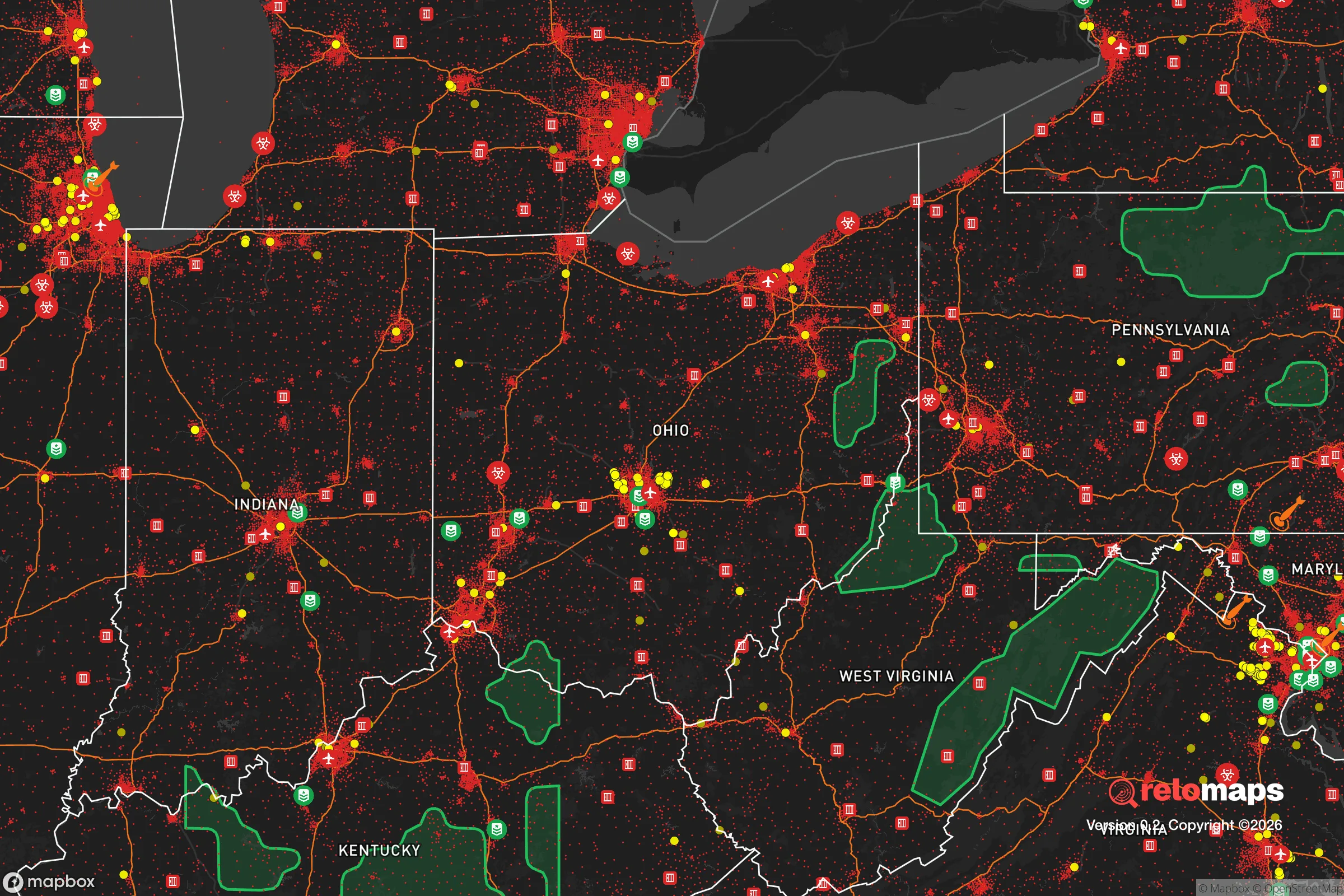


Important Note: For informational purposes only. This does not mean nothing bad ever happens in the green zones. Please use common sense. This is based on public data and modeled with AI. We tried to take a conservative approach but mistakes happen. We update this regularly as new information becomes available.
Solar Generator Recommendations
Backup power matters more here than in safer locations. We've picked three solar generators across budgets and capacity tiers — start with the budget unit if you only need a few essentials, or step up if you want to run a fridge and HVAC for days at a time.

Jackery Portable Power Station Explorer 300
Budget OptionPower on the Go: Weighing only 11 lbs, it's convenient to set up and store with book-sized foldable solar panels

BLUETTI Portable Power Station AC180
Designed for both indoor and outdoor scenarios, AC180 is highly capable as it has a robost capacity and continuous output power.

EF ECOFLOW DELTA Pro Ultra Power Station
Upgraded PickEcoFlow DELTA Pro Ultra is a whole-home energy system designed to grow with your family. Integrated with the Smart Home Panel 2, it scales to meet your evolving energy needs — keeping your home powered, intelligent, and secure through every stage of life.
We earn a commission, at no additional cost to you.
Strategic Assessment Analysis
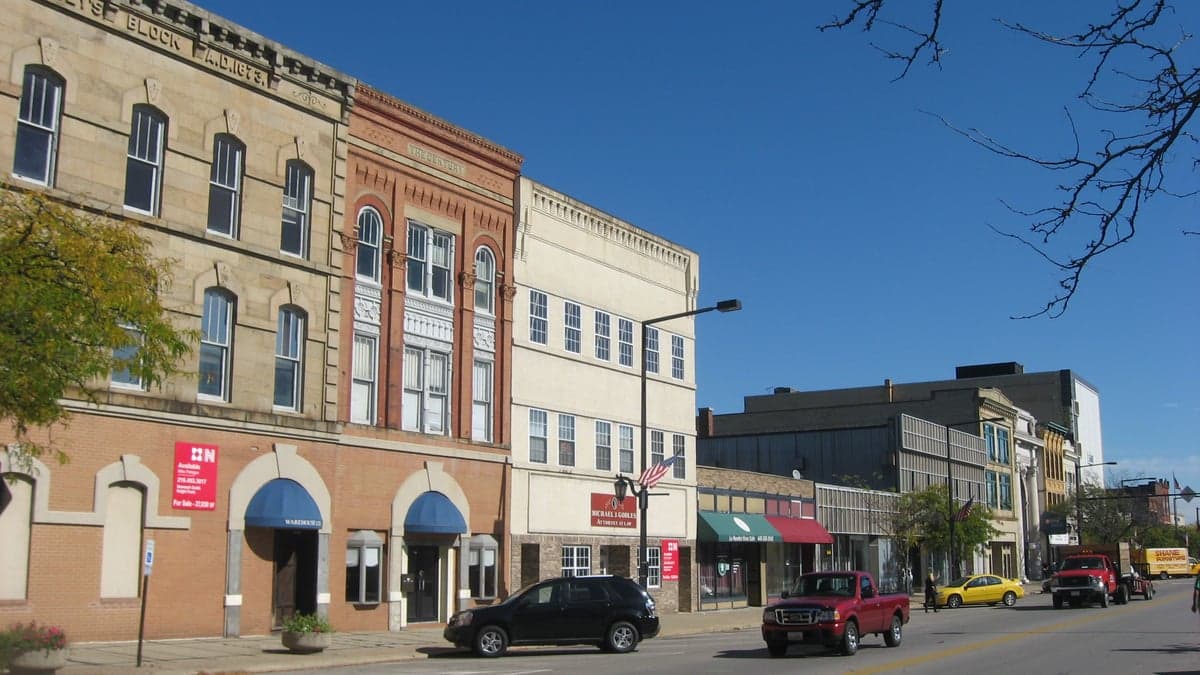
Elyria, Ohio, sits in a precarious but potentially advantageous position for those prioritizing resilience and strategic relocation. While its location in Lorain County places it within the broader Cleveland-Akron metropolitan sphere—a clear liability for those seeking true isolation—the city’s specific geography and infrastructure offer a mixed bag of defensive strengths and exposure risks. For a conservative-leaning prepper or survivalist, Elyria is not a bug-out destination but a potential staging ground: close enough to urban resources to exploit them in calm times, yet positioned with enough natural buffers and logistical anchors to weather a moderate collapse scenario. The key is understanding where the vulnerabilities lie and whether the area’s industrial backbone and water access outweigh its proximity to population centers and critical infrastructure targets.
Geographic position and natural advantages for long-term survival
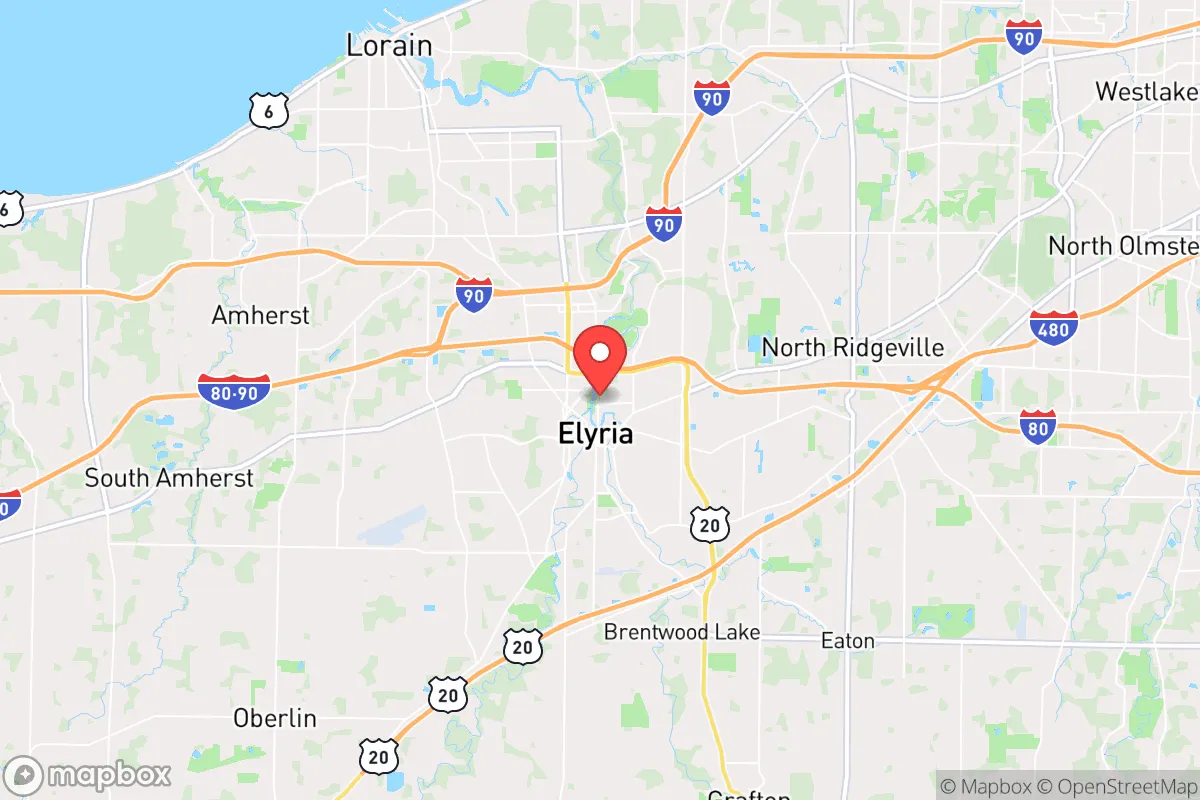
Elyria’s most significant natural asset is its position along the Black River, which feeds directly into Lake Erie roughly 10 miles north. This gives residents access to a massive, renewable freshwater source—arguably the single most critical resource for any extended disruption. The surrounding terrain is predominantly flat, with pockets of wooded areas and agricultural land in Lorain County, offering decent opportunities for small-scale farming or foraging if you secure acreage outside the city limits. The region’s four-season climate is a double-edged sword: harsh winters can be a survival challenge, but they also deter unprepared transient populations and limit the spread of certain vector-borne diseases. Elyria itself sits on relatively stable bedrock, with no significant seismic or floodplain risks outside of localized river flooding. The city’s elevation—around 700 feet above sea level—keeps it above the worst of Lake Erie’s storm surge potential. For a relocator, the natural advantages boil down to water abundance, moderate defensibility via the river and surrounding farmland, and a climate that acts as a natural filter for the less resilient.
Risks, exposures, and proximity to fallout-relevant landmarks
The downsides are substantial and cannot be glossed over. Elyria lies roughly 25 miles southwest of downtown Cleveland, a major population center that would be a magnet for civil unrest, resource competition, and potential secondary disasters in a national emergency. The city is also within 50 miles of the Perry Nuclear Power Plant (east of Cleveland) and the Davis-Besse Nuclear Power Station (east of Toledo), both of which are aging facilities that represent a radiological risk in the event of a catastrophic failure or targeted attack. More immediately, Elyria is crisscrossed by major transportation corridors—I-90, I-480, and the Ohio Turnpike—that would become chokepoints or refugee highways during an evacuation. The city’s own industrial base, including manufacturing plants and chemical storage facilities along the Black River, presents a localized hazard zone. For a prepper, the calculus is clear: Elyria’s proximity to Cleveland and critical infrastructure makes it a high-risk area for fallout, both literal and figurative. A major event in the region would likely trigger a wave of outbound traffic from the city, and Elyria’s position on the western edge of the metro area means it could be caught between fleeing urbanites and the relative safety of rural Ohio to the west and south.
Practical resilience for a relocator: food, water, energy, and defensibility
On the practical side, Elyria offers some genuine resilience advantages if you are willing to invest in preparation. The city’s water supply is drawn from Lake Erie via the Lorain County Water Authority, which has redundant intake structures and backup power generation—a solid foundation for a community water system. For individual preppers, the Black River and numerous smaller tributaries provide surface water that can be filtered or treated. Food security is more challenging: Lorain County has active farmland, but Elyria itself is a dense urban-suburban mix with limited gardening space. The city does host several large grocery distribution centers and a regional food bank, which could be targets for looting but also represent supply nodes if you have the means to secure them early. Energy resilience is a mixed bag. The grid is reliable in normal times, but the region is prone to lake-effect snowstorms that can knock out power for days. Natural gas is widely available, and many homes have fireplaces or wood stoves—a critical advantage for winter heating without grid dependency. Defensibility is the weakest link. Elyria’s street grid is typical of a mid-sized Rust Belt city: open, with few natural chokepoints, and surrounded by suburban sprawl. A single-family home on a corner lot offers little tactical advantage. The better play is to secure a property on the rural fringe of the county, where you can leverage the farmland and water access while maintaining a low profile. For a relocator, the practical takeaway is that Elyria works as a base of operations only if you are prepared to bug in with substantial supplies or have a secondary retreat further west or south.
The overall strategic picture for Elyria is one of calculated risk. It is not a survivalist paradise—far from it. The city’s location near Cleveland, its industrial hazards, and its lack of natural defensibility make it a poor choice for those seeking true independence or a bug-out location. However, for a conservative-minded individual or family who wants to remain within striking distance of urban employment and services while maintaining a credible prepping posture, Elyria offers a workable middle ground. The water access is real, the agricultural potential of Lorain County is underutilized, and the region’s industrial base means that in a prolonged crisis, there would be local capacity for manufacturing and repair. The key is to treat Elyria as a stepping stone, not a final destination. Secure a property with well water, a wood stove, and enough land to grow food, and you can ride out most scenarios short of a direct nuclear strike on Cleveland. Just keep a bug-out bag packed and a route west mapped out—because if the SHTF in the Rust Belt, Elyria will be in the thick of it, not above it.

* Values derived from national, state, county, city and local statistics and may differ in a specific area. Last updated: 2026-04-21T20:15:54.000Z
Narrative content on this page is AI-generated and may contain mistakes. Verify any details that matter before acting on them.
ReloMaps may earn a commission from affiliate links at no extra cost to you.

