Photo: Wikipedia
Demographics of Englewood, CO
Affluence Level in Englewood, CO
A middle-class area roughly in line with national averages across income, home values, education, and employment.
People of Englewood, CO
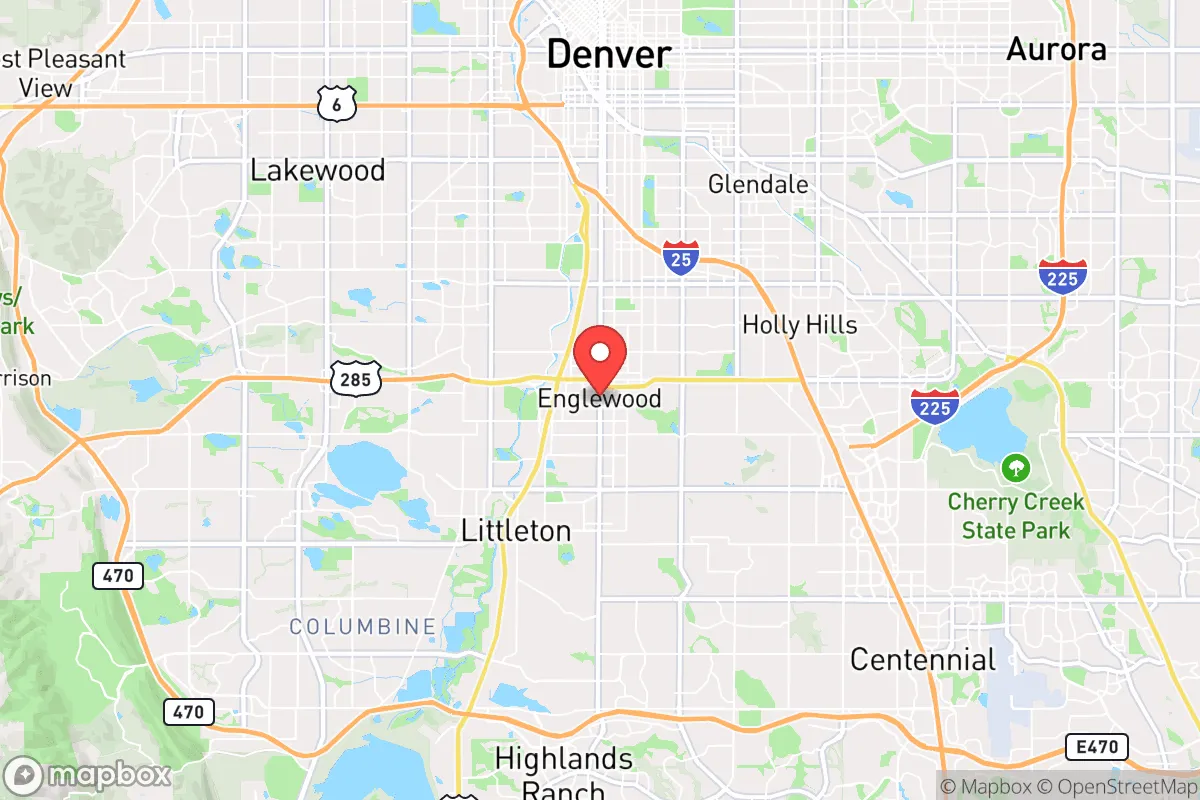
Englewood, Colorado, is a compact, inner-ring suburb of Denver with 33,774 residents who form a predominantly white (68.2%) and increasingly Hispanic (19.3%) community, marked by a higher-than-average college attainment rate of 46.4%. The city’s population is notably less diverse than Denver’s as a whole, yet it is more ethnically varied than many neighboring Arapahoe County suburbs. Its identity is shaped by a modest, middle-class character—neither the wealthy enclave of Cherry Hills Village to its north nor the sprawling new developments of Centennial to its south—and a population that is slowly diversifying while remaining anchored by long-standing white and Hispanic families.
How the city was settled and grew
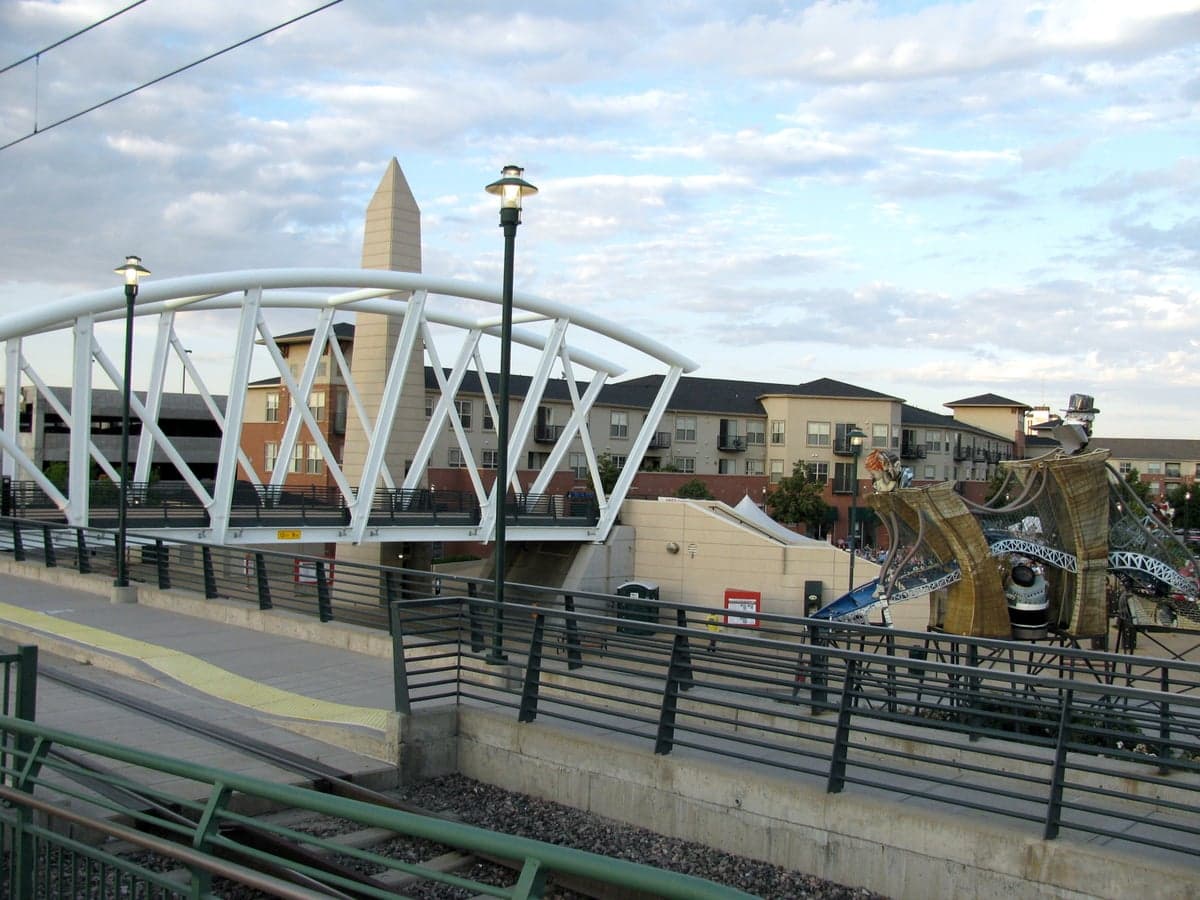
Englewood’s human history begins not with a land grant or mining camp, but with a deliberate real estate venture. Founded in 1903 on the former site of the Arapaho County Poor Farm, the city was platted as a streetcar suburb for Denver’s growing middle class. The original settlers were largely native-born white Americans of Northern European descent—English, German, and Scandinavian—who were drawn by affordable lots and the promise of a quiet, orderly community outside the city’s industrial core. The historic downtown along Broadway became the commercial and civic heart, while the Bates-Logan and Bishop’s Addition neighborhoods filled with modest bungalows and foursquares built by local carpenters and tradesmen. A second wave arrived during the 1920s oil boom, when workers for the nearby oil fields and refineries settled in the Englewood Heights area, adding a small but significant working-class contingent. The city’s population grew steadily through the 1950s, reaching roughly 33,000 by 1960, as returning WWII veterans and their families used VA loans to buy homes in neighborhoods like South Broadway and Hampden Heights. This era cemented Englewood’s reputation as a stable, white, middle-class suburb—a reputation that would begin to shift only decades later.
Modern era (post-1965)
The post-1965 period brought gradual demographic change, driven less by international immigration than by domestic in-migration and natural increase. The 1965 Immigration and Nationality Act had a muted immediate effect on Englewood; the city’s foreign-born population today is just 4.5%, well below the national average. Instead, the most significant shift has been the growth of the Hispanic population, which rose from a negligible share in 1970 to 19.3% by the 2020s. This growth came primarily from Mexican-American families moving outward from Denver’s west-side barrios, seeking affordable housing in neighborhoods like Englewood East and the area around Oxford Avenue. These areas now contain a visible cluster of Hispanic-owned businesses and Spanish-language signage, though the community is dispersed rather than concentrated in a single enclave. The Black population, at 3.9%, and East/Southeast Asian population, at 2.1%, are small but present, with Asian families concentrated in the newer multifamily developments near I-25 and Belleview. The Indian-subcontinent population (0.3%) is negligible and largely assimilated into professional-class neighborhoods. White residents remain the majority, but their share has declined from over 90% in 1970 to 68.2% today, with many older white families aging in place in the Bates-Logan and Bishop’s Addition bungalows while younger white professionals are drawn to the city’s walkable downtown and light-rail access.
The future
Englewood’s population trajectory points toward slow, steady diversification rather than rapid transformation. The Hispanic share is likely to continue rising, driven by both natural increase and continued in-migration from Denver’s more expensive neighborhoods, but the city’s limited housing stock—mostly single-family homes built before 1970—constrains how many new residents can arrive. The white population will probably continue its gradual decline, though the city’s high college attainment rate (46.4%) and proximity to Denver’s tech and healthcare job centers will keep it attractive to young white professionals who may replace retiring older whites. The East/Southeast Asian and Black populations are likely to remain small, as Englewood lacks the ethnic institutions and housing stock that draw larger communities to Aurora or Denver. The city is not tribalizing into distinct ethnic enclaves; rather, it is homogenizing into a broadly middle-class, politically moderate suburb where Hispanic and white families increasingly share the same neighborhoods and schools. For a new resident, this means moving into a community that is stable, slowly diversifying, and unlikely to experience dramatic demographic upheaval—a place where the population is quietly becoming more varied without losing its essential character as a modest, family-oriented suburb.

* Values derived from national, state, county, city and local statistics and may differ in a specific area. Last updated: 2026-04-20T06:55:12.000Z
Narrative content on this page is AI-generated and may contain mistakes. Verify any details that matter before acting on them.
ReloMaps may earn a commission from affiliate links at no extra cost to you.

