Photo: Wikipedia
Political ClimatePolitical Climate in Englewood, CO
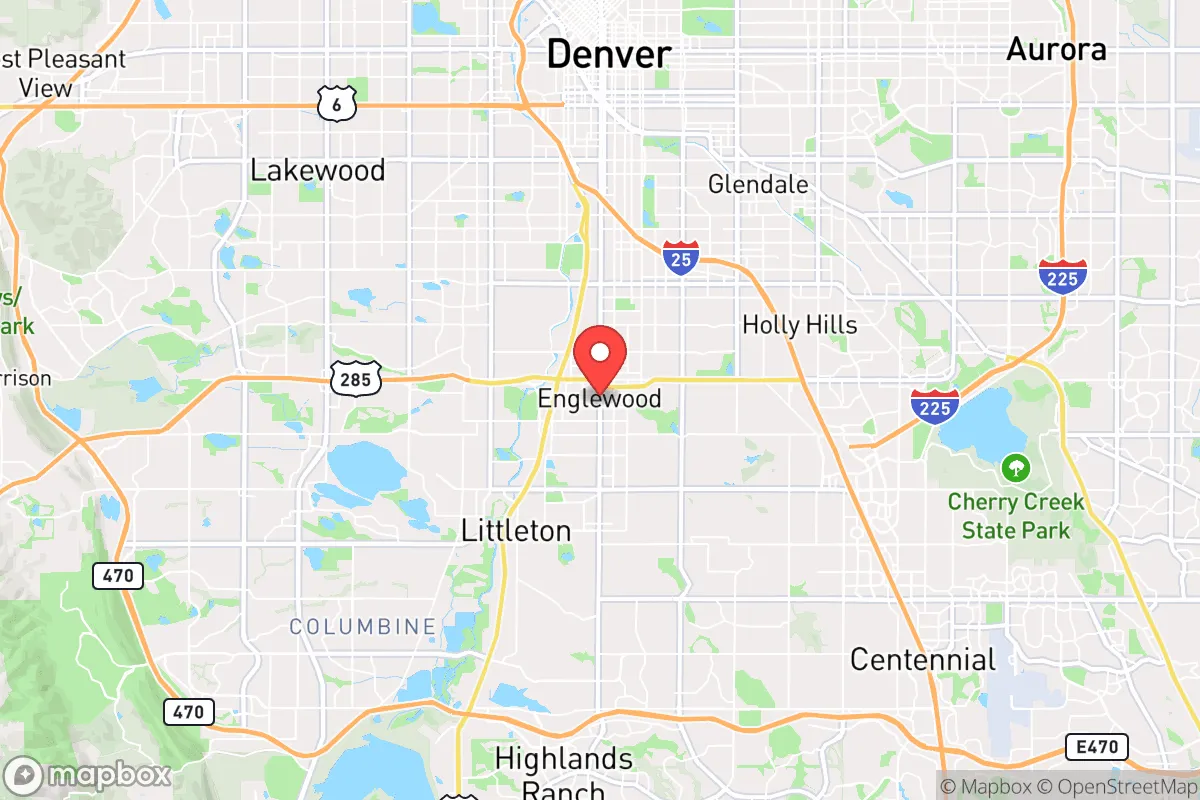
District shown is the primary district for this city’s centroid. Cities may span multiple districts.
Local Political AnalysisPolitical Analysis of Englewood, CO
Englewood, Colorado, has a Cook PVI of D+11, meaning it leans significantly more Democratic than the nation as a whole, and that shift has been accelerating. I’ve lived here long enough to remember when this was a quiet, middle-class suburb where folks mostly kept to themselves and the city council focused on potholes and water rates, not social experiments. Today, the political energy is dominated by progressive activists, and the local government has increasingly embraced policies that feel less like common-sense governance and more like top-down social engineering. The trajectory is clear: Englewood is moving further left, and for those who value personal freedom and limited government, the trend is worrying.
How it compares
To understand Englewood’s politics, you have to look at the map. Drive ten minutes south to Centennial or east to Greenwood Village, and you’re in solidly Republican territory—places where property taxes are lower, zoning is more business-friendly, and the school board isn’t debating critical race theory. Head north into Denver proper, and you get the full progressive playbook. Englewood sits right in the middle, but it’s been pulled hard toward Denver’s orbit. The D+11 rating isn’t just a number; it reflects a city where the city council has passed resolutions supporting statewide rent control and where the police department has been pressured to adopt “defund” adjacent reforms. Compare that to nearby Littleton, which still has a more moderate, split council, and the difference is stark. Englewood’s politics now resemble a mini-Denver, not the independent suburb it once was.
What this means for residents
For a long-time resident like me, the practical effects are what sting. Property taxes have crept up faster than inflation, partly because the city keeps adding new programs and staff for equity initiatives and climate action plans—things that sound nice on a press release but don’t fix a cracked sidewalk. The city council has also flirted with “sanctuary city” policies, which means local law enforcement is discouraged from cooperating with federal immigration authorities. That might feel virtuous to some, but it erodes trust and, frankly, makes the neighborhood feel less safe. If you’re a small business owner, you’ve probably noticed the new paid sick leave mandates and the push for a $20 minimum wage—both of which sound compassionate but hit mom-and-pop shops hard. The long-term outlook? I expect more of the same: higher taxes, more regulations, and a government that sees itself as a social engineer rather than a service provider. If you value personal freedom and local control, Englewood is becoming a harder place to call home.
Culturally, the shift is visible in small ways. The old VFW hall closed a few years back, and the space is now a kombucha bar and a “community art space.” The Fourth of July parade used to be a straightforward celebration; now there are booths for climate activism and racial justice nonprofits. It’s not that those causes are inherently bad, but the relentless politicization of everyday life wears on you. The city’s new “equity lens” for all policy decisions means every zoning variance or park renovation gets filtered through an ideological checklist. For those of us who just want the trash picked up and the streets plowed, it feels like the government has forgotten its basic job. If you’re considering a move here, I’d say visit on a weekday, talk to a few long-time residents at the hardware store, and decide if the trade-offs are worth it.

State Political ClimatePolitical Climate in Colorado
State Political AnalysisPolitical Environment in the State
Colorado has shifted from a classic purple swing state to a solidly blue-leaning one over the past two decades, driven by explosive growth in the Denver metro and Front Range corridor. While the state still elects a moderate Democratic governor and occasionally splits tickets, the legislature has been under unified Democratic control since 2019, and the party now holds every statewide office. The 2024 presidential race saw Colorado vote for the Democratic candidate by roughly 13 points, a far cry from the 2000 and 2004 elections when it was a true battleground. For a conservative considering relocation, the state’s trajectory is unmistakable: the political center of gravity has moved decisively left, and the rural and exurban areas that once balanced the state are being outvoted by a growing, progressive-leaning urban population.
Urban vs. rural divide
The political map of Colorado is a story of two states. The Denver metro area—including Denver, Aurora, Boulder, and the surrounding suburbs of Jefferson County, Arapahoe County, and Adams County—generates roughly 60% of the state’s vote and leans heavily Democratic. Boulder County is one of the most liberal jurisdictions in the nation, while Denver itself routinely votes 75-80% Democratic in presidential races. The I-25 corridor south to Colorado Springs and north to Fort Collins is more mixed: Colorado Springs remains a conservative stronghold, home to Focus on the Family and the Air Force Academy, but even El Paso County has been trending purple in recent cycles. Meanwhile, the Western Slope (Grand Junction, Montrose, Durango) and the Eastern Plains (Lamar, Sterling, Burlington) are deeply red, but their populations are too small to offset the Front Range. The 2020 election saw several rural counties flip from red to deeper red, but the urban and suburban growth—especially in Douglas County and Weld County—has been the decisive factor. Douglas County, once a reliably Republican suburb, voted for Joe Biden in 2020 by a narrow margin, a seismic shift that signals the erosion of traditional GOP strongholds.
Policy environment
Colorado’s policy environment has become increasingly progressive, with a tax and regulatory posture that many conservatives find concerning. The state income tax rate is a flat 4.4%, which is moderate, but property taxes have been rising sharply, particularly in high-growth areas like Douglas and Weld counties. The Taxpayer’s Bill of Rights (TABOR) still limits state revenue growth and requires voter approval for tax increases, but Democrats have found workarounds, including ballot measures that de-Bruced the state in 2005 and 2011. Education policy is dominated by the Colorado Department of Education, which has embraced progressive curricula and social-emotional learning standards that some parents view as intrusive. The state has also expanded Medicaid under the Affordable Care Act and implemented a public option health insurance plan, Colorado Option, which aims to lower costs but has drawn criticism for its regulatory burden on insurers. Election laws have been significantly loosened: Colorado was one of the first states to implement universal mail-in voting (2013), same-day voter registration, and automatic voter registration, which critics argue increases the risk of fraud and dilutes election integrity. The state also has a strong renewable energy mandate (100% carbon-free electricity by 2040) and strict emissions standards that impact vehicle ownership and home heating costs.
Trajectory & freedom
Colorado’s trajectory on personal freedom is a mixed bag, but the trend line is clearly toward more government control in several key areas. On gun rights, the state has passed some of the most restrictive laws in the nation, including a 2013 magazine capacity limit (15 rounds), universal background checks, and a 2023 red flag law that allows courts to temporarily seize firearms from individuals deemed a risk. The 2024 legislative session saw a ban on so-called assault weapons pass the House, though it stalled in the Senate. On parental rights, the state has moved in the opposite direction of many red states: a 2023 law prohibits school districts from notifying parents if a child changes their gender identity or pronouns, and the state’s health department has expanded access to gender-affirming care for minors without parental consent. Medical autonomy was curtailed during the COVID-19 pandemic, with Governor Jared Polis imposing mask mandates, business closures, and vaccine requirements that were among the strictest in the West. Property rights have been eroded by a 2021 law that limits local zoning authority to allow more accessory dwelling units, and by a 2023 law that preempts local bans on rent control. On the positive side for conservatives, Colorado has no state-level income tax on Social Security benefits, and the state’s right-to-work law remains intact, though labor unions have been pushing for its repeal.
Civil unrest & political movements
Colorado has seen its share of political flashpoints. The 2020 protests in Denver over George Floyd’s death turned violent, with looting and fires that led to the deployment of the National Guard. The city’s defund the police movement resulted in a 2021 budget cut of $8.4 million to the Denver Police Department, though much of that was later restored. On the right, the Colorado Republican Party has been riven by infighting between establishment and MAGA factions, and the state’s conservative grassroots have focused on school board races, library board elections, and county-level GOP takeovers. The 2022 election saw a wave of conservative school board candidates win in Douglas County and El Paso County, reflecting a backlash to progressive education policies. Immigration politics are a growing flashpoint: Denver has declared itself a sanctuary city, and the state has a 2019 law that limits local law enforcement cooperation with ICE. The influx of migrants from the southern border has strained Denver’s social services and sparked tensions in suburban communities like Aurora and Lakewood. Election integrity remains a hot-button issue: the 2020 election in Colorado was certified without major controversy, but the state’s universal mail-in system has drawn skepticism from conservatives who point to instances of ballot harvesting and voter roll inaccuracies. The 2022 gubernatorial race saw Republican candidate Heidi Ganahl make election integrity a central issue, though she lost by 20 points.
Projection
Over the next 5-10 years, Colorado will likely continue its leftward drift, driven by demographic trends that favor Democrats. The state is growing fastest in the Denver metro and along the Front Range, where new arrivals tend to be younger, more educated, and more liberal. The rural and exurban areas that vote Republican are aging and losing population. The 2030 redistricting cycle will likely cement Democratic control of the state legislature and congressional delegation. However, there are countervailing forces: the cost of living in Denver and Boulder is driving some families to more affordable areas like Colorado Springs, Pueblo, and the Western Slope, which could shift the political balance in those regions. The state’s independent voter bloc, which now makes up nearly 40% of registered voters, could swing elections if the Democratic Party overreaches on issues like crime, homelessness, or taxes. A conservative moving to Colorado today should expect to live in a state where their political views are increasingly in the minority, especially if they settle in the Denver metro area. The best bets for a like-minded community are El Paso County (Colorado Springs), Weld County (Greeley), or the Western Slope (Grand Junction), where conservative values still hold sway.
For a new resident, the bottom line is this: Colorado offers stunning natural beauty, a strong economy, and a high quality of life, but the political climate is increasingly hostile to conservative values. If you value gun rights, parental control over education, low taxes, and limited government, you will find yourself fighting an uphill battle in the state legislature and in local elections. The state’s trajectory is toward more regulation, higher costs, and a progressive cultural hegemony, particularly in the urban core. If you can afford to live in a red enclave like Colorado Springs or Grand Junction, you can carve out a comfortable life, but you will still be subject to state-level policies that you may find objectionable. Colorado is no longer the libertarian-leaning frontier state it was 20 years ago; it is now a blue state in the Rocky Mountain West, and anyone moving here should be prepared for that reality.
* Values derived from national, state, county, city and local statistics and may differ in a specific area. Last updated: 2026-04-20T06:55:12.000Z
Narrative content on this page is AI-generated and may contain mistakes. Verify any details that matter before acting on them.
ReloMaps may earn a commission from affiliate links at no extra cost to you.

