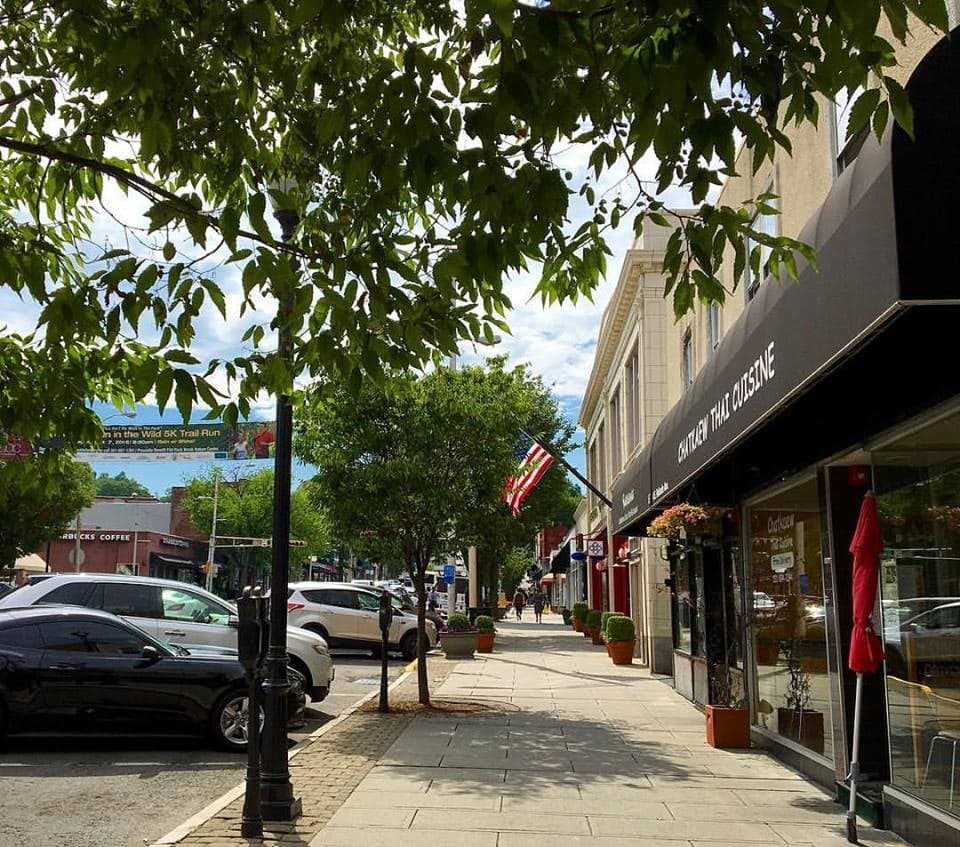
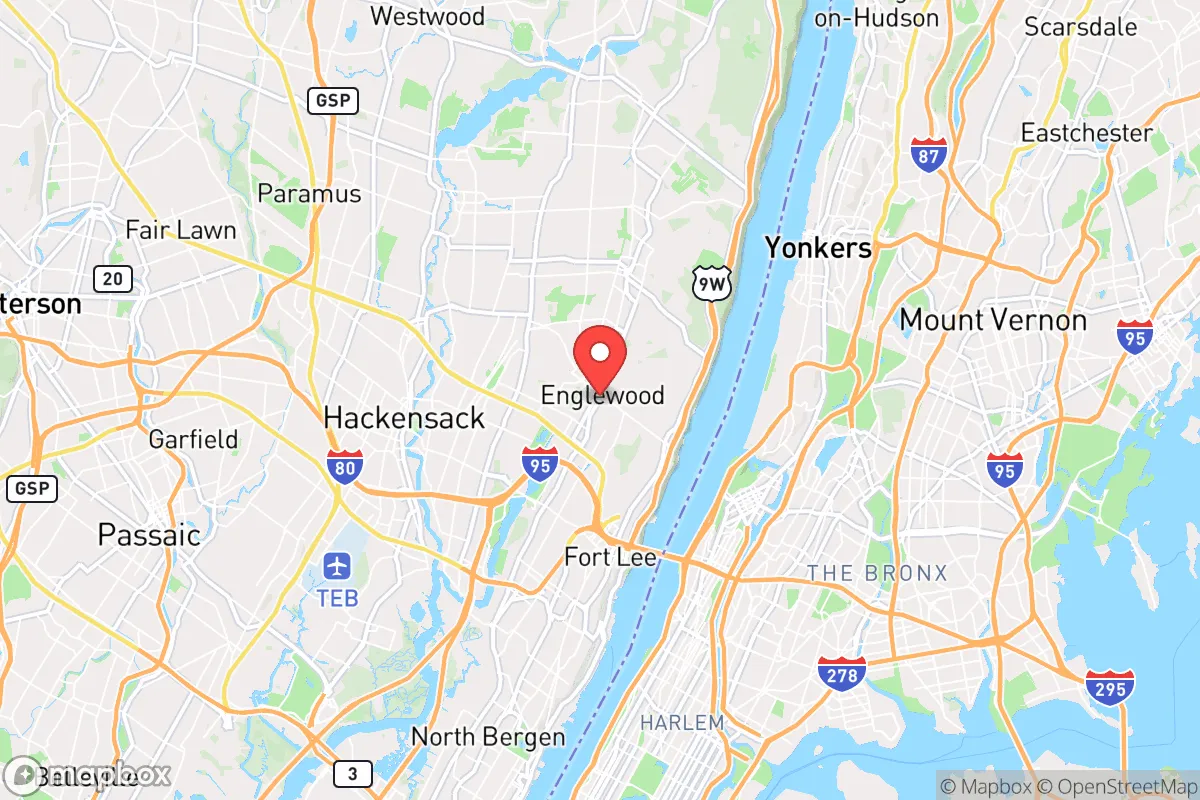
Photo: Wikipedia
Demographics of Englewood, NJ
Affluence Level in Englewood, NJ
An upper-middle-class area. Household wealth, education levels, and homeownership run ahead of national benchmarks.
People of Englewood, NJ
Englewood, New Jersey, is a densely settled city of 29,342 residents that has transformed from a predominantly white, Protestant commuter suburb into one of the most ethnically and economically diverse communities in Bergen County. Its population today is a mosaic of distinct enclaves: a 32.0% Hispanic plurality, a 30.4% white non-Hispanic population, an 18.9% Black community, a 10.0% East/Southeast Asian cohort, and a 3.0% Indian-subcontinent group, with 12.4% foreign-born. The city’s identity is shaped by its role as a stable, middle-class alternative to pricier New York City suburbs, with 45.6% of adults holding a college degree and a palpable sense of neighborhood-level separation by origin and income.
How the city was settled and grew
Englewood’s original population was drawn by its position on the New Jersey Palisades, where Dutch and English farmers settled in the late 17th century. The arrival of the Northern Branch of the Erie Railroad in the 1850s turned the village into a summer retreat for wealthy New Yorkers, who built estates in what is now the Englewood Cliffs area and the leafy West Side neighborhood. By the early 20th century, the city’s core—around Downtown Englewood along Palisade Avenue—filled with German, Irish, and Italian immigrants who worked in local retail and construction. The post-World War II boom brought a wave of Jewish families, many of whom settled in the East Hill section, building synagogues and delis that anchored a thriving middle-class community. This period cemented Englewood’s reputation as a solidly white, professional suburb, with a population that peaked near 30,000 in the 1960s.
Modern era (post-1965)
The 1965 Hart-Cellar Act and the broader civil-rights era reshaped Englewood’s human geography. Black families, many moving from Harlem and the South Bronx, began arriving in the 1970s, concentrating in the Fourth Ward—a historically redlined area south of Palisade Avenue—and the Southwest Englewood section near the Hackensack border. By the 1990s, Hispanic immigration—primarily from the Dominican Republic, Puerto Rico, and later Central America—accelerated, filling the North End and the blocks around the Englewood Hospital and Medical Center. The 2000s saw a surge of East/Southeast Asian families, particularly Korean and Chinese, who bought homes in the East Hill and West Side neighborhoods, drawn by the city’s top-rated public schools. Indian-subcontinent families, a smaller but visible group, have clustered near the Liberty Road corridor, where Hindu temples and Indian grocery stores have opened. Today, the city’s racial and ethnic groups remain somewhat tribalized: the Fourth Ward is overwhelmingly Black and Hispanic, East Hill is heavily white and Asian, and the North End is predominantly Hispanic. The white population has fallen from over 80% in 1970 to 30.4% today, while the foreign-born share has risen to 12.4%.
The future
Englewood’s population is heading toward continued diversification, but not toward homogenization. The Hispanic share is likely to grow further, driven by family reunification and affordable housing in the North End and Southwest Englewood, while the white non-Hispanic population will continue to age in place in East Hill and the West Side. The East/Southeast Asian community is plateauing, as many second-generation families move to larger homes in Tenafly or Fort Lee. The Indian-subcontinent population is small but growing steadily, drawn by the same school system that attracted earlier Asian groups. The Black population has stabilized after a decline in the 2000s, with younger Black families choosing Englewood for its proximity to New York and its relatively low crime rates. The city is not tribalizing into hostile enclaves, but distinct ethnic corridors are hardening: expect the Fourth Ward to remain predominantly Black and Hispanic, East Hill to stay white and Asian, and the North End to become even more Hispanic. Gentrification pressure from nearby Bergen County towns is modest, as Englewood’s housing stock is older and its property taxes are high.
For a conservative-leaning mover, Englewood is becoming a place where neighborhood choice matters more than ever. The city offers strong schools and a stable tax base, but the social fabric is increasingly defined by separate ethnic and economic spheres rather than a single civic identity. New arrivals should expect to find their niche—whether in the established Jewish community of East Hill, the growing Hispanic corridor of the North End, or the professional-class mix of the West Side—rather than a melting-pot experience. The city’s trajectory is one of managed diversity, not assimilation, and that is likely to remain the norm for the next decade.

* Values derived from national, state, county, city and local statistics and may differ in a specific area. Last updated: 2026-04-29T18:47:19.000Z
Narrative content on this page is AI-generated and may contain mistakes. Verify any details that matter before acting on them.
ReloMaps may earn a commission from affiliate links at no extra cost to you.

