Photo: Wikipedia
Quality of Life in Englewood, NJ
A high quality of life with strong walkability, manageable living costs, healthy neighborhood signals, and solid amenity access.
What does Quality of Life tell us?
Quality of Life blends cost of living, nearby amenities, socioeconomic signals, and neighborhood character. City-level scores represent the whole municipality; individual neighborhoods can differ.
What does this tell us?
Quality of Life blends cost of living, nearby amenities, socioeconomic signals, and neighborhood character. City-level scores represent the whole municipality; individual neighborhoods can differ.
Cost of Living
70% above national average
The Real Cost of Living in Englewood, NJ for 2026
| Tier | Individual | Family (4) |
|---|---|---|
| Survival | $31k | $58k |
| Comfortable | $97k | $142k |
| Luxury | $183k+ | $284k+ |
| Elite (Top 5%) | $281k+ | $436k+ |
71%
The Area Signal
A metric tracking the socioeconomic signals of the area.
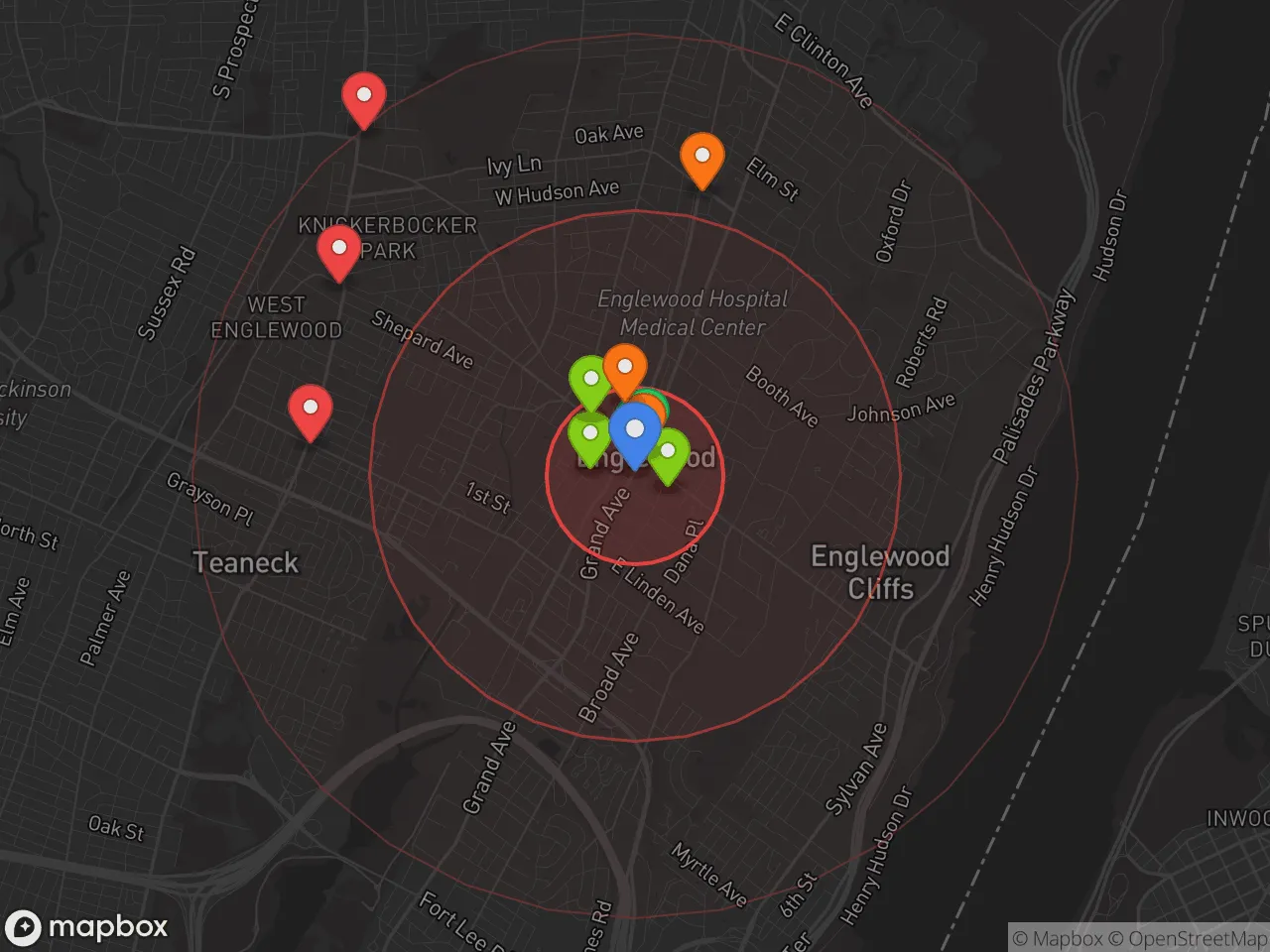
Hobbies
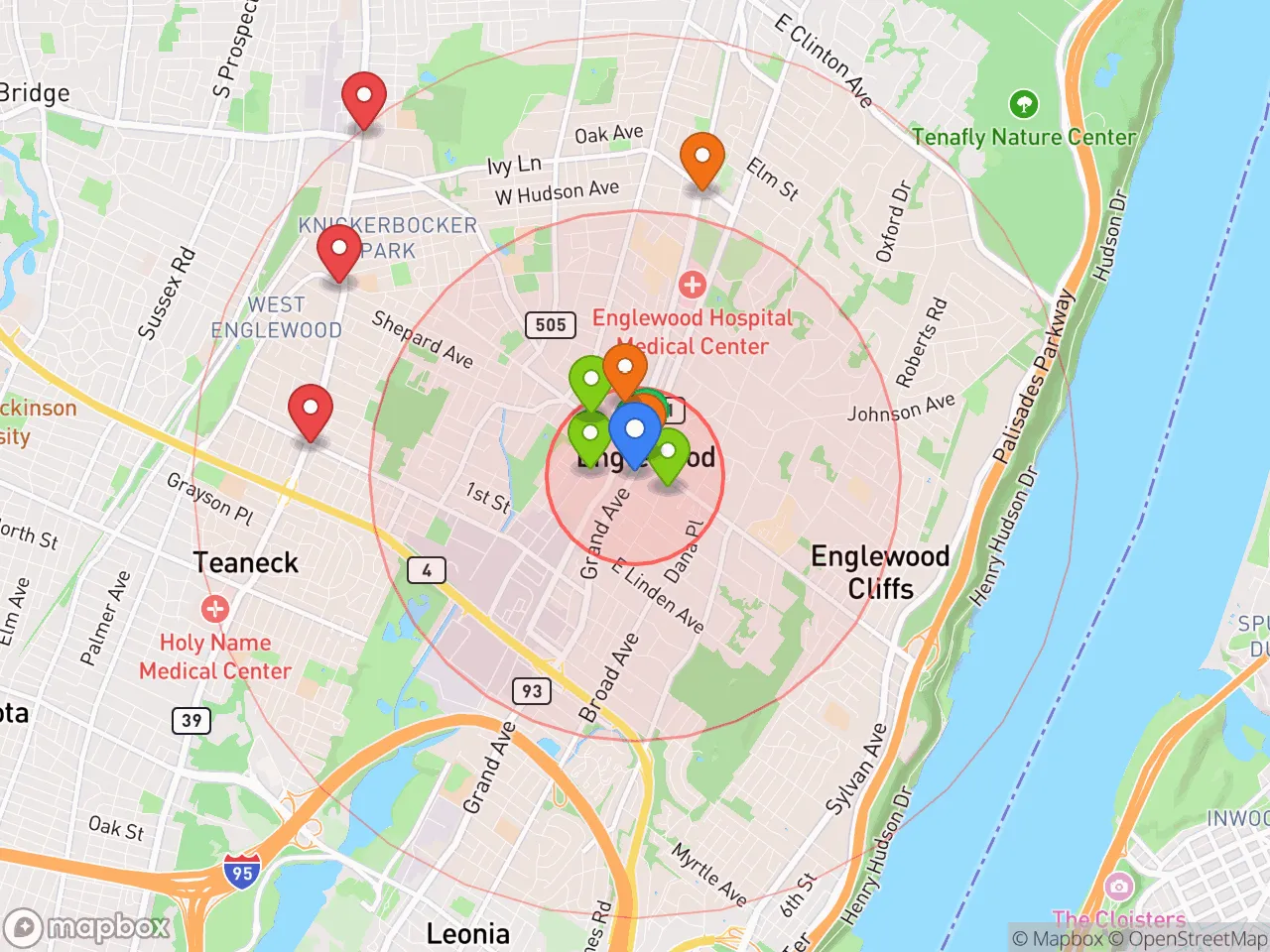
Explore the areaGroceries
7 within 10 miles
Gas
20 within 10 miles
Hospital
20 within 20 miles
Airport
EWR — Newark Liberty International
Post Office
USPS — Englewood, NJ
Critical Amenities
Quality-of-Life Analysis
Englewood, New Jersey, is an affluent suburban city in Bergen County that attracts professionals, families, and commuters seeking proximity to Manhattan without the intensity of urban life. With a cost of living index of 170—70% above the national average—the city draws residents who prioritize space, strong schools, and a walkable downtown over lower expenses. The population skews educated and upper-middle-class, with many working in finance, law, healthcare, or tech in New York City.
Cost of living, housing, and how Englewood compares to nearby towns
Englewood’s cost of living is significantly higher than the U.S. average but remains competitive within Bergen County. The median home value is $497,500, which is notably lower than in neighboring Tenafly (median around $1.1 million) or Alpine (often exceeding $2 million). Median rent is $1,925, offering a more accessible entry point than in Fort Lee or Edgewater, where one-bedroom apartments frequently top $2,500. However, housing costs still represent a major financial commitment: a typical mortgage or rent consumes 35–40% of median household income. Property taxes in Bergen County are among the highest in the nation, averaging roughly $10,000–$12,000 annually for a single-family home, which adds to the overall expense. For buyers, the trade-off is a relatively affordable entry into a high-demand region with strong resale value.
What daily life is like: amenities, schools, and commute patterns
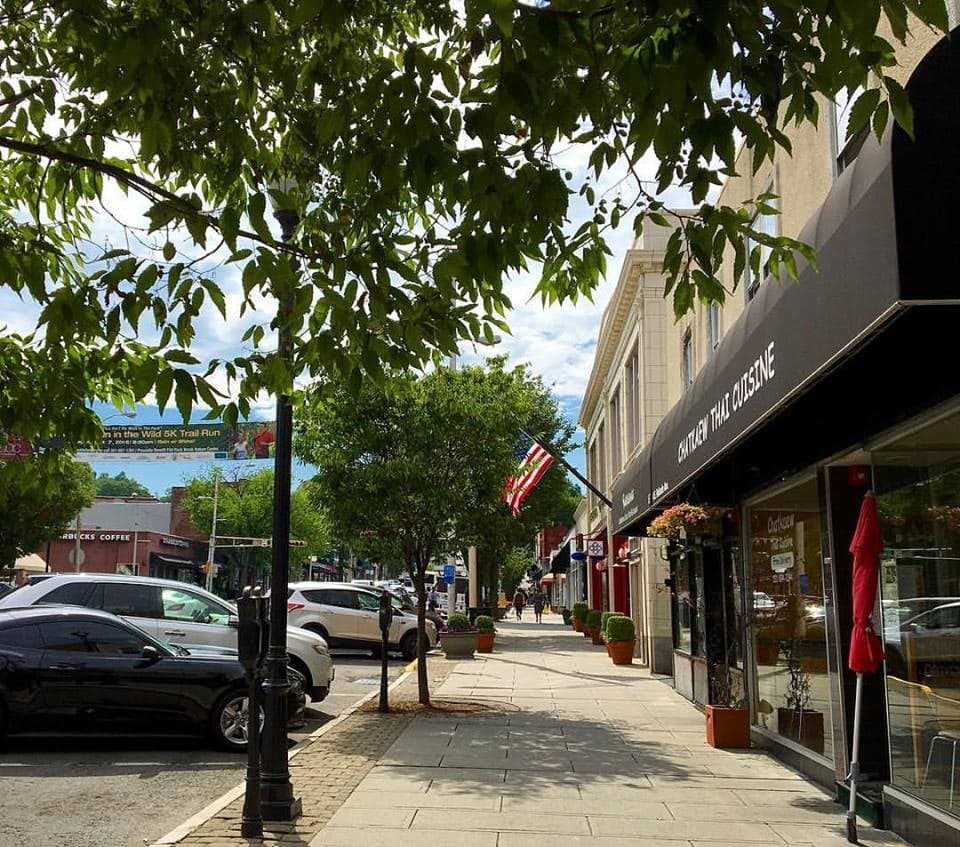
Daily life in Englewood centers on a compact, walkable downtown along Palisade Avenue and Grand Avenue, featuring independent restaurants, coffee shops, and retail. The city’s public schools—especially the Dwight Morrow High School and the Academies@Englewood—are highly rated, with a 9/10 GreatSchools rating and strong college placement records. Private options include the prestigious Dwight-Englewood School, a K–12 institution with a $45,000+ tuition. The average commute time is 28.4 minutes, with many residents driving to the Englewood NJ Transit bus terminal for express service to the Port Authority Bus Terminal (about 30–40 minutes). Others take the nearby George Washington Bridge or use the Hudson-Bergen Light Rail from neighboring stations. Parks like Flat Rock Brook Nature Center and Mackay Park provide outdoor recreation, while the Bergen Performing Arts Center offers cultural events. The rhythm is suburban but not sleepy: evenings see families at local pizzerias and professionals grabbing takeout after late commutes.
Englewood is best suited for professionals and families who value a short commute to Manhattan, strong public schools, and a walkable downtown, and who can absorb the high cost of living. Singles and couples without children may find the property tax burden steep relative to rental options in nearby Jersey City or Hoboken. Retirees on fixed incomes might struggle with housing costs unless downsizing. For those who prioritize space, safety, and access to urban jobs—and can afford the premium—Englewood offers a stable, amenity-rich suburban base with genuine city proximity.

Crime in Englewood, NJ
Generally safer than 72% of comparable U.S. locations.
Violent CrimeViolent Crime Analysis
Property CrimeProperty Crime Analysis
Crime Analysis
Englewood, New Jersey, presents a mixed safety picture for prospective residents. The city’s violent crime rate of 230 incidents per 100,000 residents is notably lower than the national average, but its property crime rate of 992.2 per 100,000 is significantly elevated, creating a situation where residents must be vigilant about theft and burglary while generally feeling safe from violent confrontations. As a small city within the New York metropolitan area, Englewood’s crime dynamics are also shaped by the broader legal and prosecutorial environment of Bergen County, which leans progressive and may influence how offenders are processed and returned to the community.
Crime in context
Englewood’s violent crime rate of 230 per 100,000 is roughly 35% lower than the national average of about 380 per 100,000, placing it in a safer tier for serious offenses like homicide, robbery, and aggravated assault. However, the property crime rate of 992.2 per 100,000 is nearly 50% higher than the U.S. average of roughly 670 per 100,000. This disparity means that while a resident’s chance of being a victim of a violent crime is relatively low, the risk of experiencing larceny, motor vehicle theft, or burglary is well above typical suburban norms. Compared to other Bergen County municipalities, Englewood’s property crime rate is among the highest, driven largely by its density, transit access, and proximity to New York City, which attracts property crime from both local and transient offenders.
What residents experience
In daily life, Englewood residents are far more likely to encounter property crime than violent crime. Common complaints include package theft from porches, vehicle break-ins, and bicycle theft, particularly in denser neighborhoods near the downtown commercial corridor and the Englewood Hospital and Medical Center. The city’s police department maintains a visible presence and has invested in community policing initiatives, but the high property crime rate persists. A key concern for many residents is the broader criminal justice philosophy in Bergen County, where progressive district attorneys and judges often prioritize diversion programs, reduced bail, and shorter sentences for non-violent property offenders. While these policies aim to reduce incarceration, they can result in repeat property criminals cycling back onto Englewood’s streets quickly, undermining deterrence and frustrating victims who see little accountability for thefts that disrupt their daily lives.
Neighborhood-level variation is significant in Englewood. The affluent, tree-lined areas west of Grand Avenue—such as the Englewood Cliffs border and the historic Hudson Avenue district—experience very low violent crime and property crime rates comparable to the safest Bergen County suburbs. In contrast, the more densely populated eastern sections near the Hackensack border and the Palisade Avenue corridor see higher concentrations of property crime and occasional gang-related violence. For those considering a move, choosing a block with strong neighborhood watch participation and good street lighting can substantially reduce risk, but the overarching property crime challenge and the lenient justice system remain citywide factors to weigh carefully.
* Values derived from national, state, county, city and local statistics and may differ in a specific area. Last updated: 2026-04-29T18:47:19.000Z
Narrative content on this page is AI-generated and may contain mistakes. Verify any details that matter before acting on them.
ReloMaps may earn a commission from affiliate links at no extra cost to you.

