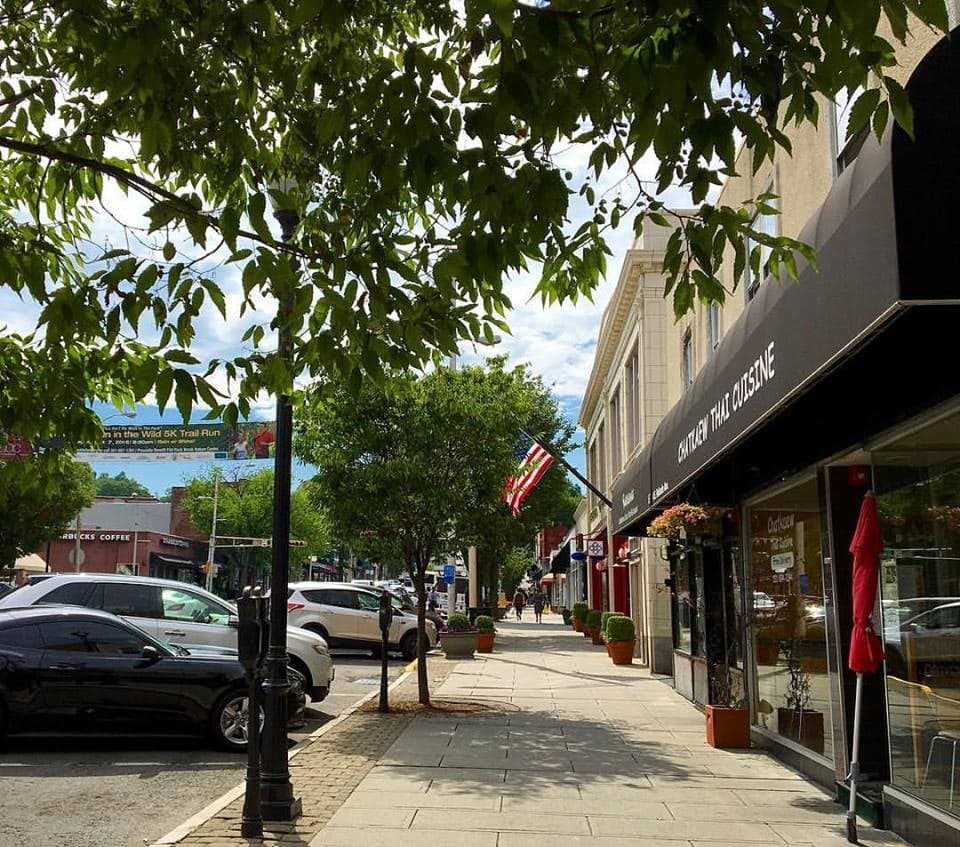
Photo: Wikipedia
Personal Sovereignty in Englewood, NJ
Viable for self-reliance. Generally workable, though some barriers may limit total independence.
What does Personal Sovereignty tell us?
Personal Sovereignty measures your capacity for self-reliance and independence with minimal government friction. Higher scores mean fewer barriers between you and the way you want to live... but it assumes you have the space you need and good neighbors.
What does this tell us?
Personal Sovereignty measures your capacity for self-reliance and independence with minimal government friction. Higher scores mean fewer barriers between you and the way you want to live... but it assumes you have the space you need and good neighbors.
State Policy
Energy independence: Importer (8% of energy produced in-state)
Personal Liberty
Homesteading

Personal Liberty Analysis
For a conservative-leaning individual or family prioritizing personal sovereignty, Englewood, New Jersey presents a challenging environment. While the city itself offers a dense, walkable urban core and proximity to New York City, the broader state context imposes significant constraints on autonomy. New Jersey consistently ranks among the most restrictive states in the nation for gun rights, tax burdens, and regulatory oversight, meaning that a move here requires a clear-eyed acceptance of limited personal latitude compared to states like Texas, Florida, or New Hampshire. The core trade-off is access to Northeast economic opportunities versus a heavily managed lifestyle where government reach into daily life is the norm, not the exception.
Tax burden and regulatory posture: How New Jersey’s fiscal climate impacts personal freedom
The financial aspect of personal sovereignty in Englewood is dominated by New Jersey’s notoriously high tax burden. The state has the highest property taxes in the country, with the average effective rate hovering around 2.2% of home value. For a typical Englewood home valued at $500,000, that translates to roughly $11,000 annually in property taxes alone. This is a direct, recurring claim on your income and assets, reducing the capital available for self-reliance investments like land, tools, or emergency savings. Additionally, New Jersey’s state income tax is progressive, with rates climbing to 10.75% for high earners, and the state’s sales tax is 6.625%. The regulatory posture extends beyond taxes: the state has strict environmental regulations, building codes, and business licensing requirements that can frustrate attempts at self-employment or home-based enterprises. For a prepper mindset, this fiscal environment means that a significant portion of your labor is effectively redirected to the state, limiting your ability to build independent wealth and resilience. The cost of living in Bergen County, where Englewood sits, is roughly 30% above the national average, further squeezing the budget for sovereignty-related pursuits.
Self-defense and gun law specifics: Navigating New Jersey’s restrictive firearms environment
For those who view the Second Amendment as a cornerstone of personal sovereignty, Englewood is a difficult jurisdiction. New Jersey has some of the strictest gun laws in the United States. The state requires a Firearms Purchaser Identification Card (FPID) for long guns and a separate permit to purchase a handgun, each involving background checks, fingerprinting, and references. The process is slow and discretionary, often taking months. Carrying a concealed firearm is legally possible after the 2022 Bruen decision, but New Jersey’s “justifiable need” requirement was replaced with a “sensitive places” law that bans carry in a vast array of locations—including parks, public transit, restaurants that serve alcohol, and private property without explicit permission. This effectively makes lawful carry impractical for daily life. Magazine capacity is limited to 10 rounds, and “assault weapons” are broadly defined, banning many common semi-automatic rifles. For a survivalist, this means that self-defense options are heavily circumscribed. The state’s legal climate also imposes civil liability risks on gun owners, and defensive use of force can lead to prosecution. In short, Englewood is not a place where you can rely on firearms as a primary tool for personal or family security without navigating a dense, hostile legal framework.
Self-reliance and homesteading viability: Lot sizes, zoning, and off-grid feasibility in Englewood
Englewood is a densely developed suburban city, not a rural homesteading locale. Typical residential lot sizes range from 5,000 to 10,000 square feet, with many homes on smaller plots in the city’s core. Zoning is strictly residential, with most lots governed by municipal codes that prohibit agricultural activities like keeping livestock, chickens, or bees without special permits. The city’s zoning board has significant discretion, and variances are difficult to obtain. Off-grid living is essentially impossible: the city mandates connection to municipal water, sewer, and electric grids. Solar panels are allowed but subject to aesthetic review, and battery storage for full grid independence is rare and expensive. Rainwater collection for potable use is restricted by state health codes. For a prepper seeking to grow food, raise animals, or achieve energy independence, Englewood offers little room. The nearest viable land for such pursuits is in rural areas of Sussex or Warren Counties, 60-90 minutes away, where acreage is more affordable and zoning is looser. Within Englewood, the best you can do is a small vegetable garden and perhaps a few fruit trees, but this is a far cry from the self-reliant homesteading ideal. The city’s dense layout also means close neighbors and limited privacy, which can be a concern for those who value operational security in their preparations.
Personal liberties: Parental rights, medical autonomy, speech, and property in Englewood
New Jersey’s legal framework significantly impacts personal liberties across several domains. On parental rights, the state has been a leader in progressive education policies. The New Jersey Department of Education mandates LGBTQ-inclusive curriculum standards, and school districts, including Englewood’s, have broad authority over health and sex education. Parents can opt their children out of specific lessons, but the process is not automatic and can require active monitoring and advocacy. The state also has a strong child welfare system with broad reporting mandates, which some parents view as intrusive. On medical autonomy, New Jersey imposed one of the strictest COVID-19 vaccine mandates for healthcare workers and had prolonged school mask mandates, reflecting a general posture of state authority over individual health decisions. The state also has a robust public health apparatus that can compel treatments or isolation during declared emergencies. Free speech is generally protected, but the state has hate crime laws that can be applied to speech deemed threatening or harassing, and local ordinances in Englewood may regulate public demonstrations. Property rights are heavily constrained by zoning, environmental regulations, and historic preservation rules. The city’s rent control ordinance also limits what landlords can charge, which can affect property values and investment returns. For a conservative concerned with government overreach, these factors create an environment where the state’s authority routinely supersedes individual and family decision-making.
In summary, Englewood offers a high degree of economic opportunity and urban convenience, but at a steep cost to personal sovereignty. The tax burden is among the highest in the nation, gun rights are severely restricted, homesteading is impractical, and personal liberties are subject to extensive state oversight. Compared to states in the South, Midwest, or Mountain West, where property taxes are lower, gun laws are more permissive, and zoning allows for greater self-reliance, Englewood represents a heavily managed existence. For a survivalist or prepper, this is not a location where you can build a fortress of independence. It is a place to live if your priorities are career and proximity to New York, but you will need to accept that your autonomy will be significantly curtailed by the state. If sovereignty is your primary concern, you would be better served looking at rural areas in New Hampshire, Tennessee, or Idaho, where the legal and fiscal climate aligns more closely with a self-reliant lifestyle.

* Values derived from national, state, county, city and local statistics and may differ in a specific area. Last updated: 2026-04-29T18:47:19.000Z
Narrative content on this page is AI-generated and may contain mistakes. Verify any details that matter before acting on them.
ReloMaps may earn a commission from affiliate links at no extra cost to you.

