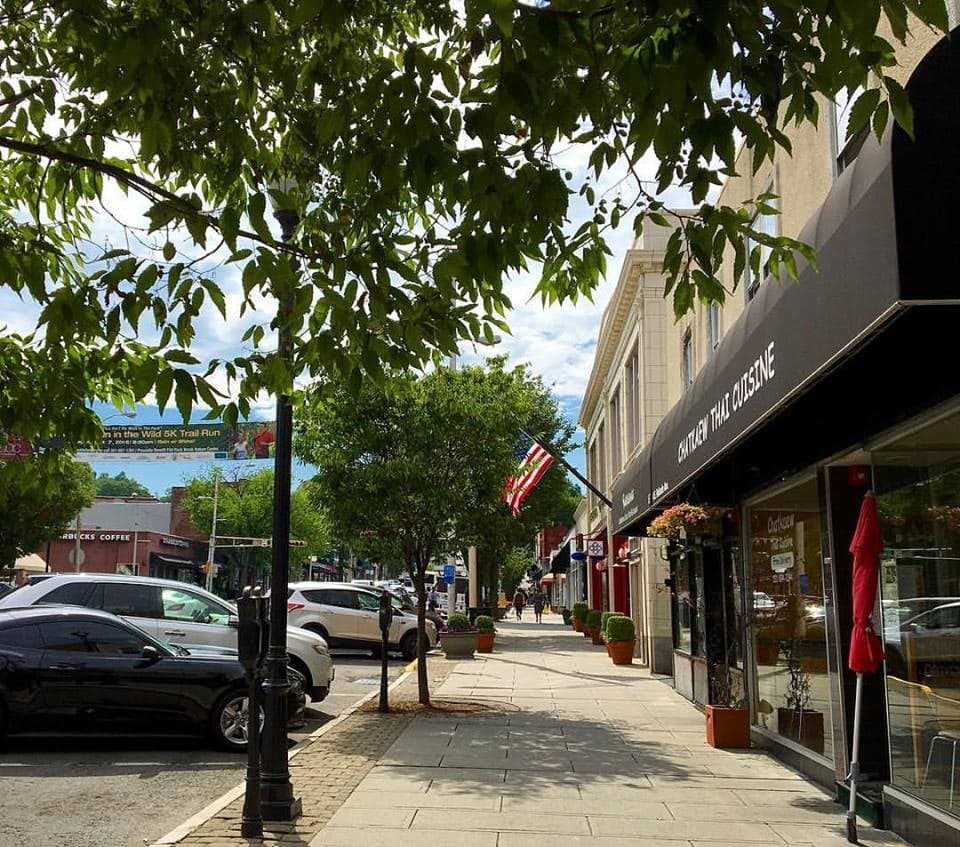
Photo: Wikipedia
Political ClimatePolitical Climate in Englewood, NJ
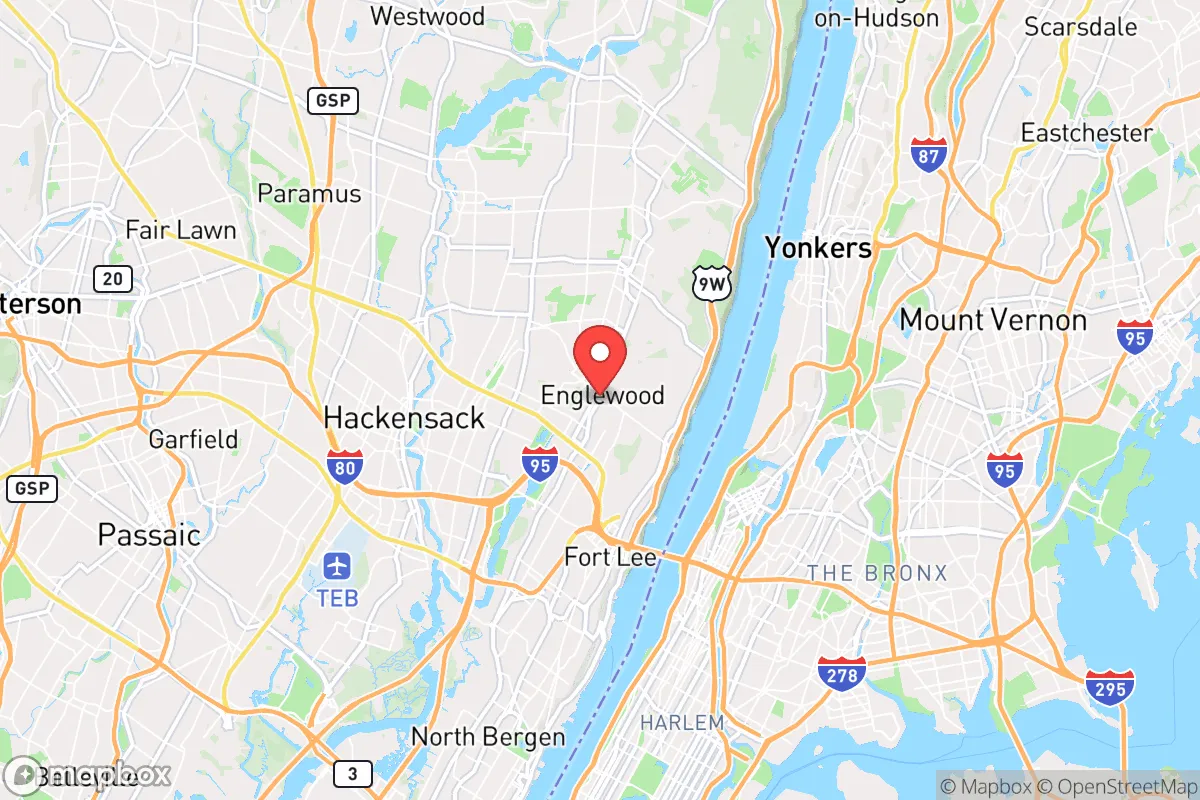
District shown is the primary district for this city’s centroid. Cities may span multiple districts.
Local Political AnalysisPolitical Analysis of Englewood, NJ
Look, I’ve lived in Englewood my whole life, and I’ve watched this town shift from a reliably moderate, common-sense place into something that feels a lot more like a one-party echo chamber. The Cook PVI of D+2 might not sound extreme, but that number doesn’t tell the whole story. In practice, local elections are rarely competitive, and the progressive wing of the Democratic party has a stranglehold on city council and the school board. We’re not talking about a purple town anymore; we’re talking about a place where the political center has been hollowed out, and the only debate is how far left to go.
How it compares
Drive ten minutes west to Alpine or Closter, and you’ll find towns that still vote Republican in local races and keep their taxes in check. Those communities have a live-and-let-live vibe—they don’t try to micromanage your property or your business. Englewood, by contrast, has become a regional outlier. Tenafly and Demarest to the north are also blue, but they’re more fiscally conservative and less eager to embrace every social experiment coming out of Trenton. The difference is stark: in Englewood, the local government has been quick to adopt statewide progressive mandates—like strict rent control ordinances and sanctuary city policies—that neighboring towns have either rejected or watered down. It’s not just a political difference; it’s a difference in philosophy about how much the government should be in your life.
What this means for residents
For the average homeowner or small business owner, this tilt has real consequences. Property taxes are already among the highest in Bergen County, and the city council keeps finding new ways to spend—whether it’s on DEI consultants or climate action plans that do nothing to lower your tax bill. School board meetings have become battlegrounds over curriculum and parental rights, with a vocal minority pushing for critical race theory and gender ideology lessons that many parents find intrusive. If you value personal freedom—like the right to choose your child’s education, run a business without endless red tape, or keep your Second Amendment rights intact—you’ll feel increasingly out of step here. The long-term trend is concerning: as the progressive base grows more organized, expect more zoning changes that favor developers over single-family homeowners, and more ordinances that restrict what you can do with your own property.
One cultural distinction worth noting: Englewood has a strong African American and Caribbean community that historically leaned moderate-to-conservative on social issues. That voting bloc is being taken for granted by the local Democratic machine, which assumes they’ll vote blue no matter what. But there’s a quiet frustration brewing—especially among older residents—about crime trends and the lack of police accountability reforms that actually make the streets safer. The city’s embrace of cashless bail and soft-on-crime policies has made some neighborhoods feel less secure than they were a decade ago. If you’re thinking of moving here, just know that the political culture is not neutral—it’s actively progressive, and it’s only going to get more so as younger, out-of-state transplants replace the old guard. For those who value limited government and personal liberty, Englewood is a place to watch with caution, not optimism.

State Political ClimatePolitical Climate in New Jersey
State Political AnalysisPolitical Environment in the State
New Jersey has long been a Democratic stronghold, but don’t let the blue tint fool you—it’s a deep shade of purple under the surface. The state hasn’t voted Republican for president since 1988, and Democrats control the governorship and both legislative chambers. But the margin has tightened in recent cycles: in 2020, Joe Biden won the state by about 16 points, down from Hillary Clinton’s 14-point win in 2016 and Barack Obama’s 17-point win in 2012. The real story is the suburban and exurban drift—places like Hunterdon County and Sussex County have moved right, while the urban cores of Newark, Jersey City, and Paterson remain overwhelmingly Democratic. The state’s political trajectory over the past 10-20 years is one of slow, grinding polarization: the coasts and cities get bluer, the rural and outer suburbs get redder, and the middle—places like Middlesex County and Ocean County—becomes the battleground.
Urban vs. rural divide
The political map of New Jersey is a tale of three zones. The urban core—Newark, Jersey City, Paterson, Elizabeth, and Trenton—is deep blue, driven by dense populations, strong public-sector unions, and a heavy reliance on government services. These cities produce massive Democratic margins; in 2024, Essex County (Newark) gave Kamala Harris over 75% of the vote. The suburban ring—Bergen County, Middlesex County, and Monmouth County—is more competitive but still leans Democratic, thanks to professional-class voters who prioritize social issues and environmental regulations. The real Republican strongholds are the rural and exurban counties: Sussex County (Trump won by 18 points in 2024), Hunterdon County (Trump +12), and Ocean County (Trump +15). Cape May County at the southern tip is also reliably red. The divide isn’t just about population density—it’s about economic reliance. Rural areas depend on agriculture, tourism, and small business, while urban areas depend on government, healthcare, and education. The result is a state where a 30-minute drive can take you from a “Defund the Police” rally in Newark to a “Back the Blue” parade in Newton.
Policy environment
New Jersey’s policy environment is a textbook case of progressive governance with a heavy hand. The state has the highest property taxes in the nation—averaging over $9,500 per year—and a progressive income tax that tops out at 10.75% for earners over $1 million. The regulatory posture is aggressive: the state has its own version of the Affordable Care Act (NJ FamilyCare), a $15 minimum wage, and some of the strictest environmental regulations in the country, including a ban on single-use plastic bags and a mandate for electric vehicle charging stations in new construction. Education policy is dominated by the teachers’ union (NJEA), which has successfully blocked school choice expansion and charter school growth. The state’s public schools are among the best in the nation, but the cost is staggering—per-pupil spending exceeds $25,000 in many districts. Healthcare is heavily regulated, with a state-run health insurance exchange and strict certificate-of-need laws that limit hospital competition. Election laws are among the most liberal: no-excuse mail-in voting, automatic voter registration, and same-day registration. For a conservative-leaning resident, the policy environment feels like a constant tax-and-regulate treadmill, with little room for local autonomy.
Trajectory & freedom
New Jersey is becoming less free by almost any measure, and the trend has accelerated since 2020. On gun rights, the state passed some of the nation’s strictest laws after the Bruen decision, including a ban on carrying firearms in “sensitive places” like parks, libraries, and private businesses without explicit permission. The law is currently being challenged in court, but for now, it’s a de facto ban on concealed carry in most public spaces. On parental rights, the state passed a law in 2022 that requires schools to adopt policies supporting LGBTQ+ students, including allowing them to use preferred names and pronouns without parental consent—a direct blow to parental authority. On speech, the state has no campus free-speech protections, and public universities like Rutgers have faced controversies over disinviting conservative speakers. On medical autonomy, New Jersey expanded abortion access to the point of being a “sanctuary state” for out-of-state patients, and it legalized assisted suicide in 2019. Property rights are under constant assault from the state’s powerful eminent domain authority, particularly in urban redevelopment projects. The tax burden is the biggest freedom killer: the combination of high property taxes, income taxes, and sales taxes (6.625%) means residents effectively work for the government for the first four months of the year. The state’s motto might as well be “You’ll own nothing and pay for everything.”
Civil unrest & political movements
New Jersey has seen its share of political flashpoints. The 2020 Black Lives Matter protests in Newark and Jersey City were large but mostly peaceful, though they led to calls to defund the police that were ultimately rejected by the Democratic-controlled legislature. The state’s sanctuary policies are a major source of tension: New Jersey is one of the most aggressive “sanctuary states” in the country, with laws that prohibit local law enforcement from cooperating with ICE detainers. This has led to high-profile incidents, like the 2018 murder of a Newark police detective by an undocumented immigrant who had been released despite an ICE hold. The state’s immigration politics are a constant source of friction, with Republican lawmakers in Ocean County and Sussex County pushing for “sanctuary city” bans that have gone nowhere. Election integrity is another flashpoint: New Jersey’s no-excuse mail-in voting system, expanded during COVID, has led to concerns about ballot harvesting and chain-of-custody issues, though no major scandals have been proven. The most visible political movement on the right is the “New Jersey Rebellion” group, which organizes against vaccine mandates and school mask policies. On the left, the Working Families Party has gained influence in Newark and Jersey City, pushing for rent control and defunding the police. A new resident would notice the constant low-grade political tension, especially in the suburbs where “Fuck Biden” flags fly next to “In This House We Believe” signs.
Projection
Over the next 5-10 years, New Jersey will likely become more Democratic, more expensive, and less free. Demographic trends are working against conservatives: the state’s population is aging, and younger voters are overwhelmingly progressive. The urban cores are growing, while rural areas are shrinking. In-migration from New York City is accelerating the blue shift in Hudson County and Bergen County, as wealthy professionals flee Manhattan for Jersey City and Hoboken. The state’s tax base is eroding, with high earners moving to Florida and Texas, but the remaining population is more dependent on government services, creating a vicious cycle of higher taxes and less freedom. The state’s debt is massive—over $50 billion in unfunded pension liabilities—and the only solution the legislature seems willing to consider is more taxes. Expect more gun control, more parental rights restrictions, and more environmental mandates. The one wild card is the courts: the state’s Supreme Court, now with a 4-3 conservative majority after Governor Murphy’s appointments, could push back on some of the more extreme laws. But for a conservative-leaning resident, the realistic outlook is grim. If you’re moving to New Jersey, you’re betting on the blue team’s vision of society—and you’d better be ready to pay for it.
For a conservative-leaning individual or family, New Jersey is a tough sell. The taxes are crushing, the regulations are suffocating, and the political trajectory is firmly leftward. If you’re considering a move here, you need to be prepared for a state where your property taxes will rival a mortgage payment, your gun rights will be severely limited, and your parental authority will be challenged by the state. The best you can do is pick a red pocket—Sussex County, Hunterdon County, or Ocean County—where you’ll at least have neighbors who share your values. But even there, you’ll be paying for the policies of Newark and Trenton. If freedom and low taxes are your priorities, you’re better off looking at Pennsylvania, Florida, or Texas. New Jersey is a beautiful state with great schools and natural beauty, but the price of admission—both financial and political—is steep.
* Values derived from national, state, county, city and local statistics and may differ in a specific area. Last updated: 2026-04-29T18:47:19.000Z
Narrative content on this page is AI-generated and may contain mistakes. Verify any details that matter before acting on them.
ReloMaps may earn a commission from affiliate links at no extra cost to you.

