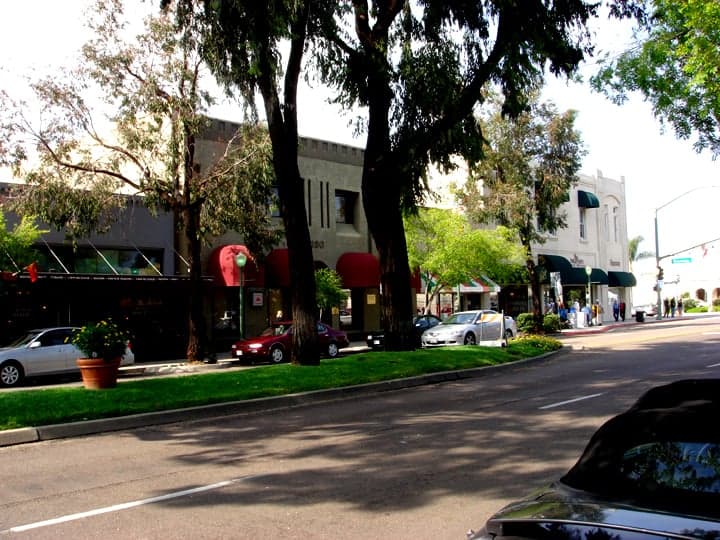
Photo: Wikipedia
Personal Sovereignty in Escondido, CA
Moderate friction. Expect trade-offs in some aspect of personal liberty and independence.
What does Personal Sovereignty tell us?
Personal Sovereignty measures your capacity for self-reliance and independence with minimal government friction. Higher scores mean fewer barriers between you and the way you want to live... but it assumes you have the space you need and good neighbors.
What does this tell us?
Personal Sovereignty measures your capacity for self-reliance and independence with minimal government friction. Higher scores mean fewer barriers between you and the way you want to live... but it assumes you have the space you need and good neighbors.
State Policy
Energy independence: Importer (33% of energy produced in-state)
Personal Liberty
Homesteading

Personal Liberty Analysis
Escondido offers a mixed bag for those prioritizing personal sovereignty, sitting within a state known for aggressive regulatory overreach while retaining some local characteristics that appeal to self-reliant individuals. Located in northern San Diego County, this city of roughly 150,000 residents operates under California’s heavy-handed state framework, which imposes strict controls on everything from firearms to land use, but its inland location and semi-rural fringe provide pockets of autonomy that coastal cities lack. For a conservative-leaning prepper or survivalist, Escondido is less about outright freedom and more about strategic navigation—knowing where the cracks in the system are and how to exploit them without drawing unwanted attention.
Tax burden and regulatory posture in Escondido
California’s tax regime is among the most oppressive in the nation, and Escondido residents feel it directly. The state’s top marginal income tax rate of 13.3% applies to high earners, while the state sales tax in Escondido hits 8.5% (base plus local add-ons), making everyday purchases noticeably more expensive. Property taxes are capped at 1% of assessed value under Proposition 13, but that’s just the starting point—Mello-Roos districts and special assessments can add another 1-2% in newer developments, so check the fine print before buying. The regulatory posture is equally suffocating: California’s California Environmental Quality Act (CEQA) can be weaponized by activists to stall any construction or business expansion, and Escondido’s city council has shown a willingness to impose local ordinances on short-term rentals, water use, and building codes that go beyond state mandates. For a prepper, this means any attempt to build a workshop, install solar panels, or dig a well will require permits, inspections, and patience—expect 6-12 months for even simple projects. The silver lining is that Escondido’s inland location means fewer coastal commission restrictions, but don’t mistake that for freedom; the state’s grip is tight, and local officials often enforce it zealously.
Self-defense and gun law specifics in Escondido
California’s gun laws are among the strictest in the country, and Escondido offers no refuge from them. The state requires a 10-day waiting period for all firearm purchases, a background check for every transaction (including private sales, which must go through a licensed dealer), and a handgun roster that limits which models you can buy—effectively banning many popular self-defense pistols. Magazine capacity is capped at 10 rounds, and “assault weapons” (a broad category including many common rifles) are banned outright. Concealed carry is possible but difficult: San Diego County is a “may-issue” jurisdiction, meaning the sheriff has discretion, and applicants must demonstrate “good cause” beyond general self-defense—a standard that has historically been used to deny permits to ordinary citizens. As of 2026, the Bruen decision has loosened this somewhat, but the process remains costly and time-consuming, with training requirements and fees exceeding $500. For home defense, you can legally own a shotgun or handgun kept in the home, but storage laws require firearms to be locked away if a minor might access them—a vague standard that could be used against you in a dispute. The bottom line: if you value the right to keep and bear arms without government interference, Escondido is a hostile environment. Stock up on legal configurations, train discreetly, and consider relocating to a free state if this is a dealbreaker.
Self-reliance and homesteading viability in Escondido
Escondido’s semi-rural character offers some homesteading potential, but it’s constrained by zoning and water realities. The city’s minimum lot size in agricultural zones is 1 acre, and some unincorporated areas allow up to 5-acre parcels, giving room for gardens, chicken coops, or even a small orchard. However, water is the critical limiting factor: Escondido averages just 15 inches of rain annually, and the city’s water supply is heavily dependent on imported State Water Project allocations, which are increasingly unreliable due to drought and environmental restrictions. Rainwater harvesting is legal but limited to 5,000 gallons per property without a permit, and graywater systems require approved designs. Off-grid living is effectively impossible within city limits—building codes mandate grid connection for new construction, and solar panels must be tied to the grid unless you pay for expensive battery systems and navigate net metering caps. Zoning also restricts livestock: chickens are allowed on lots under 1 acre (with limits on roosters), but goats, pigs, or larger animals require agricultural zoning. For a serious prepper, the best bet is to look at unincorporated areas east of Escondido, like Valley Center or Ramona, where lot sizes are larger and enforcement is looser. Even there, expect to deal with county health department inspections for septic systems and well permits that can take months. Self-reliance in Escondido is possible, but it’s a bureaucratic slog—plan for red tape and high upfront costs.
Personal liberties in Escondido: parental rights, medical autonomy, speech, and property
California’s progressive policies erode personal liberties across the board, and Escondido is no exception. Parental rights are under direct assault: the state’s Education Code prohibits schools from notifying parents when a child requests to change their gender identity or pronouns, effectively creating a secret system that bypasses family authority. Escondido Union School District has implemented these policies, and parents who object face legal threats or social ostracism. Medical autonomy is similarly constrained: vaccine mandates for school attendance remain in place (though COVID-era mandates have been relaxed), and the state’s health department can impose quarantine orders without judicial review. Alternative medical treatments, like ivermectin or hydroxychloroquine, are effectively banned for off-label use, and doctors who prescribe them risk license revocation. Free speech is nominally protected, but California’s “hate speech” laws and workplace harassment standards create a chilling effect—public criticism of government officials or policies can lead to social media bans or employment retaliation. Property rights are the weakest link: the California Coastal Commission and local planning boards have broad authority to restrict land use, including denying permits for fences, sheds, or even tree removal in some cases. Eminent domain is rarely used, but the threat of “downzoning” (reducing allowed density) can destroy property values overnight. For a conservative individual, these constraints mean constant vigilance—every aspect of life is subject to government oversight, and pushing back requires legal resources most people don’t have.
Overall, Escondido ranks poorly on personal sovereignty compared to states like Texas, Idaho, or Montana, where taxes are lower, gun laws are permissive, and property rights are stronger. Within California, it’s a middle-ground option—better than San Francisco or Los Angeles for those seeking space and a conservative community, but still shackled by state-level tyranny. The city’s inland location and agricultural fringe offer some breathing room, but the regulatory and legal environment is fundamentally hostile to self-reliance. If you’re determined to stay in California, Escondido is a workable base for strategic prepping—just keep your head down, know the laws, and have an exit plan for when the state’s overreach becomes unbearable. For those who value true freedom, the smart move is to look elsewhere.

* Values derived from national, state, county, city and local statistics and may differ in a specific area. Last updated: 2026-04-29T23:44:57.000Z
Narrative content on this page is AI-generated and may contain mistakes. Verify any details that matter before acting on them.
ReloMaps may earn a commission from affiliate links at no extra cost to you.

