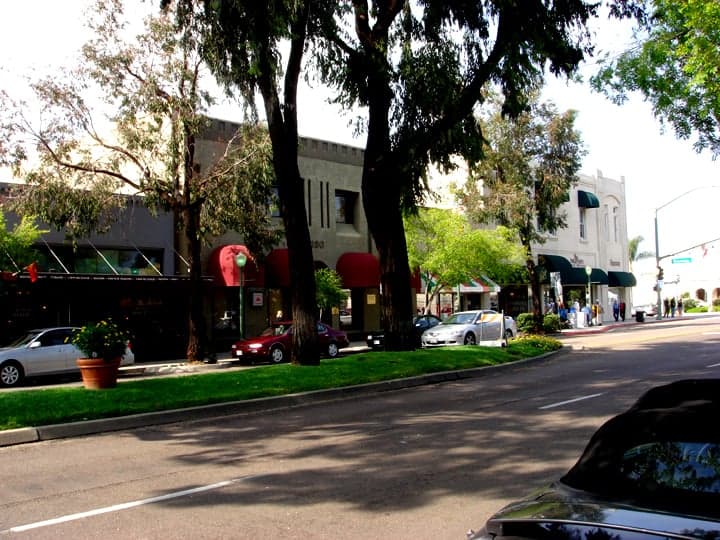
Photo: Wikipedia
Political ClimatePolitical Climate in Escondido, CA
District shown is the primary district for this city’s centroid. Cities may span multiple districts.
Local Political AnalysisPolitical Analysis of Escondido, CA
Escondido’s political climate has shifted noticeably leftward in recent years, and if you’ve lived here as long as I have, you’ve felt it. The city sits in a county that’s gone from purple to deep blue, and with a Cook PVI of D+16, Escondido now leans solidly Democratic—a far cry from the more balanced, live-and-let-live vibe I remember from the 1990s and early 2000s. The 2020 election results here mirrored that trend, with Joe Biden carrying the city by a comfortable margin, and local races have increasingly favored progressive candidates. It’s not the same Escondido where folks used to joke that the biggest political fight was over which church had the best potluck.
How it compares
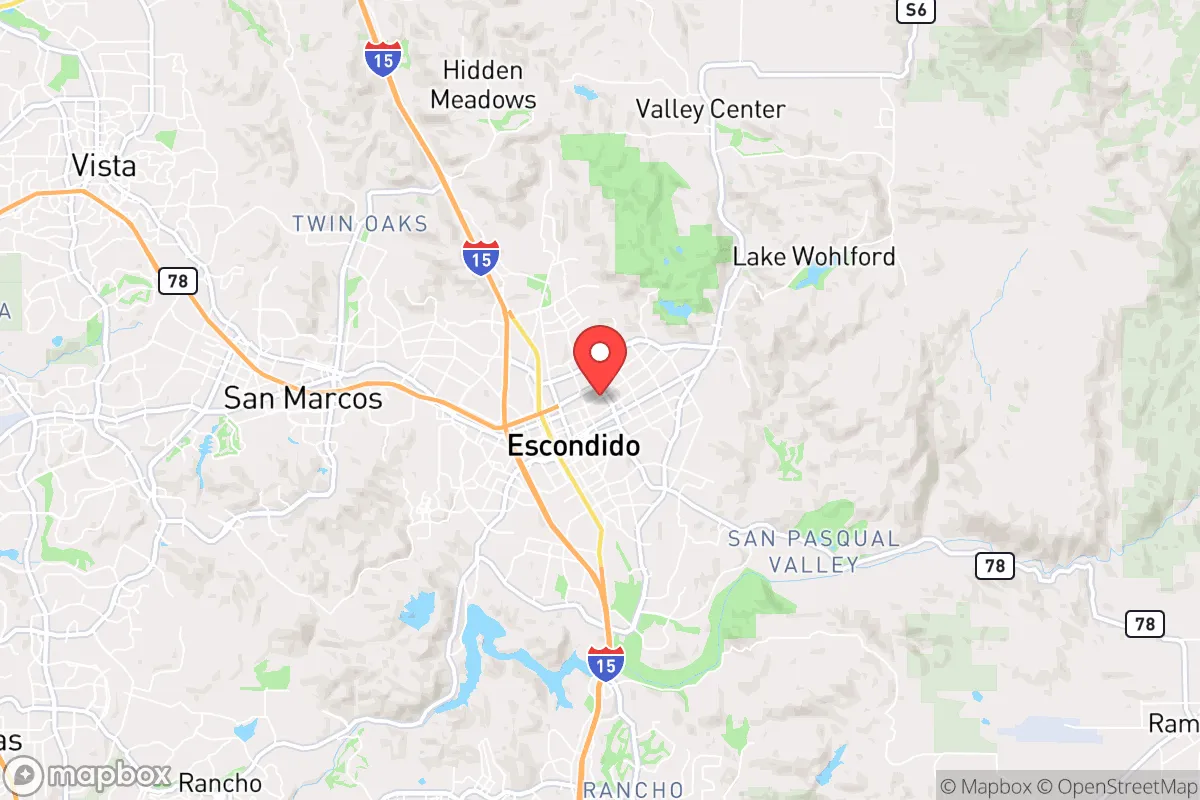
Drive 15 minutes north to San Marcos, and you’ll find a similar D+ lean, though it’s even more pronounced thanks to the university crowd. But head east toward Valley Center or Ramona, and the political landscape flips hard—those unincorporated areas still vote reliably Republican, often by 20 points or more. Even closer, the city of San Diego to the south is a progressive stronghold, so Escondido sits as a kind of buffer zone. What’s striking is how fast the change happened: in 2016, Hillary Clinton won Escondido by only a few points, but by 2020, the margin had widened significantly. The surrounding rural towns feel like a different world now, and that cultural gap is growing every election cycle.
What this means for residents
For those of us who value personal freedoms and limited government, the shift is concerning. You’re seeing more local ordinances that lean into progressive priorities—things like stricter rent control measures, expanded public funding for homeless services that sometimes feel more like enabling, and a city council that’s less skeptical of state-level mandates. The push for higher density housing near transit corridors, for example, has ramped up, and while it’s sold as “affordable housing,” it often means less say for existing homeowners about what gets built next door. The school board has also taken a more activist turn, with curriculum changes that emphasize social justice over core academics. It’s not that every new policy is bad, but the overall direction feels like a slow erosion of the hands-off, common-sense approach that made Escondido a comfortable place to raise a family.
On the cultural side, you’ll notice the change in everyday life. The annual Escondido Christmas parade, once a straightforward community event, now includes more political messaging from progressive groups. The local farmers’ market has become a hub for activist booths. And the city’s response to state mandates during the pandemic—shutting down small businesses while big-box stores stayed open—left a bitter taste for many longtime residents. The tax burden is creeping up too, with sales tax hikes and new fees that fund programs you might not agree with. If you’re looking for a place where your vote still feels like it counts against the state’s progressive machine, Escondido is becoming a tougher sell. The trajectory suggests more of the same: tighter regulations, higher costs, and a government that’s less interested in protecting your rights than in pushing a social agenda. It’s still a great city with good people, but the political winds are blowing hard, and not in a direction that respects the old-fashioned idea of leaving folks alone to live their lives.

State Political ClimatePolitical Climate in California
State Political AnalysisPolitical Environment in the State
California is a one-party Democratic state where registered Democrats outnumber Republicans by nearly 2-to-1, and the last time it voted for a Republican presidential candidate was George H.W. Bush in 1988. Over the past 20 years, the state has lurched sharply left, driven by massive population growth in coastal metros and a steady exodus of conservatives from rural and suburban areas. While the state’s overall partisan lean is deeply blue, the internal political landscape is far more fractured than the statewide numbers suggest — and that fracture is widening.
Urban vs. rural divide
The political map of California is a tale of two states. The coastal urban crescent — from San Francisco and Oakland in the Bay Area down through Los Angeles, San Diego, and Orange County — drives the state’s Democratic supermajority. These metros are home to the state’s most progressive voters, union strongholds, and tech-industry donors who bankroll left-wing candidates. In contrast, the Central Valley and inland regions — places like Bakersfield, Fresno, Redding, and Palmdale — vote reliably Republican, often by margins of 20-30 points. The divide is stark: in 2024, Kamala Harris won San Francisco County by 77 points, while Donald Trump won Tulare County by 18 points. Even within blue counties, there are red islands — Simi Valley in Ventura County and Murrieta in Riverside County are reliably conservative suburbs where parents and small-business owners feel increasingly out of step with Sacramento.
Policy environment
California’s policy environment is a textbook case of government overreach. The state has the highest personal income tax rate in the nation (13.3% for top earners), a 7.25% sales tax that local governments can pile onto, and some of the highest gas taxes in the country — currently 68 cents per gallon. Property taxes are capped by Prop 13, but the state makes up for it with a dizzying array of fees and regulatory costs. On education, California spends over $23,000 per student but ranks near the bottom nationally in reading and math proficiency — a classic case of high spending with poor results. The state’s healthcare system is dominated by a massive Medi-Cal expansion and a push toward single-payer, though it hasn’t passed yet. Election laws are among the most permissive in the country: universal mail-in ballots, same-day registration, and no voter ID requirement. For a conservative, the policy environment feels like a slow-motion erosion of personal agency — every aspect of life, from what car you can drive to how you heat your home, is subject to state mandate.
Trajectory & freedom
California is becoming less free by nearly any measure. The state’s trajectory over the past decade has been toward tighter control over personal choices. On gun rights, California has some of the strictest laws in the nation — an assault weapons ban, a 10-day waiting period, a “may issue” concealed carry regime that was only loosened slightly after the Bruen decision, and a new law (SB 2) that effectively bans carrying in most public places. On parental rights, the state passed AB 1955 in 2024, which prohibits schools from notifying parents if a child changes their gender identity — a direct blow to family autonomy. On speech, the state has flirted with “hate speech” laws that critics say chill political expression. On medical autonomy, California mandated COVID-19 vaccines for schoolchildren and healthcare workers, and has pushed to expand government-run healthcare. On property rights, the state’s rent control laws (AB 1482) and aggressive tenant protections make it hard for landlords to evict even non-paying tenants. The only area where freedom has expanded is on recreational marijuana, which is fully legal — but even that is heavily taxed and regulated. The overall trend is clear: Sacramento trusts the state more than it trusts you.
Civil unrest & political movements
California has been a flashpoint for political unrest for decades. The 2020 George Floyd protests in Los Angeles and Oakland turned into widespread looting and arson, with billions in damage and a soft-on-crime response from local prosecutors like George Gascón in LA and Chesa Boudin in San Francisco (both later recalled). The state is a sanctuary jurisdiction — SB 54 prohibits local law enforcement from cooperating with federal immigration authorities, which has turned California into a magnet for illegal immigration and strained public services. On the right, there’s a growing “Calexit” movement, though it’s mostly rhetorical; more practically, there’s been a steady push for a constitutional convention to rein in federal power, led by groups like the Convention of States. Election integrity is a live issue — after 2020, the state’s universal mail-in system was made permanent, and there’s no voter ID requirement, which has fueled distrust among conservatives. In 2024, a recall effort against Governor Gavin Newsom failed to gather enough signatures, but the energy behind it showed that a significant minority of Californians feel politically homeless in their own state.
Projection
Over the next 5-10 years, California will likely become even more Democratic and more progressive. Demographic trends are clear: the state’s white population is shrinking, while Latino and Asian populations — which lean Democratic — are growing. The exodus of conservatives to Texas, Idaho, and Tennessee is accelerating, with net domestic migration losses of over 300,000 people per year. The state’s high cost of living and regulatory burden are driving out middle-class families and small businesses, leaving behind a population that is either wealthy enough to absorb the taxes or poor enough to depend on state services. The state legislature is on track to pass a single-payer healthcare system, a wealth tax, and even stricter gun laws. For a conservative moving in now, the realistic expectation is that your vote will be increasingly irrelevant, your taxes will go up, and your personal freedoms — from school choice to gun ownership to medical decisions — will continue to be restricted. The only countervailing force is the possibility of a federal preemption or a Supreme Court ruling that reins in some of the state’s overreach, but that’s a long shot.
Bottom line for a new resident: If you’re a conservative considering a move to California, you need to go in with your eyes wide open. The state offers unmatched natural beauty, a strong economy in certain sectors, and world-class universities — but it comes at the cost of living under a government that is actively hostile to your values. You’ll find like-minded communities in places like Simi Valley, Murrieta, or Bakersfield, but you’ll still be subject to Sacramento’s ever-expanding reach. If you value personal liberty, low taxes, and local control, California is likely not the place for you — unless you’re prepared to fight for every inch of freedom you can keep.
* Values derived from national, state, county, city and local statistics and may differ in a specific area. Last updated: 2026-04-29T23:44:57.000Z
Narrative content on this page is AI-generated and may contain mistakes. Verify any details that matter before acting on them.
ReloMaps may earn a commission from affiliate links at no extra cost to you.

