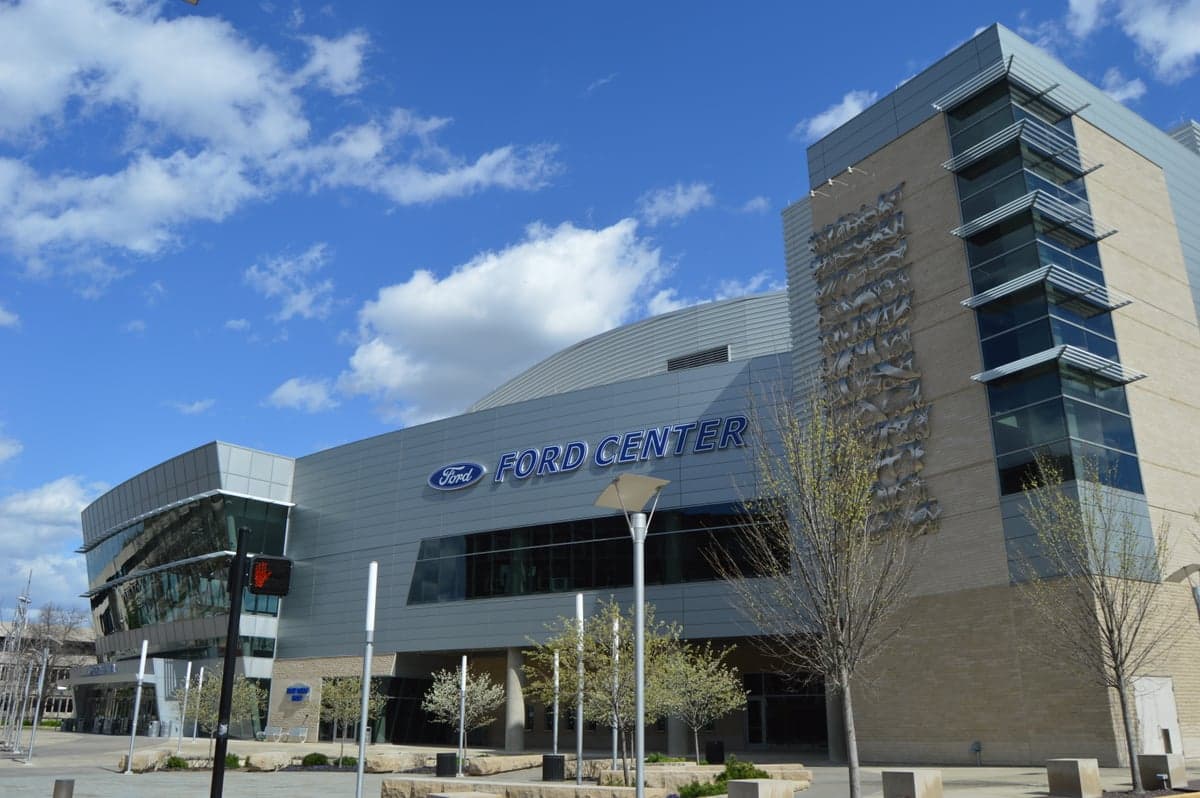
Photo: Wikipedia
Personal Sovereignty in Evansville, IN
Viable for self-reliance. Generally workable, though some barriers may limit total independence.
What does Personal Sovereignty tell us?
Personal Sovereignty measures your capacity for self-reliance and independence with minimal government friction. Higher scores mean fewer barriers between you and the way you want to live... but it assumes you have the space you need and good neighbors.
What does this tell us?
Personal Sovereignty measures your capacity for self-reliance and independence with minimal government friction. Higher scores mean fewer barriers between you and the way you want to live... but it assumes you have the space you need and good neighbors.
State Policy
Energy independence: Importer (35% of energy produced in-state)
Personal Liberty
Homesteading

Personal Liberty Analysis
For the individual who values personal sovereignty above all else—the prepper, the survivalist, the parent who refuses to be a ward of the state—Evansville, Indiana, offers a strategic foothold in the American heartland that is markedly more defensible than the coastal or urban strongholds of government overreach. While no location is a perfect fortress against federal overreach or societal decay, Evansville sits in a state that has, for the better part of a decade, actively rolled back the kind of regulatory and tax burdens that erode self-reliance. The city itself is a mixed bag: a blue-collar river town with a pragmatic, live-and-let-live ethos, but one that still carries the legacy of Indiana's more restrictive local governance in certain areas. The key for the sovereignty-minded is understanding where the state's protective laws end and where local ordinances begin, particularly in Vanderburgh County.
Tax burden and regulatory posture in a low-tax state
Indiana is a consistent performer in the Tax Foundation's rankings, typically landing in the top 10 for business tax climate, and that structural advantage flows directly to the individual. The state's flat income tax rate of 3.15% (as of 2025, with a scheduled phase-down to 2.9% by 2027) is a hard ceiling—no progressive brackets to punish earning more or stockpiling resources. Property taxes in Vanderburgh County are a genuine bright spot: the effective rate hovers around 0.85% of assessed value, well below the national average of roughly 1.1%. For a prepper looking to own land and a primary residence outright, this means the state's hand in your pocket is light. Sales tax is 7% (state plus county), which is middling, but the real win is the absence of any state-level estate or inheritance tax. Your gear, your land, your supplies—they pass to your heirs without the state taking a cut. On the regulatory front, Indiana is a right-to-work state and has preempted most local gun and zoning ordinances, meaning Evansville cannot easily impose the kind of boutique restrictions that plague cities in blue states. The state's regulatory environment is best described as "leave you alone unless you force their hand," which is the baseline any sovereignty-minded person should demand.
Self-defense and gun law specifics for the prepared individual
Indiana is a constitutional carry state, and that is the single most important legal fact for anyone prioritizing personal sovereignty. As of July 2022, no permit is required to carry a handgun, openly or concealed, for any law-abiding adult 18 or older. This is not a "shall-issue" compromise; it is a full recognition of the right. Evansville itself is not a sanctuary city for gun rights in the way some rural Indiana counties are, but the state preemption law (IC 35-47-11.1) is strong—local governments cannot pass their own bans on carry, magazine capacity, or firearm types. The state also has a "Stand Your Ground" law (IC 35-41-3-2), with no duty to retreat in any place you are lawfully present. For the survivalist, this means your home, vehicle, and property are legally defensible without the risk of prosecution for standing your ground. The only notable restriction is the prohibition on carrying in schools, courthouses, and airports, which is standard. Indiana also has a robust "red flag" law (the Jake Laird Law), which allows for the temporary seizure of firearms via a court order based on a showing of dangerousness. This is the one area where the state's posture is less than ideal for the liberty-minded, as it relies on subjective judgment. However, enforcement in Vanderburgh County is not aggressive compared to Marion County (Indianapolis). For the prepper, the legal landscape is clear: stock, carry, and train without fear of the state.
Self-reliance and homesteading viability in the Ohio River Valley
Evansville's position on the Ohio River gives it a distinct advantage for the self-reliant: abundant water, fertile soil, and a growing season that runs from April to October. The city's zoning code is a patchwork, but the key for the homesteader is that Vanderburgh County's unincorporated areas allow for residential lots as small as one acre with no minimum dwelling size for agricultural use. Inside city limits, standard residential lots are typically 6,000 to 10,000 square feet, which is tight for serious food production but workable for a large garden and a few chickens (chickens are allowed in most residential zones with a permit, but no roosters). The real opportunity lies in the surrounding townships—German, Knight, and Perry—where 5- to 20-acre parcels are still available for under $10,000 per acre. Off-grid feasibility is high: the region gets an average of 42 inches of rain per year, making rainwater catchment a viable primary water source. Solar potential is moderate (4.5 peak sun hours), but the state has net metering policies that allow you to sell excess power back to the grid, which is a hedge against grid collapse. The county does not require building permits for structures under 200 square feet, which is a green light for a small workshop, tool shed, or bunker. The biggest regulatory hurdle is the county's septic system requirements, which mandate a percolation test and a permit for any dwelling with plumbing. This is not a dealbreaker, but it is a cost and a paper trail. For the serious prepper, the land is affordable, the water is plentiful, and the local government is not actively hostile to self-sufficient living.
Personal liberties: parental rights, medical autonomy, and free speech
Indiana has become a battleground for parental rights, and the current legal landscape is favorable for those who believe the family, not the state, is the primary authority over children. The state's "Parents' Bill of Rights" (HEA 1608, passed in 2023) explicitly affirms that parents have the fundamental right to direct the upbringing, education, and health care of their children. This includes the right to opt out of any school curriculum or activity, and the right to access all educational and medical records. In practice, this means an Evansville parent can pull a child from a controversial lesson, refuse mandated vaccines (Indiana allows both medical and religious exemptions for school attendance), and homeschool without onerous state oversight—the state only requires a notification of intent and a basic curriculum outline. Medical autonomy for adults is more mixed. Indiana has a broad "conscience clause" that allows medical professionals to refuse to participate in procedures they object to, but the state also has a strict abortion ban (with limited exceptions) that some might view as a government overreach into private medical decisions. On free speech, Indiana is a solid First Amendment state; there are no state-level "hate speech" laws that criminalize expression, and the city of Evansville has not attempted to create its own. Property rights are protected by the state's "right to farm" law, which shields agricultural operations from nuisance lawsuits, and by a relatively low rate of eminent domain abuse. For the sovereignty-minded individual, the state's posture is clear: the default is liberty, and the burden is on the government to justify any restriction.
When stacked against other mid-sized Midwestern cities, Evansville offers a sovereignty profile that is genuinely competitive. It lacks the extreme low-regulation environment of a place like rural Idaho or Montana, but it compensates with lower land costs, abundant water, and a state government that has, in recent years, consistently sided with individual liberty over collective mandates. The city itself is not a libertarian paradise—it has the usual urban problems of property crime and a local bureaucracy that can be slow—but the state-level legal framework provides a strong shield. For the prepper or survivalist who wants to be within a day's drive of major logistics hubs (St. Louis, Nashville, Indianapolis) while maintaining a low profile and a high degree of personal autonomy, Evansville is a solid B+ choice. It is not a fortress, but it is a defensible position with good supply lines and a government that, for now, mostly stays out of your way.

* Values derived from national, state, county, city and local statistics and may differ in a specific area. Last updated: 2026-04-22T11:04:13.000Z
Narrative content on this page is AI-generated and may contain mistakes. Verify any details that matter before acting on them.
ReloMaps may earn a commission from affiliate links at no extra cost to you.

