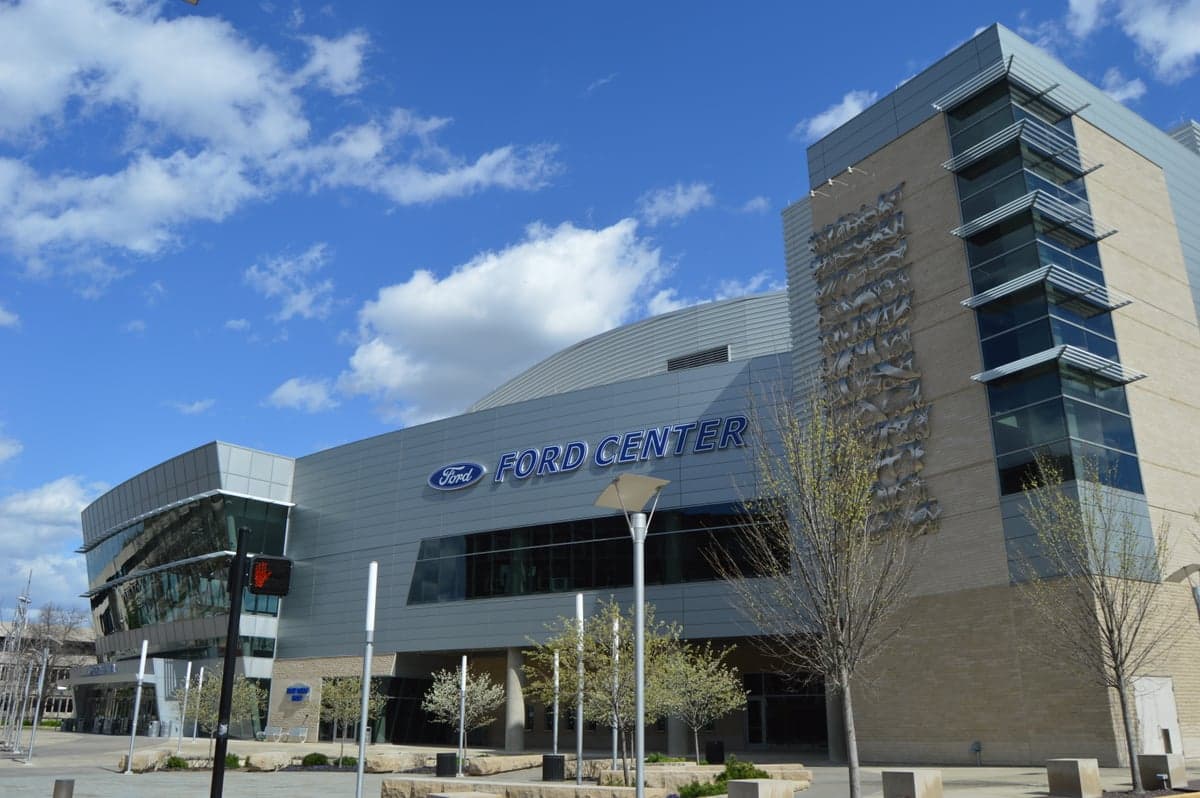
Photo: Wikipedia
Political ClimatePolitical Climate in Evansville, IN
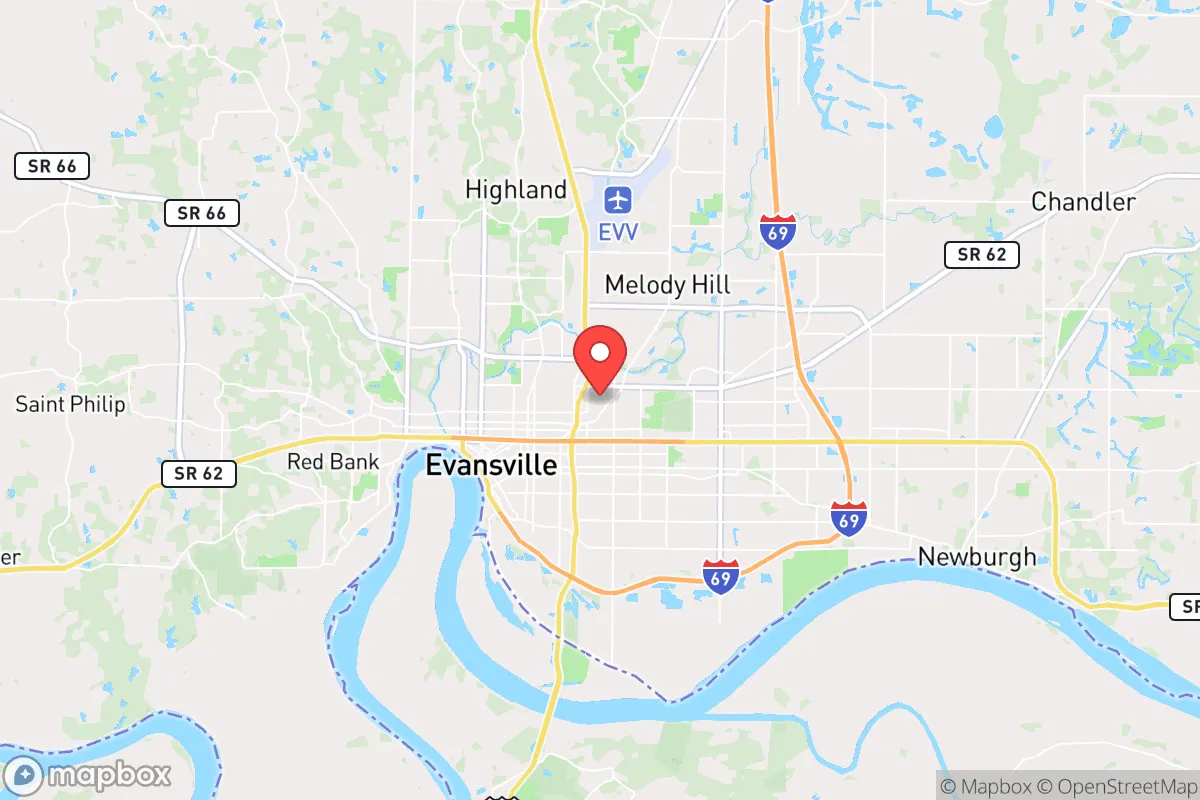
District shown is the primary district for this city’s centroid. Cities may span multiple districts.
Local Political AnalysisPolitical Analysis of Evansville, IN
Evansville has long been a solidly conservative stronghold in southwestern Indiana, and that hasn't changed much despite some national trends. The Cook Partisan Voting Index (PVI) sits at R+18, meaning the district votes about 18 points more Republican than the national average — a number that reflects the area's deep-rooted preference for limited government and traditional values. If you've lived here a while, you know that folks around here don't take kindly to outsiders telling them how to live their lives, and that sentiment has only hardened in recent years as progressive policies have crept into other parts of the state and country.
How it compares
When you look at the political map, Evansville stands out as a conservative island in a region that's actually trending redder. Drive an hour east to Jasper or Huntingburg, and you'll find even more conservative communities — those areas are deep red, with strong Catholic and manufacturing roots that keep government skepticism alive. But head north to Terre Haute or east to Bloomington, and you'll see a different story: Bloomington is a liberal college town that votes blue by wide margins, and Terre Haute has swung back and forth. The contrast is stark. Evansville's R+18 PVI puts it in the same league as Owensboro, Kentucky just across the river, which is also reliably conservative. The difference is that Evansville has a bit more urban diversity — some neighborhoods lean more moderate — but the county as a whole hasn't flipped blue in a presidential race since 1964. That's not changing anytime soon.
What this means for residents
For the average person living here, the political climate means you can generally expect local government to stay out of your business. Property taxes are low compared to states like Illinois or California, and there's little appetite for new regulations on things like firearms, homeschooling, or small businesses. The city council and county commissioners are overwhelmingly Republican, so you won't see the kind of progressive overreach — think mask mandates, vaccine passports, or heavy-handed zoning — that's become common in places like Indianapolis or Chicago. That said, there are some warning signs. The city's population has been slowly declining for decades, and younger residents sometimes move to more liberal areas for jobs or lifestyle. If that trend continues, you could see a slow shift in the electorate, but for now, the conservative majority is solid. The real concern is state-level politics: while Indiana's legislature is reliably red, there's always the risk of federal overreach from Washington, which is why many locals pay close attention to national elections.
Culturally, Evansville is a place where church attendance is still high, the local news covers high school sports like they're the Super Bowl, and the phrase "government efficiency" is met with a healthy dose of skepticism. You won't find many pride flags flying downtown, and the local paper's opinion page leans right. The biggest policy distinction is probably the area's strong support for Second Amendment rights — gun ownership is common, and there's little patience for talk of "common-sense" restrictions that feel like a slippery slope. If you're looking for a place where your personal freedoms are respected and the government isn't trying to micromanage your daily life, Evansville is about as good as it gets in the Midwest. Just keep an eye on those migration patterns — the next decade could bring changes if enough folks from blue states decide to move in.

State Political ClimatePolitical Climate in Indiana
State Political AnalysisPolitical Environment in the State
Indiana has long been a reliably red state in presidential elections, voting Republican in every cycle since 2008 except for a narrow Obama win in 2008 driven by the Great Recession and a strong ground game in the industrial north. The state’s overall partisan lean is roughly +11 to +14 points Republican in federal races, but the real story is the growing cultural and political chasm between its fast-growing, conservative-leaning suburbs and its shrinking, historically Democratic industrial cities. Over the past 20 years, the GOP has consolidated power at the state level, holding supermajorities in both chambers of the legislature and the governor’s office since 2005, with a policy agenda that has steadily moved rightward on taxes, guns, education, and social issues.
Urban vs. rural divide
The political map of Indiana is a study in contrasts. The Indianapolis metro area, home to nearly 2 million people, is the state’s only true swing region—Marion County (Indianapolis) votes reliably Democratic, but the surrounding suburban counties like Hamilton, Hendricks, and Johnson are among the most Republican in the nation. Hamilton County, anchored by Carmel, Fishers, and Noblesville, voted +28 points Republican in 2024 and is a national model for conservative suburban governance. Meanwhile, the state’s other major cities—Fort Wayne, Evansville, South Bend, and Gary—tell a more complex story. Gary and Lake County in the northwest are heavily Democratic and have seen population decline for decades, while Fort Wayne (Allen County) has trended redder as its manufacturing base diversified. The rural expanse—from the Ohio River towns like Madison and Jeffersonville to the cornfields of Tippecanoe County (home to Purdue University in West Lafayette)—is overwhelmingly Republican, with many counties routinely voting 70-80% for GOP candidates. The divide isn’t just about geography; it’s about economic trajectory. The urban cores are losing population and political influence, while the suburbs and exurbs are booming with families fleeing high-tax states like Illinois and California.
Policy environment
Indiana’s policy environment is a model of limited government conservatism. The state has a flat income tax of 3.15% (down from 3.23% in 2023, with a scheduled phase-down to 2.9% by 2029), no estate tax, and a property tax cap of 1% for residential, 2% for rental, and 3% for commercial properties—enshrined in the state constitution. The regulatory posture is business-friendly, with a right-to-work law (repealed in 2022 by a Democratic governor, but the state remains a de facto right-to-work environment due to low union density) and no state-level minimum wage above the federal $7.25. Education policy is a battleground: Indiana has one of the nation’s most robust school choice programs, with vouchers, charter schools, and education savings accounts available to nearly all families. The state also passed a law in 2022 requiring schools to post curriculum materials online and notify parents of any “human sexuality” instruction—a win for parental rights. On healthcare, Indiana expanded Medicaid under the Affordable Care Act in 2015 via a conservative waiver (HIP 2.0) that includes premiums and work requirements, though the work requirement was later blocked by courts. Election laws are among the most secure in the nation: voter ID is required, early voting is limited to 28 days, and the state purges inactive voters regularly. There is no no-excuse absentee voting—you need a valid reason to vote by mail.
Trajectory & freedom
Indiana is moving in a decidedly more free direction on most fronts, but there are warning signs. On the positive side, the state passed constitutional carry (permitless carry) in 2022, allowing any law-abiding adult to carry a handgun without a license. The same year, the legislature passed a near-total abortion ban (Senate Enrolled Act 1), with exceptions only for rape, incest, and life of the mother—a major win for pro-life advocates. In 2023, the state enacted a Parents’ Bill of Rights (HB 1608), requiring schools to get parental consent before changing a student’s name, pronouns, or access to bathrooms. On the concerning side, the state has seen a push for more government overreach in the name of “public health.” During the COVID-19 pandemic, Governor Eric Holcomb imposed a stay-at-home order and mask mandates, which sparked significant backlash and led to the passage of a law in 2021 limiting the governor’s emergency powers (HB 1123). More recently, there have been efforts to ban TikTok on state devices and to regulate social media platforms’ content moderation—a double-edged sword for free speech. The biggest threat to freedom in Indiana is the creeping influence of federal dollars and mandates, particularly in education and healthcare, which tie state policy to Washington’s whims.
Civil unrest & political movements
Indiana has seen its share of political flashpoints, but they are localized and rarely spill into daily life for most residents. The most visible movement in recent years has been the parental rights uprising, centered in suburban school board meetings in Carmel, Zionsville, and Brownsburg, where parents organized to oppose critical race theory, mask mandates, and LGBTQ curriculum in elementary schools. These efforts were largely successful, leading to the passage of the Parents’ Bill of Rights and the ousting of several progressive school board members. On the left, the Black Lives Matter protests in Indianapolis in 2020 were large and occasionally violent, leading to property damage downtown and a lasting distrust between the city’s Democratic leadership and the state’s Republican legislature. Immigration politics are relatively quiet—Indiana is not a border state, and the immigrant population is small (about 5% of the total). However, there have been skirmishes over sanctuary city policies: in 2019, the legislature passed a law (SB 573) requiring local governments to cooperate with federal immigration enforcement, effectively banning sanctuary cities. There is no serious secession or nullification movement in Indiana, though some rural counties have passed symbolic “Second Amendment sanctuary” resolutions. Election integrity is a settled issue here—the 2020 and 2024 elections were conducted smoothly, with no major controversies, thanks to the state’s strict voter ID laws and regular list maintenance.
Projection
Over the next 5-10 years, Indiana will likely become more conservative, not less. The primary driver is in-migration: people are moving from blue states like Illinois, California, and New York to Indiana’s suburbs, drawn by lower taxes, cheaper housing, and a more family-friendly culture. These newcomers tend to be moderate-to-conservative, not progressive—they’re leaving the policies they dislike. The Indianapolis metro will continue to grow, with Hamilton County and Hendricks County absorbing most of the new residents, while the urban core of Indianapolis and the industrial north (Gary, South Bend) will continue to shrink. The state’s Republican supermajority is unlikely to be challenged seriously in the next decade, as the Democratic base is concentrated in a few shrinking cities. The biggest wildcard is the national political climate: if the GOP fractures or if a national recession hits Indiana’s manufacturing-heavy economy, there could be a temporary shift. But the long-term trend is clear: Indiana is becoming a more solidly red, more culturally conservative state, with a policy environment that increasingly reflects those values.
Bottom line for a new resident: If you’re moving to Indiana, you’re coming to a state where the government largely stays out of your personal life—low taxes, strong gun rights, school choice, and parental control over education. The trade-off is that you’ll have to drive to get anywhere, the winters are gray, and the politics in the cities (especially Indianapolis and Gary) can feel like a different country. But for a conservative family or individual looking for a place where your values are the norm, not the exception, Indiana is one of the best bets in the Midwest. Just make sure you pick the right suburb—Carmel, Fishers, or Noblesville are safe bets; avoid the urban cores unless you’re prepared for a more progressive environment.
* Values derived from national, state, county, city and local statistics and may differ in a specific area. Last updated: 2026-04-22T11:04:13.000Z
Narrative content on this page is AI-generated and may contain mistakes. Verify any details that matter before acting on them.
ReloMaps may earn a commission from affiliate links at no extra cost to you.

