
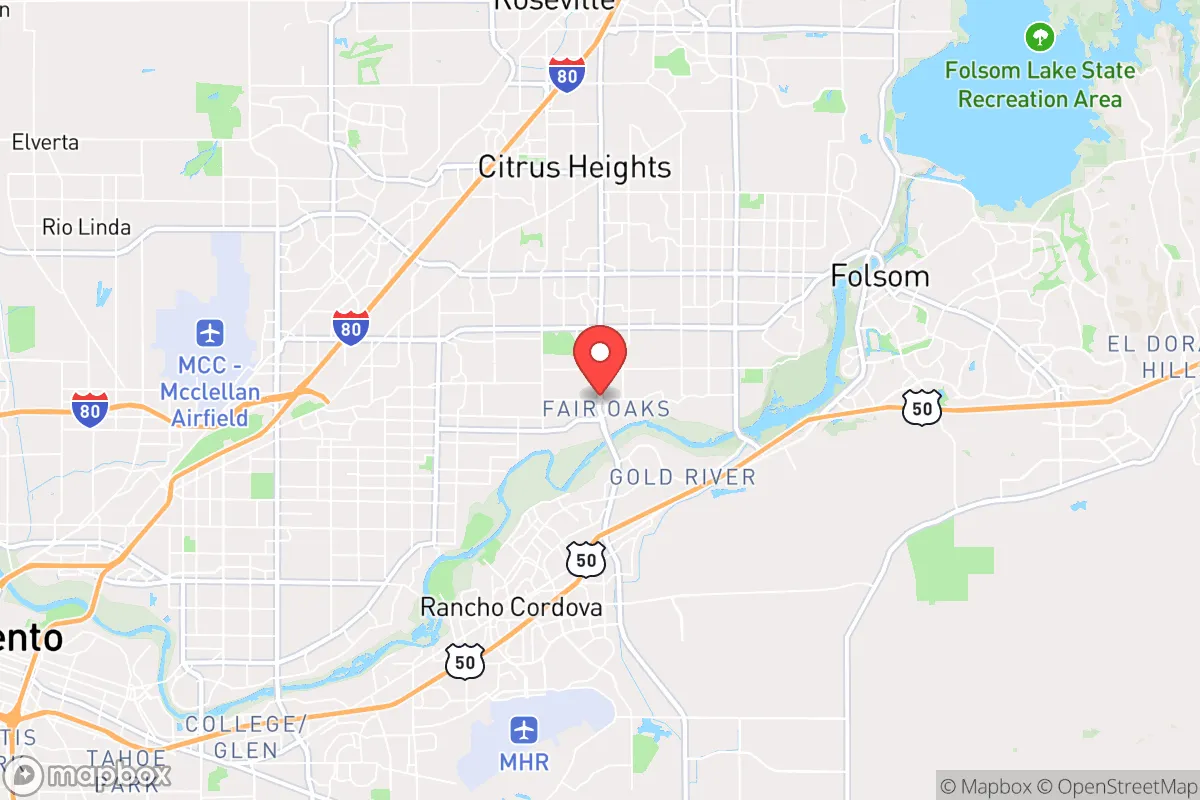
Photo by Olivia Brewer on Unsplash
Demographics of Fair Oaks, CA
Affluence Level in Fair Oaks, CA
An upper-middle-class area. Household wealth, education levels, and homeownership run ahead of national benchmarks.
People of Fair Oaks, CA
Fair Oaks, California, is a census-designated place of roughly 32,030 residents that retains a distinctly suburban, family-oriented character, with a population that is 71.9% White and 13.8% Hispanic. The community is notably well-educated, with 46.4% of adults holding a college degree, and it has a very low foreign-born rate of just 2.7%, reflecting a long-established, predominantly native-born population. Its identity is shaped by a blend of historic agricultural roots and modern suburban stability, with a cultural atmosphere that leans conservative and community-focused. The area is not a major destination for new international migration, but rather a place where existing families and domestic transplants from other parts of California have put down roots.
How the city was settled and grew
Fair Oaks was originally part of the vast Mexican land grant of Rancho del Paso, and its modern history began in the late 19th century when the area was subdivided for citrus and olive orchards. The first significant wave of settlers were Anglo-American farmers and businessmen from the Midwest and East Coast, drawn by the promise of fertile soil and the arrival of the Southern Pacific Railroad in the 1890s. These early residents established the core of the community around the historic Fair Oaks Village district, which remains the commercial and social heart of the area. A smaller but notable group of Japanese-American farmers arrived in the early 20th century, contributing to the agricultural economy, particularly in the Sunrise Boulevard corridor, where many worked the orchards before being forcibly displaced during World War II. The post-World War II era saw a second major wave of domestic in-migration, as returning veterans and their families moved into newly built suburban tracts, such as those in the Pine Hills neighborhood, transforming Fair Oaks from a rural farming community into a bedroom suburb of Sacramento.
Modern era (post-1965)
Following the 1965 Immigration and Nationality Act, Fair Oaks did not experience the same surge of international immigration seen in other parts of California. Instead, its growth through the late 20th century was driven primarily by domestic migration from within the Sacramento region and the Bay Area, as families sought larger lots and lower crime rates. The American River Canyon area, with its newer, larger homes, attracted upper-middle-class professionals, while the Madison Park neighborhood became a hub for families moving into established ranch-style homes. The Hispanic population, now 13.8%, grew steadily through the 1980s and 1990s, with many families settling in the more affordable housing stock near Winding Way and Hazel Avenue. The East/Southeast Asian community, at 3.8%, is largely composed of second- and third-generation families who moved outward from Sacramento's older ethnic enclaves, and they are dispersed throughout the community rather than concentrated in a single district. The Black population, at 2.2%, and the Indian subcontinent population, at 0.6%, remain small and are integrated across the area's neighborhoods, reflecting Fair Oaks' character as a predominantly White, low-diversity suburb.
The future
Demographic projections for Fair Oaks suggest a slow but steady increase in diversity, driven primarily by the growth of the Hispanic population and a modest influx of East/Southeast Asian families. The overall population is expected to remain stable or grow slightly, as the area is largely built out with limited new housing development. The Fair Oaks Village area is seeing some infill development and a push for more mixed-use zoning, which may attract younger professionals and empty-nesters, but the dominant trend is an aging population as long-time residents stay in place. The community's cultural identity is likely to remain rooted in its suburban, family-oriented values, with a continued emphasis on local schools, parks, and civic engagement. For someone moving in now, Fair Oaks offers a stable, low-crime environment with a strong sense of history, but it is not a place of rapid demographic change or high ethnic diversity.
Fair Oaks is becoming a mature, stable suburb where the population is slowly diversifying but remains overwhelmingly White and native-born. For a family or individual seeking a quiet, well-educated community with a conservative tilt and a strong connection to its agricultural past, it offers a predictable and secure environment. The area's future is one of gradual evolution rather than transformation, making it a reliable choice for those who value continuity over change.

* Values derived from national, state, county, city and local statistics and may differ in a specific area. Last updated: 2026-08-22T09:47:46.000Z
Narrative content on this page is AI-generated and may contain mistakes. Verify any details that matter before acting on them.
ReloMaps may earn a commission from affiliate links at no extra cost to you.

