
Photo by Olivia Brewer on Unsplash
Political ClimatePolitical Climate in Fair Oaks, CA
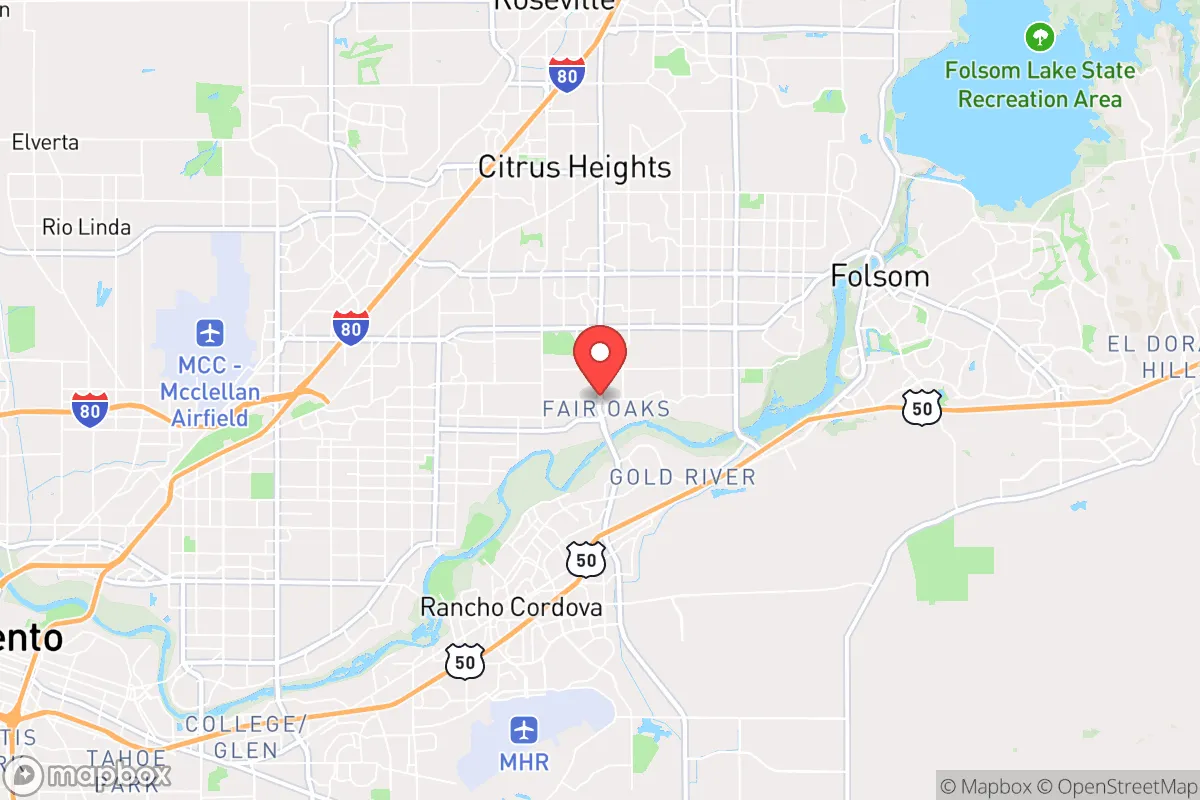
District shown is the primary district for this city’s centroid. Cities may span multiple districts.
Local Political AnalysisPolitical Analysis of Fair Oaks, CA
Fair Oaks has a political identity that’s a bit more moderate than you might expect for a Sacramento County suburb, leaning Democratic but with a noticeable independent streak. The area sits in California’s 7th Congressional District, which carries a Cook PVI of D+8, meaning it’s about 8 points more Democratic than the national average. That’s a solid blue lean, but it’s not as deep blue as Sacramento proper or the inner East Bay. Over the past decade, the shift has been gradual but real—older, more conservative residents have been aging out, while younger families and commuters from the Sacramento metro have moved in, nudging the needle left. Still, Fair Oaks isn’t a monolith; you’ll see plenty of Trump signs mixed in with Harris yard signs during election season, especially in the more rural pockets near the American River bluffs.
How it compares
Compared to the rest of California, Fair Oaks is a bit of a bellwether for the state’s suburban middle. The state as a whole is reliably Democratic at the statewide level—think Gavin Newsom winning by double digits—but Fair Oaks sits in that transitional zone where local races can be competitive. Drive 15 minutes south to Rancho Cordova, and you’ll find a more working-class, politically mixed vibe with a stronger Republican presence. Head west into Carmichael, and it’s similar to Fair Oaks but slightly older and more conservative. Go east into the foothills toward Folsom, and you hit a more affluent, Republican-leaning suburb. So Fair Oaks acts as a kind of political buffer: not as liberal as midtown Sacramento, not as conservative as Placer County. The D+8 PVI reflects that—it’s blue, but not overwhelmingly so, and local elections often hinge on turnout rather than party registration.
What this means for residents
For liberal residents, Fair Oaks feels comfortable but not insulated. You’ll find plenty of like-minded neighbors in the older neighborhoods near the Fair Oaks Village, and local Democratic clubs are active. But you’re also close enough to conservative areas that you’ll encounter differing viewpoints regularly, which keeps things from becoming an echo chamber. For conservative residents, the area can feel like a bit of a battleground. You’re not in hostile territory—there are Republican strongholds nearby in Folsom and Granite Bay—but you’re definitely in the minority locally. That said, local governance in Fair Oaks is unincorporated Sacramento County, so the political fights tend to be about land use, fire safety, and school funding rather than the culture-war issues that dominate state politics. Both sides can find common ground on practical matters like keeping the American River Parkway clean or managing traffic on Sunrise Boulevard.
One cultural distinction worth noting: Fair Oaks has a strong "live and let live" ethos that predates the current polarized era. The area’s history as a rural retreat for Sacramento professionals, combined with its unincorporated status, means residents are used to handling things themselves without heavy-handed county oversight. You’ll see this in the local opposition to high-density development, which unites both conservative property-rights advocates and liberal environmentalists. The Fair Oaks Recreation and Park District is a good example—it’s run by locally elected board members who tend to focus on pragmatic issues like trail maintenance and community events rather than partisan fights. That practical streak, more than any party label, is what defines the political climate here. It’s a place where your neighbor might have a Biden sticker on their Prius and a "Don’t Tread on Me" flag on their porch, and nobody really cares as long as you show up for the annual chicken festival.

State Political ClimatePolitical Climate in California
State Political AnalysisPolitical Environment in the State
California is a deeply blue state where Democrats hold every statewide office and supermajorities in both legislative chambers, but that monolithic label hides a far more complicated reality. The state hasn't voted Republican in a presidential election since 1988, and the Democratic share of the vote has crept from about 54% in 2000 to over 60% in 2024. Yet this isn't a uniform leftward march — it's a story of coastal metros pulling one way while vast inland regions pull the other, with a growing number of voters feeling politically homeless in their own neighborhoods.
Urban vs. rural divide
The political map of California is essentially a battle between the densely populated coast and the sprawling interior. The San Francisco Bay Area and Los Angeles County are the Democratic engine rooms, delivering margins of 70-85% in most elections. San Francisco itself voted over 85% for Biden in 2020, while Los Angeles County provided more raw Democratic votes than 40 other states. On the flip side, the Central Valley and far northern counties are deeply Republican. Bakersfield in Kern County is a conservative stronghold, routinely voting 55-60% Republican, while Redding in Shasta County is one of the most conservative small cities in the state, with Trump winning over 65% there in 2024. The Inland Empire around Riverside and San Bernardino has become a true battleground — these fast-growing suburbs and exurbs have shifted rightward in recent cycles as moderate and conservative-leaning families flee coastal housing costs. Orange County, once a Republican bastion, flipped to Biden in 2020 and has stayed competitive, but its northern cities like Fullerton and Yorba Linda remain more conservative than the county average. The real story is the growing polarization: the urban cores get bluer, the rural areas get redder, and the suburbs in between are where the political future of the state will be decided.
Policy environment
California's policy environment is defined by high taxes, heavy regulation, and a strong safety net. The state has a progressive income tax with rates up to 13.3%, one of the highest in the nation, and a state sales tax that can exceed 10% in some cities. Property taxes are capped at 1% of assessed value under Proposition 13, but reassessment upon sale means newcomers often face much higher bills than long-time owners. The regulatory posture is aggressive: California sets its own vehicle emissions standards, mandates renewable energy targets of 60% by 2030, and has some of the strictest environmental review laws in the country. Education policy is dominated by the California Teachers Association, one of the most powerful political forces in the state, and per-pupil spending has risen to over $15,000 annually. Healthcare is heavily regulated, with the state running its own insurance exchange and expanding Medi-Cal to cover all low-income residents regardless of immigration status. Election laws are among the most accessible in the nation: universal mail-in ballots, same-day registration, and automatic voter registration at the DMV. For a conservative relocator, the practical effect is a high cost of living, a powerful state bureaucracy, and a political system where your vote in statewide races is effectively drowned out by the coastal majority.
Recent policy direction
The last five years have seen California accelerate in a progressive direction on nearly every front. On gun policy, the state passed SB 2 in 2023, which bans carrying firearms in most public places and requires a "good cause" permit standard that effectively eliminates concealed carry for most residents — this is currently tied up in federal court. On education, AB 1078 in 2023 restricted school boards from banning books and curriculum materials, effectively overriding local conservative school boards. Parental rights took a hit with AB 1955 in 2024, which prohibits school districts from requiring parental notification when a child changes their gender identity. On speech, the state has passed laws targeting online hate speech and disinformation, though these have faced First Amendment challenges. Privacy and surveillance saw a mixed bag: the California Privacy Rights Act of 2020 strengthened consumer data protections, but the state also expanded police surveillance powers in certain contexts. Medical and bodily autonomy is fully protected, with California becoming a "sanctuary state" for abortion access after Dobbs, passing laws to shield providers and patients from out-of-state prosecution. Property rights are constrained by rent control expansion under the Tenant Protection Act of 2019, which caps annual rent increases at 5% plus inflation. On voting, the state has moved to all-mail elections and expanded ballot access, but this has also led to ongoing Republican complaints about ballot harvesting and signature verification standards. The overall direction is clear: California is doubling down on progressive governance, and conservative residents increasingly find themselves on the losing end of policy debates.
Civil unrest & political movements
California has been a flashpoint for political activism on both sides. The 2020 George Floyd protests in Los Angeles and San Francisco were among the largest and most destructive in the nation, with billions in property damage and a lasting impact on public safety perceptions. The homelessness crisis has spawned its own political movements, with groups like the Coalition to Save the Sidewalks pushing for more aggressive enforcement against encampments, while progressive activists demand housing-first approaches. Immigration politics are front and center: California is a "sanctuary state" under SB 54, which limits local law enforcement cooperation with federal immigration authorities, and this has created ongoing tension with conservative cities like Huntington Beach, which passed its own voter ID law in 2024 in defiance of state policy. The secession movement, CalExit, has fizzled but still has a small following. Election integrity controversies have been particularly sharp in rural counties like Shasta County, where the Board of Supervisors voted in 2023 to replace Dominion voting machines with hand-counting — a move later blocked by the state. The recall of San Francisco District Attorney Chesa Boudin in 2022 and the narrow defeat of a similar recall for Los Angeles DA George Gascón show that even in deep-blue areas, voters are pushing back on progressive criminal justice reforms. A new resident will notice the political tension most in everyday conversations about housing costs, public safety, and the direction of local schools.
Projection
Over the next 5-10 years, California's political trajectory points toward continued Democratic dominance at the state level, but with growing internal friction. Demographic trends favor the left: the state's growing Latino and Asian American populations lean Democratic, and the white working-class base of the GOP is shrinking. However, the massive out-migration of over 800,000 residents between 2020 and 2024, many of them moderate and conservative-leaning, is reshaping the electorate. The people leaving are disproportionately from the middle class and from inland areas, which means the remaining electorate is becoming both wealthier and more liberal. The Central Valley and Inland Empire will continue to be competitive, but they lack the population to flip statewide races. The real action will be at the local level: expect more fights between the state and conservative cities like Huntington Beach and Bakersfield over housing, policing, and education policy. The housing crisis will remain the central political fault line, with YIMBY (Yes In My Backyard) activists pushing for more development against entrenched local control. A conservative moving in now should expect that their vote in statewide elections will not change the outcome, but their voice in local city council and school board races can still matter — and those local races are where the most interesting political battles will be fought.
For a new resident, the bottom line is this: California offers unmatched economic opportunity and natural beauty, but you will be living in a state where your political views are likely in the minority if you lean conservative. The practical implications are high taxes, a powerful state government that will override local conservative preferences, and a culture that can feel alienating if you're not on the progressive side. However, conservative communities do exist — Bakersfield, Redding, and parts of Orange County offer like-minded neighbors and local political representation. The key is to go in with eyes open: you're not going to change the state's direction, but you can find your niche and live well if you're willing to adapt to the reality of living in a blue state.
* Values derived from national, state, county, city and local statistics and may differ in a specific area. Last updated: 2026-08-22T09:47:46.000Z
Narrative content on this page is AI-generated and may contain mistakes. Verify any details that matter before acting on them.
ReloMaps may earn a commission from affiliate links at no extra cost to you.

