
Photo by Olivia Brewer on Unsplash
Quality of Life in Fair Oaks, CA
Above-average quality of iife. The area offers a reasonable cost of living, decent mobility, and a mix of neighborhood amenities.
What does Quality of Life tell us?
Quality of Life blends cost of living, nearby amenities, socioeconomic signals, and neighborhood character. City-level scores represent the whole municipality; individual neighborhoods can differ.
What does this tell us?
Quality of Life blends cost of living, nearby amenities, socioeconomic signals, and neighborhood character. City-level scores represent the whole municipality; individual neighborhoods can differ.
Cost of Living
84% above national average
The Real Cost of Living in Fair Oaks, CA for 2026
| Tier | Individual | Family (4) |
|---|---|---|
| Survival | $29k | $54k |
| Comfortable | $125k | $184k |
| Luxury | $186k+ | $288k+ |
| Elite (Top 5%) | $219k+ | $339k+ |
60%
The Area Signal
A metric tracking the socioeconomic signals of the area.
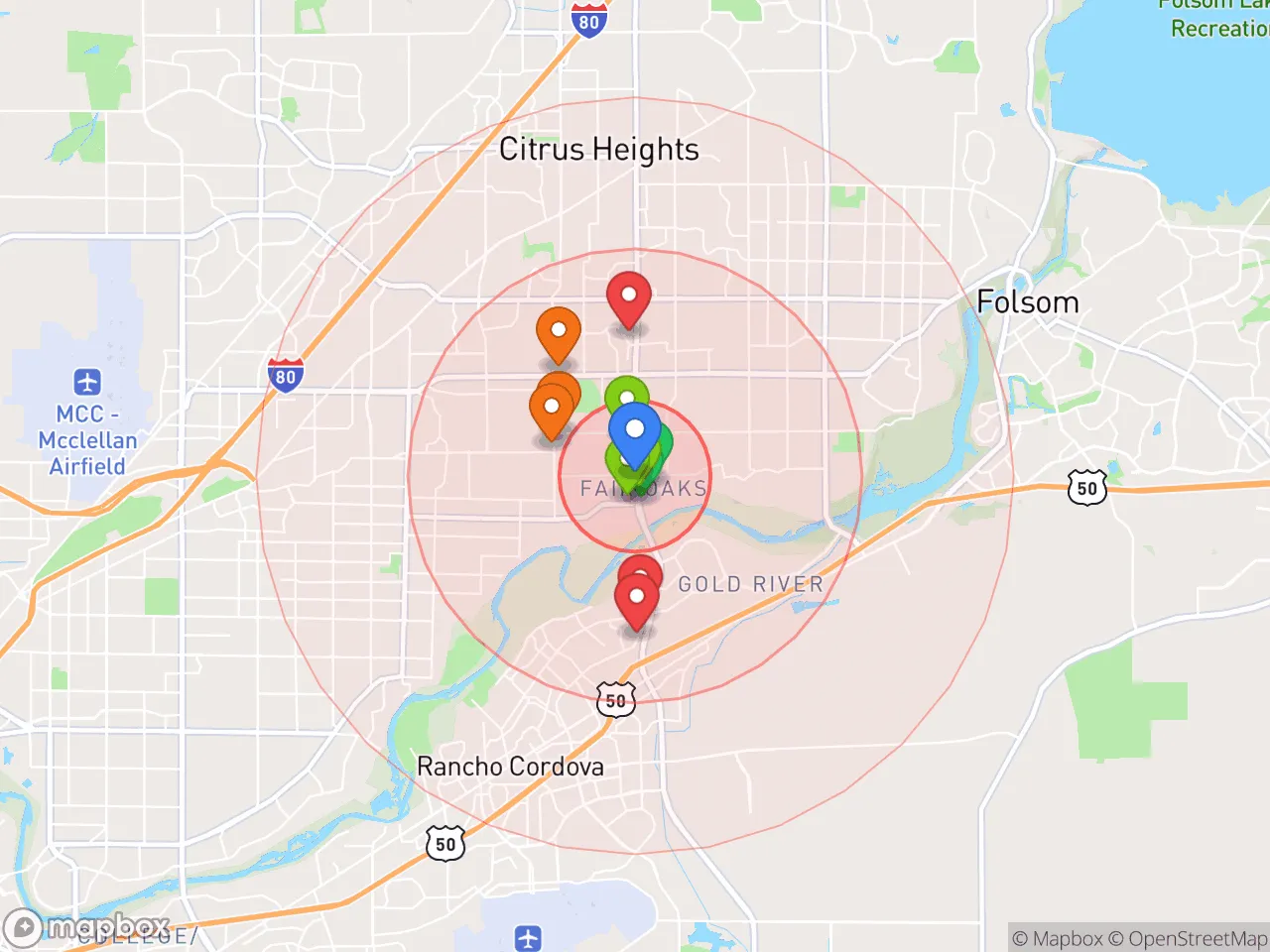
Hobbies
Explore the areaGroceries
7 within 10 miles
Gas
20 within 10 miles
Hospital
20 within 20 miles
Airport
SAN — Oakland San Francisco Bay
Post Office
USPS — Fair Oaks, CA
Critical Amenities
Quality-of-Life Analysis
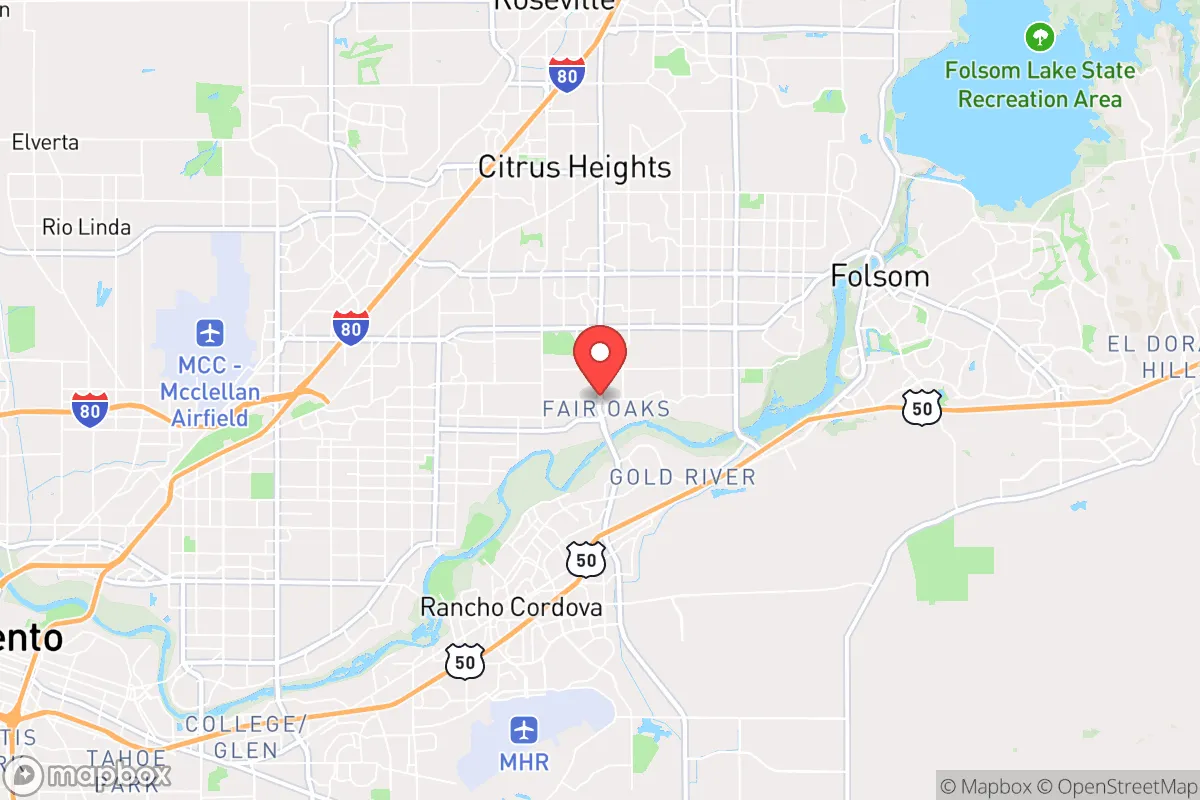
Fair Oaks, California, is an affluent, unincorporated suburb of Sacramento defined by its mature oak woodlands, mid-century ranch homes, and a notably high cost of living that attracts established professionals and families seeking space and stability. With a cost-of-living index of 184 (84% above the U.S. average), the area draws residents who prioritize generous lot sizes, top-rated public schools, and a semi-rural atmosphere over urban convenience or affordability. The typical resident is a homeowner in their 40s or 50s, often commuting to Sacramento or Folsom for white-collar work, and values the quiet, leafy streets and strong sense of community that distinguish Fair Oaks from denser nearby cities.
Cost of living, housing, and affordability compared to Sacramento and Folsom
Fair Oaks is significantly more expensive than the Sacramento metro average, driven almost entirely by housing costs. The median home value sits at $645,600, roughly 50% higher than the Sacramento County median, while the median rent of $1,797 is more aligned with regional averages but still above the national figure. For context, a comparable home in nearby Citrus Heights or Carmichael might cost 15–20% less, while Folsom’s newer developments can match or exceed Fair Oaks prices. The average one-way commute of 29.8 minutes reflects the trade-off: residents accept longer drives to Sacramento (about 20 minutes via US-50) or Folsom (15 minutes) in exchange for larger lots, lower crime rates, and better school assignments. Property taxes in Sacramento County hover around 0.77% of assessed value, and while California’s Proposition 13 caps annual increases, new buyers face a substantial upfront tax bill on a $645,600 home. Renters, meanwhile, face a tight market with limited apartment complexes, as the housing stock is dominated by single-family homes.
Schools, parks, and what daily life is like for families
Daily life in Fair Oaks revolves around its highly rated public schools, extensive county parks, and a small but active village center. The San Juan Unified School District serves the area, with schools like Harry Dewey Fundamental Elementary and Mira Loma High School consistently earning 8–9 out of 10 on GreatSchools ratings, drawing families who prioritize academics. The American River Parkway runs along the southern edge, offering 23 miles of bike trails, fishing access, and the popular William B. Pond Recreation Area. The historic Fair Oaks Village, centered on Fair Oaks Boulevard, provides a walkable cluster of independent coffee shops, a farmers market on Saturday mornings, and the Fair Oaks Theatre Festival, an outdoor Shakespeare series that runs through summer. For groceries and daily errands, most residents drive to Sunrise Boulevard or Madison Avenue, where big-box retailers and chain restaurants dominate. The area lacks a major hospital or large employer within its borders, so most healthcare and employment needs pull residents toward Sacramento or Roseville. The overall rhythm is quiet and car-dependent, with children biking to neighborhood schools and adults spending weekends on home improvement or river access.
Fair Oaks is best suited for families and mid-career professionals who can absorb the high housing costs and want a safe, suburban environment with strong schools and outdoor recreation. Empty-nesters downsizing from larger Sacramento-area homes also find the village walkability and lower maintenance of smaller ranch houses appealing. Singles and young renters on a typical Sacramento salary will likely struggle with the rent-to-income ratio and limited nightlife, making nearby midtown Sacramento a more practical choice. For those who value oak-shaded streets, a tight-knit community, and a 30-minute commute to the state capital, Fair Oaks delivers a quality of life that justifies its premium price tag.

Crime in Fair Oaks, CA
Higher crime rates than 58% of comparable U.S. locations.
Violent CrimeViolent Crime Analysis
Property CrimeProperty Crime Analysis
Crime Analysis
Fair Oaks, an unincorporated community in Sacramento County, reports a violent crime rate of 434.6 per 100,000 residents and a property crime rate of 1,820.1 per 100,000. These figures place the area above both the national average and the statewide average for California, indicating a heightened risk environment that prospective residents should weigh carefully. The community's safety profile is significantly shaped by its proximity to Sacramento and the broader policy environment of Sacramento County, where progressive prosecutorial and judicial approaches have drawn criticism for prioritizing offender rehabilitation over public safety and victim justice.
Crime in context
Fair Oaks' violent crime rate of 434.6 per 100,000 is roughly 24% higher than the national average of approximately 350 per 100,000 and notably exceeds California's statewide average of about 442 per 100,000. Property crime in Fair Oaks, at 1,820.1 per 100,000, is nearly 30% above the national average of roughly 1,400 per 100,000 and aligns with the elevated property crime rates seen across Sacramento County. These statistics reflect a community where theft, burglary, and vehicle-related crimes are persistent concerns, while incidents of assault and robbery contribute to the elevated violent crime figures. The county's broader criminal justice policies, including reduced sentencing for certain offenses and early release programs championed by progressive district attorneys, have been linked to recidivism rates that keep crime numbers elevated in unincorporated areas like Fair Oaks.
What residents experience
Residents of Fair Oaks commonly report property crimes such as package theft, vehicle break-ins, and residential burglaries as the most frequent safety nuisances. Violent incidents, while less common in daily life, occur with enough regularity that many locals avoid certain commercial corridors after dark and invest in home security systems. The community's proximity to major highways like Interstate 80 and Sunrise Boulevard facilitates quick access for criminals moving between Sacramento and outlying areas, a pattern exacerbated by what critics describe as a "catch-and-release" justice system under Sacramento County's current leadership. Victims of crime in Fair Oaks often express frustration with slow police response times and low prosecution rates for property offenses, outcomes that some attribute to district attorney policies that deprioritize non-violent felonies.
Neighborhood-level variation
Safety conditions vary noticeably within Fair Oaks. Areas east of Hazel Avenue and near the American River tend to see lower crime rates, benefiting from higher property values and stronger neighborhood watch programs. In contrast, neighborhoods along Madison Avenue and near the intersection of Sunrise Boulevard and Winding Way experience property crime rates up to 40% higher than the community average, driven by easier access to commercial zones and public transit routes. The unincorporated status of Fair Oaks means it relies on Sacramento County Sheriff's Department patrols rather than a dedicated municipal police force, a factor that can lead to slower emergency response in outlying subdivisions compared to incorporated cities with their own departments. Prospective renters and buyers should request specific block-level crime data from the Sheriff's Department before committing to a lease or purchase in any given pocket of the community.
* Values derived from national, state, county, city and local statistics and may differ in a specific area. Last updated: 2026-08-22T09:47:46.000Z
Narrative content on this page is AI-generated and may contain mistakes. Verify any details that matter before acting on them.
ReloMaps may earn a commission from affiliate links at no extra cost to you.

