
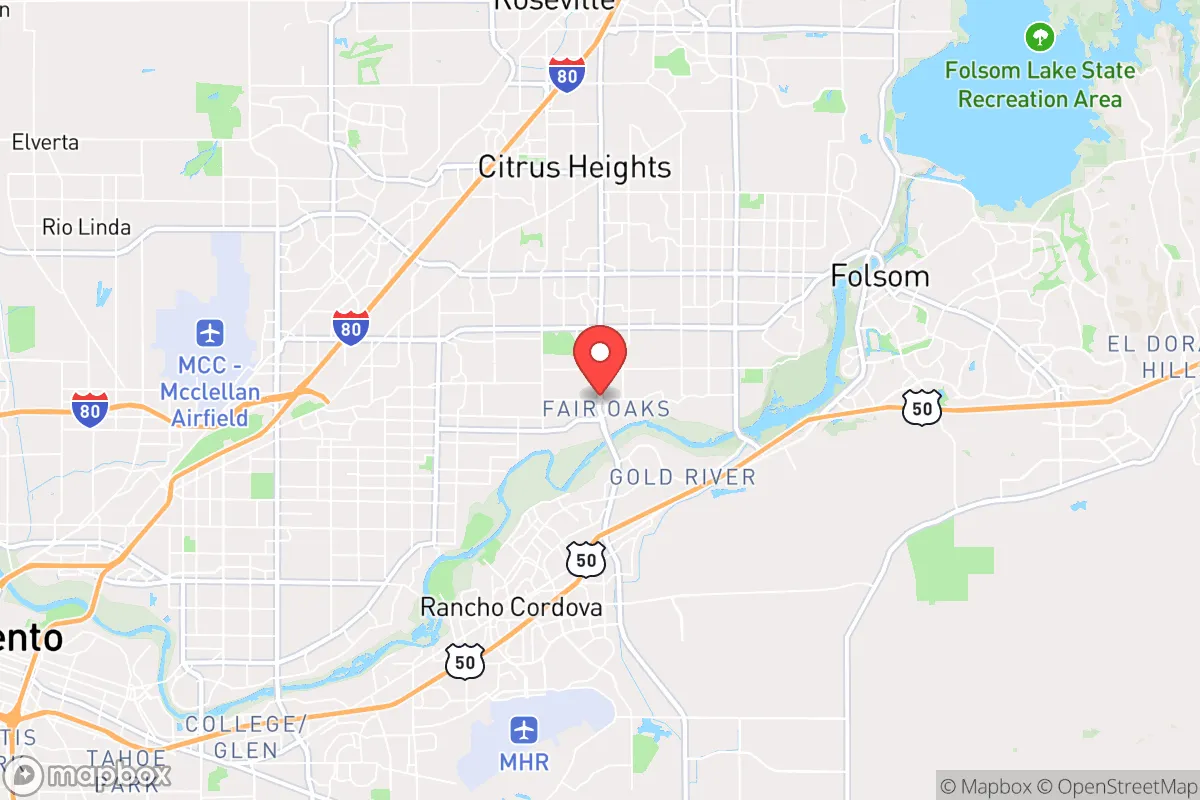
Photo by Olivia Brewer on Unsplash
Personal Sovereignty in Fair Oaks, CA
Viable for self-reliance. Generally workable, though some barriers may limit total independence.
What does Personal Sovereignty tell us?
Personal Sovereignty measures your capacity for self-reliance and independence with minimal government friction. Higher scores mean fewer barriers between you and the way you want to live... but it assumes you have the space you need and good neighbors.
What does this tell us?
Personal Sovereignty measures your capacity for self-reliance and independence with minimal government friction. Higher scores mean fewer barriers between you and the way you want to live... but it assumes you have the space you need and good neighbors.
State Policy
Energy independence: Importer (33% of energy produced in-state)
Personal Liberty
Homesteading

Personal Liberty Analysis
Fair Oaks, California, offers a nuanced personal sovereignty environment that balances California’s state-level regulatory framework with a notably more permissive local culture in Sacramento County. While the state imposes some of the nation’s highest taxes and strictest environmental rules, Fair Oaks itself maintains a semi-rural character with larger lots, active agricultural zoning, and a community ethos that leans toward self-reliance. For individuals and families who prioritize autonomy, the area provides meaningful opportunities for self-directed living, but only if they are prepared to navigate California’s overarching legal and fiscal landscape.
Tax burden and regulatory posture in Fair Oaks compared to surrounding areas
California’s state income tax tops out at 13.3%, and sales tax in Sacramento County is 8.75%, which includes a 0.25% countywide transportation tax. Property taxes are capped at 1% of assessed value under Proposition 13, with annual increases limited to 2%, making long-term homeownership more predictable than in many other states. Fair Oaks itself does not levy a city income tax, and the county’s regulatory posture is moderate relative to coastal California. Building permits for minor additions or accessory dwelling units (ADUs) are processed through Sacramento County’s planning department, which has streamlined ADU approvals under state law. However, environmental review requirements under the California Environmental Quality Act (CEQA) can add time and cost to larger projects. For a conservative-leaning audience, the key takeaway is that while the state-level tax burden is high, the local regulatory environment in Fair Oaks is less intrusive than in urban centers like San Francisco or Los Angeles, and the county’s zoning code permits a range of agricultural and residential uses that support self-reliance.
Self-defense and gun law specifics in Fair Oaks, CA
California’s firearm laws are among the strictest in the nation, and Fair Oaks residents must comply with state-level regulations. The state requires a 10-day waiting period, a Firearm Safety Certificate, and a background check for all firearm purchases. As of 2024, California’s “may-issue” concealed carry permitting system was replaced by a “shall-issue” framework following the Supreme Court’s Bruen decision, but Sacramento County still imposes additional requirements, including a firearms safety course and a demonstration of “good cause” that is now interpreted more broadly. The county sheriff’s office processes CCW applications, and approval rates have increased since the legal shift, though processing times can exceed 90 days. Assault weapons and high-capacity magazines are banned statewide, and ammunition purchases require a background check. For self-defense at home, California law recognizes the Castle Doctrine but does not have a “stand your ground” statute; instead, it imposes a duty to retreat in public spaces if safely possible. Fair Oaks residents who prioritize firearm ownership should be prepared for administrative hurdles and ongoing compliance costs, but lawful ownership and concealed carry are achievable with proper documentation.
Self-reliance and homesteading viability: lot sizes, zoning, and off-grid feasibility
Fair Oaks is one of the few unincorporated areas in Sacramento County where larger residential lots are common, with many properties ranging from 0.5 to 5 acres. Zoning designations include AR-2 (Agricultural Residential, 2-acre minimum) and AR-5 (5-acre minimum), which permit keeping chickens, goats, sheep, and up to two horses per acre without a conditional use permit. Beekeeping is allowed on parcels of 0.5 acres or more. The county’s zoning code also allows for small-scale crop production and the sale of produce from the property, provided it does not create a public nuisance. Off-grid living is legally challenging: California requires connection to the electrical grid for new construction, though solar panels with net metering are widely used. Rainwater catchment is permitted without a permit for non-potable uses, but potable water systems must meet state health standards. Composting toilets are allowed under the California Plumbing Code if they are certified by the state. The county does not actively enforce against small-scale homesteading activities, but residents should expect periodic inspections for any structures or systems that require permits. Overall, Fair Oaks offers genuine homesteading potential for those willing to work within California’s regulatory framework, particularly on parcels of 2 acres or more.
Personal liberties: parental rights, medical autonomy, speech, and property
California law grants parents broad authority over their children’s education, including the option to homeschool under a private school affidavit or through a public charter school. Fair Oaks has a strong homeschooling community, with several local support groups and co-ops operating in the area. Medical autonomy is more restricted: California mandates vaccination for school attendance, though medical and personal belief exemptions are available for some vaccines. The state also has strict laws regarding medical marijuana, but adult recreational use is legal, and Fair Oaks has several licensed dispensaries. Free speech is protected under the First Amendment, and local government meetings are open to the public, though the county’s noise and signage ordinances impose reasonable time, place, and manner restrictions. Property rights are generally respected, but California’s environmental regulations can limit land use, particularly near waterways or in habitat conservation areas. The county’s general plan designates much of Fair Oaks as “Low Density Residential” or “Agricultural,” which protects against high-density development but also restricts commercial uses on residential land. For a conservative-leaning reader, the balance in Fair Oaks leans toward personal liberty in education and speech, with more constraints in medical autonomy and property development compared to states like Texas or Idaho.
Compared to other areas in California, Fair Oaks ranks as a moderately high-sovereignty location, especially for those seeking a semi-rural lifestyle with room for self-reliance. The tax burden is unavoidable, but the regulatory environment is less restrictive than in coastal cities, and the county’s zoning supports homesteading and firearm ownership within state limits. For families and individuals who value personal freedom and are willing to navigate California’s legal landscape, Fair Oaks offers a viable compromise between state-level oversight and local autonomy.

* Values derived from national, state, county, city and local statistics and may differ in a specific area. Last updated: 2026-08-22T09:47:46.000Z
Narrative content on this page is AI-generated and may contain mistakes. Verify any details that matter before acting on them.
ReloMaps may earn a commission from affiliate links at no extra cost to you.

