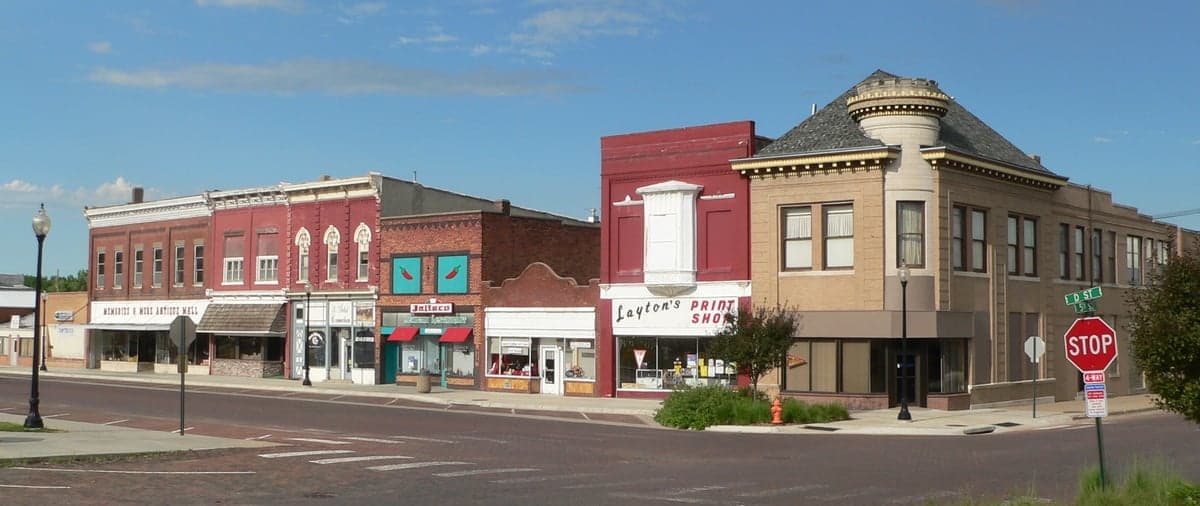
Photo: Wikipedia
Political ClimatePolitical Climate in Fairbury, NE
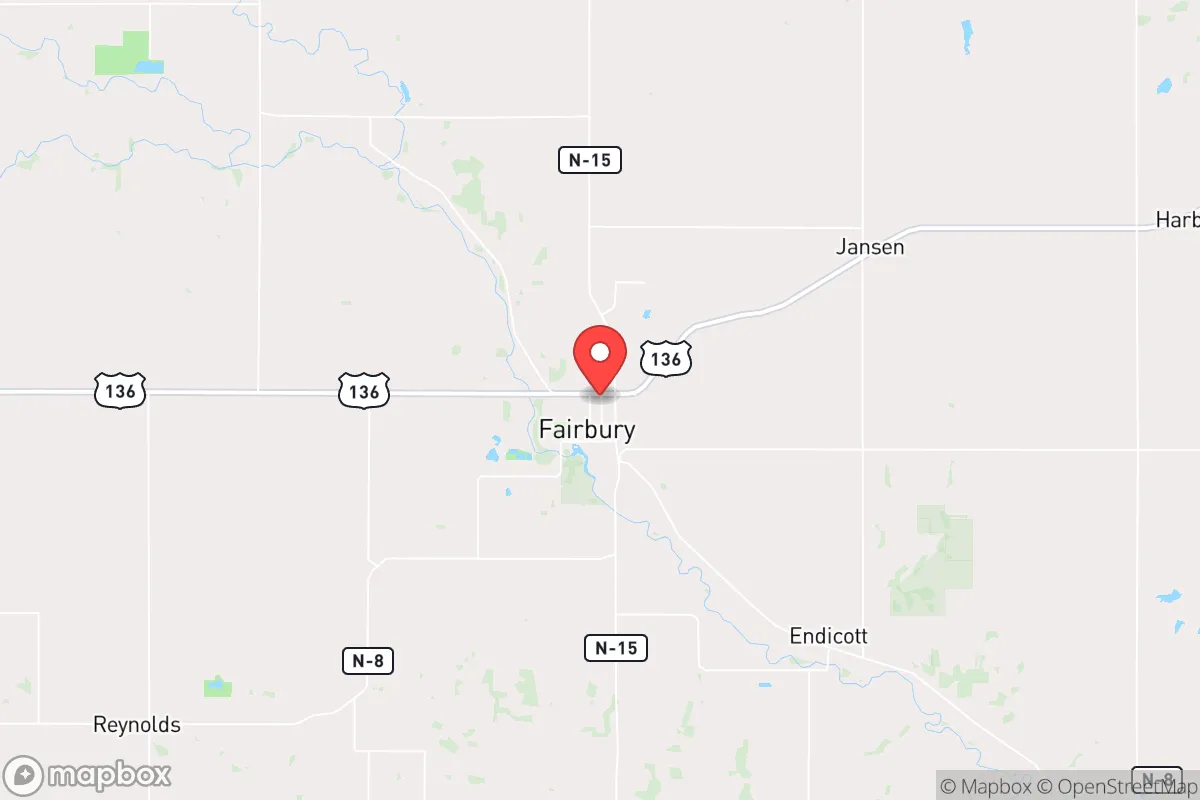
District shown is the primary district for this city’s centroid. Cities may span multiple districts.
Local Political AnalysisPolitical Analysis of Fairbury, NE
Fairbury, Nebraska, sits deep in the heart of the state’s conservative stronghold, and it’s been that way for as long as anyone can remember. With a Cook Partisan Voting Index of R+27, this town doesn’t just lean Republican—it’s one of the most reliably red spots in the entire country. That means you’re looking at a place where folks take their personal freedoms seriously, where government overreach is met with a healthy dose of skepticism, and where the idea of being left alone to live your life isn’t a political talking point—it’s just common sense. The trajectory here hasn’t shifted much over the decades, and if anything, the surrounding rural areas have only dug in deeper as the national conversation has drifted leftward. You won’t find much appetite for progressive experiments in Fairbury; this is a community that values tradition, self-reliance, and a government that stays out of the way.
How it compares
If you drive an hour north to Lincoln, you’ll hit a completely different world—a blue island in a red sea, where the university crowd and state government workers push policies that would make most Fairbury residents’ blood boil. The contrast is stark: Lincoln’s city council has toyed with things like sanctuary city policies and higher local taxes, while Fairbury’s leaders are focused on keeping the streets safe and the tax burden low. Even Beatrice, just 20 miles east, feels a bit more moderate, with a few more registered Democrats in the mix. But Fairbury itself? It’s surrounded by counties that vote 70-80% Republican in most elections. The nearest town that might give you a taste of progressive thinking is probably Omaha, and that’s a two-hour haul east. For anyone worried about government creeping into their personal lives—whether it’s overbearing health mandates, property rights restrictions, or school curriculum battles—Fairbury offers a refuge where those fights are still winnable at the local level.
What this means for residents
For the people who live here, the political climate translates into a daily life that feels a lot more free than what you’d get in bigger cities. You won’t see mask mandates or business shutdowns being enforced by local officials—during the pandemic, Fairbury largely let folks make their own choices, and the economy stayed open. Property taxes are a perennial concern, but the county commissioners and city council are generally responsive to complaints about spending, because they know they’ll get voted out if they go on a spending spree. The school board leans conservative, so you’re not going to see critical race theory or gender ideology pushed in the classroom—parents still have a real say in what their kids are taught. For someone who values the Second Amendment, there’s no nonsense about magazine limits or waiting periods; it’s a place where gun ownership is treated as a normal, protected right. The biggest worry for longtime residents is that as the state as a whole sees more migration from blue states, those progressive ideas might start trickling down from Lincoln. But so far, Fairbury’s local elections have kept that tide at bay, and the community is vigilant about keeping it that way.
Culturally, Fairbury is the kind of town where the county fair is still a big deal, where the local diner knows your order, and where people wave at each other on the street. There’s no push for bike lanes or public art installations funded by tax hikes—instead, you’ll find a focus on practical infrastructure, like keeping the roads paved and the water clean. The biggest policy distinction you’ll notice is a strong resistance to any form of zoning or land-use regulation that might tell a property owner what they can or can’t do with their land. That’s a core value here: your property is your own, and the government’s job is to protect that, not meddle with it. If you’re looking for a place where personal freedom isn’t just a slogan but a way of life, Fairbury delivers. Just don’t expect it to change anytime soon—the folks here like it just the way it is.

State Political ClimatePolitical Climate in Nebraska
State Political AnalysisPolitical Environment in the State
Nebraska has long been a reliably conservative state, but its politics are more layered than the simple "red state" label suggests. The state has voted Republican in every presidential election since 1968, and its unique unicameral, nonpartisan legislature often produces policy that leans right, though with a pragmatic, independent streak. Over the last 10-20 years, the dominant coalition has been a mix of rural conservatives, agricultural interests, and business-friendly Republicans, but a growing urban-liberal bloc in Omaha and Lincoln has created a widening cultural and electoral divide, making the state’s trajectory a tale of two Nebraskas.
Urban vs. rural divide
The political map of Nebraska is starkly split. The eastern third, anchored by Omaha (Douglas County) and Lincoln (Lancaster County), is the state’s blue stronghold. Douglas County has voted Democratic in the last three presidential elections, and Lancaster County has trended the same way, with Biden winning it in 2020. These two counties alone account for over half the state’s population, and their influence is growing. In contrast, the rest of the state is deeply red. Scottsbluff in the Panhandle, Grand Island in the central Platte Valley, and Norfolk in the northeast are all reliably conservative, with rural precincts often delivering 80%+ Republican margins. The real flashpoint is the 2nd Congressional District (Omaha metro), which is a perennial swing district and the only one in the state that split its electoral vote in 2020, awarding one of Nebraska’s five electoral votes to Joe Biden. This urban-rural chasm means state policy is often a tug-of-war between Omaha’s more progressive city council and the conservative rural majority in the legislature.
Policy environment
Nebraska’s policy environment is generally favorable for conservatives, but with notable exceptions. The state has no income tax on Social Security benefits and a flat state income tax rate that was recently cut from 6.84% to 5.84% (with further reductions scheduled), making it competitive for retirees and earners. Property taxes, however, are a persistent pain point, among the highest in the region, and the legislature has struggled to deliver meaningful relief despite years of debate. On education, Nebraska has a robust school choice movement, with the passage of LB 753 in 2023 creating a state-funded scholarship program for private and parochial school students, a major win for parental rights. Healthcare is a mixed bag: the state expanded Medicaid under the Affordable Care Act in 2020 via a ballot initiative (overriding legislative resistance), but it also passed a 12-week abortion ban in 2023, with exceptions for rape, incest, and medical emergencies. Election laws are solidly conservative—voter ID is now required (passed in 2021), and the state has no same-day registration, though mail-in voting is widely available. The unicameral legislature’s nonpartisan structure often frustrates hardliners on both sides, as it forces coalition-building and can water down the most aggressive conservative bills.
Trajectory & freedom
On balance, Nebraska has been moving in a more freedom-oriented direction over the past five years, but the path is uneven. The most significant expansion of personal liberty came with the passage of LB 77 in 2023, which eliminated the requirement for a permit to carry a concealed handgun, making Nebraska a constitutional carry state. This was a clear win for Second Amendment advocates. On parental rights, the legislature passed LB 1084 in 2023, which restricts instruction on sexual orientation and gender identity in K-12 schools, a move that aligns with the growing national movement for parental transparency. However, the state also saw a concerning expansion of government overreach during the pandemic, with Governor Pete Ricketts imposing some of the longest-lasting emergency health directives in the region, including mask mandates and business closures that many conservatives felt were excessive. More recently, the 2023 abortion ban, while popular with the pro-life base, represents a significant government restriction on medical autonomy that some libertarian-leaning residents view warily. The state’s tax burden, particularly property taxes, remains a drag on economic freedom, and efforts to cap them have repeatedly stalled.
Civil unrest & political movements
Nebraska has not seen the kind of large-scale civil unrest seen in coastal states, but there have been notable flashpoints. The most visible was the 2020 George Floyd protests in Omaha, which saw several nights of demonstrations, some property damage, and a heavy police response. This event galvanized a more organized progressive activist network in the city, particularly around racial justice and police reform. On the right, the most active movement has been the "Nebraska Republican Party" faction that pushed for election integrity reforms after 2020, leading to the voter ID law and a push to eliminate the state’s use of drop boxes (which ultimately failed). Immigration politics are a simmering issue, particularly in Grand Island and South Sioux City, where meatpacking plants have drawn a significant Hispanic workforce. There have been local debates over sanctuary policies, but Nebraska has no sanctuary cities, and state law prohibits them. The most recent political flashpoint was the 2023 fight over the abortion ban, which drew large crowds to the state capitol in Lincoln from both sides, but remained largely peaceful. A new resident would notice that political activism is more subdued than in many states, but the divide between Omaha’s progressive activism and the rural conservative base is real and growing.
Projection
Over the next 5-10 years, Nebraska is likely to become more politically polarized, but the overall conservative lean should hold. The key demographic trend is the continued growth of the Omaha metro, which is attracting younger, more diverse, and more liberal residents, while rural counties continue to lose population. This will make the 2nd Congressional District increasingly competitive and could eventually flip the state’s electoral vote allocation if Democrats ever win the governorship. However, the state’s rural-dominated legislature is likely to remain conservative, and the recent trend of tax cuts and school choice expansion suggests the policy environment will continue to favor economic and educational freedom. The biggest wildcard is property tax reform—if the legislature can deliver meaningful relief, it would solidify Nebraska’s appeal for conservative movers. If not, the state may struggle to retain its rural base. In-migration from blue states, particularly to the Omaha suburbs like Elkhorn and Gretna, is accelerating, and these new arrivals tend to be more moderate than the native rural population, which could shift the state’s center of gravity slightly leftward over time. A new resident moving in now should expect a state that remains reliably red on most issues, but with a growing blue island in the east that will keep the culture war alive.
For a conservative individual or family considering a move, Nebraska offers a solid foundation: low income taxes, a strong school choice program, constitutional carry, and a legislature that generally respects parental rights and local control. The main practical drawbacks are the high property taxes and the growing political influence of Omaha, which will continue to push for progressive policies on social issues and spending. If you’re looking for a state where your vote counts and your values are broadly reflected in state law, Nebraska is a good bet—just be prepared for a property tax bill that stings and a state capitol that sometimes moves slower than you’d like. It’s a place where you can still have a real conversation with your neighbor, even if you disagree, and that’s becoming rarer by the year.
* Values derived from national, state, county, city and local statistics and may differ in a specific area. Last updated: 2026-05-03T20:31:07.000Z
Narrative content on this page is AI-generated and may contain mistakes. Verify any details that matter before acting on them.
ReloMaps may earn a commission from affiliate links at no extra cost to you.

