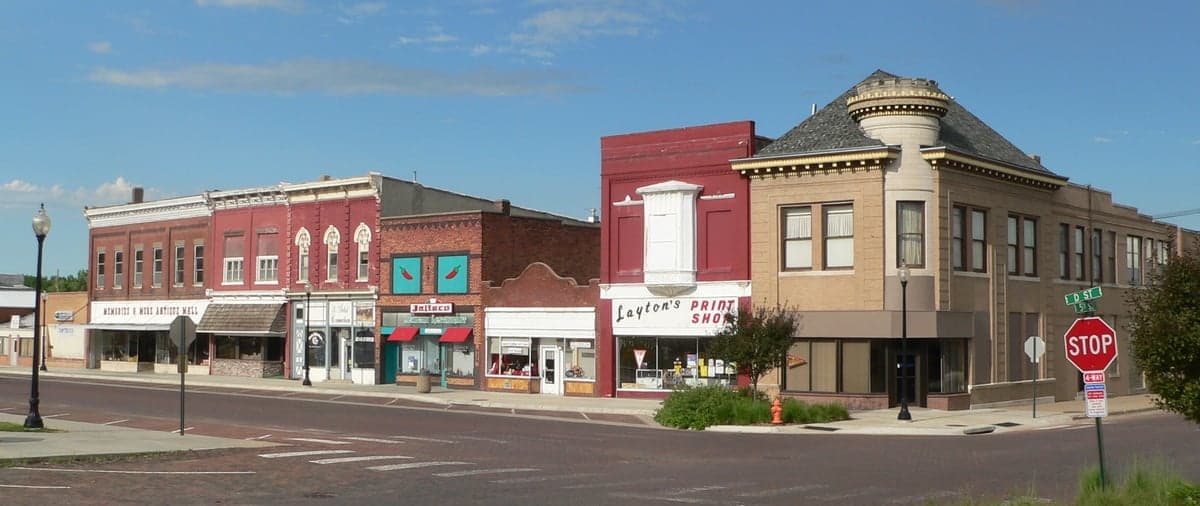
Photo: Wikipedia
Strategic Assessment of Fairbury, NE
Deep buffer from population centers and strategic targets. Low natural disaster risk and minimal exposure to border or coastal threats.
What does the Strategic Assessment tell us?
Our Strategic Assessment grades tactical survivability of an area. Major population centers, military targets, fallout zones, natural disasters, and border exposure all drive risk — lower exposure means a more defensible position in a crisis.
This is heavily inspired by Joel Skousen's Strategic Relocation book. Highly recommended you checkout the book ($)What does this tell us?
Our Strategic Assessment grades tactical survivability of an area. Major population centers, military targets, fallout zones, natural disasters, and border exposure all drive risk — lower exposure means a more defensible position in a crisis.
This is heavily inspired by Joel Skousen's Strategic Relocation book. Highly recommended you checkout the book ($)Strategic Pillars

Key Distances
Regional Safe Places
Below is our recommended "safe zones" in Nebraska and the surrounding area based on our strategic heuristics. For most people, it's unrealistic to live in a “safe zone” full-time due to work, family or other personal reasons. They tend to be more rural. However, many of these areas are perfect for second homes and retreat properties that double as a vacation home or even a short-term rental.
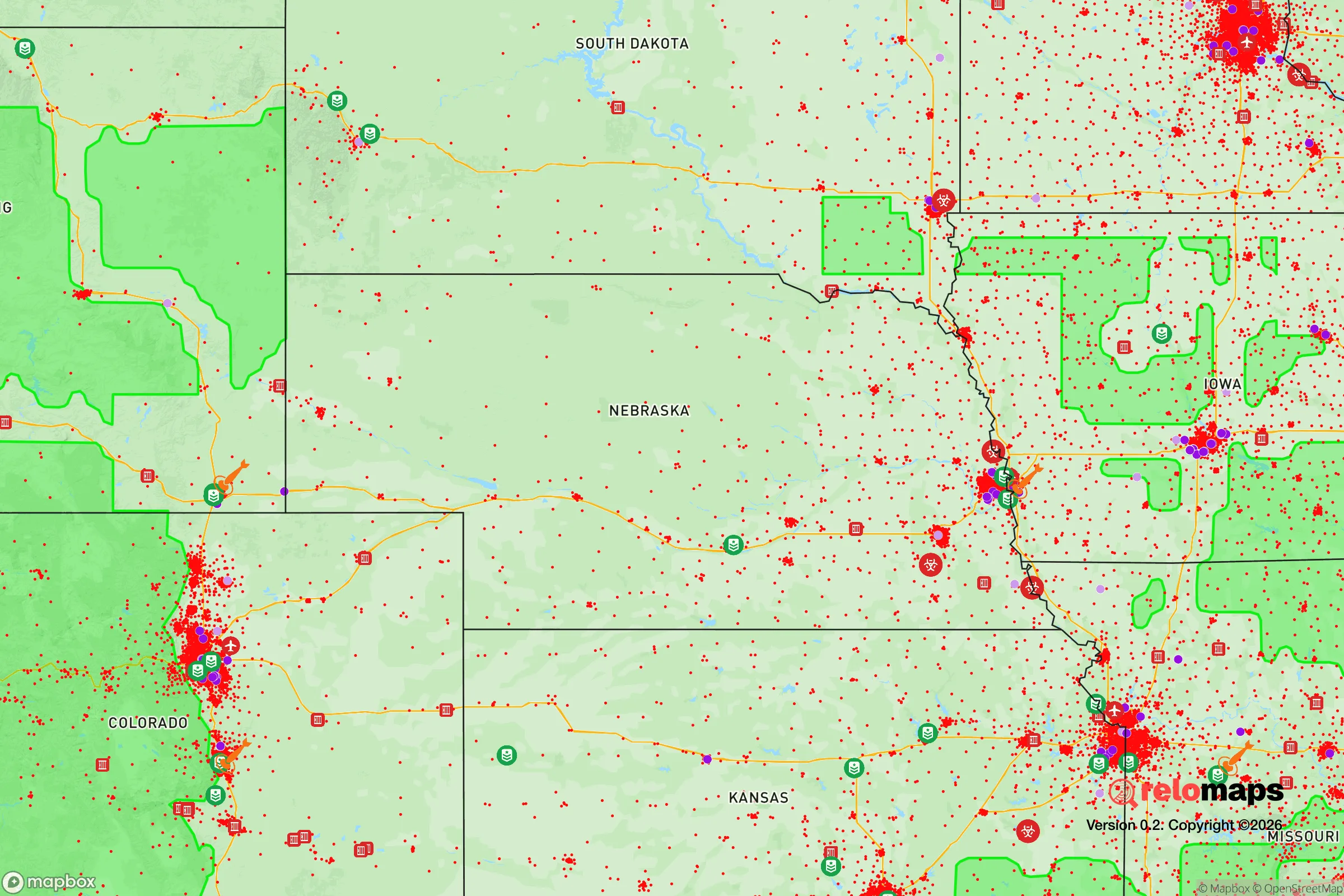
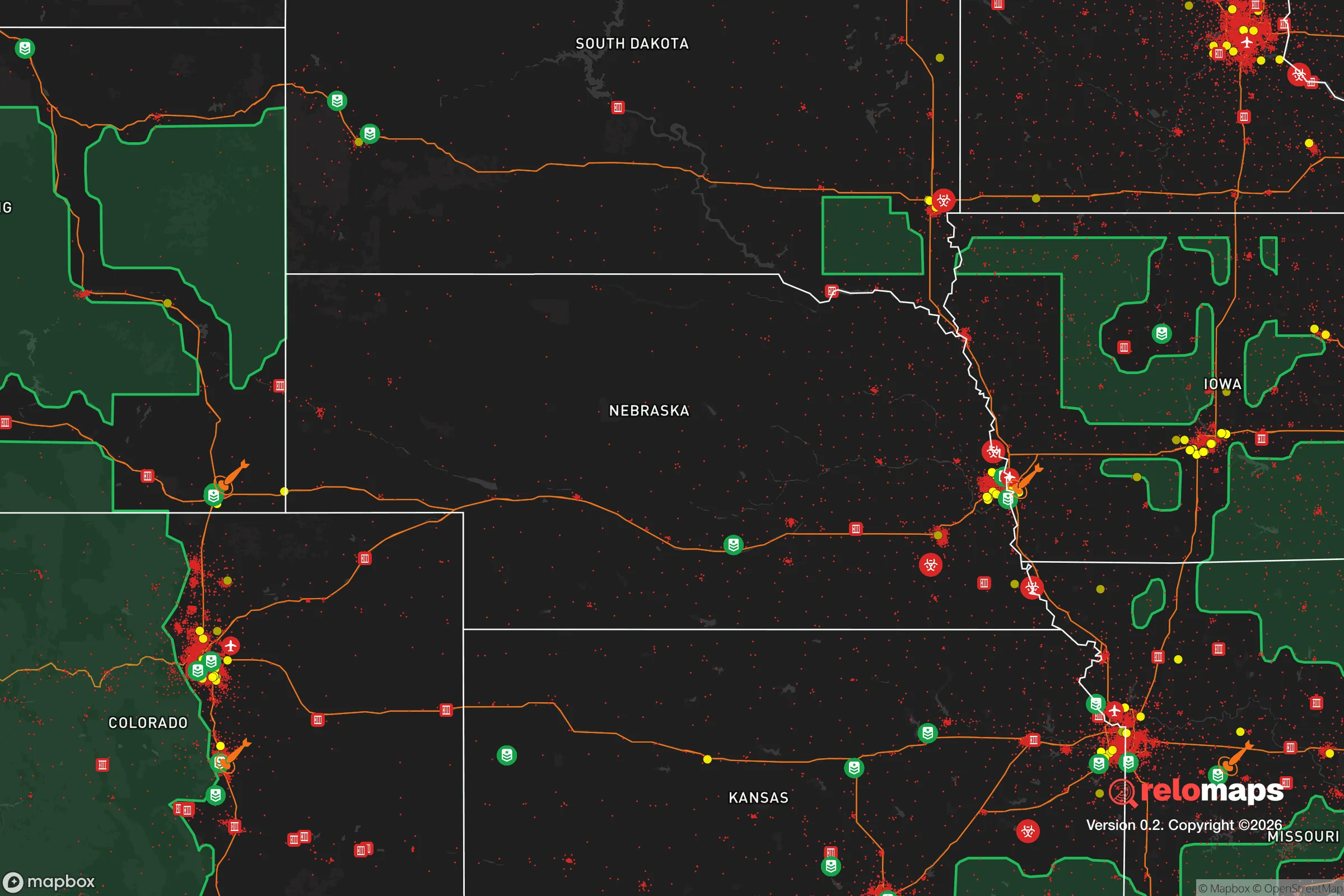


Important Note: For informational purposes only. This does not mean nothing bad ever happens in the green zones. Please use common sense. This is based on public data and modeled with AI. We tried to take a conservative approach but mistakes happen. We update this regularly as new information becomes available.
Solar Generator Recommendations
Backup power matters more here than in safer locations. We've picked three solar generators across budgets and capacity tiers — start with the budget unit if you only need a few essentials, or step up if you want to run a fridge and HVAC for days at a time.

Jackery Portable Power Station Explorer 300
Budget OptionPower on the Go: Weighing only 11 lbs, it's convenient to set up and store with book-sized foldable solar panels

BLUETTI Portable Power Station AC180
Designed for both indoor and outdoor scenarios, AC180 is highly capable as it has a robost capacity and continuous output power.

EF ECOFLOW DELTA Pro Ultra Power Station
Upgraded PickEcoFlow DELTA Pro Ultra is a whole-home energy system designed to grow with your family. Integrated with the Smart Home Panel 2, it scales to meet your evolving energy needs — keeping your home powered, intelligent, and secure through every stage of life.
We earn a commission, at no additional cost to you.
Strategic Assessment Analysis
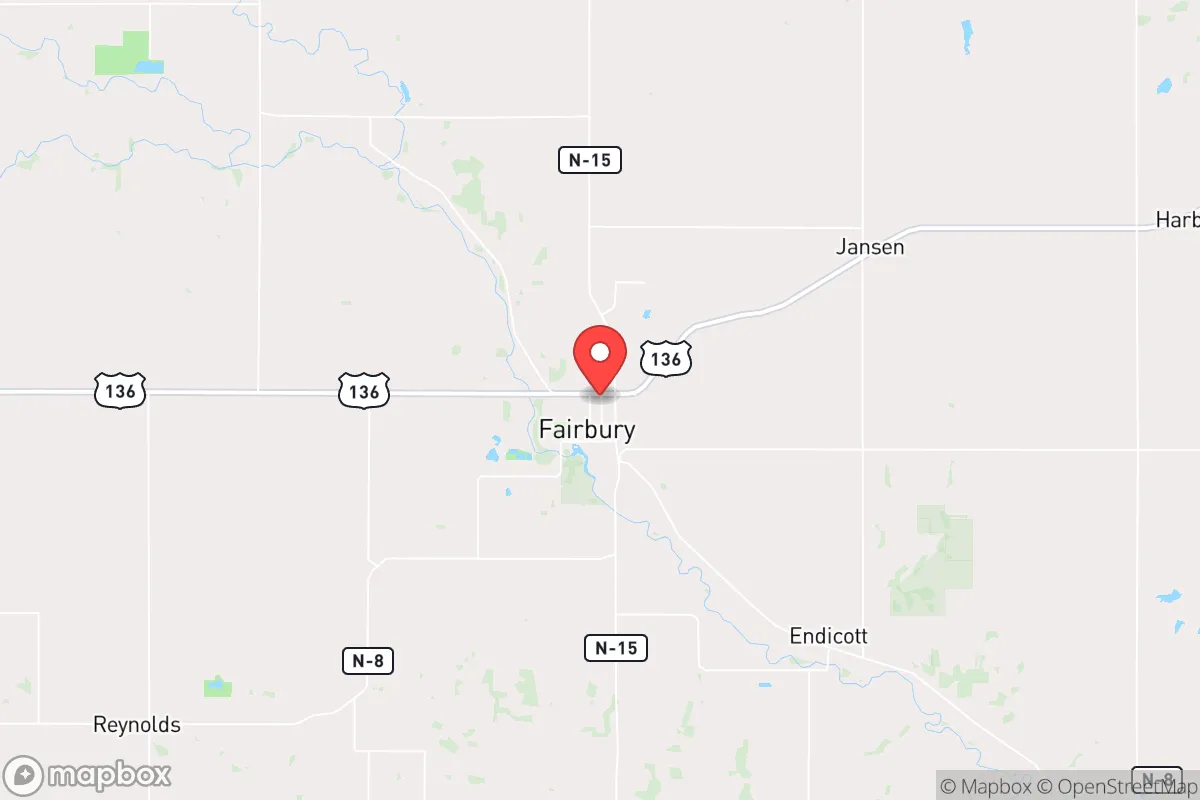
Fairbury, Nebraska, sits as a quietly strategic outpost in the southeastern corner of the state, roughly 90 miles southwest of Lincoln and 40 miles north of the Kansas border. Its resilience profile is built on a foundation of agricultural self-sufficiency, low population density, and a location that places it outside the immediate blast and fallout zones of major strategic targets, while still being within a practical distance of essential supply routes and medical infrastructure. For a relocator thinking in terms of decades, not election cycles, Fairbury offers a blend of isolation and connectivity that is increasingly rare in the lower 48.
Geographic position and natural advantages for long-term security
Fairbury’s primary strategic asset is its position within the Big Blue River valley, a fertile corridor that has sustained continuous farming since the 1860s. The surrounding Jefferson County is predominantly rural, with a population density of roughly 12 people per square mile—a figure that drops further as you move west into Thayer and Nuckolls counties. This low density means that in a grid-down or civil unrest scenario, competition for resources like firewood, game, and uncontaminated water would be far less intense than in the Front Range suburbs or the I-35 corridor. The local aquifer, part of the High Plains system, is generally reliable, though well depths in the area average 100–200 feet, requiring a backup hand pump or solar setup for true independence. The terrain is gently rolling prairie with scattered shelterbelts of cottonwood and cedar, offering decent natural cover and defensible farmsteads, though it lacks the mountainous chokepoints of a place like the Ozarks. The climate is continental, with hot summers and cold winters, but the growing season (roughly 160 days) is long enough for a serious garden and small orchard—apples, pears, and hardy plums do well here.
Risks, exposures, and proximity to fallout-relevant landmarks
The most significant risk for Fairbury is its proximity to Lincoln and Omaha, which are roughly 90 and 120 miles northeast, respectively. While this distance places Fairbury outside the primary blast radius of any nuclear strike on those cities, it is within the zone for moderate fallout contamination depending on wind patterns. A ground burst at Offutt Air Force Base (south of Omaha) could deposit significant fallout across southeastern Nebraska within 6–12 hours. Fairbury’s position south of the Platte River valley offers some protection, as prevailing winds in a crisis are often westerly or northwesterly, but a southward shift would put the town in a secondary fallout plume. The Kansas City metropolitan area is about 130 miles southeast, and the Fort Riley military installation (home to the 1st Infantry Division) is roughly 100 miles south-southwest—both are potential targets. On the positive side, Fairbury is not near any major interstate highways (I-80 is 40 miles north), which reduces the risk of refugee flows or military convoys passing through. The local rail line (a BNSF branch) is a minor asset for logistics but also a potential target for sabotage. Natural hazards are limited: tornadoes are a real threat (Jefferson County averages 2–3 per year), but the flat terrain makes them visible from miles away, and the town has a well-established storm shelter network.
Practical resilience for a relocator: food, water, energy, and defensibility
For a relocator serious about self-sufficiency, Fairbury offers a strong baseline. The surrounding county is one of the top corn and soybean producers in Nebraska, meaning bulk grain for animal feed and human consumption is locally available if you have the storage and processing equipment. The town itself has a small but functional agricultural supply chain: co-ops for seed, fertilizer, and fencing, plus a local feed mill. Water is the critical variable. The Big Blue River runs through town, but surface water requires filtration and is vulnerable to upstream contamination. Most rural properties rely on private wells, and the water table is generally high (30–60 feet in the valley), making hand-dug wells or shallow pumps feasible with basic tools. A solar-powered well pump with a 500-gallon cistern would provide a reliable off-grid supply. Electricity is served by Nebraska Public Power District, which has a mixed generation portfolio (coal, nuclear, wind), but the grid is vulnerable to EMP or cyberattack. A propane or diesel generator with a 1,000-gallon tank is a practical investment, as propane delivery is common in the area. Defensibility is moderate: the town has a grid layout with open fields on three sides, making approach routes visible. The Jefferson County Sheriff’s Office has about 10 deputies, so law enforcement response times in rural areas can be 20–30 minutes. A well-armed and trained household with a clear line of sight to the nearest road would have a significant advantage. The local hospital (Jefferson Community Health Center) is a critical access facility with a small ER and limited surgical capability—major trauma would require a 90-minute drive to Lincoln, so a robust medical kit and training are non-negotiable.
Overall strategic picture for a conservative relocator
Fairbury is not a bug-out location for the weekend warrior; it is a long-term homesteading play for someone willing to invest in infrastructure and community relationships. The town’s political leanings are reliably conservative—Jefferson County voted +35 points for Trump in 2020—and the local culture is one of self-reliance, church involvement, and neighborly reciprocity. The biggest drawback is the lack of a robust local economy for remote workers or those needing in-person employment; the largest employers are the school system, the hospital, and a few manufacturing plants (e.g., a Bunge grain elevator and a small metal fabrication shop). For a relocator with a portable income or a retirement nest egg, the low cost of living (median home price around $120,000) and low property taxes (Nebraska’s are moderate, but Jefferson County is below the state average) free up capital for preps. The strategic verdict: Fairbury is a solid B+ location for a survival-minded relocator who values agricultural independence, low population density, and distance from primary targets, but who is willing to accept the risks of secondary fallout exposure and the logistical challenges of a remote rural setting. It is a place to build, not just to hide.

* Values derived from national, state, county, city and local statistics and may differ in a specific area. Last updated: 2026-05-03T20:31:07.000Z
Narrative content on this page is AI-generated and may contain mistakes. Verify any details that matter before acting on them.
ReloMaps may earn a commission from affiliate links at no extra cost to you.

