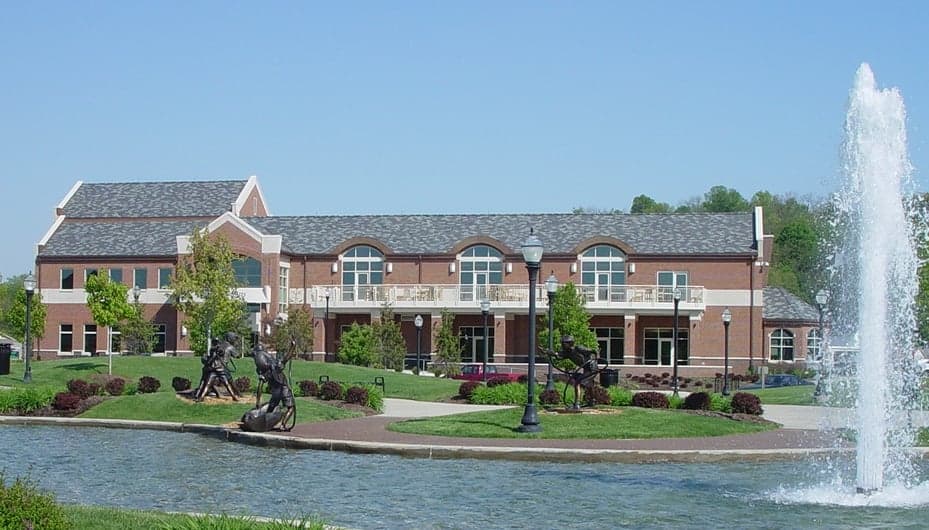
Photo: Wikipedia
Strategic Assessment of Fairfield, OH
Meaningful friction. Expect exposure to either population pressure, blast zones, or natural disaster risk. Consider buying a retreat property.
What does the Strategic Assessment tell us?
Our Strategic Assessment grades tactical survivability of an area. Major population centers, military targets, fallout zones, natural disasters, and border exposure all drive risk — lower exposure means a more defensible position in a crisis.
This is heavily inspired by Joel Skousen's Strategic Relocation book. Highly recommended you checkout the book ($)What does this tell us?
Our Strategic Assessment grades tactical survivability of an area. Major population centers, military targets, fallout zones, natural disasters, and border exposure all drive risk — lower exposure means a more defensible position in a crisis.
This is heavily inspired by Joel Skousen's Strategic Relocation book. Highly recommended you checkout the book ($)Strategic Pillars

Key Distances
Regional Safe Places
Below is our recommended "safe zones" in Ohio and the surrounding area based on our strategic heuristics. For most people, it's unrealistic to live in a “safe zone” full-time due to work, family or other personal reasons. They tend to be more rural. However, many of these areas are perfect for second homes and retreat properties that double as a vacation home or even a short-term rental.

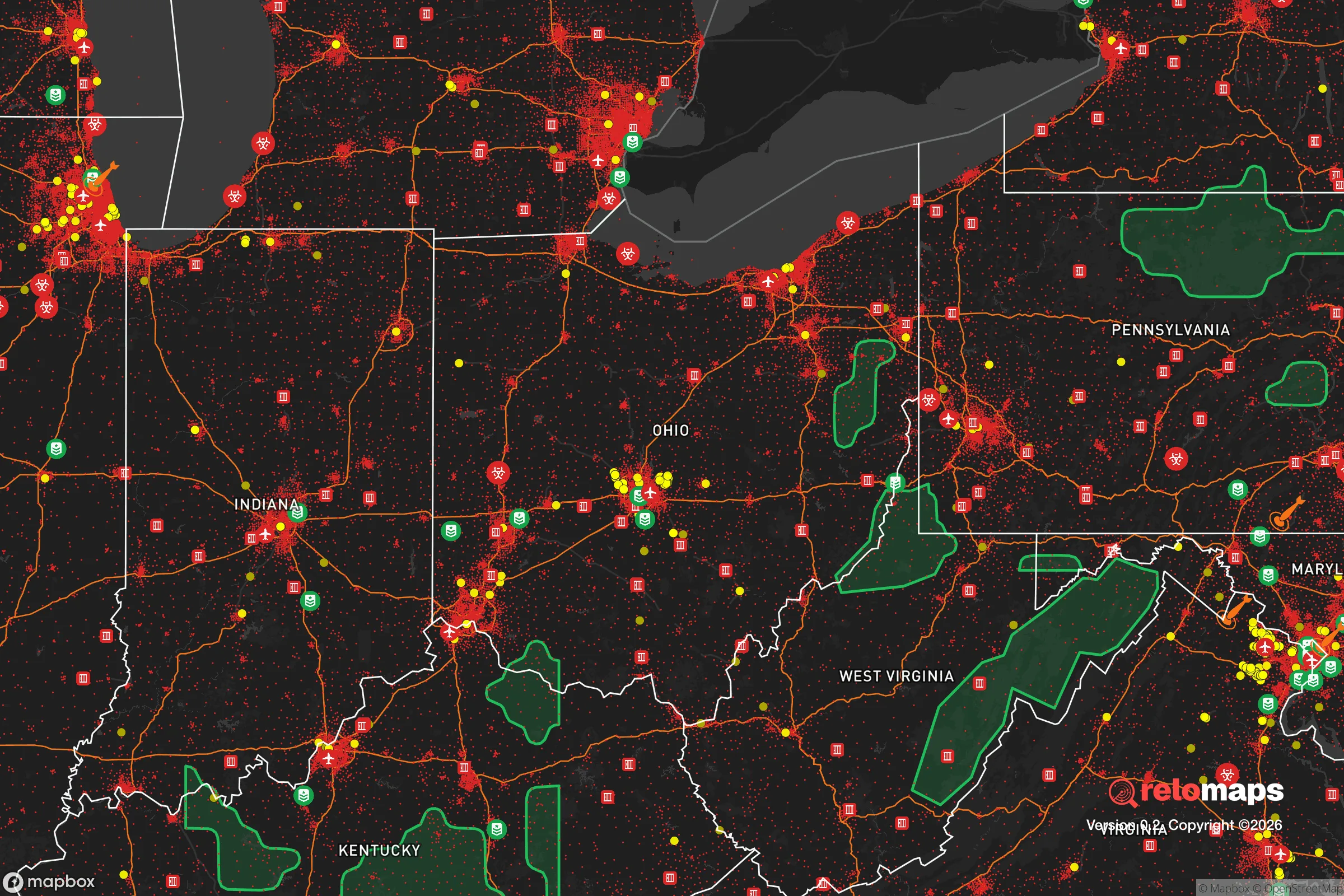


Important Note: For informational purposes only. This does not mean nothing bad ever happens in the green zones. Please use common sense. This is based on public data and modeled with AI. We tried to take a conservative approach but mistakes happen. We update this regularly as new information becomes available.
Solar Generator Recommendations
Backup power matters more here than in safer locations. We've picked three solar generators across budgets and capacity tiers — start with the budget unit if you only need a few essentials, or step up if you want to run a fridge and HVAC for days at a time.

Jackery Portable Power Station Explorer 300
Budget OptionPower on the Go: Weighing only 11 lbs, it's convenient to set up and store with book-sized foldable solar panels

BLUETTI Portable Power Station AC180
Designed for both indoor and outdoor scenarios, AC180 is highly capable as it has a robost capacity and continuous output power.

EF ECOFLOW DELTA Pro Ultra Power Station
Upgraded PickEcoFlow DELTA Pro Ultra is a whole-home energy system designed to grow with your family. Integrated with the Smart Home Panel 2, it scales to meet your evolving energy needs — keeping your home powered, intelligent, and secure through every stage of life.
We earn a commission, at no additional cost to you.
Strategic Assessment Analysis
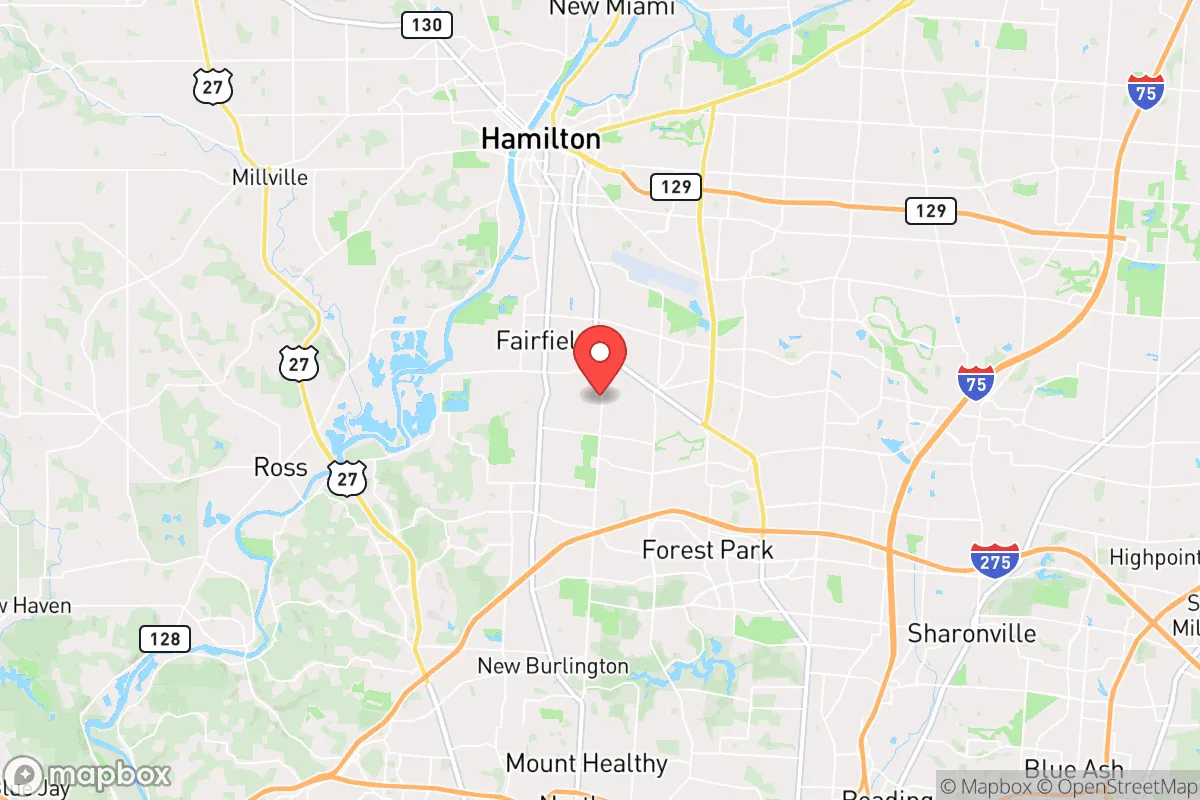
Fairfield, Ohio, sits in a precarious but potentially workable position for a prepper or survivalist household looking to balance access to resources with the need to avoid the worst fallout zones. Located in Butler County, roughly 25 miles north of Cincinnati, the city is close enough to a major metropolitan area to offer supply chains and employment, but far enough that a sudden collapse or mass casualty event in the city center wouldn't immediately overwhelm your doorstep. The area's resilience comes down to its geography, its infrastructure, and the practical steps a relocator can take to harden their position against the kind of civic unrest, grid failure, or regional disaster that a conservative-minded prepper is planning for.
Geographic position and natural advantages for long-term survival
Fairfield's location within the Great Miami River valley gives it a few natural advantages that a strategic relocator should note. The city sits on relatively high ground compared to the flood-prone areas directly along the river, which means you're not dealing with the same water risks that plague communities like Hamilton or Middletown. The surrounding terrain is a mix of rolling hills and farmland, offering decent line-of-sight defensibility for a rural retreat if you're willing to drive 10–15 minutes outside the city limits. The region's temperate climate means you can grow food for at least six months of the year, and the soil in Butler County is some of the most productive in the state—ideal for a serious garden or small-scale farming operation. Water access is also a plus: the Great Miami Aquifer is one of the largest underground water sources in the Midwest, and while municipal supply is reliable now, a well-drilled on private property gives you a hard-to-cut resource. For a prepper, the key takeaway is that Fairfield offers a buffer—close enough to Cincinnati for resupply and work, but with enough rural spillover to allow for a retreat strategy if things go sideways.
Risks, exposures, and proximity to fallout-relevant landmarks
The biggest downside for a survivalist in Fairfield is its proximity to several high-value targets and potential fallout zones. Cincinnati is a major transportation hub with a large airport (CVG), multiple rail yards, and a significant industrial base—including chemical plants and refineries along the Ohio River. A coordinated attack, EMP event, or even a major industrial accident could send shockwaves through the region. Fairfield itself is home to a large Ford plant (Lima Engine Plant is about 90 miles north, but the area has its own manufacturing footprint), and the nearby Fernald Feed Materials Production Center—a former uranium processing site—is only about 15 miles west. While Fernald is now a Superfund site undergoing cleanup, the legacy of contamination and the potential for secondary risks from a disaster shouldn't be ignored. Interstate 75 runs right through the city, which is a double-edged sword: it's a vital supply route, but in a mass evacuation scenario, it becomes a choke point and a target. For a prepper, the calculus is that Fairfield is not a remote bug-out location—it's a suburban staging area. You need to have a plan for getting out if the city becomes a danger zone, and you need to accept that you're within the blast radius of a major event in Cincinnati. The good news is that the surrounding rural areas of Preble County and the Indiana border offer relatively quick escape routes if you have a vehicle and a pre-planned route that avoids I-75.
Practical resilience for a relocator: food, water, energy, and defensibility
For a single individual or family looking to set up a resilient household in Fairfield, the practical steps are straightforward but require upfront investment. Water: The municipal supply is treated and reliable, but a prepper should install a whole-house filtration system and have at least a 55-gallon drum of stored water per person. A well on a rural property within 20 minutes of Fairfield is a better long-term bet, but even in the suburbs, rainwater catchment from a roof can yield hundreds of gallons per month. Food: The area has multiple grocery chains (Kroger, Meijer, Walmart) and a strong local farmers' market scene from spring through fall. For long-term storage, you'll want to build a pantry with freeze-dried goods and canned staples, but the real advantage is the growing season—you can put in a garden that produces tomatoes, peppers, squash, and greens from April through October. Energy: Duke Energy provides electricity, and outages are common during summer storms and winter ice events. A whole-home generator running on natural gas or propane is a must for a prepper household—plan for at least a 20kW unit to keep the fridge, well pump (if applicable), and a few circuits running. Solar panels with battery backup are viable here, though the region gets about 180 sunny days per year, so don't rely on them as your sole source. Defensibility: Fairfield is a suburban grid with cul-de-sacs and standard lot sizes. That's not ideal for a fortified position, but it does mean you have neighbors who can form a community watch. For a serious prepper, the better play is to buy a property on the outskirts—look at areas near the intersection of State Route 4 and State Route 747, where lots are larger and you have more setback from the road. A fence, a reinforced door, and a good security camera system are baseline. Firearms are legal in Ohio with a concealed carry permit, and the local sheriff's office is generally supportive of Second Amendment rights, which aligns with the conservative prepper mindset.
The overall strategic picture for Fairfield is that it's a decent middle-ground option for a relocator who wants to stay within striking distance of Cincinnati's economy but isn't willing to live inside the blast radius. You're not going to find the isolation of a Montana homestead or the defensibility of a mountain redoubt here. What you get is a solid suburban base with good soil, decent water access, and a community that, while not uniformly prepper-minded, is conservative enough that you won't be the only one with a generator and a gun safe. The risks are real—proximity to I-75, Cincinnati, and industrial sites means you need a bug-out plan and a willingness to leave if the situation deteriorates. But for a single person or family who wants to build a resilient life without going full off-grid, Fairfield offers a workable balance. Just don't get comfortable—the world is unstable, and this area is close enough to the chaos that you need to stay sharp, stay stocked, and stay ready to move.

* Values derived from national, state, county, city and local statistics and may differ in a specific area. Last updated: 2026-04-21T18:31:39.000Z
Narrative content on this page is AI-generated and may contain mistakes. Verify any details that matter before acting on them.
ReloMaps may earn a commission from affiliate links at no extra cost to you.

