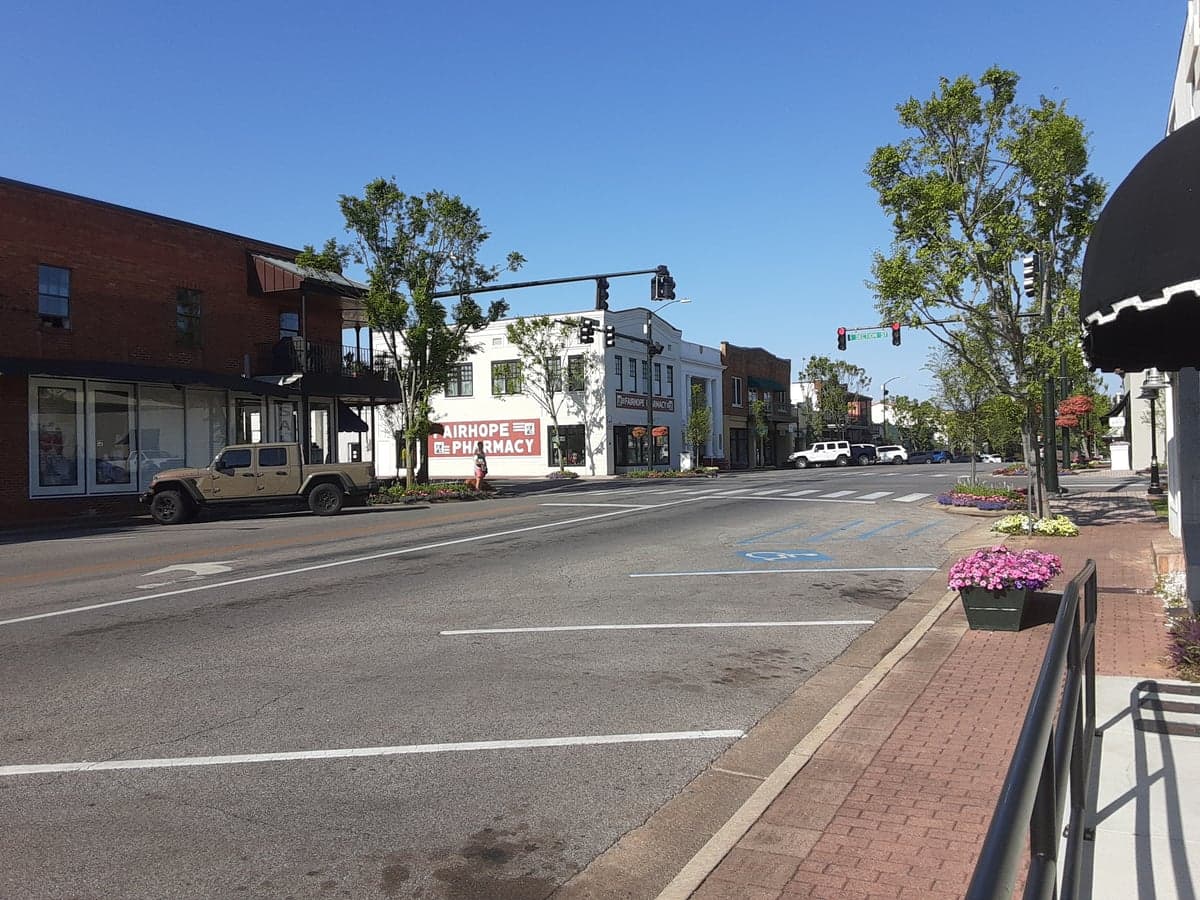
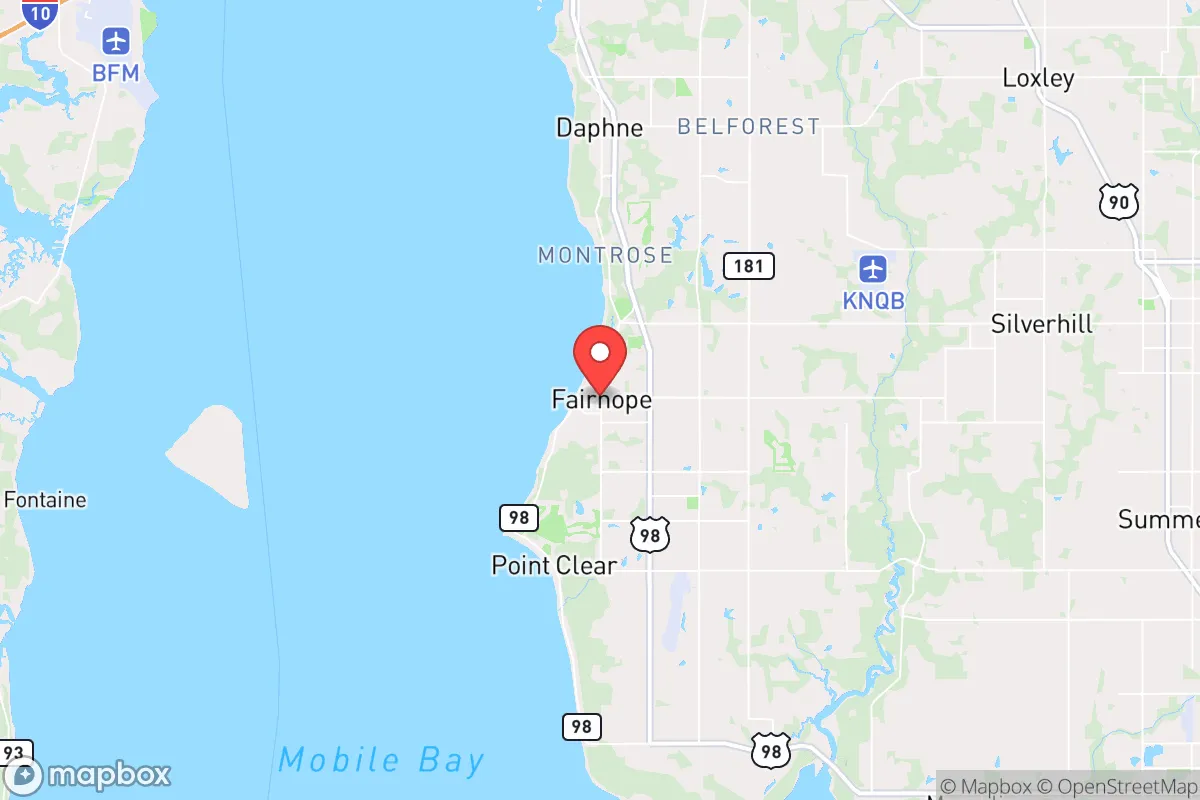
Photo: Wikipedia
Quality of Life in Fairhope, AL
A high quality of life with strong walkability, manageable living costs, healthy neighborhood signals, and solid amenity access.
What does Quality of Life tell us?
Quality of Life blends cost of living, nearby amenities, socioeconomic signals, and neighborhood character. City-level scores represent the whole municipality; individual neighborhoods can differ.
What does this tell us?
Quality of Life blends cost of living, nearby amenities, socioeconomic signals, and neighborhood character. City-level scores represent the whole municipality; individual neighborhoods can differ.
Cost of Living
42% above national average
The Real Cost of Living in Fairhope, AL for 2026
| Tier | Individual | Family (4) |
|---|---|---|
| Survival | $26k | $49k |
| Comfortable | $79k | $116k |
| Luxury | $156k+ | $242k+ |
| Elite (Top 5%) | $232k+ | $359k+ |
75%
The Area Signal
A metric tracking the socioeconomic signals of the area.


Hobbies
Explore the areaGroceries
2 within 10 miles
Gas
0 within 10 miles
Hospital
3 within 20 miles
Airport
ATL — Hartsfield–Jackson Atlanta International
Post Office
USPS — Daphne, AL
Critical Amenities
Quality-of-Life Analysis
Fairhope, Alabama, is one of the Gulf Coast’s most affluent small towns, drawing a mix of remote professionals, retired executives, and families seeking a slower pace without sacrificing coastal amenities. With a cost-of-living index of 142 (42% above the national average), the city commands a premium over nearby Mobile (index ~88) and Daphne (index ~105), reflecting its desirability and limited housing inventory. The median home value of $406,500 is roughly double the Alabama state median, while the median rent of $1,637 per month places it among the priciest rental markets on the Eastern Shore.
Cost of living, housing affordability, and how Fairhope compares to Mobile and Daphne
Fairhope’s housing market is the primary driver of its elevated cost of living. The median home value of $406,500 is about 70% higher than in Daphne ($240,000) and more than double Mobile’s median ($175,000). Renters face a similar gap: the median monthly rent of $1,637 is roughly 35% higher than Daphne’s $1,200 and 55% higher than Mobile’s $1,050. The average commute of 23.4 minutes is notably shorter than Mobile’s 27-minute average, a perk for workers who cross the bay via the Baldwin Beach Express or I-10’s Wallace Tunnel. However, property taxes remain low by national standards—Baldwin County’s effective rate is about 0.42% of assessed value—which partially offsets the high purchase prices. For buyers, the trade-off is clear: Fairhope offers walkable downtown living and bay views, but at a premium that often pushes first-time buyers toward Daphne or Robertsdale.
What daily life is like for families: schools, amenities, and the local rhythm
Daily life in Fairhope revolves around its historic downtown, the Fairhope Municipal Pier, and a calendar of community events like the Fairhope Arts and Crafts Festival (attracting 250,000+ visitors annually). The city’s public schools are a major draw: Fairhope High School consistently ranks among Alabama’s top 10, with a 94% graduation rate and strong Advanced Placement offerings. Elementary options like Fairhope East Elementary and Fairhope West Elementary both hold A ratings from the state. For daily errands, residents rely on the Eastern Shore Centre (anchored by Target, Publix, and Belk) and a growing cluster of boutique shops along Section Street. The local rhythm is notably slower than Mobile’s—restaurants like Gulf Coast Restaurant and Camellia Café fill for brunch, but evening nightlife is limited to a handful of wine bars and breweries. Outdoor recreation is abundant: the Fairhope Pier offers fishing and sunset views, while the Baldwin County Trail system connects to Daphne and Spanish Fort for biking.
Fairhope is best suited for households with above-median incomes—typically $90,000 or more—who value walkability, strong schools, and a tight-knit community over nightlife or urban density. Retirees and remote workers with flexible budgets will find the premium housing costs justified by the low crime rates (violent crime is roughly 60% below the national average) and access to Mobile’s medical hubs like USA Health University Hospital. Families should weigh the higher rent and home prices against the school quality and short commute, while young professionals may find the social scene too quiet. For those who can afford the entry price, Fairhope offers a rare combination of small-town charm and coastal convenience that few Alabama towns can match.

Crime in Fairhope, AL
Lower crime rates than 80% of comparable U.S. locations.
Violent CrimeViolent Crime Analysis
Property CrimeProperty Crime Analysis
Crime Analysis
Fairhope, Alabama, is a relatively safe city compared to national averages, though its property crime rate warrants attention from prospective residents. The city’s violent crime rate stands at 141 incidents per 100,000 residents, well below the national average, while its property crime rate of 1,235.5 per 100,000 is slightly above the national benchmark. These figures place Fairhope in a favorable position within Baldwin County, which generally enjoys lower crime rates than the state of Alabama as a whole.
Crime in context
Fairhope’s violent crime rate is roughly 60% lower than the national average, making it one of the safer small cities in the Gulf Coast region. For comparison, the national violent crime rate hovers around 380 per 100,000, while Alabama’s state rate is approximately 500 per 100,000. Property crime, however, is a more pressing concern: Fairhope’s rate of 1,235.5 per 100,000 is about 15% higher than the national average of roughly 1,100 per 100,000. This disparity is driven largely by thefts and vehicle break-ins, which are common in tourist-adjacent communities. It is important to note that Fairhope is not part of a large, liberal-leaning metro area with progressive criminal justice policies; Baldwin County is known for a more conservative judicial approach, which tends to emphasize public safety and victim rights over offender leniency.
What residents experience
Most residents report feeling safe walking downtown and in residential neighborhoods, even after dark. The city’s police department maintains a visible presence, and community-oriented policing is standard. However, property crimes—particularly theft from vehicles and package theft—are the most common complaints. Residents are advised to lock car doors and secure outdoor belongings. Violent incidents are rare and typically involve domestic disputes or isolated altercations, not random attacks. The city’s location near Mobile and the Eastern Shore corridor means that some property crime is linked to transient populations, but the overall risk of becoming a victim of violent crime is low.
Neighborhood-level variation
Safety in Fairhope varies modestly by area. The historic downtown and waterfront districts are heavily patrolled and have very low crime rates. Newer subdivisions on the outskirts, such as those near County Road 48, also report few incidents. The area around U.S. Highway 98, particularly near commercial corridors, sees slightly higher property crime due to easier access and foot traffic. The city’s eastern neighborhoods, closer to the bay, are among the safest. Overall, Fairhope’s crime profile is typical of an affluent, family-oriented suburb with strong community ties and conservative local governance, which contributes to a sense of security that many larger metro areas cannot match.
* Values derived from national, state, county, city and local statistics and may differ in a specific area. Last updated: 2026-04-19T18:49:55.000Z
Narrative content on this page is AI-generated and may contain mistakes. Verify any details that matter before acting on them.
ReloMaps may earn a commission from affiliate links at no extra cost to you.

