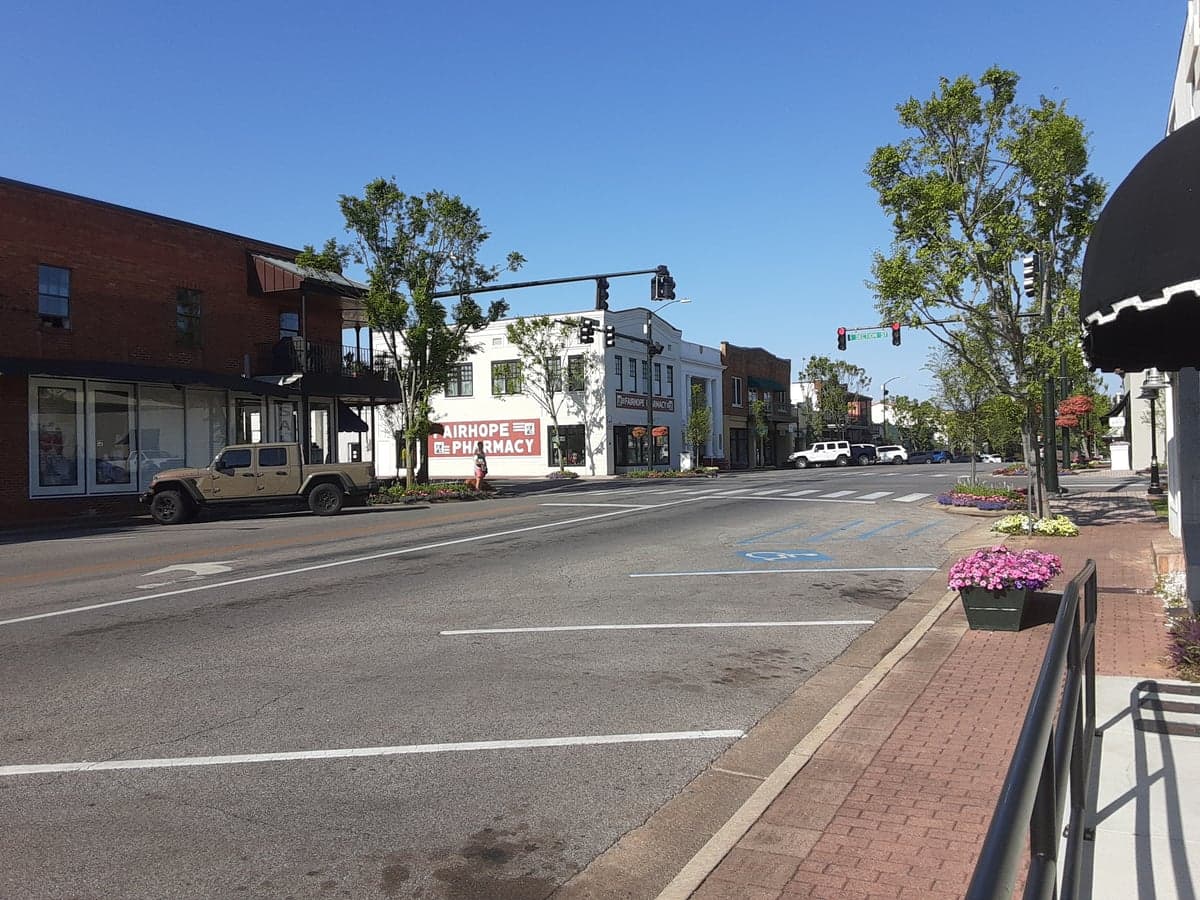
Photo: Wikipedia
Political ClimatePolitical Climate in Fairhope, AL
District shown is the primary district for this city’s centroid. Cities may span multiple districts.
Local Political AnalysisPolitical Analysis of Fairhope, AL
Fairhope, Alabama, has long been a stronghold of conservative values, and that hasn’t changed much over the years. The area’s Cook Partisan Voting Index (PVI) of R+27 tells you everything you need to know: this is deep-red territory, and folks here take their personal freedoms and limited government seriously. While the rest of the country has seen some wild swings, Fairhope has stayed pretty steady, though you can feel a subtle shift if you’ve been around long enough—especially with new folks moving in from places like California or Chicago, bringing ideas that don’t always sit well with the old guard.
How it compares
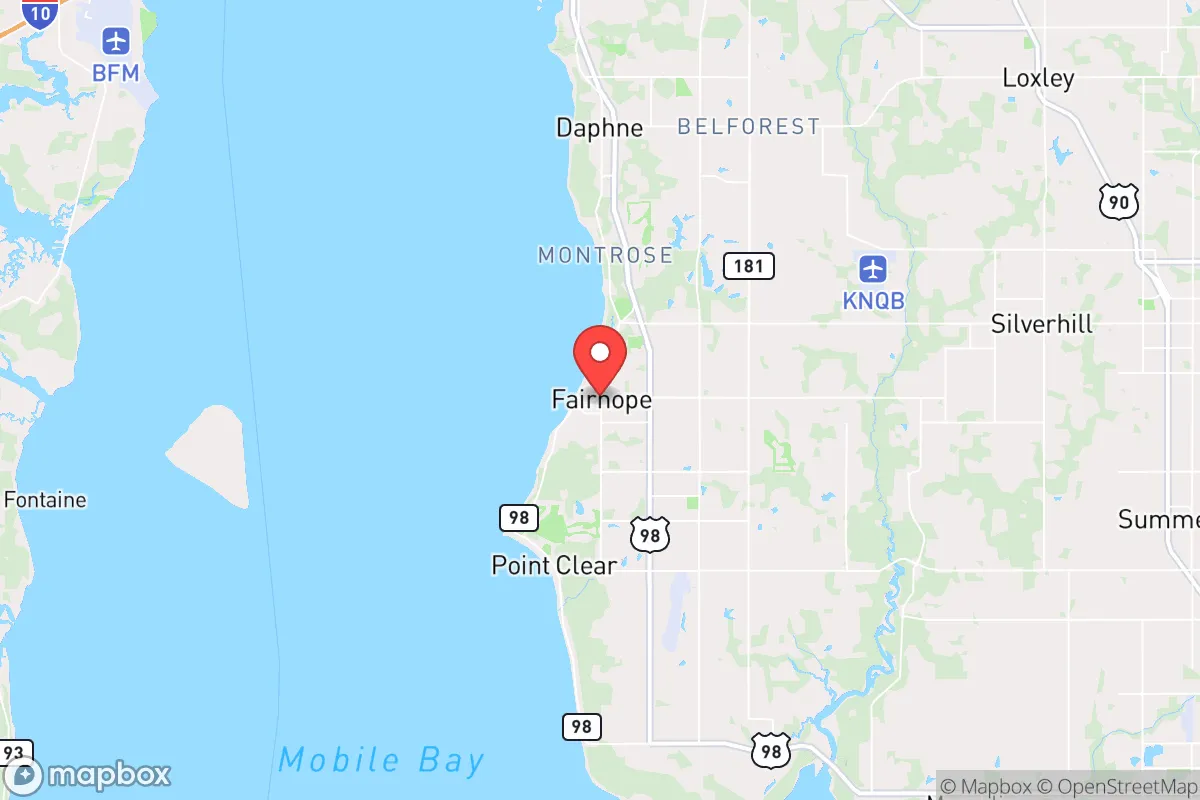
If you drive just a few miles north to Mobile, you’ll notice a different vibe—Mobile County leans more purple, with a PVI of R+16, and the city itself has a more mixed political scene, especially in local elections. Head east across the bay to Daphne or Spanish Fort, and you’ll find similar conservative leanings, but Fairhope is the real heart of it. Baldwin County as a whole is solidly red, but Fairhope stands out as the cultural and political anchor. Places like Gulf Shores and Orange Beach are more tourist-driven, so their politics are a bit more laid-back, but Fairhope’s residents are the ones showing up to school board meetings and city council sessions, keeping an eye on any overreach. The contrast is sharpest when you look at Montgomery or Birmingham—those areas are light-years away in terms of ideology, and Fairhope folks tend to see them as cautionary tales of what happens when government gets too big.
What this means for residents
For the people living here, the political climate means a lot of day-to-day freedoms that are getting harder to find elsewhere. You won’t see heavy-handed mandates or intrusive regulations in Fairhope—at least not yet. The local government tends to stay out of your business, whether it’s about how you run your small business, what you teach your kids, or how you use your property. That said, there’s a growing concern among long-time residents about the slow creep of progressive ideas, especially in the schools and local planning boards. Some worry that as the area grows, outsiders might push for more zoning restrictions, higher taxes, or even policies that limit personal choice. For now, though, most folks feel like they can live their lives without the government breathing down their necks, and that’s a big reason why people move here in the first place.
Cultural and policy distinctions
One thing that sets Fairhope apart is its strong sense of community and self-reliance. You won’t find a lot of hand-wringing over national politics here—people are more focused on local issues like keeping the downtown area vibrant, maintaining good schools, and making sure the city doesn’t get overrun with overpriced condos and chain stores. There’s a real pride in the town’s history as a utopian socialist experiment that quickly turned into a bastion of individualism—ironic, but true. Policy-wise, Fairhope has kept property taxes low and resisted the kind of development that would require big government projects. The biggest red flag for locals is any talk of “equity” or “inclusion” initiatives that could lead to quotas or mandates. Most residents would rather see the city stay focused on practical stuff like roads and public safety, not social engineering. If you’re looking for a place where you can breathe easy and not worry about the government meddling in your life, Fairhope is still one of the best bets in the South—but keep an eye on those city council meetings, because the fight to keep it that way is ongoing.

State Political ClimatePolitical Climate in Alabama
State Political AnalysisPolitical Environment in the State
Alabama is a deeply red state, with Republicans holding every statewide elected office and supermajorities in both legislative chambers, but the real story is how that conservatism has hardened and shifted over the past two decades. The state voted for Donald Trump by 25 points in 2024, up from 14 points in 2016, as the rural and suburban base consolidated while the few remaining Democratic strongholds shrank. The dominant coalition is a mix of traditional Southern conservatives, evangelical Christians, and a growing number of transplants from blue states seeking lower taxes and fewer regulations, but the political energy is now driven by a more assertive, liberty-minded wing that is pushing the state further right on everything from gun rights to education.
Urban vs. rural divide
The political map of Alabama is stark: the rural Black Belt and the northern hill counties are the only remaining Democratic territory, while the rest of the state is solidly Republican. Jefferson County (Birmingham) is the largest Democratic stronghold, delivering about 60% of its vote to Democrats, but its influence is diluted by the surrounding suburbs of Hoover and Vestavia Hills, which vote 65-70% Republican. Montgomery and Mobile are also Democratic-leaning, but their margins are shrinking as white flight and suburban growth accelerate. The real engine of the state’s conservatism is the Huntsville metro area, which has become a Republican powerhouse thanks to an influx of defense contractors and tech workers who are culturally conservative but fiscally libertarian. Auburn and Opelika in Lee County are another fast-growing Republican hub, driven by the university and a wave of retirees from the Northeast. The rural counties like DeKalb and Marshall in the northeast are among the most conservative in the nation, regularly voting 80%+ Republican, while the Black Belt counties like Greene and Lowndes vote 70%+ Democratic but have shrinking populations. The divide is not just partisan but cultural: the rural areas are deeply skeptical of federal authority, while the suburbs are more focused on school choice and property rights.
Policy environment
Alabama’s policy environment is aggressively conservative, with a low tax burden and minimal regulation that appeals to those fleeing high-cost states. The state has no state-level property tax (only local rates, averaging about 0.4% of home value), a flat income tax of 5%, and a sales tax that can reach 10% in some cities. The regulatory posture is business-friendly, with right-to-work laws and weak unions, but the real action is in education and social policy. The Alabama Accountability Act of 2013 created a robust school choice program through tax credits for private school scholarships, and the School Choice and Student Opportunity Act of 2024 expanded Education Savings Accounts to nearly all families, making Alabama one of the most school-choice-friendly states in the South. On healthcare, the state has not expanded Medicaid, keeping the system lean and private-sector-driven, though this leaves rural hospitals struggling. Election laws are strict: voter ID is required, early voting is limited to absentee ballots with an excuse, and the state purges inactive voters regularly. The Alabama Human Life Protection Act of 2019 bans nearly all abortions, with no exceptions for rape or incest, reflecting the state’s strong evangelical influence. The legislature also passed a transgender sports ban in 2021 and a ban on gender-affirming care for minors in 2022, both of which have been upheld in court.
Trajectory & freedom
Alabama is becoming more free in the areas of gun rights, parental rights, and economic liberty, but less free in terms of social conformity and government intervention in private medical decisions. The Alabama Firearms Freedom Act of 2024 expanded permitless carry to all adults, and the state has preempted local gun ordinances, meaning Birmingham and Mobile cannot enact their own restrictions. The Parental Rights Protection Act of 2022 gave parents the right to opt their children out of any curriculum they find objectionable, and the Don’t Say Gay-style law passed in 2023 restricts classroom discussion of sexual orientation and gender identity. On medical autonomy, the state’s strict abortion ban and ban on gender-affirming care for minors represent a significant contraction of personal liberty, but these are popular with the conservative base. Property rights are strong: the state has no statewide zoning, and the Private Property Protection Act of 2020 limited eminent domain for economic development. Taxation is trending downward: the legislature cut the income tax from 5% to 4% in 2025, with a trigger for further cuts if revenue growth exceeds inflation. The trajectory is toward a more libertarian-leaning conservatism, but with a strong social conservative overlay that limits personal freedom in areas like reproductive health and LGBTQ+ expression.
Civil unrest & political movements
Alabama has seen relatively little civil unrest compared to other states, but there are active political movements on both sides that a new resident would notice. The Yellowhammer Fund and other abortion-rights groups have staged protests in Montgomery and Birmingham since the Dobbs decision, but they are small and often outnumbered by counter-protesters from groups like Alabama Citizens for Life. The Alabama Freedom Riders movement, a left-wing coalition focused on voting rights and criminal justice reform, has held marches in Selma and Montgomery, but these are largely symbolic. On the right, the Alabama Sovereignty Commission (a revived version of a 1960s-era group) has pushed for nullification of federal gun laws and immigration enforcement, though it has no official power. Immigration politics are relatively quiet because Alabama has a small foreign-born population (about 3.5%), but the Beason-Hammon Alabama Taxpayer and Citizen Protection Act of 2011, which targeted undocumented immigrants, remains on the books and is occasionally enforced. Election integrity controversies flared in 2020 and 2022, with the state GOP passing a law requiring hand-counting of absentee ballots in some counties, but there have been no major protests or violence. The most visible flashpoint is the Confederate monument debate: Birmingham removed its monument in 2020, leading to a state law (the Alabama Memorial Preservation Act) that fines cities for removing historical monuments, and this remains a live issue in local politics.
Projection
Over the next 5-10 years, Alabama will likely become even more conservative, driven by two demographic trends: the continued growth of the Huntsville and Auburn metros, which attract conservative-leaning transplants, and the ongoing depopulation of the Black Belt, which reduces the Democratic base. The state’s population is projected to grow by about 5% by 2035, with nearly all of that growth in the northern and eastern suburbs. This will shift the political center of gravity further toward the Huntsville model: fiscally conservative, pro-business, and culturally traditional but not as socially rigid as the rural areas. The legislature will likely pass further tax cuts, expand school choice, and tighten election laws. The biggest wildcard is the federal courts: the state’s abortion ban and transgender care ban are being challenged, and if they are struck down, the legislature will likely pass even stricter versions. A new resident moving in now should expect a state that is stable, predictable, and increasingly aligned with the priorities of the national conservative movement, but with a distinct Southern flavor that values local control and distrusts federal authority.
For someone considering a move to Alabama, the bottom line is this: you will find a state that respects your right to keep and bear arms, choose your child’s school, and keep more of your paycheck, but you will also find a government that is deeply involved in your personal medical decisions and social life. The trade-off is clear: economic and educational freedom in exchange for social conformity. If that trade-off works for you, Alabama offers a stable, affordable, and increasingly prosperous environment where your values are the mainstream. Just know that the political climate is not passive—it is actively being shaped by a confident, assertive conservative movement that shows no signs of slowing down.
* Values derived from national, state, county, city and local statistics and may differ in a specific area. Last updated: 2026-04-19T18:49:55.000Z
Narrative content on this page is AI-generated and may contain mistakes. Verify any details that matter before acting on them.
ReloMaps may earn a commission from affiliate links at no extra cost to you.

