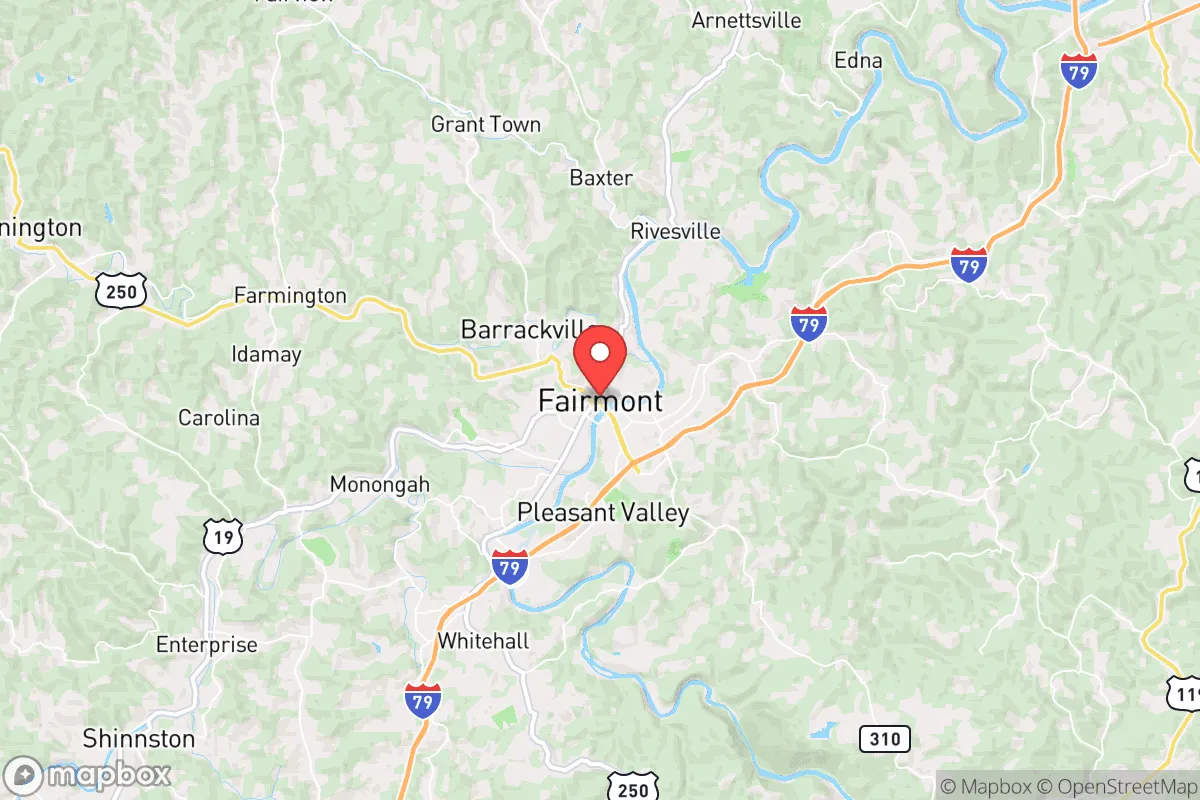
Photo: Wikipedia
Quality of Life in Fairmont, WV
A high quality of life with strong walkability, manageable living costs, healthy neighborhood signals, and solid amenity access.
What does Quality of Life tell us?
Quality of Life blends cost of living, nearby amenities, socioeconomic signals, and neighborhood character. City-level scores represent the whole municipality; individual neighborhoods can differ.
What does this tell us?
Quality of Life blends cost of living, nearby amenities, socioeconomic signals, and neighborhood character. City-level scores represent the whole municipality; individual neighborhoods can differ.
Cost of Living
31% below national average
The Real Cost of Living in Fairmont, WV for 2026
| Tier | Individual | Family (4) |
|---|---|---|
| Survival | $14k | $27k |
| Comfortable | $31k | $45k |
| Luxury | $89k+ | $138k+ |
| Elite (Top 5%) | $105k+ | $162k+ |
134%
The Area Signal
A metric tracking the socioeconomic signals of the area.


Hobbies
Explore the areaGroceries
2 within 10 miles
Gas
17 within 10 miles
Hospital
10 within 20 miles
Airport
Pittsburgh International Airport
Post Office
USPS — Fairmont, WV
Critical Amenities
Quality-of-Life Analysis
Fairmont, West Virginia, offers a notably affordable quality of life that attracts a mix of working professionals, retirees, and families seeking a lower cost of living without sacrificing access to outdoor recreation and small-city amenities. With a cost of living index of 69—31% below the U.S. average—the area’s median home value of $159,100 and median rent of $902 make it one of the most budget-friendly communities in the North Central West Virginia region. The typical resident enjoys a short average commute of just over 21 minutes, a figure that underscores the area’s manageable scale and proximity to employment hubs like Morgantown and Clarksburg.
Cost of living, housing affordability, and how Fairmont compares to nearby cities
Fairmont’s housing market is a primary draw: the median home value of $159,100 is roughly half the national median, while the median rent of $902 is well below the U.S. average of about $1,200. This affordability extends to utilities, groceries, and transportation, all of which are priced below national norms. Compared to Morgantown, just 15 miles north, Fairmont offers significantly cheaper real estate—Morgantown’s median home value hovers around $220,000—while still being within commuting distance of West Virginia University and the area’s largest employers, including WVU Medicine and Mylan Pharmaceuticals. The average commute of 21.4 minutes is shorter than the national average (26 minutes) and reflects the ease of navigating Fairmont’s road network, including I-79 and U.S. Route 250. For renters, the $902 median rent is about 30% lower than Morgantown’s median, making Fairmont a practical choice for those who work in the larger city but want to stretch their housing dollar further.
Local amenities, schools, and the daily rhythm of life in Fairmont
Daily life in Fairmont centers on a walkable downtown with historic architecture, local eateries like the popular Joe’s Pizza & Grill, and community events such as the annual Fairmont Chocolate Festival. The Marion County School system serves the area, with East Fairmont High School and Fairmont Senior High School both offering career-technical programs and dual-credit courses through Pierpont Community & Technical College. For outdoor recreation, residents have quick access to the Monongahela River Trail, a paved path popular for walking and cycling, and nearby Prickett’s Fort State Park, which provides hiking and historical interpretation. The city’s small size—roughly 18,000 residents—means most errands can be completed within a 10-minute drive, and the absence of heavy traffic contributes to a relaxed pace. Healthcare needs are met by WVU Medicine Fairmont Medical Center, a 90-bed facility, while specialized care is available in Morgantown. The area’s low crime rate relative to national averages further supports a family-friendly atmosphere, though residents note that retail and dining options are more limited than in larger metro areas.
Fairmont is best suited for those who prioritize affordability and a slower, community-oriented lifestyle over urban excitement. Retirees on fixed incomes, remote workers seeking a low-cost base, and families who value short commutes and access to nature will find the area particularly appealing. The combination of a cost of living index of 69, a median home value under $160,000, and a commute under 22 minutes creates a compelling value proposition for anyone willing to trade big-city amenities for financial breathing room and a tight-knit community feel.

Crime in Fairmont, WV
Crime rates similar to the national median for U.S. locations.
Violent CrimeViolent Crime Analysis
Property CrimeProperty Crime Analysis
Crime Analysis
Fairmont, West Virginia, reports a violent crime rate of 395 incidents per 100,000 residents and a property crime rate of 1,196 per 100,000, placing it above national averages for both categories. These figures indicate that while Fairmont is not among the most dangerous cities in the state, residents face a notably higher risk of crime compared to the typical U.S. community. The city's proximity to the larger Morgantown metro area introduces additional dynamics, as regional crime patterns and justice system policies can influence local safety conditions.
Crime in context
Fairmont's violent crime rate of 395 per 100,000 is roughly 13% higher than the national average of approximately 350 per 100,000 and significantly exceeds West Virginia's statewide average of about 320 per 100,000. Property crime in Fairmont, at 1,196 per 100,000, is about 20% above the national average of roughly 1,000 per 100,000 and well above the West Virginia state average of approximately 900 per 100,000. These comparisons place Fairmont in a higher-risk tier for both violent offenses—such as assault, robbery, and homicide—and property crimes like burglary, theft, and motor vehicle theft. The elevated rates suggest systemic factors, including socioeconomic conditions and policing strategies, that differ from the broader state and national trends.
What residents experience
For Fairmont residents, the elevated crime rates translate into tangible daily concerns. Violent crime, while less frequent than property crime, poses a real threat, with incidents concentrated in specific areas and times. Property crime is the more pervasive issue, affecting neighborhoods through vehicle break-ins, home burglaries, and theft from porches or yards. Residents often report feeling the need for heightened vigilance, such as securing vehicles and homes more rigorously than in lower-crime communities. The presence of progressive judicial philosophies in nearby larger metro areas, particularly in Morgantown and surrounding counties, is a factor that local observers note may contribute to recidivism and a revolving-door justice system. When district attorneys and judges prioritize rehabilitation over accountability, it can result in more offenders returning to the streets sooner, undermining public safety and victim justice. This ideological approach, while well-intentioned, directly impacts Fairmont by potentially increasing the pool of active criminals in the region.
Neighborhood-level variation in Fairmont is notable. Areas closer to the downtown core and along major corridors like U.S. Route 19 and West Virginia Route 310 tend to report higher crime densities, particularly for property offenses. In contrast, residential neighborhoods on the city's outskirts, such as those near East Fairmont High School or along the Monongahela River, generally experience lower crime rates. Prospective residents should research specific blocks and consult local police department crime maps, as safety can vary significantly within a few blocks. The city's overall safety profile is one of moderate concern, with property crime being the primary risk and violent crime a less common but serious threat, all influenced by broader regional justice policies.
* Values derived from national, state, county, city and local statistics and may differ in a specific area. Last updated: 2026-04-23T06:06:23.000Z
Narrative content on this page is AI-generated and may contain mistakes. Verify any details that matter before acting on them.
ReloMaps may earn a commission from affiliate links at no extra cost to you.

