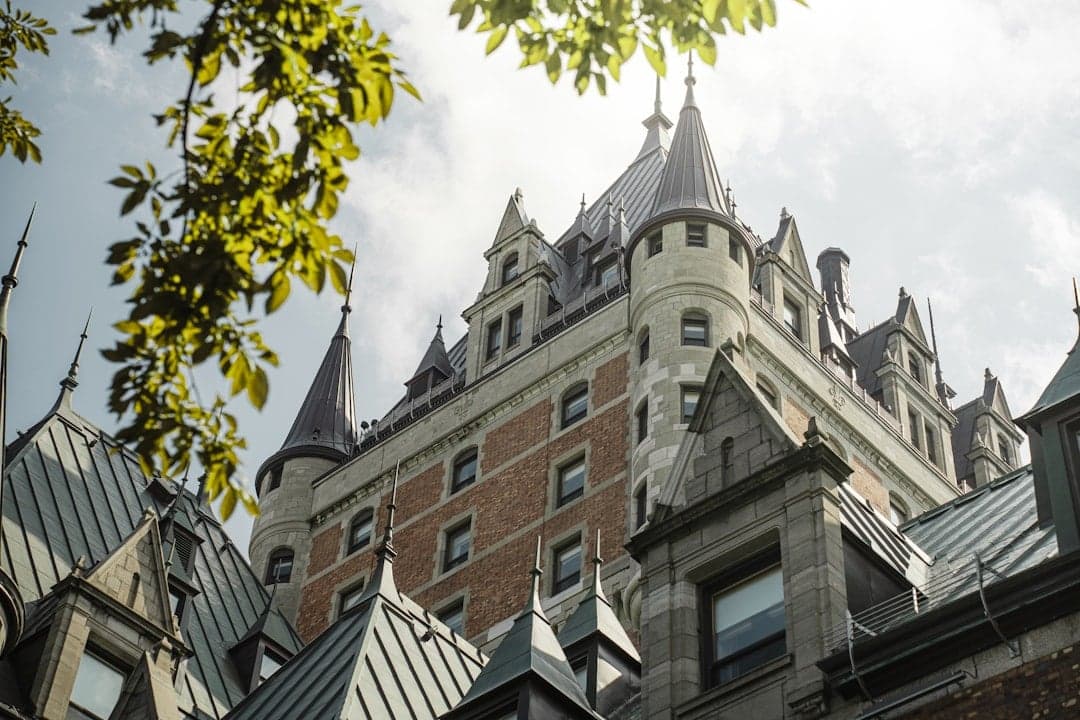
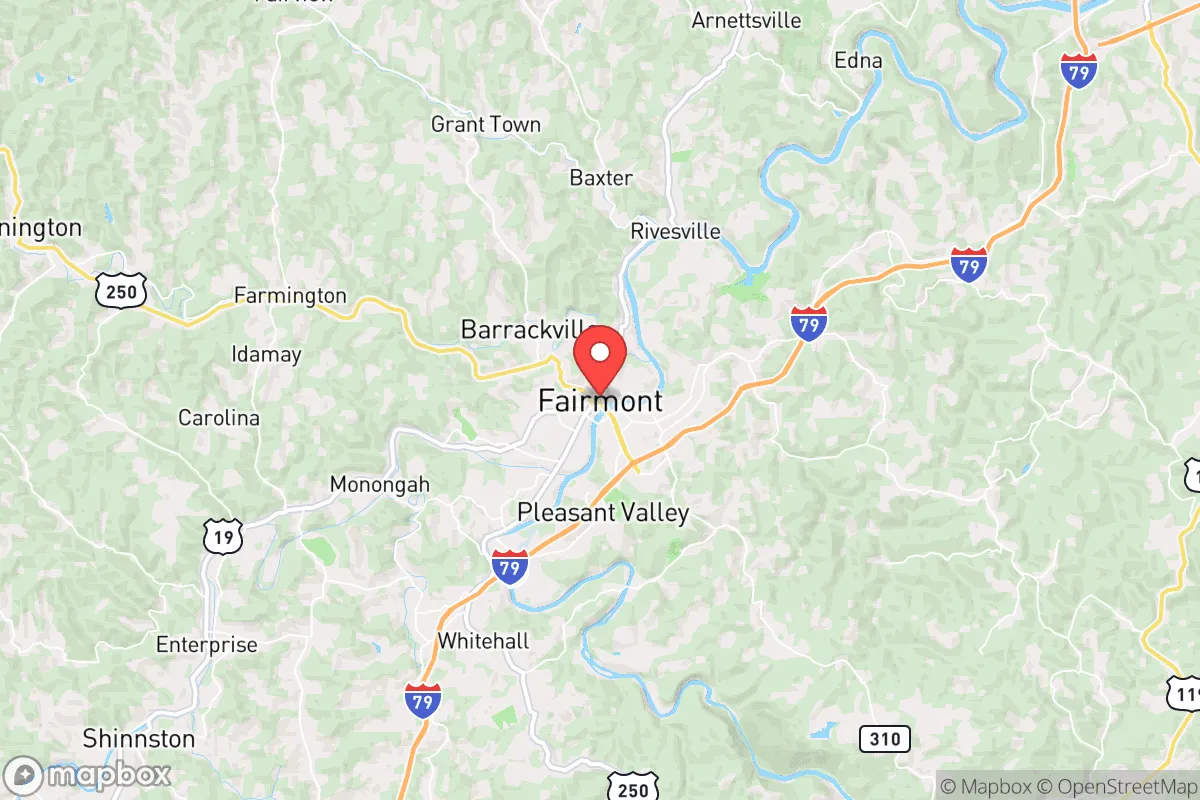
Photo: Wikipedia
Demographics of Fairmont, WV
Affluence Level in Fairmont, WV
A below-average socioeconomic profile. Incomes, home values, and educational attainment trail the U.S., with higher poverty and unemployment.
People of Fairmont, WV
The people of Fairmont, West Virginia, today number 18,303, forming a predominantly white (85.0%) and native-born community with a notably small foreign-born population of just 1.0%. The city’s character is rooted in its industrial past and Appalachian identity, with a college-educated rate of 31.1% that reflects the presence of Fairmont State University. Distinctive markers include a tight-knit, family-oriented social fabric and a population density that feels more small-town than urban, with neighborhoods that still echo the ethnic enclaves of the 19th and early 20th centuries.
How the city was settled and grew
Fairmont’s human history begins with European settlement in the late 18th century, when the Booths and other families from Virginia and Pennsylvania claimed land along the Monongahela River. The city’s real growth came after the discovery of the Pittsburgh coal seam in the 1840s, which drew waves of immigrants to work the mines and build the railroads. The first major wave was Irish immigrants, who settled in the East Side neighborhood near the coal tipples and rail yards, building St. Peter the Fisherman Catholic Church as their anchor. By the 1880s, Italian immigrants arrived, many from southern Italy, and concentrated in Italian Hill (also known as the “Pleasant Valley” area), where they worked as miners and laborers and established a strong Catholic parish life. A smaller wave of Eastern European immigrants, including Poles and Slovaks, settled in the Watson neighborhood, near the glass factories and foundries that diversified the local economy. These groups, along with native-born Appalachian migrants from surrounding counties, formed a working-class, ethnically European population that peaked around 19,000 in the 1950s.
Modern era (post-1965)
After the 1965 Hart-Cellar Act, Fairmont saw little new immigration due to the decline of coal and manufacturing. The foreign-born share today is just 1.0%, one of the lowest in any West Virginia city. Instead, the post-1965 period was defined by domestic out-migration: as coal jobs vanished, many younger residents left for larger cities, and the population fell from a peak of roughly 28,000 in 1960 to 18,303 today. The Black population, historically small but present since the early 1900s (working in domestic service and the mines), grew slightly to 6.2% as some African American families moved into the North Fairmont area and the Greenwood neighborhood, though these remain modest enclaves. The Hispanic share (2.0%) and East/Southeast Asian share (0.5%) are negligible, with no Indian subcontinent population recorded. The most notable demographic shift has been the aging of the white population: many long-time residents remain in historic neighborhoods like East Side and Italian Hill, while younger families have gravitated toward newer subdivisions on the city’s western edge, such as White Hall (technically a separate town but functionally a bedroom community). Suburbanization has been limited, as the city’s compact layout and lack of major highway expansion kept most growth within existing boundaries.
The future
Fairmont’s population is likely to continue its slow decline, with projections suggesting a drop to around 16,000 by 2040 if current trends hold. The city is homogenizing rather than tribalizing: the white share remains dominant, and the small Black and Hispanic populations are not growing rapidly enough to create distinct new ethnic enclaves. The East/Southeast Asian community (0.5%) is concentrated among faculty and staff at Fairmont State University and is unlikely to expand significantly without a major employer shift. The foreign-born share may rise slightly if the university recruits more international students, but it will remain below 3% for the foreseeable future. The biggest wildcard is the potential for remote-worker migration from the Washington, D.C., and Pittsburgh metros, which could bring younger, more diverse residents to neighborhoods like Watson and East Side, where historic housing stock is affordable. However, this trend is nascent and has not yet reversed population loss.
For someone moving in now, Fairmont is becoming a quieter, older, and more culturally uniform place than it was a generation ago. The city offers stability and low cost of living, but its demographic future points toward continued contraction unless new economic drivers attract younger families or immigrants. The historic ethnic neighborhoods remain as cultural landmarks rather than active enclaves, and the community’s identity is increasingly defined by its Appalachian heritage and university presence rather than by diversity or growth.

* Values derived from national, state, county, city and local statistics and may differ in a specific area. Last updated: 2026-04-23T06:06:23.000Z
Narrative content on this page is AI-generated and may contain mistakes. Verify any details that matter before acting on them.
ReloMaps may earn a commission from affiliate links at no extra cost to you.

