Photo: Wikipedia
Political ClimatePolitical Climate in Fairmont, WV
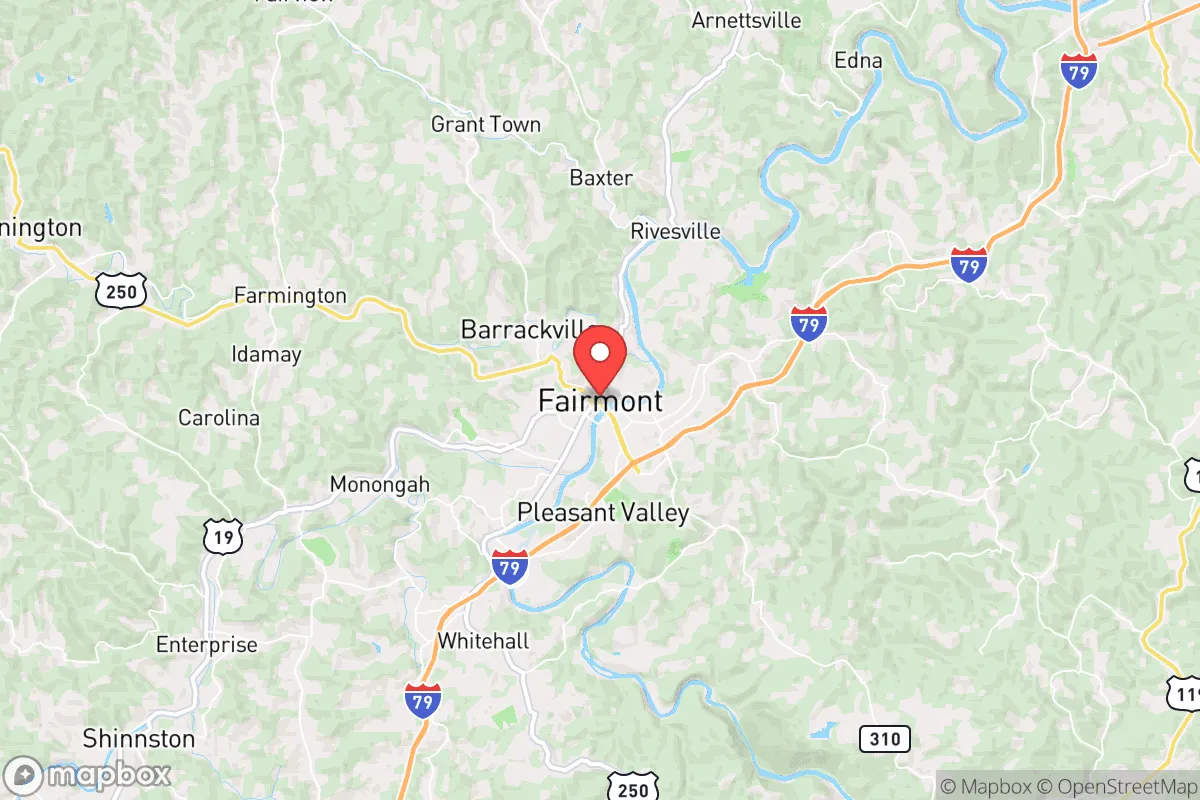
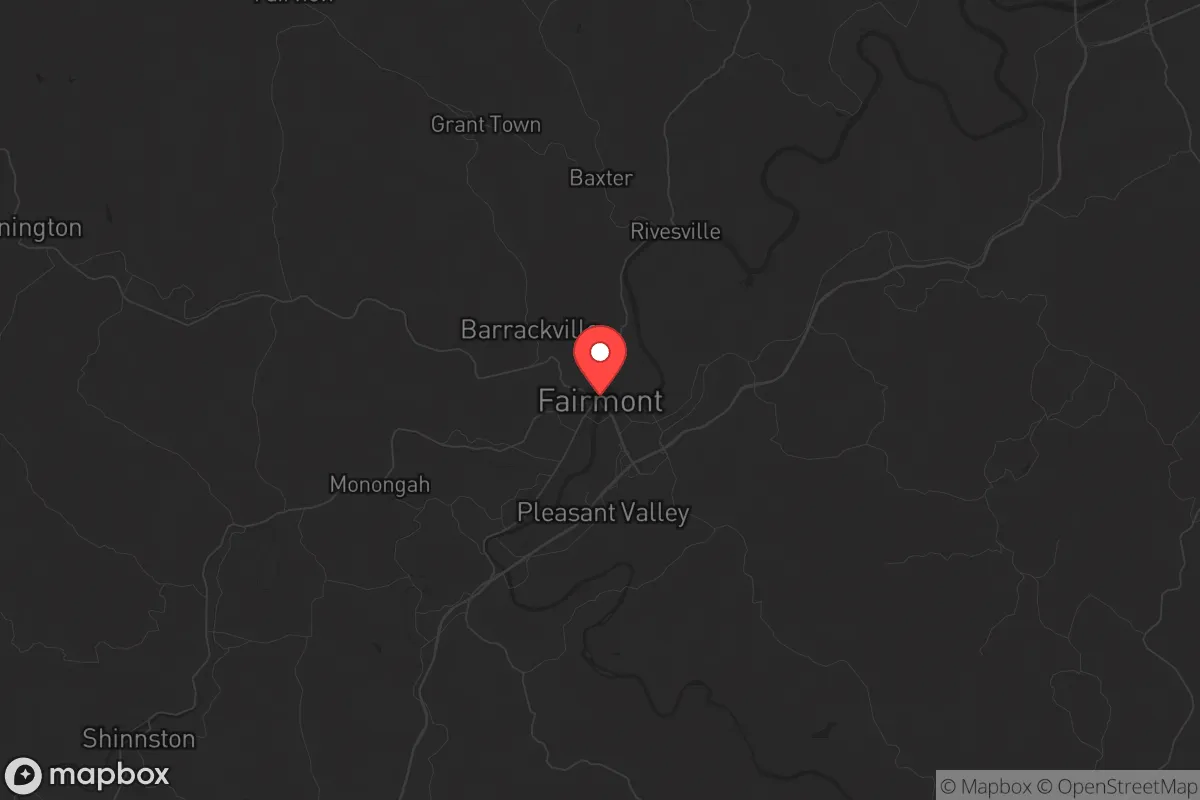
District shown is the primary district for this city’s centroid. Cities may span multiple districts.
Local Political AnalysisPolitical Analysis of Fairmont, WV
Fairmont, West Virginia, sits solidly in the red, with a Cook PVI of R+20, meaning it votes about 20 points more Republican than the national average. That’s not just a number—it’s a reflection of a community that’s long valued local control, self-reliance, and a healthy skepticism of government overreach. While the surrounding Marion County has historically been a union stronghold with Democratic roots, the shift here has been real and lasting, especially since the 2000s. You’ll still find plenty of folks who remember when their parents voted straight-ticket Democrat, but today, the conversation is almost always about protecting personal freedoms and pushing back against mandates that feel like they come from a thousand miles away.
How it compares
Drive 20 miles south to Morgantown, home of West Virginia University, and you’ll feel the difference immediately. That town leans more moderate, with a younger, more transient population that’s pulled the county toward the center in recent elections. Fairmont, by contrast, is older, more rooted, and far more consistent in its conservative voting patterns. Head north to Clarksburg, and you’ll find a similar vibe—R+ territory, but with a bit more of a working-class Democratic hangover from the coal and glass plant days. Fairmont’s advantage is its stability: it doesn’t swing wildly, and it doesn’t get caught up in the culture-war noise that dominates coastal politics. The real contrast, though, is with the state’s eastern panhandle, where D.C. commuters have started to shift things left. Here in north-central West Virginia, that’s not a concern—yet.
What this means for residents
For folks living here, the political climate means a government that mostly stays out of your way. You’re not going to see heavy-handed zoning rules or aggressive tax hikes that squeeze small businesses. The local school board and city council tend to focus on practical stuff—road repairs, water lines, keeping the police funded—rather than social experiments. That said, there’s a growing unease about state-level moves that feel like overreach, like when the governor’s office tried to mandate vaccine passports or when the legislature flirts with property tax increases to fund pet projects. Residents here watch those moves closely, because once the government gets a taste of your paycheck or your medical choices, it’s hard to get that freedom back. The long-term worry is that as younger people leave for jobs elsewhere, the tax base shrinks, and the state gets more desperate for revenue—which could lead to more intrusion into daily life.
Culturally, Fairmont is still a place where the Second Amendment is a given, not a debate, and where the phrase “my body, my choice” applies to medical decisions and vaccine mandates, not just abortion. You’ll see Trump flags on pickup trucks and “Don’t Tread on Me” stickers on toolboxes. The local churches are full, and the community rallies around high school football and the annual Three Rivers Festival. There’s a quiet pride in being left alone—no one’s knocking on your door to check your carbon footprint or your pronouns. The biggest policy distinction here is the strong resistance to any form of statewide mask or vaccine mandates, which were met with open defiance during the pandemic. That spirit isn’t going anywhere, but the challenge ahead is keeping it alive as the state’s economy struggles and outside money tries to reshape the region. If you value a place where your vote actually counts and your voice isn’t drowned out by a coastal agenda, Fairmont’s still that kind of town—for now.

State Political ClimatePolitical Climate in West Virginia
State Political AnalysisPolitical Environment in the State
West Virginia has been one of the most reliably Republican states in the nation for over two decades, with a partisan lean that has only deepened since the 2000s. The state voted for Donald Trump by nearly 39 points in 2020 and by a similar margin in 2024, making it the second-most Republican state in the country after Wyoming. This wasn't always the case—West Virginia was a Democratic stronghold for much of the 20th century, but a combination of cultural shifts, coal industry politics, and national party realignment has flipped it decisively red. Today, the dominant coalition is a mix of rural conservatives, working-class voters who abandoned the national Democratic Party over energy and cultural issues, and a growing number of out-of-state transplants seeking lower taxes and fewer regulations.
Urban vs. rural divide
The political map of West Virginia is starkly divided between a handful of small urban centers and the vast rural expanse. The state's largest city, Charleston, is a Democratic-leaning island in a sea of red, with Kanawha County typically voting about 10-15 points more Democratic than the state average. Morgantown, home to West Virginia University, is another blue dot, driven by the academic and student population—Monongalia County went for Joe Biden in 2020 by a slim margin, a rarity in the state. Huntington and Wheeling are more competitive but still lean Republican overall, while Martinsburg in the Eastern Panhandle has seen rapid growth from Washington D.C. exurbs, bringing a mix of conservative and moderate voters. The rural counties—like Mingo, Logan, and McDowell in the south, and Tucker and Pendleton in the east—routinely deliver 75-80% of their votes to Republican candidates. The divide isn't just about population density; it's about economic dependence on coal and natural gas, which has made energy policy a defining issue. The urban centers, with their service economies and universities, are more moderate, but they lack the population to shift the statewide balance.
Policy environment
West Virginia's policy environment is among the most conservative in the nation, and it's been trending that way for years. The state has no personal income tax on most wages—a flat 4.12% rate was phased down from a progressive structure, and in 2023, the legislature passed a bill to cut it further, aiming for elimination by 2026. Property taxes are low, with no state-level property tax and local rates capped by the state constitution. The regulatory posture is business-friendly, with a right-to-work law passed in 2016 and a tort reform system that caps non-economic damages in medical malpractice cases at $500,000. On education, the state has a robust school choice movement: the 2021 Hope Scholarship program provides up to $4,600 per student for private school or homeschooling expenses, and it's been expanded since. Healthcare is a mixed bag—West Virginia expanded Medicaid under the Affordable Care Act, which was a rare bipartisan move, but the state also passed a law in 2023 banning gender-affirming care for minors and restricting abortion to the first eight weeks, with no exceptions for rape or incest. Election laws are strict: voter ID is required, early voting is limited to 10 days, and absentee voting requires an excuse. The state also passed a law in 2022 creating a new election security unit within the Secretary of State's office, which has been praised by conservatives for its focus on ballot integrity.
Trajectory & freedom
West Virginia is becoming more free in several key areas, particularly fiscal and gun policy, but there are concerning trends in medical autonomy and education. On the positive side, the state passed constitutional carry in 2016, allowing concealed carry without a permit, and in 2023, it expanded stand-your-ground protections. The 2021 Hope Scholarship program is a major win for parental rights, giving families control over their children's education. The state also passed a law in 2023 banning COVID-19 vaccine mandates by private employers, a direct response to federal overreach. However, there are red flags. The 2023 abortion ban is a significant restriction on medical autonomy, and while it aligns with conservative values, it's a clear expansion of government power over healthcare decisions. The state also passed a law in 2022 allowing pharmacists to refuse to dispense medications for moral or religious reasons, which some see as a protection of conscience rights but others view as a limit on access. On property rights, West Virginia has a strong tradition of mineral rights protection, but the state's reliance on natural gas extraction has led to controversies over forced pooling, where landowners can be compelled to lease their mineral rights if a majority of neighbors agree. This is a gray area that libertarians and property rights advocates watch closely.
Civil unrest & political movements
West Virginia has a history of labor activism, but in recent years, political movements have been dominated by conservative and populist energy. The 2018 teachers' strike was a rare moment of cross-party unity, with educators from both red and blue counties walking out over pay and benefits—it was the largest labor action in the state's history and resulted in a 5% pay raise. Since then, the state has seen a rise in Second Amendment activism, with groups like the West Virginia Citizens Defense League holding regular rallies at the state capitol. Immigration politics are less visible here than in border states, but the Eastern Panhandle has seen an influx of Hispanic workers in agriculture and construction, leading to some local tensions in Jefferson County. There is no sanctuary city policy anywhere in the state; in fact, the legislature passed a law in 2023 requiring local law enforcement to cooperate with federal immigration authorities. Election integrity remains a hot topic: after the 2020 election, the state conducted a forensic audit of its voting machines, which found no irregularities, but the issue still animates conservative activists. There have been no major secession or nullification movements, though some rural counties have floated the idea of joining neighboring states like Virginia or Maryland over frustration with state-level policies—but these are fringe proposals with no real traction.
Projection
Over the next 5-10 years, West Virginia is likely to become even more conservative, driven by two trends: out-migration of younger, more moderate residents and in-migration of retirees and remote workers from high-tax states like New York and California. The Eastern Panhandle, particularly Berkeley County and Jefferson County, is growing fast as D.C. exurbanites seek lower costs and more space—these newcomers tend to be moderate to conservative, but they bring different cultural expectations that could create friction with the older, more traditional population. The state's population is aging and shrinking overall, which means the political power of rural counties will only increase relative to the urban centers. Expect further tax cuts, possibly full elimination of the income tax, and continued expansion of school choice. The abortion ban is unlikely to be rolled back, and medical freedom issues—like vaccine mandates and gender-affirming care—will remain flashpoints. The biggest wildcard is the energy transition: as coal declines, the state's economy will need to diversify, and that could shift political priorities. But for now, the trajectory is clear: West Virginia is doubling down on its conservative identity, and anyone moving here should expect a state that values low taxes, gun rights, and local control above almost everything else.
For a new resident, the bottom line is straightforward: West Virginia offers a high degree of personal freedom in most areas, especially fiscal and gun policy, but it comes with trade-offs. The state's healthcare system is weak, with limited access to specialists and rural hospital closures. The education system ranks near the bottom nationally, though the Hope Scholarship gives families an escape hatch. And while the political climate is overwhelmingly conservative, the state's small size means that local politics can feel intensely personal—your county commission and school board decisions will have a direct impact on your daily life. If you value low taxes, strong gun rights, and a community that shares your cultural values, West Virginia is a solid bet. Just be prepared for a slower pace of life, limited amenities, and a state that is still grappling with the legacy of its industrial past.
* Values derived from national, state, county, city and local statistics and may differ in a specific area. Last updated: 2026-04-23T06:06:23.000Z
Narrative content on this page is AI-generated and may contain mistakes. Verify any details that matter before acting on them.
ReloMaps may earn a commission from affiliate links at no extra cost to you.

