
Photo: Wikipedia
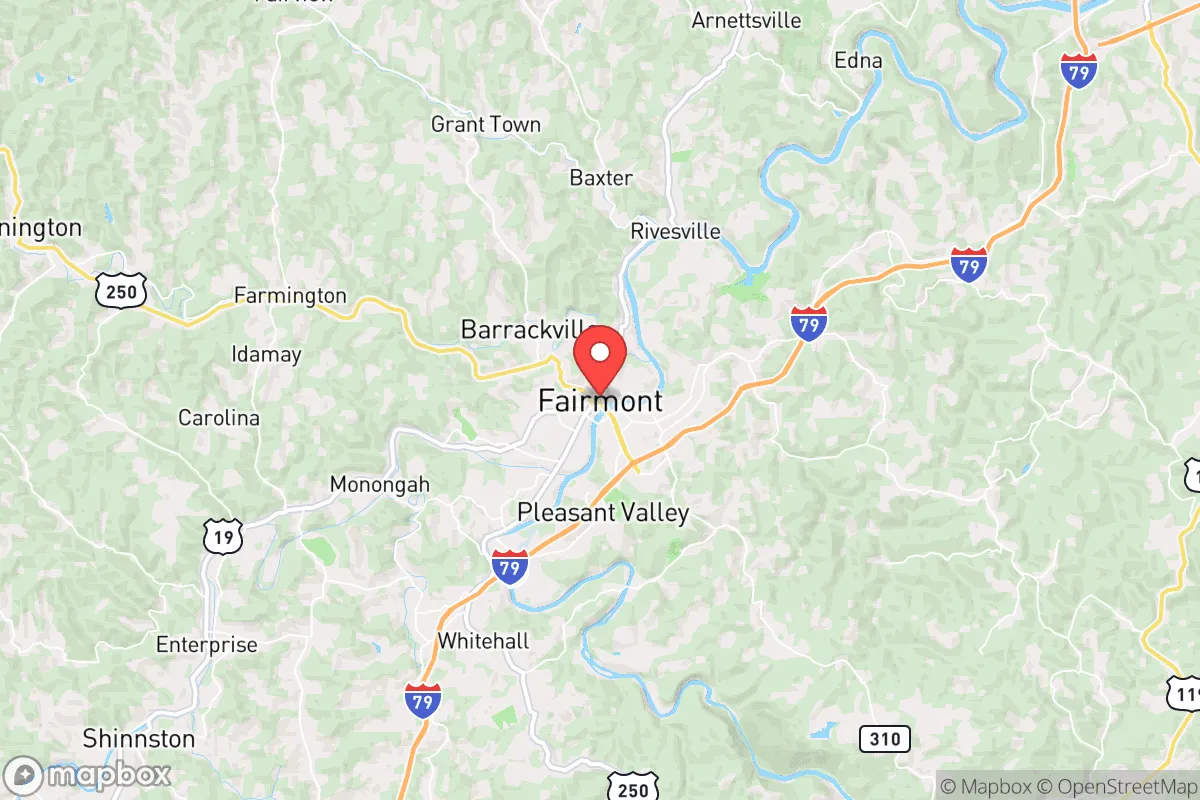
Strategic Assessment of Fairmont, WV
Meaningful friction. Expect exposure to either population pressure, blast zones, or natural disaster risk. Consider buying a retreat property.
What does the Strategic Assessment tell us?
Our Strategic Assessment grades tactical survivability of an area. Major population centers, military targets, fallout zones, natural disasters, and border exposure all drive risk — lower exposure means a more defensible position in a crisis.
This is heavily inspired by Joel Skousen's Strategic Relocation book. Highly recommended you checkout the book ($)What does this tell us?
Our Strategic Assessment grades tactical survivability of an area. Major population centers, military targets, fallout zones, natural disasters, and border exposure all drive risk — lower exposure means a more defensible position in a crisis.
This is heavily inspired by Joel Skousen's Strategic Relocation book. Highly recommended you checkout the book ($)Strategic Pillars

Key Distances
Regional Safe Places
Below is our recommended "safe zones" in West Virginia and the surrounding area based on our strategic heuristics. For most people, it's unrealistic to live in a “safe zone” full-time due to work, family or other personal reasons. They tend to be more rural. However, many of these areas are perfect for second homes and retreat properties that double as a vacation home or even a short-term rental.
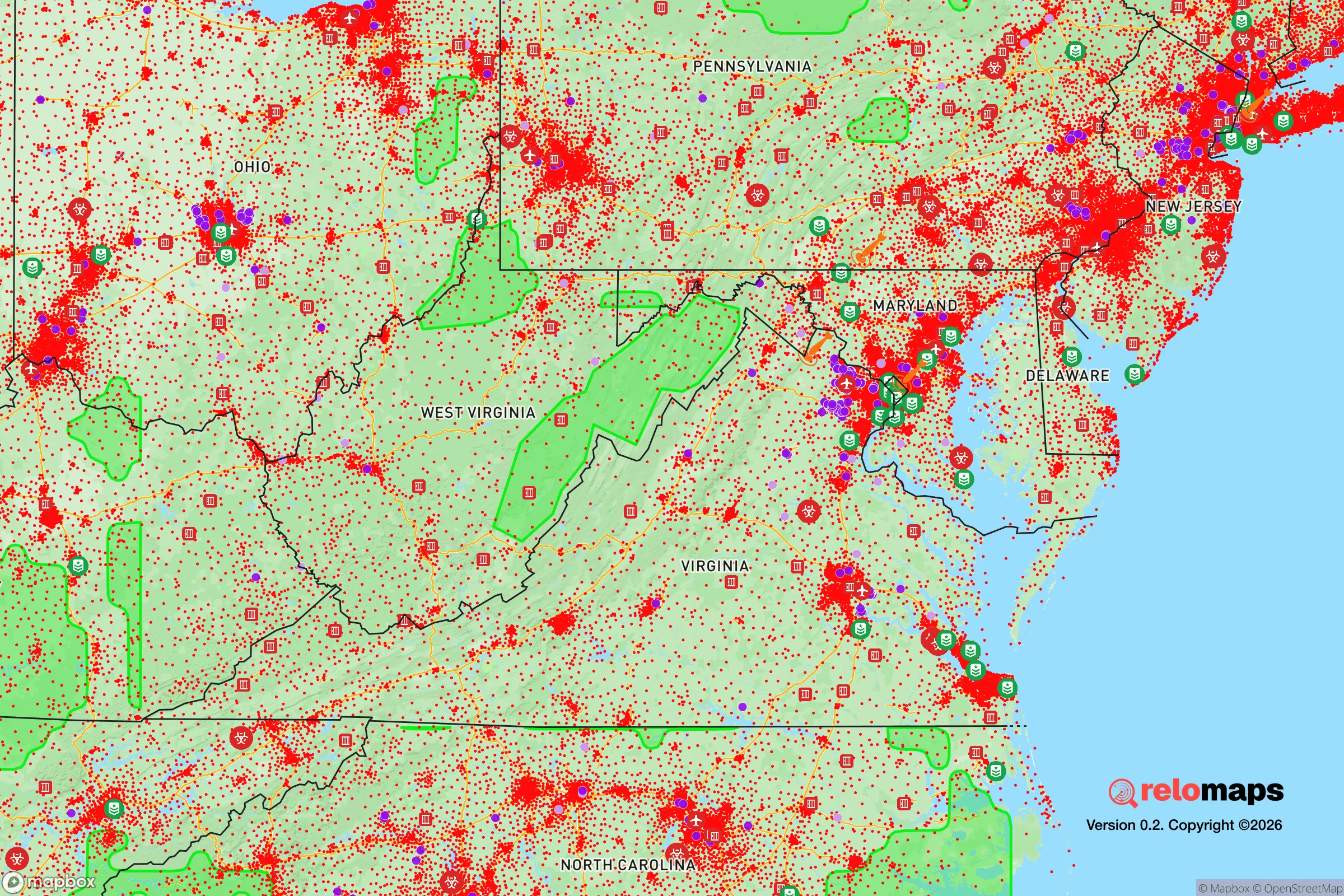
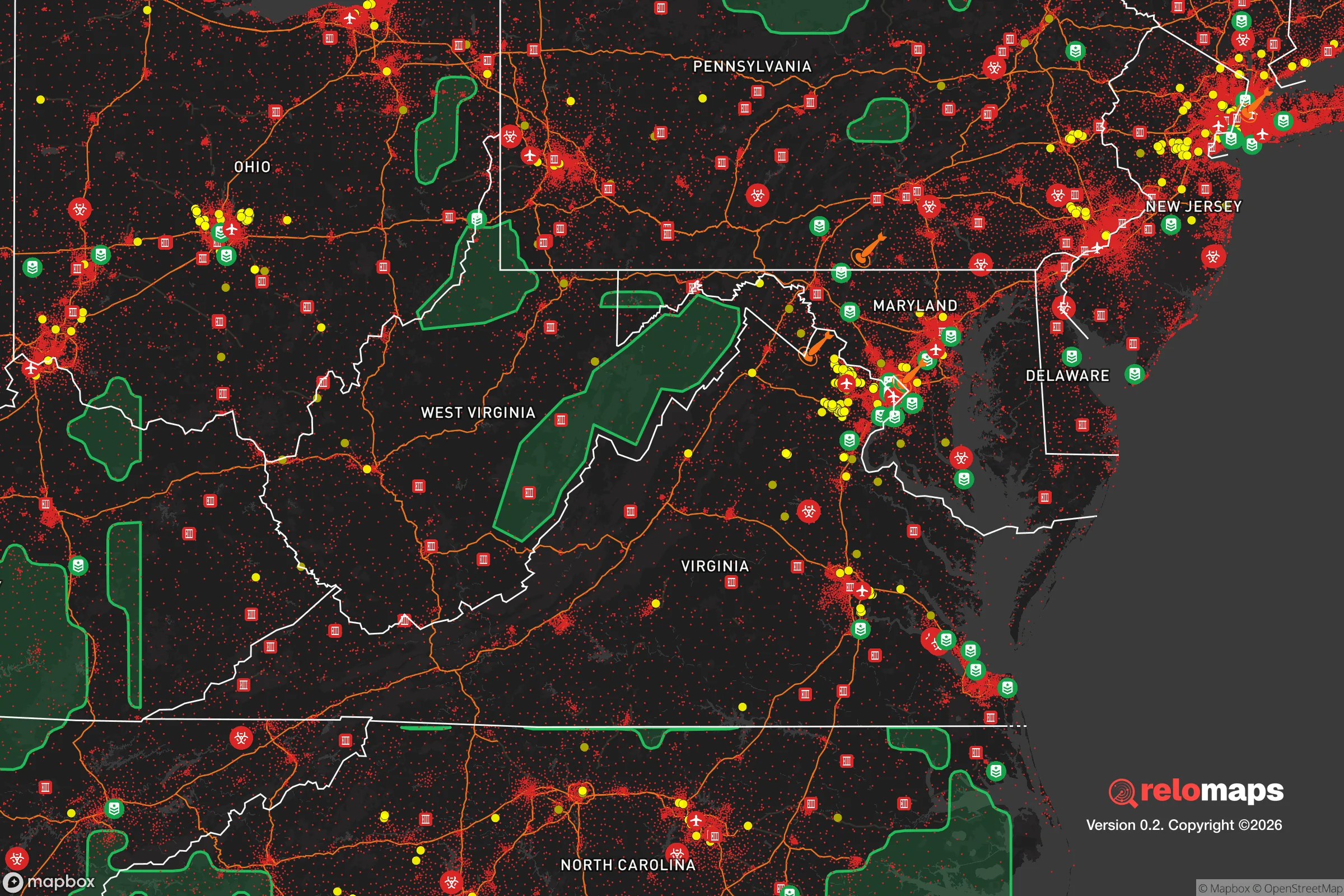


Important Note: For informational purposes only. This does not mean nothing bad ever happens in the green zones. Please use common sense. This is based on public data and modeled with AI. We tried to take a conservative approach but mistakes happen. We update this regularly as new information becomes available.
Solar Generator Recommendations
Backup power matters more here than in safer locations. We've picked three solar generators across budgets and capacity tiers — start with the budget unit if you only need a few essentials, or step up if you want to run a fridge and HVAC for days at a time.

Jackery Portable Power Station Explorer 300
Budget OptionPower on the Go: Weighing only 11 lbs, it's convenient to set up and store with book-sized foldable solar panels

BLUETTI Portable Power Station AC180
Designed for both indoor and outdoor scenarios, AC180 is highly capable as it has a robost capacity and continuous output power.

EF ECOFLOW DELTA Pro Ultra Power Station
Upgraded PickEcoFlow DELTA Pro Ultra is a whole-home energy system designed to grow with your family. Integrated with the Smart Home Panel 2, it scales to meet your evolving energy needs — keeping your home powered, intelligent, and secure through every stage of life.
We earn a commission, at no additional cost to you.
Strategic Assessment Analysis
Fairmont, West Virginia, offers a compelling strategic position for those prioritizing resilience, sitting in a geographic pocket that balances rural seclusion with practical access to critical infrastructure. The city itself is small—roughly 18,000 residents—but its location in Marion County places it within a day’s drive of over half the U.S. population, yet far enough from major metropolitan targets to reduce exposure to initial fallout from a large-scale event. For a relocator with a survivalist mindset, Fairmont’s advantages lie in its topography, water resources, and a community that still retains a degree of self-reliance, though it is not without risks that demand careful consideration.
Geographic position and natural advantages for long-term survival
Fairmont sits in the Tygart Valley, surrounded by the rolling hills of the Appalachian Plateau, which provides natural defensibility and limits line-of-sight threats. The area’s elevation—around 1,000 feet—reduces flood risk compared to lower-lying river towns, though the Tygart River and its tributaries offer reliable surface water sources. The surrounding Monongahela National Forest, less than an hour east, provides a buffer zone and potential retreat area, with dense tree cover that can obscure movement and absorb fallout particles. The region’s average annual rainfall of 45 inches supports off-grid water collection and gardening, while the moderate climate—winters average 30°F, summers 75°F—reduces the energy burden for heating and cooling compared to northern states. Fairmont’s location along I-79 gives it a strategic corridor for movement north to Pittsburgh (90 miles) or south to Charleston (100 miles), but the highway itself is a double-edged sword: it enables resupply but also potential movement of displaced populations. The nearby Morgantown area (15 miles east) hosts West Virginia University, which could become a logistical hub or a target depending on the scenario, so proximity to that population center (roughly 30,000 students) is a factor to weigh.
Risks, exposures, and proximity to fallout-relevant landmarks
Fairmont’s primary risk exposure comes from its relative proximity to critical infrastructure that could become targets during a major conflict or collapse. The Morgantown Industrial Park, about 20 miles east, houses a Department of Energy facility and the National Energy Technology Laboratory, which could be a secondary target in a kinetic event. The Fort Martin Power Station, a coal-fired plant on the Monongahela River 15 miles north, is a potential grid vulnerability—if it goes down, the region could lose power for weeks. The nearby Pittsburgh metropolitan area (90 miles north) is a Tier 1 target for any adversary, and while Fairmont is outside the immediate blast radius for a conventional strike, fallout patterns from a nuclear detonation over Pittsburgh could reach the area within hours depending on wind direction. The Tygart River Dam, 10 miles upstream, is a concrete gravity dam that could be a target for sabotage or natural failure; a breach would flood low-lying areas of Fairmont within minutes. The area also sits in a moderate seismic zone—the 2011 Mineral, Virginia earthquake was felt here—but the risk of a major quake is low. For a prepper, the biggest concern is the region’s dependence on a single major highway (I-79) for evacuation and resupply; a bridge collapse or blockage could isolate the area for days.
Practical resilience for a relocator: food, water, energy, and defensibility
Fairmont’s practical resilience for a relocator is mixed but leans positive for those willing to invest in off-grid infrastructure. The water situation is strong: the Tygart River and its tributaries provide year-round flow, and the area’s groundwater is generally clean, though testing for mining-related heavy metals (e.g., selenium, arsenic) is advisable before drilling a well. The city’s municipal water comes from the Tygart River and is treated, but a grid-down scenario would require a backup plan—rainwater catchment is viable given the 45 inches of annual precipitation. Food production is feasible: the growing season runs from April to October, and the region’s acidic soil (pH 5.5–6.5) supports potatoes, beans, squash, and apples, though you’ll need to amend with lime for vegetables. Local farmers’ markets and small-scale agriculture are common, and the Marion County area has a history of subsistence farming that could be revived. Energy is a weak point: the grid is aging and prone to outages from winter storms (ice storms are common), and natural gas is the primary heating fuel. Solar potential is moderate—the area gets about 200 sunny days per year, less than the Southwest—but a 5kW system with battery storage can cover basic loads. Defensibility is good: the hilly terrain provides natural chokepoints, and the low population density (roughly 100 people per square mile in the county) reduces the risk of mass looting or civil unrest. The local culture is still rooted in hunting and firearms ownership—West Virginia has some of the most permissive gun laws in the country, with no permit required for concealed carry and no registration—so you’ll find a community that’s armed and generally self-sufficient. The nearest major medical center is WVU Medicine in Morgantown, 20 minutes away, which is a double-edged sword: it’s a resource in a medical emergency but could become overwhelmed in a mass casualty event.
The overall strategic picture for Fairmont is one of a solid B-tier relocation option for a conservative-leaning prepper. It avoids the worst risks of coastal cities and major targets, offers reliable water and defensible terrain, and sits in a state with a culture that values independence and preparedness. But it’s not a bug-out paradise: the proximity to Morgantown’s infrastructure, the single-highway dependency, and the potential for fallout from a Pittsburgh strike are real concerns that require a layered plan—think multiple water sources, a secondary retreat location in the Monongahela National Forest, and a vehicle capable of off-road travel if I-79 is blocked. For a single individual or a family willing to invest in off-grid systems and build local networks, Fairmont provides a realistic foundation for weathering the next decade’s uncertainties. The key is to arrive with a plan, not just a dream: secure a property with a well and southern solar exposure, stockpile at least three months of supplies, and get to know your neighbors before the lights go out.

* Values derived from national, state, county, city and local statistics and may differ in a specific area. Last updated: 2026-04-23T06:06:23.000Z
Narrative content on this page is AI-generated and may contain mistakes. Verify any details that matter before acting on them.
ReloMaps may earn a commission from affiliate links at no extra cost to you.

