Photo: Wikipedia
Political ClimatePolitical Climate in Falls City, NE
District shown is the primary district for this city’s centroid. Cities may span multiple districts.
Local Political AnalysisPolitical Analysis of Falls City, NE
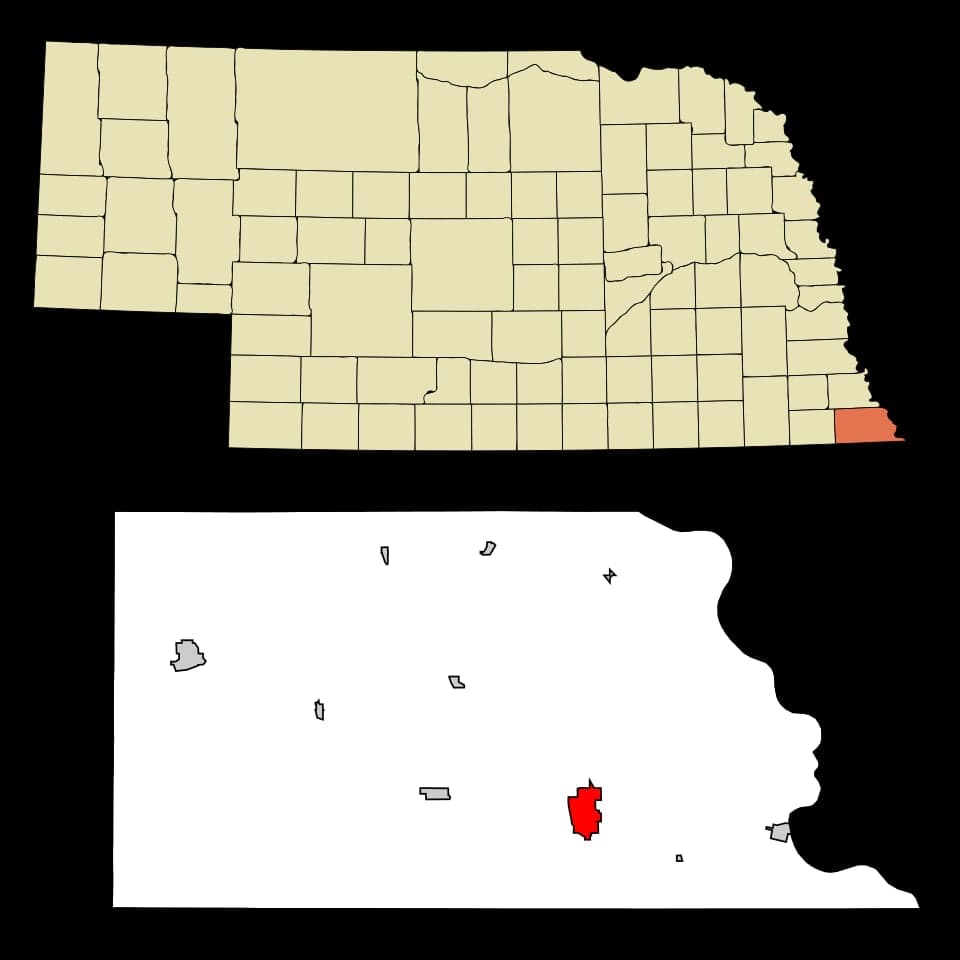
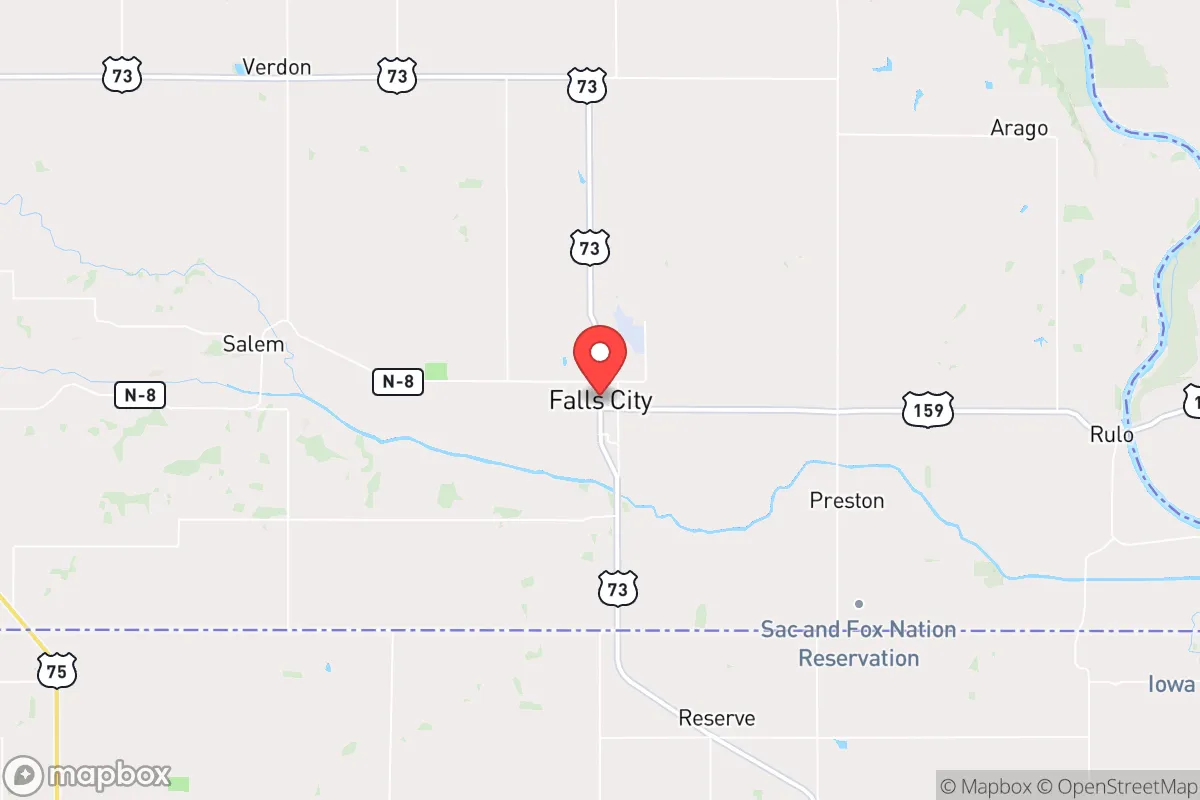
Falls City, Nebraska, is about as solidly conservative as it gets, with a Cook PVI of R+27 that puts it deep in the red column. This isn't a recent shift either—this area has been reliably Republican for generations, and the voting patterns reflect a community that values traditional principles and local control. If you look at the broader Richardson County, you'll see the same story: folks here tend to vote their conscience, and that conscience leans heavily toward limited government and personal responsibility. The trajectory hasn't budged much in the last decade, and I don't see it changing anytime soon, especially as surrounding towns like Auburn and Nebraska City also trend conservative, though not quite as strongly.
How it compares
When you stack Falls City up against other parts of Nebraska, the contrast is stark. Drive an hour and a half north to Lincoln, and you're in a completely different world—blue-leaning, with a university vibe that pushes progressive policies on everything from taxes to zoning. Even Omaha, about two hours away, feels like another country politically. But here in Falls City, the R+27 rating puts us in the same league as places like Kimball or Chadron out west. The difference is that Falls City is more of a quiet, agricultural hub, so the politics here feel less performative and more rooted in everyday life—land rights, school board decisions, and keeping government out of your business. Surrounding towns like Humboldt and Pawnee City are similar, but Falls City tends to be the most consistently conservative in the region, likely because of its strong farming and small-business base.
What this means for residents
For anyone moving here, the political climate means you can expect a government that stays out of your hair for the most part. Property taxes are a perennial gripe—Nebraska's system is complicated—but local officials are generally responsive to concerns about overreach. You won't see the kind of heavy-handed mandates or progressive social experiments that have popped up in bigger cities. That said, there's been a subtle push in recent years from state-level policies that some residents worry could erode local control, like debates over land use regulations and school funding formulas. The long-term concern is that as Nebraska's urban areas grow in influence, they might try to impose their values on rural communities like Falls City. For now, though, the culture here remains one of self-reliance: people take care of their own, and they expect the same from their elected leaders.
Culturally, Falls City stands out for its strong sense of community and its resistance to the kind of top-down changes that have reshaped other parts of the country. The annual Richardson County Fair and the local Main Street events are more than just traditions—they're a reflection of a place that values continuity over disruption. Policy-wise, you'll find a general skepticism of new taxes and a preference for voluntary solutions over government programs. If you're looking for a place where your voice matters and where the government isn't constantly trying to micromanage your life, Falls City delivers. Just don't expect any sudden shifts toward progressive ideology—this town knows what it believes, and it's not budging.

State Political ClimatePolitical Climate in Nebraska
State Political AnalysisPolitical Environment in the State
Nebraska has long been a reliably conservative state, but its political landscape is more nuanced than a simple red-state label suggests. The state has voted Republican in every presidential election since 1968, and its congressional delegation is currently a 3-0 GOP majority, but the real story is the growing divide between its two dominant population centers and the vast, deeply conservative rural expanse. Over the last 10-20 years, the state has shifted rightward on cultural and fiscal issues, even as its largest city, Omaha, has become a Democratic stronghold, creating a dynamic where state-level policy remains firmly conservative while local governance varies dramatically.
Urban vs. rural divide
The political map of Nebraska is a study in contrasts. The eastern third of the state, anchored by the Omaha metro area (Douglas and Sarpy Counties) and Lincoln (Lancaster County), is where the state’s Democratic votes are concentrated. Omaha itself is a reliably blue city, with its 2nd Congressional District being the only competitive seat in the state—it flipped to Joe Biden in 2020 and has been a perennial battleground. Lincoln, home to the University of Nebraska, leans left but is less reliably Democratic than Omaha. Meanwhile, the rest of the state is overwhelmingly Republican. The Panhandle, including cities like Scottsbluff and Chadron, votes +40 points Republican. The Sandhills region and central Nebraska, with towns like Kearney and Grand Island, are deeply red, driven by agriculture, ranching, and a strong evangelical presence. The key suburban battleground is Papillion and La Vista in Sarpy County, which have trended slightly more competitive as Omaha’s suburbs grow, but still lean Republican by double digits. The rural-urban split is stark: the 1st and 3rd Congressional Districts are safe GOP seats, while the 2nd is a toss-up that both parties pour millions into every cycle.
Policy environment
Nebraska’s state-level policy is a model of conservative governance, with a few notable exceptions. The state has no income tax on Social Security benefits and a flat state income tax rate of 5.58% (with a scheduled reduction to 5.5% by 2027). Property taxes are high—among the top 10 in the nation—but the state has a robust property tax credit program. The regulatory environment is business-friendly, with a right-to-work law and no state-level minimum wage above the federal $7.25 (though a 2022 ballot measure raised it to $15 by 2026, a rare progressive win). Education policy is a flashpoint: the state has a school choice program (the Nebraska School Choice Act of 2023) that provides tax credits for private school scholarships, but it’s been challenged in court. The state’s unique unicameral, nonpartisan legislature means bills often pass with bipartisan support, but the body is functionally conservative. Election laws are solid: voter ID is required (passed in 2023), and the state has no-excuse mail-in voting, but with strict signature verification. Healthcare is a mixed bag—Nebraska expanded Medicaid in 2020, but the state has some of the strictest abortion laws in the nation, banning the procedure after 12 weeks with limited exceptions. The state also has a “trigger law” that would ban abortion entirely if Roe v. Wade were overturned, which it was, but the 12-week ban is currently in effect.
Trajectory & freedom
On the freedom front, Nebraska is a mixed bag trending in the right direction. The state has seen a significant expansion of Second Amendment rights: in 2023, the legislature passed a permitless carry law (LB 77), allowing any law-abiding adult to carry a concealed firearm without a permit. This was a major win for gun rights advocates. On parental rights, the state passed the “Parents’ Bill of Rights” (LB 1084) in 2024, requiring schools to notify parents of any curriculum involving sexual orientation or gender identity and to obtain parental consent before any mental health screenings. This was a direct response to progressive school board policies in Omaha and Lincoln. Medical freedom took a hit with the state’s strict COVID-19 vaccine mandates for healthcare workers (upheld by the courts), but the legislature has since banned vaccine passports for private businesses. Property rights are strong, with no state-level rent control and a robust “right to farm” amendment in the state constitution. The biggest concern for conservatives is the growth of Omaha’s progressive city council, which has passed sanctuary city policies (limiting cooperation with ICE) and a “fair housing” ordinance that some argue infringes on property rights. The state legislature has pushed back with preemption bills, but the tension is real.
Civil unrest & political movements
Nebraska is not a hotbed of civil unrest, but there have been notable flashpoints. The 2020 George Floyd protests in Omaha turned violent, with looting and fires in the downtown area, leading to a heavy police response and a subsequent push for police reform that ultimately failed in the legislature. The state has seen a growing “MAGA” movement in rural areas, with regular rallies in Norfolk and Columbus, and a strong presence of the Nebraska Republican Party’s more conservative wing. Immigration politics are a major issue: the state has a large meatpacking workforce, with significant Hispanic populations in Lexington and South Sioux City. The legislature has debated several bills to crack down on sanctuary cities, but none have passed yet. Election integrity is a hot topic—the 2020 election saw no major fraud, but the state has since tightened voter ID laws and purged voter rolls. The most visible political movement is the “Nebraska for Freedom” coalition, which pushes for school choice, gun rights, and limited government. On the left, the “Nebraska Civic Engagement Table” organizes progressive voters in Omaha and Lincoln, but their influence is limited outside those cities.
Projection
Over the next 5-10 years, Nebraska is likely to remain a conservative state, but the urban-rural divide will deepen. Omaha’s 2nd District will become more competitive, possibly flipping to a permanent Democratic seat if current demographic trends hold (the city is growing faster than the rest of the state). The rural areas will continue to hemorrhage population, leading to a loss of a congressional seat after the 2030 census. The state legislature will likely pass more preemption laws to block Omaha and Lincoln’s progressive policies, particularly on immigration and housing. The biggest wildcard is the state’s tax structure: property taxes are a growing burden, and there will be pressure to shift to a consumption-based tax or cut spending. The school choice movement will continue to expand, possibly leading to a voucher program. On cultural issues, the state will likely pass a near-total abortion ban if the legislature flips further right, and gun rights will remain strong. The in-migration of conservatives from blue states (particularly California and Illinois) is already boosting rural areas, but the out-migration of young people to Omaha and Lincoln will keep the cities blue. A new resident moving in now should expect a state that is broadly conservative but with a growing progressive urban core that will require vigilance to keep in check.
For a conservative individual or family considering a move, Nebraska offers a solid foundation: low taxes (with a path to lower), strong gun rights, parental control in schools, and a business-friendly environment. The key is to choose your location carefully—stick to the suburbs of Omaha (like Elkhorn or Gretna) or the rural towns to avoid the progressive policies of the cities. The state’s trajectory is positive for freedom, but the fight over Omaha’s direction will be the defining political battle of the next decade. If you’re looking for a place where your vote still counts and your values are respected, Nebraska is a solid bet—just keep an eye on the legislature and the city councils.
* Values derived from national, state, county, city and local statistics and may differ in a specific area. Last updated: 2026-04-19T07:06:23.000Z
Narrative content on this page is AI-generated and may contain mistakes. Verify any details that matter before acting on them.
ReloMaps may earn a commission from affiliate links at no extra cost to you.

