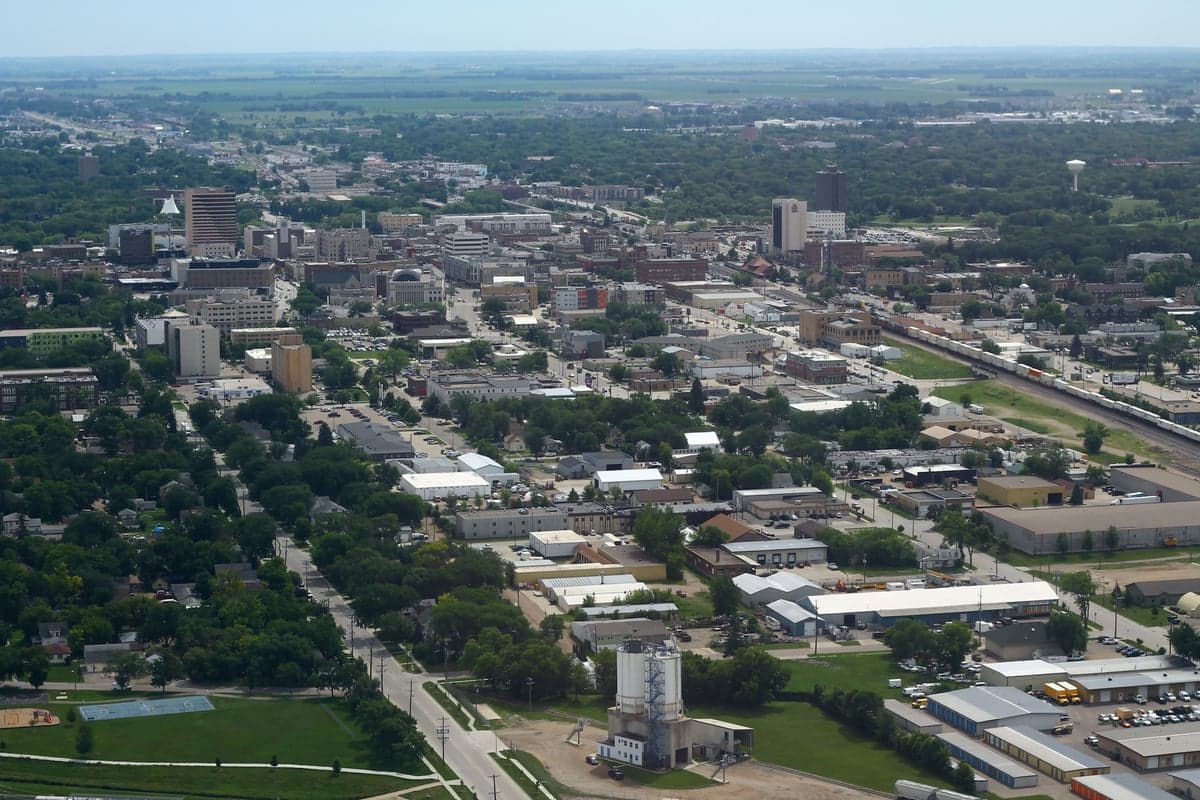
Photo: Wikipedia
Strategic Assessment of Fargo, ND
Workable tactical position. Some exposure to population density or targets, but generally defensible in a crisis.
What does the Strategic Assessment tell us?
Our Strategic Assessment grades tactical survivability of an area. Major population centers, military targets, fallout zones, natural disasters, and border exposure all drive risk — lower exposure means a more defensible position in a crisis.
This is heavily inspired by Joel Skousen's Strategic Relocation book. Highly recommended you checkout the book ($)What does this tell us?
Our Strategic Assessment grades tactical survivability of an area. Major population centers, military targets, fallout zones, natural disasters, and border exposure all drive risk — lower exposure means a more defensible position in a crisis.
This is heavily inspired by Joel Skousen's Strategic Relocation book. Highly recommended you checkout the book ($)Strategic Pillars

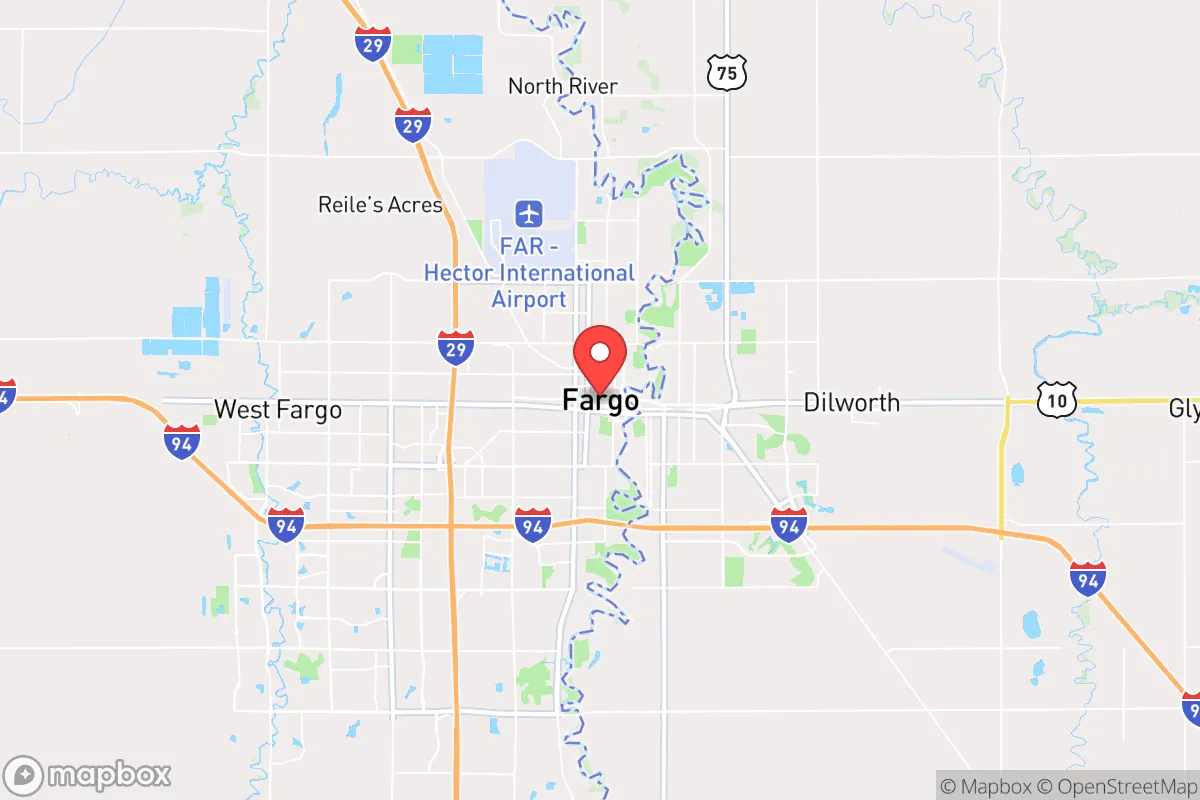
Key Distances
Regional Safe Places
Below is our recommended "safe zones" in North Dakota and the surrounding area based on our strategic heuristics. For most people, it's unrealistic to live in a “safe zone” full-time due to work, family or other personal reasons. They tend to be more rural. However, many of these areas are perfect for second homes and retreat properties that double as a vacation home or even a short-term rental.
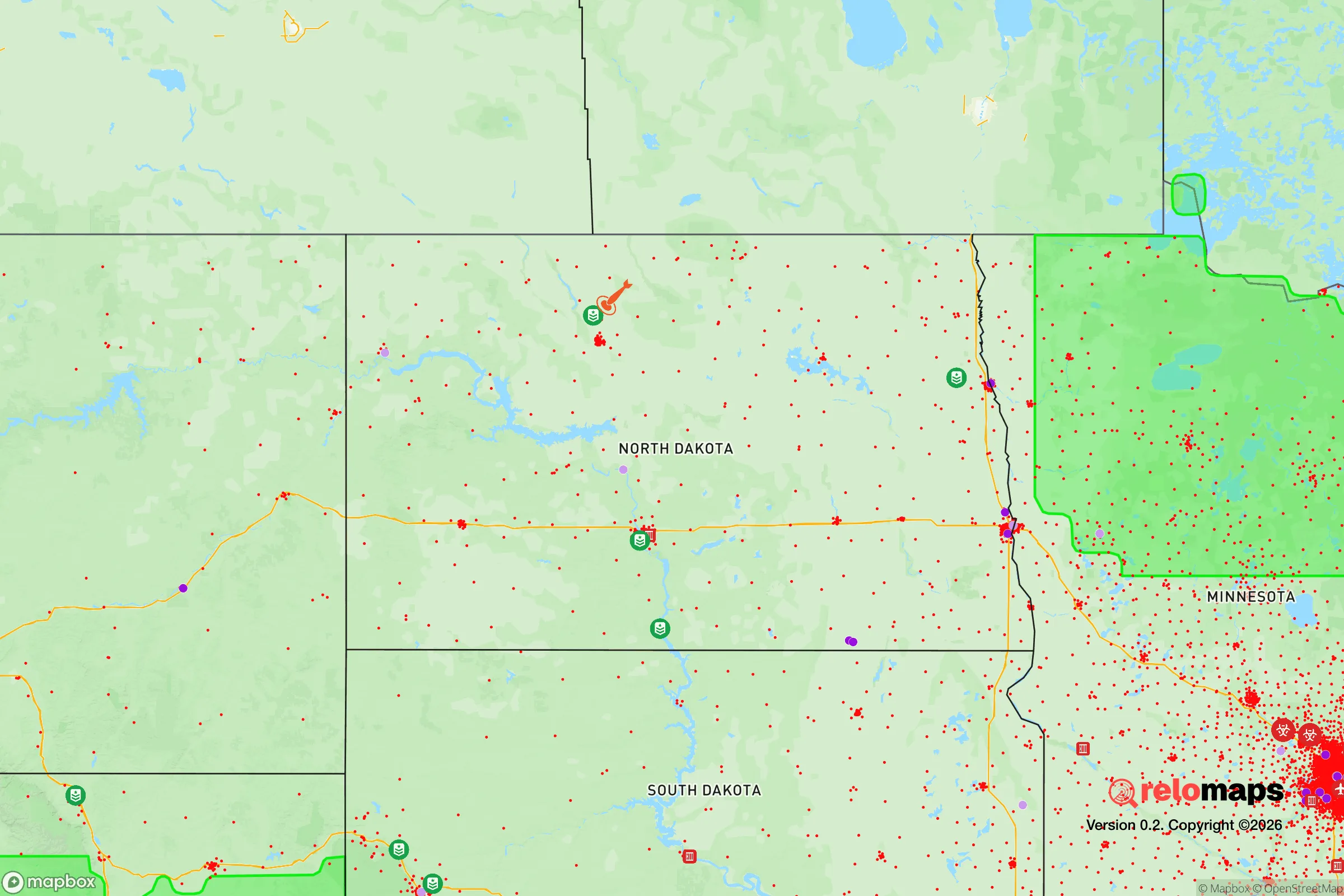
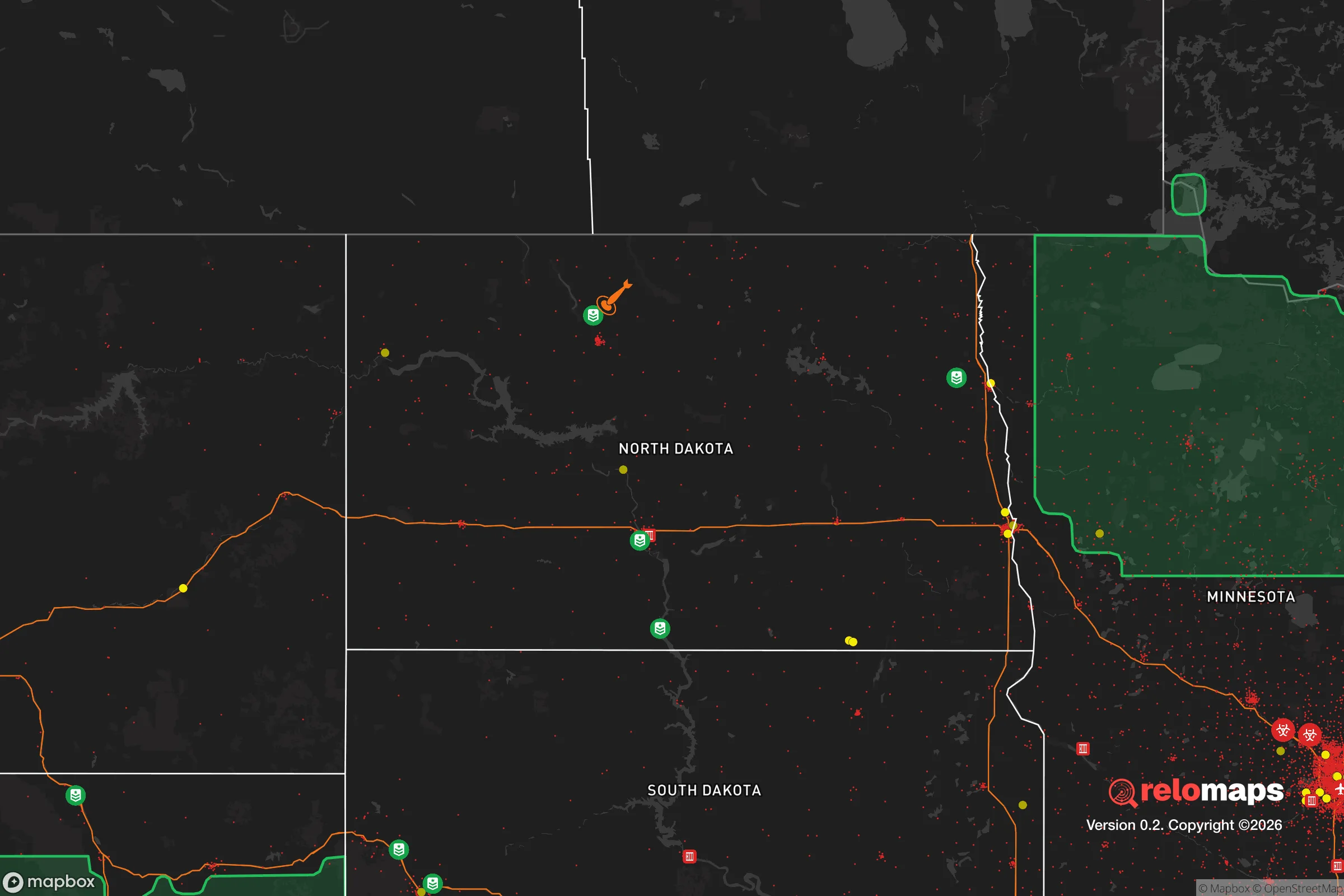


Important Note: For informational purposes only. This does not mean nothing bad ever happens in the green zones. Please use common sense. This is based on public data and modeled with AI. We tried to take a conservative approach but mistakes happen. We update this regularly as new information becomes available.
Solar Generator Recommendations
Backup power matters more here than in safer locations. We've picked three solar generators across budgets and capacity tiers — start with the budget unit if you only need a few essentials, or step up if you want to run a fridge and HVAC for days at a time.

Jackery Portable Power Station Explorer 300
Budget OptionPower on the Go: Weighing only 11 lbs, it's convenient to set up and store with book-sized foldable solar panels

BLUETTI Portable Power Station AC180
Designed for both indoor and outdoor scenarios, AC180 is highly capable as it has a robost capacity and continuous output power.

EF ECOFLOW DELTA Pro Ultra Power Station
Upgraded PickEcoFlow DELTA Pro Ultra is a whole-home energy system designed to grow with your family. Integrated with the Smart Home Panel 2, it scales to meet your evolving energy needs — keeping your home powered, intelligent, and secure through every stage of life.
We earn a commission, at no additional cost to you.
Strategic Assessment Analysis
Fargo, North Dakota, offers a compelling strategic position for those prioritizing resilience and distance from the major fault lines of American instability. Its location in the Red River Valley provides a buffer from coastal collapse, major population centers, and the most likely targets of a national-scale disruption, while still maintaining access to critical infrastructure and supply chains. For a conservative-leaning individual or family looking to weather civic unrest, economic shocks, or larger-scale disasters, Fargo represents a calculated trade-off: significant geographic security in exchange for a harsh climate and a relatively isolated, but not entirely remote, position.
Geographic position and natural advantages for long-term security
Fargo’s primary strategic asset is its location. Situated in the far eastern edge of North Dakota, it sits roughly 250 miles from Minneapolis-St. Paul, the nearest major metropolitan area and a likely flashpoint for civil unrest or supply chain disruption. This distance provides a critical buffer—far enough to avoid the immediate fallout of urban chaos, but close enough to monitor events and access regional resources if needed. The surrounding Red River Valley is flat, agricultural, and sparsely populated, offering few natural chokepoints for an adversary but also few targets of value. The area’s low population density (Cass County has roughly 200,000 people, with the metro area around 260,000) means that in a crisis, you’re not competing with millions for food, fuel, or medical care. The region’s cold winters—average January highs around 18°F—act as a natural deterrent to mass migration from warmer states, and the deep snowpack and frozen ground make large-scale movement difficult for anyone unprepared. The Missouri River system, while not directly in Fargo, provides a regional water source, and the area’s reliance on groundwater from the Dakota Aquifer offers a more resilient local supply than surface water alone.
Risks, exposures, and proximity to fallout-relevant landmarks
No location is without vulnerabilities, and Fargo has several that a prepper must account for. The most immediate is the Red River flood risk—the area experiences near-annual spring flooding, and the 2009 and 2020 events demonstrated that a major flood can overwhelm local infrastructure, isolate neighborhoods, and strain emergency services. While the city has invested heavily in flood control (dikes, diversion channels), a catastrophic 100-year flood could still cut off roads and disrupt power for days. More concerning from a strategic standpoint is Fargo’s proximity to Grand Forks Air Force Base (about 75 miles north) and the Minot Air Force Base (about 200 miles northwest), both of which house nuclear-capable assets. In a major conflict, these are high-value targets. While the probability of a direct strike on Fargo itself is low, the electromagnetic pulse (EMP) or fallout from a strike on Minot or Grand Forks could disrupt electronics and contaminate the region for weeks. Additionally, Fargo sits near the Canadian border (about 60 miles north), which in a national emergency could become a contested zone or a bottleneck for refugees. The city’s reliance on a single major highway (I-94) and one rail line for resupply is a vulnerability—if either is cut, the city’s ability to receive food, fuel, and medical supplies is severely compromised. Finally, the area’s agricultural monoculture (primarily wheat, soybeans, and corn) means that a crop failure or bioweapon targeting grain could devastate the local food supply.
Practical resilience for a relocator: food, water, energy, and defensibility
For a family or individual looking to establish a resilient homestead, Fargo offers a mixed bag. Food security is a strong point: the surrounding farmland is among the most productive in the world, and local farmers’ markets, co-ops, and CSAs are abundant. The growing season is short (roughly 120 days), but cold-hardy crops like potatoes, carrots, and cabbage store well. Hunting and fishing are viable—deer, waterfowl, and walleye are plentiful in the region—but require a significant time investment and knowledge of the land. Water security is decent: the city’s municipal water comes from the Red River and groundwater, but a well on your property is the gold standard. The water table is high in the valley, so drilling a shallow well is feasible, but you’ll need to treat for iron and hardness. Energy resilience is a challenge. The grid is reliable in normal times, but winter storms can knock out power for days. Solar is marginal due to long, dark winters; a backup generator with a large propane tank or a small wind turbine (the area is windy) is a better bet. Heating is critical—most homes use natural gas, but a wood stove or pellet stove is a wise backup. Defensibility is where Fargo falls short for a prepper. The city is flat, open, and spread out, with few natural defensive positions. A rural property outside the city limits (say, 20-30 miles out) offers better security—you can control access, maintain a low profile, and have space for a garden, livestock, and a root cellar. The local law enforcement and sheriff’s departments are professional but small; in a widespread crisis, they’ll be stretched thin. The community itself is generally conservative, self-reliant, and neighborly, which is a plus for mutual aid, but you’ll want to vet your neighbors carefully—not everyone shares the same preparedness mindset.
The overall strategic picture for Fargo is one of calculated isolation with manageable risks. It’s not a bug-out location for a weekend warrior; it’s a place to build a life that can withstand a slow-burn collapse or a regional crisis. The climate is harsh, the flood risk is real, and the proximity to military targets is a concern, but the distance from coastal chaos, the low population density, and the agricultural abundance make it a viable option for those willing to put in the work. For a conservative family seeking a place where traditional values, self-reliance, and community still hold weight, Fargo offers a solid foundation—just make sure you have a plan for the flood, the cold, and the long drive to the nearest major supply hub. It’s not a fortress, but it’s a damn sight better than most places in the lower 48.

* Values derived from national, state, county, city and local statistics and may differ in a specific area. Last updated: 2026-04-19T05:43:05.000Z
Narrative content on this page is AI-generated and may contain mistakes. Verify any details that matter before acting on them.
ReloMaps may earn a commission from affiliate links at no extra cost to you.

