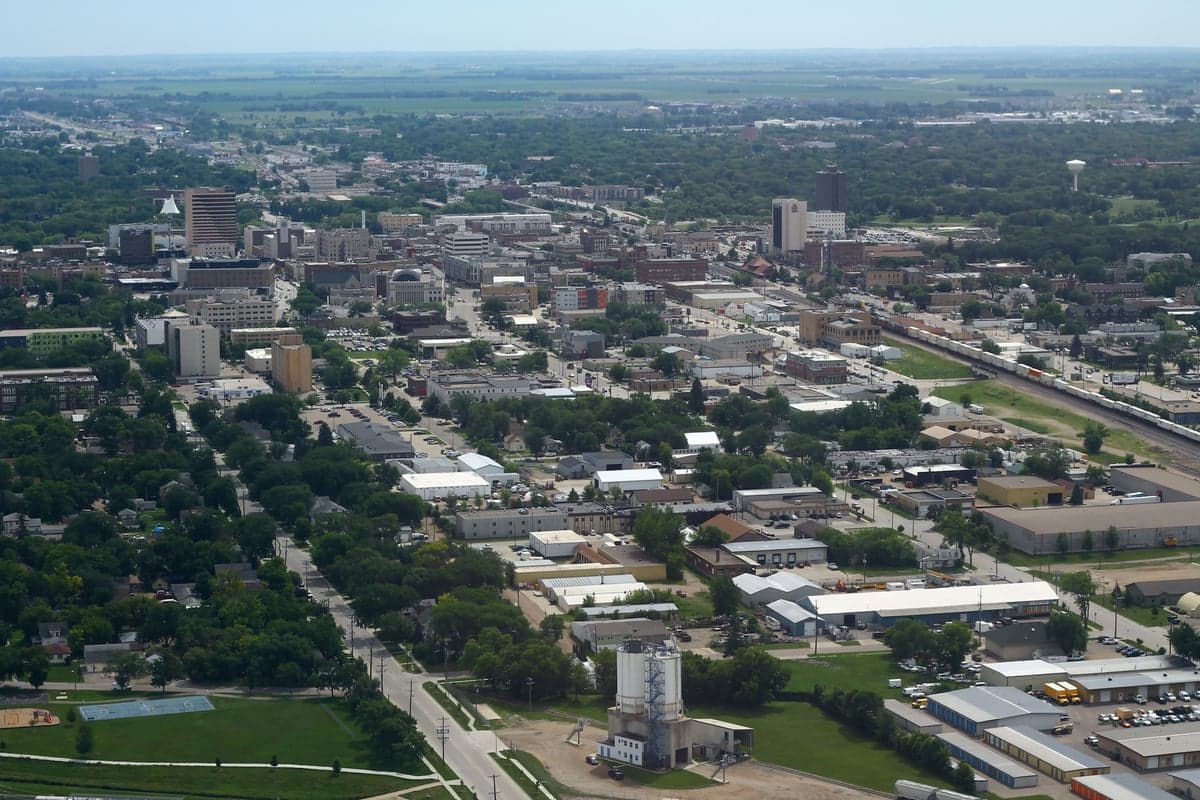
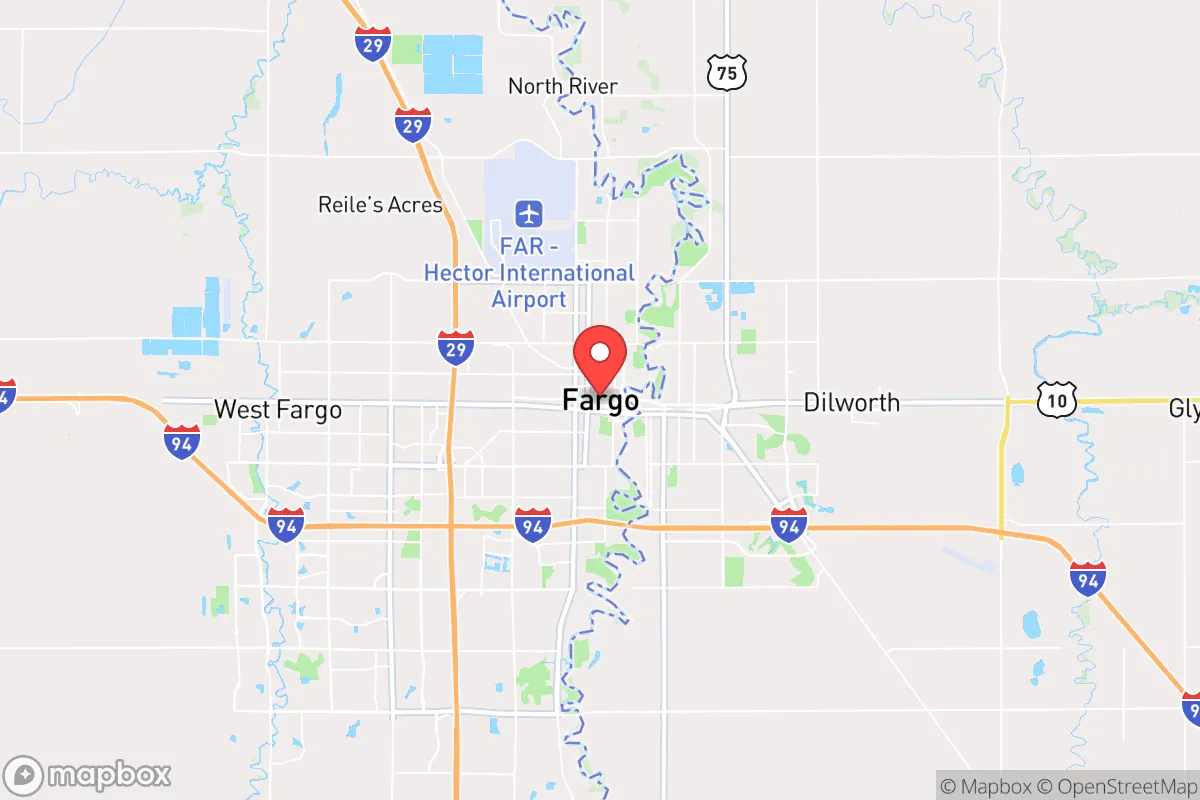
Photo: Wikipedia
Quality of Life in Fargo, ND
Above-average quality of iife. The area offers a reasonable cost of living, decent mobility, and a mix of neighborhood amenities.
What does Quality of Life tell us?
Quality of Life blends cost of living, nearby amenities, socioeconomic signals, and neighborhood character. City-level scores represent the whole municipality; individual neighborhoods can differ.
What does this tell us?
Quality of Life blends cost of living, nearby amenities, socioeconomic signals, and neighborhood character. City-level scores represent the whole municipality; individual neighborhoods can differ.
Cost of Living
14% below national average
The Real Cost of Living in Fargo, ND for 2026
| Tier | Individual | Family (4) |
|---|---|---|
| Survival | $15k | $27k |
| Comfortable | $52k | $77k |
| Luxury | $119k+ | $185k+ |
| Elite (Top 5%) | $148k+ | $229k+ |
86%
The Area Signal
A metric tracking the socioeconomic signals of the area.


Hobbies
Explore the areaGroceries
5 within 10 miles
Gas
0 within 10 miles
Hospital
3 within 20 miles
Airport
JFK — John F. Kennedy Memorial
Post Office
USPS — Fargo, ND
Critical Amenities
Quality-of-Life Analysis
Fargo, North Dakota, presents a quality of life defined by strong economic stability and a cost of living that consistently undercuts national averages, attracting a mix of young professionals, growing families, and long-term residents. With a cost of living index of 86 (where 100 equals the U.S. average), the city offers a notably lower financial barrier to entry compared to the national norm, while maintaining a median household income that often exceeds the state average. The population skews younger and more educated than much of rural North Dakota, driven by the presence of North Dakota State University and a robust healthcare sector, creating a community that balances Midwestern pragmatism with a steady influx of new talent.
How housing costs and affordability compare to nearby cities
Fargo’s housing market remains one of the most accessible in the Upper Midwest, with a median home value of $269,800 and a median rent of $916. These figures are significantly lower than in comparable regional hubs like Minneapolis-St. Paul, where median home values often exceed $350,000, and rents routinely top $1,400. The city’s affordability is further underscored by an average commute of just under 16 minutes, which reduces transportation costs and frees up household income for savings or discretionary spending. While home prices have risen steadily since 2020—driven by low inventory and demand from remote workers—Fargo still offers a price-to-income ratio that allows many single-income households to qualify for a mortgage, a rarity in many U.S. metros. Renters also benefit from a relatively stable market, with vacancy rates hovering around 3-4%, keeping rent increases moderate compared to national trends.
What daily life is like for families and professionals in Fargo
Daily life in Fargo is shaped by a compact urban footprint and a strong sense of community, with most errands and commutes taking under 20 minutes. The city’s school system, led by Fargo Public Schools, consistently earns above-average ratings for academic performance, and the presence of North Dakota State University provides a steady pipeline of cultural and sporting events. Amenities are concentrated along the 13th Avenue South corridor and downtown’s Broadway district, which feature local restaurants, breweries, and the Fargo Theatre—a historic Art Deco venue. For outdoor recreation, the Red River Greenway offers over 20 miles of paved trails for biking and walking, while Lindenwood Park and Island Park provide family-friendly green spaces. Winters are long and cold, with average January highs near 18°F, but the city invests heavily in snow removal and indoor infrastructure, including the FargoDome and multiple recreation centers. The rhythm of life is slower than in larger metros, but the presence of major employers like Sanford Health, Microsoft, and Scheels ensures a professional environment that supports career growth without the congestion of a big city.
Fargo is best suited for individuals and families who prioritize financial stability, short commutes, and a tight-knit community over urban density or warm-weather recreation. Young professionals will find a strong job market in healthcare, technology, and education, while families benefit from affordable housing and solid public schools. Retirees on fixed incomes may also appreciate the low cost of living, though those seeking a warmer climate or extensive public transit options may find the city limiting. Overall, Fargo offers a pragmatic, high-quality lifestyle for those who value economic security and a manageable pace of life.

Crime in Fargo, ND
Higher crime rates than 59% of comparable U.S. locations.
Violent CrimeViolent Crime Analysis
Property CrimeProperty Crime Analysis
Crime Analysis
Fargo, North Dakota, presents a mixed safety profile for potential residents. While the city is often perceived as a safe, family-friendly community, its crime rates exceed both state and national averages, particularly for property crime. In 2024, Fargo reported a violent crime rate of 372.7 incidents per 100,000 residents and a property crime rate of 3,248.4 per 100,000, placing it above the national average for both categories.
Crime in context
Fargo’s violent crime rate is roughly on par with the U.S. average of 380 per 100,000 but is significantly higher than the North Dakota state average of approximately 290 per 100,000. The property crime rate, however, is a more pronounced concern: it is about 40% higher than the national average of 2,300 per 100,000 and nearly double the state average of roughly 1,800 per 100,000. This disparity is largely driven by theft and motor vehicle theft. As a growing metro area in a state with a relatively progressive judicial philosophy in its larger counties, some analysts point to a pattern of lenient sentencing and reduced incarceration for property offenders, which can contribute to repeat offenses and a higher volume of crime. The presence of a large, transient university population and a robust economy also create more opportunities for theft.
What residents experience
For daily life, the most tangible impact is property crime. Residents report that car break-ins, bicycle theft, and package theft are common nuisances, especially in neighborhoods near downtown and the North Dakota State University campus. Violent crime, while less frequent, is not absent. Aggravated assaults make up the majority of violent incidents, often linked to disputes or alcohol consumption in the city’s bar district. Fargo’s status as a regional hub for healthcare and retail also means it attracts some crime from smaller surrounding communities. The Cass County State’s Attorney’s office has faced criticism for a perceived progressive approach that prioritizes diversion programs and reduced jail time for non-violent offenders, a philosophy that some residents believe undermines deterrence and public safety.
Neighborhood-level variation is notable. Areas like the Horace Mann and Clara Barton neighborhoods (near downtown) and the University District see higher concentrations of both property and violent crime. In contrast, newer developments in south Fargo, the Osgood neighborhood, and the city of West Fargo consistently report lower crime rates. Prospective residents should research specific block-level data, as even within a generally safe city, proximity to commercial corridors or high-density apartment complexes can significantly alter the local safety picture. The overall trend is that Fargo is not a high-crime city by national standards, but its rates are rising and warrant caution, particularly regarding property security and awareness of judicial policies that may affect recidivism.
* Values derived from national, state, county, city and local statistics and may differ in a specific area. Last updated: 2026-04-19T05:43:05.000Z
Narrative content on this page is AI-generated and may contain mistakes. Verify any details that matter before acting on them.
ReloMaps may earn a commission from affiliate links at no extra cost to you.

