Photo: Wikipedia
Demographics of Fargo, ND
Affluence Level in Fargo, ND
A middle-class area roughly in line with national averages across income, home values, education, and employment.
People of Fargo, ND
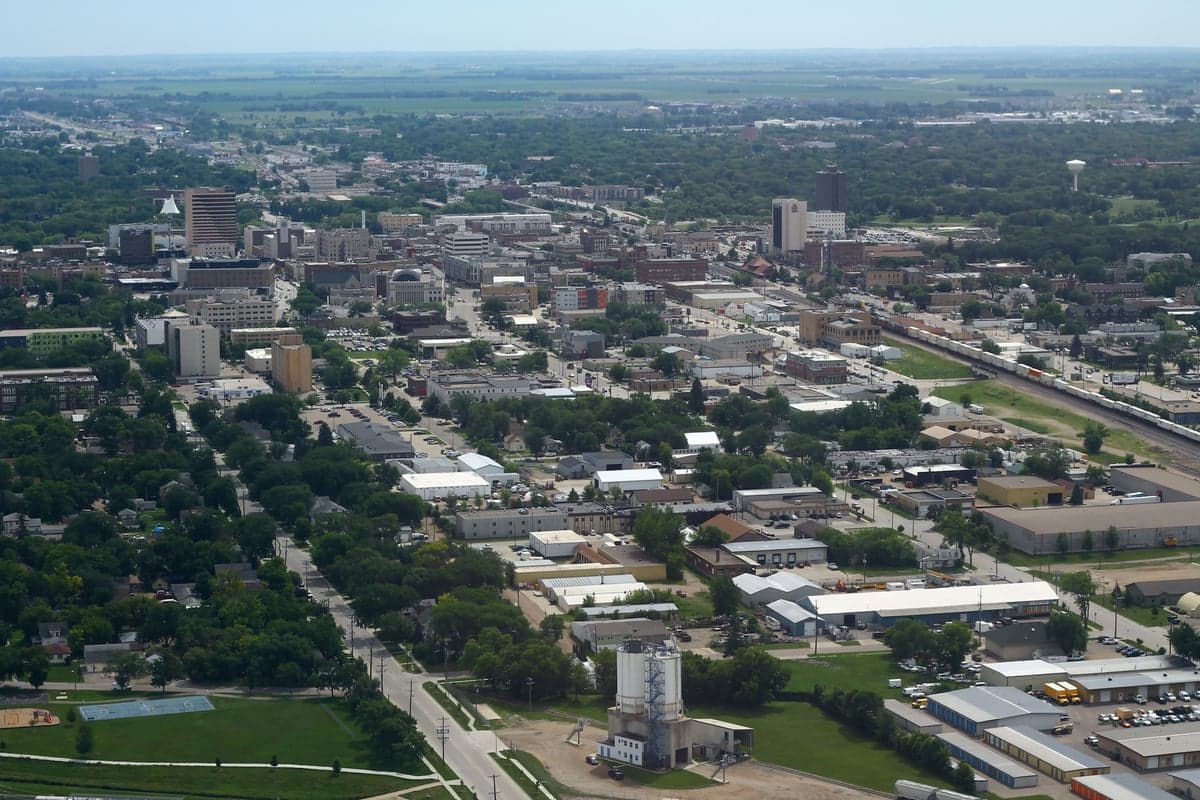
The people of Fargo, North Dakota, today form a predominantly white (79.7%) and college-educated (43.2%) population of 129,064, shaped by a history of Scandinavian and German settlement, recent refugee resettlement, and steady domestic in-migration from the rural Plains. The city is notably more diverse than the surrounding region, with a Black population of 8.3%, an East/Southeast Asian population of 2.0%, and an Indian-subcontinent population of 1.8%, alongside a 3.7% Hispanic share. Fargo’s identity is a blend of Lutheran-rooted civic order, a growing professional class tied to healthcare and technology, and a visible refugee community that has reshaped several older neighborhoods. The city remains one of the fastest-growing in the Upper Midwest, driven by a strong economy and relatively affordable housing.
How the city was settled and grew
Fargo was founded in 1871 as a railroad town on the Northern Pacific line, with the first wave of settlers drawn by land grants and the promise of wheat farming. The original population was overwhelmingly Northern European: Norwegians, Swedes, and Germans from Russia (ethnic Germans who had lived in the Volga region) arrived in the 1870s–1890s, establishing the city’s Lutheran and Catholic institutional base. The Horace Mann neighborhood, just north of downtown, was built by these early Scandinavian and German families, with its grid of modest wood-frame homes and corner churches still reflecting that heritage. A second wave came during the 1910s–1920s as the agricultural boom expanded, filling the Jefferson neighborhood south of Main Avenue with workers for the grain elevators and the new North Dakota Agricultural College (now NDSU). The city’s population grew from 5,000 in 1900 to 28,000 by 1920, almost entirely white and Northern European. The Great Depression and Dust Bowl slowed growth, but Fargo’s role as a regional trade hub kept it stable through the mid-20th century.
Modern era (post-1965)
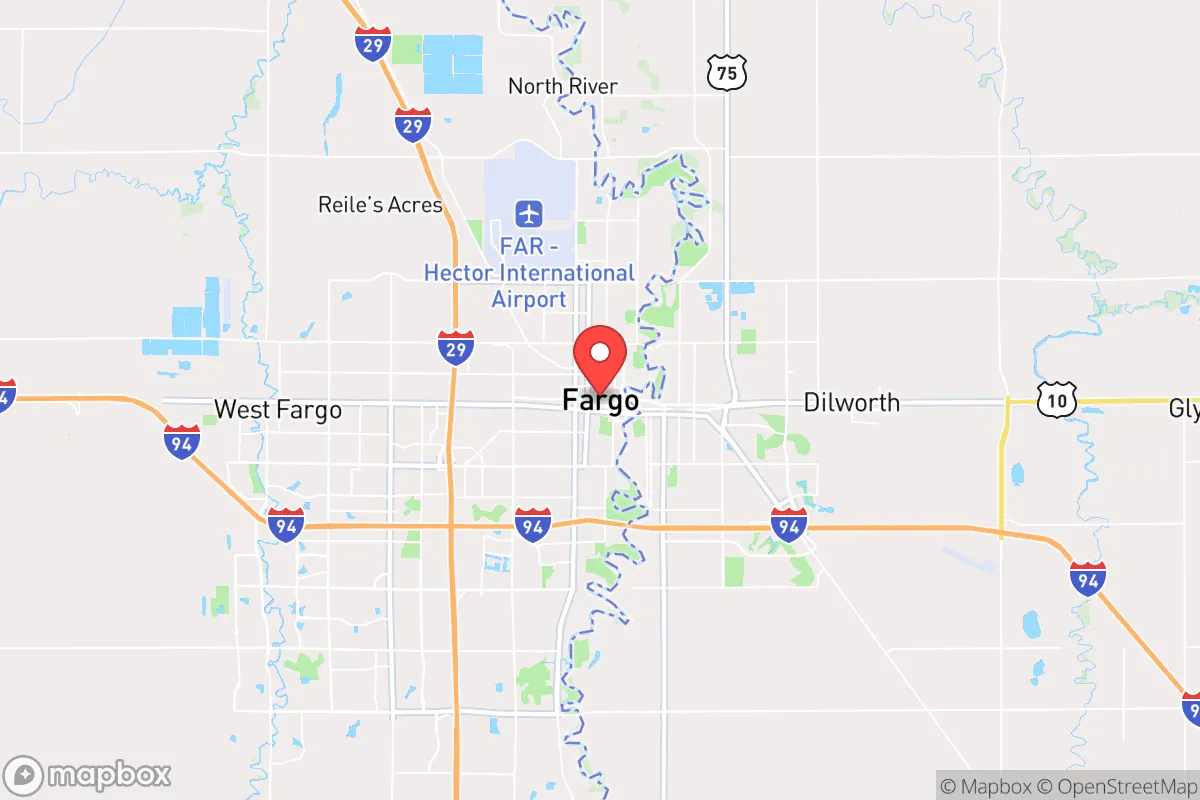
The 1965 Immigration and Nationality Act opened the door for Fargo’s first non-European arrivals, but the city remained overwhelmingly white through the 1980s. The major demographic shift began in the 1990s with the federal refugee resettlement program. Fargo became a primary resettlement site for Somali Bantu and other East African refugees, who concentrated in the Downtown and Roosevelt neighborhoods, where older, cheaper housing stock and proximity to social services created an entry point. By 2020, the Black population had reached 8.3%, almost entirely from refugee families and their U.S.-born children. A smaller but significant wave of Bhutanese and Burmese refugees arrived in the 2000s, settling in the Southside neighborhood near the intersection of 13th Avenue South and 25th Street, where a cluster of Asian grocery stores and community centers now operates. The Indian-subcontinent population (1.8%) is newer and more professional, largely tied to the healthcare sector: doctors and IT workers at Sanford Health and NDSU, living in the Oak Creek and Shadow Wood subdivisions in southwest Fargo. Domestic in-migration has been steady from rural North Dakota and Minnesota, as well as from other Midwest states, drawn by Fargo’s job market in healthcare, manufacturing, and logistics. Suburbanization pushed growth south and west, with the Osgood neighborhood emerging as a master-planned, family-oriented area of new single-family homes and chain retail.
The future
Fargo’s population is projected to continue growing at 1–2% annually, driven by domestic in-migration and the natural increase of the refugee-origin population, which has a younger age structure than the white population. The city is not homogenizing; rather, it is tribalizing into distinct enclaves by income and ethnicity. The refugee communities in Downtown and Roosevelt remain concentrated, with limited outward mobility due to housing costs and transportation barriers, while the white professional class increasingly clusters in the southwest suburbs (Osgood, Oak Creek). The East/Southeast Asian and Indian-subcontinent populations are small but growing, primarily through professional recruitment, and are assimilating into the broader middle class. The Hispanic population (3.7%) is growing slowly, mainly through secondary migration from other states, and is dispersed across the city. The next 10–20 years will likely see Fargo become more ethnically diverse but also more economically stratified, with the southwest corridor becoming increasingly affluent and the older central neighborhoods retaining a higher share of renters and minority residents.
For someone moving in now, Fargo is a city where the dominant culture remains Midwestern and Lutheran-influenced, but where a visible and growing minority population is reshaping parts of the urban core. The city offers strong economic opportunity and low crime relative to national averages, but newcomers should expect distinct neighborhood identities—from the historic Scandinavian feel of Horace Mann to the refugee-driven diversity of Downtown to the master-planned homogeneity of Osgood. The trajectory is toward greater diversity and suburbanization, but Fargo is unlikely to become a truly integrated city in the near term.

* Values derived from national, state, county, city and local statistics and may differ in a specific area. Last updated: 2026-04-19T05:43:05.000Z
Narrative content on this page is AI-generated and may contain mistakes. Verify any details that matter before acting on them.
ReloMaps may earn a commission from affiliate links at no extra cost to you.

